

Executive Overview
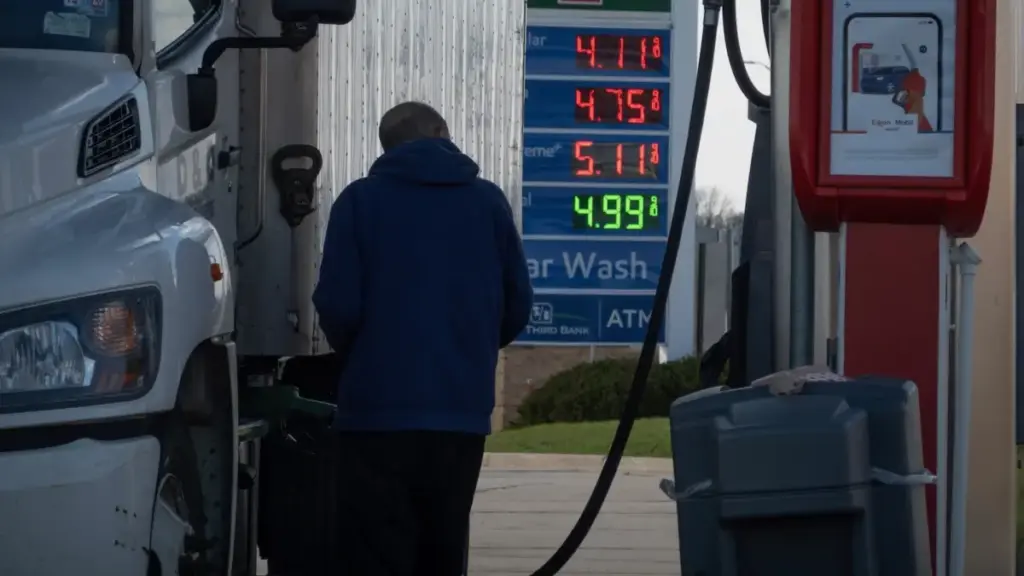
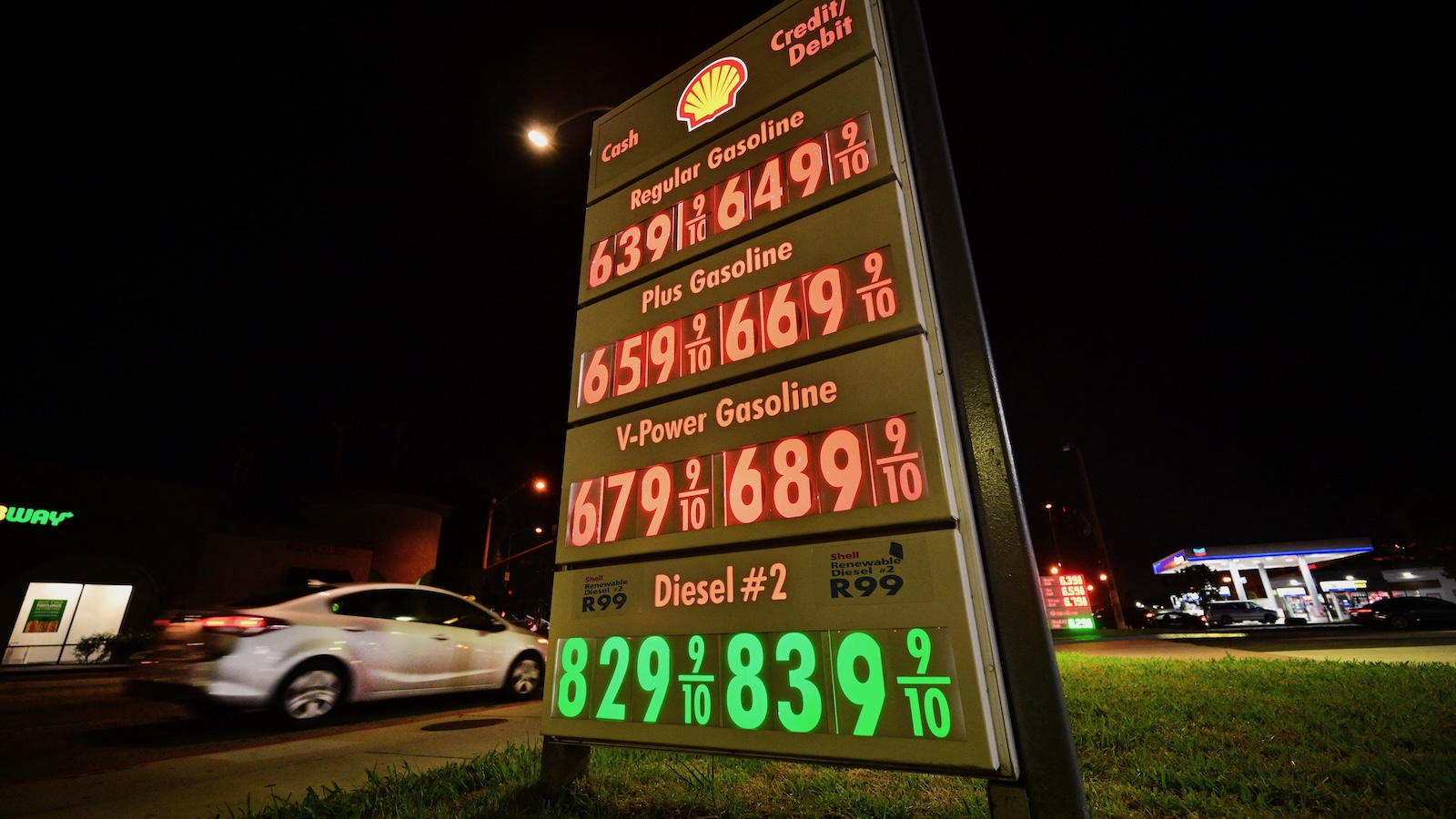
The United States economy is facing an unprecedented energy crunch as national diesel prices shatter records on an almost daily basis, peaking at a staggering $6.52 per gallon, according to data from AAA. While passenger vehicles rarely rely on diesel, the fuel serves as the absolute lifeblood of American commerce, driving the long-haul trucks, cargo ships, and freight trains that stock supermarket shelves, while heavily powering the nation’s agricultural sector.
The cascading impact of these historic prices has reignited a fierce political debate in Washington over whether the federal government should step in and ban the export of domestic diesel fuel. President Donald Trump has officially endorsed the concept, telling reporters on the sidelines of the United Nations General Assembly in New York that he has called on his administration to pursue a ban.
However, the proposal has exposed deep fractures within the political establishment and the energy sector alike. While populist lawmakers and consumer advocates argue that keeping refined fuel within U.S. borders is a commonsense measure to shield American families from the fallout of foreign conflicts, major oil refineries, free-market economists, and energy analysts warn that an export ban would backfire, ultimately worsening global supply shortages, depressing domestic production, and driving prices even higher.
Detailed Chronology of the Crisis
The roots of the current crisis trace back to the escalation of geopolitical conflict earlier this year, when the United States and Israel launched a joint military campaign against Iran. The outbreak of hostilities immediately paralyzed commercial shipping traffic in the Strait of Hormuz—a crucial maritime choke point through which approximately 10 percent of the world’s water-borne diesel flows.
Compounding the maritime logjam, ongoing Ukrainian military strikes targeting Russian energy infrastructure have further constrained the global supply of refined petroleum products. With traditional supply lines severely disrupted, international buyers have increasingly looked to the United States to make up the shortfall.
During the week of September 11, the U.S. Energy Information Administration (EIA) reported that domestic refineries produced more than 5 million barrels of distillate fuels per day, shipping roughly 1.6 million of those barrels abroad. At the same time, domestic oil and fuel reserves have plummeted to their lowest levels since 1982, creating a dangerous pinch point for American consumers.
The convergence of wartime supply shocks and high export volumes has caused domestic diesel prices to skyrocket by nearly 80 percent since the beginning of the Iran conflict. In September alone, prices jumped by nearly $1 per gallon, pushing average costs to unprecedented heights and leaving some regional gas stations completely out of fuel.
Supporting Context & Metrics: The Human and Economic Toll
The economic fallout of the diesel price surge extends far beyond commercial transport, directly attacking the pocketbooks of everyday Americans. According to an online tracking dashboard developed by researchers at Brown University (iranwarcost.watson.brown.edu), the ongoing diesel price hikes have cost American households nearly $400 each, translating to over $51 billion in aggregate economic damage.
Jeff Colgan, a Brown University political scientist who helped design the impact tracker, argues that implementing a ban on diesel exports would quickly flood the domestic market with excess supply, driving down prices for hard-pressed consumers. "It could make a huge difference," Colgan noted.
Advocates of the ban draw direct parallels to existing federal trade restrictions. Senator Chuck Grassley (R-Iowa) took to social media to voice his frustration, writing on X (formerly Twitter): "If our govt can embargo chips to China it can embargo diesel to help American farmers & truckers."
Representative Ashley Hinson (R-Iowa) echoed those sentiments, posting: "Iowans are being squeezed and shouldn’t have to foot the bill at the pump or the checkout line for the war in Iran." Senate Majority Leader John Thune (R-S.D.) also expressed a willingness to look into the proposal, stating that if a ban would relieve pricing pressure on consumers, he is "open to exploring it."
The concept of restricting energy exports is not without precedent in American history. In 1975, following the economic shock of the OPEC oil embargo, Congress passed the Energy Policy and Conservation Act, which effectively banned the export of domestic crude oil. That restriction remained in place for four decades until President Barack Obama signed legislation lifting the ban in late 2015. Since then, domestic energy corporations have reaped billions of dollars by selling petroleum products on the lucrative global market, and they remain fiercely opposed to any revival of export controls.
Official Statements and Industry Reactions
Despite President Trump’s sudden endorsement—stating from New York, "I’ve said, Let’s not send out the diesel… I’ve called for it. I’ve called for it within my people"—the administration’s official stance remains murky. Prior to the president’s remarks, a White House official told media outlets that an export ban was not under active consideration.
The pushback from the energy sector and free-market policymakers has been swift and severe. The American Fuel & Petrochemical Manufacturers (AFPM) released a sharply worded statement warning that export restrictions would achieve the exact opposite of their intended effect.
"Export bans do not create more fuel for Americans," the organization stated. "They reduce U.S. fuel production, put upward pressure on prices, weaken energy security, and hand market share to foreign competitors."
Prominent conservative lawmakers from major energy-producing states have also condemned the proposal. Senator John Cornyn (R-Texas) dismissed the idea as a mere "gimmick" when speaking with The Hill, while Interior Secretary Doug Burgum warned in a CNBC interview that an export ban "could actually hurt Americans."
Energy analysts point out that domestic diesel pricing cannot be isolated from the global market. Patrick De Haan, head of petroleum analysis for GasBuddy, argued on X: "U.S. diesel prices are determined not by a U.S. supply and demand balance, but a global one. Keeping distillates and diesel home does not change the world price."
Meanwhile, congressional Democrats have largely approached the Trump administration’s sudden pivot with skepticism, noting that previous calls for export caps during the Biden administration were similarly contentious. Senator Peter Welch (D-Vt.) dismissed the president’s rhetoric, telling reporters, "Trump is all smoke and mirrors. If he’s serious about lowering prices of oil, gas, and home heating oil, he needs to end his illegal war with Iran."
Future Outlook: Finding a Middle Ground
As Washington grapples with how to respond to the crisis, consumer advocacy groups are warning against viewing the issue through a strictly binary lens. Tyson Slocum, energy program director for the public interest watchdog group Public Citizen, argued that the current policy debate has been unnecessarily polarized.
"The debate is so absurdly simplistic," Slocum said. "People are like, either total unfettered, unregulated exports, or zero exports."
Slocum contends that the federal government has numerous regulatory levers between those two extremes. Rather than enacting a total embargo, policymakers could implement graduated quotas or temporarily cap the percentage of refined distillate fuels shipped overseas, thereby easing domestic shortages without completely severing international trade ties.
"It could be very significant," Slocum added, asserting that even partial restrictions would lead to a "significant short-term drop in diesel prices."
Whether President Trump’s public statements will translate into binding executive action—or whether Congress can forge a bipartisan legislative consensus—remains to be seen. What is clear, however, is that as long as conflicts in the Middle East and Eastern Europe continue to strain global energy markets, American consumers, truckers, and agricultural producers will continue to bear the crushing weight of record fuel prices at the pump and the grocery checkout line.



