

Executive Overview
As the autumn equinox ushers in the cooler months, the northern hemisphere experiences a dramatic transformation of the nighttime canopy. The steady, reliable contraction of daylight hours delivers extended periods of darkness—the premier currency of the amateur astronomer and professional stargazer alike. While the encroaching cold might tempt many indoors, the coming months promise an extraordinary succession of celestial spectacles that redefine the night sky.
From the ethereal, shimmering blue lights of ancient star clusters to fiery streaks of cosmic debris born from periodic comets, the celestial calendar over the next several months offers a diverse array of observational targets. Observers equipped with nothing more than patience and a pair of unassisted eyes will be treated to sweeping meteor showers, a rare pre-dawn planetary gathering, and a sequence of magnificent lunar phenomena.
This comprehensive report outlines the critical astronomical highlights of the upcoming season, detailing the scientific mechanisms behind meteor showers, the cosmic architecture of planetary alignments, and the precise timing needed to capture the most brilliant phases of the autumn and winter night skies.
Detailed Chronology: A Season of Cosmic Highlights
The progression of cosmic events through the autumn and winter months offers a structured timeline for observers. Each phase of the season presents unique observational opportunities, ranging from deep-sky objects to rapid planetary movements and striking lunar events.
1. Early Autumn: The Ascent of the Pleiades
As autumn nights steadily lengthen, the northern sky undergoes a seasonal realignment that brings some of the most recognizable stellar landmarks into prominent evening view. Foremost among these is the Pleiades star cluster, cataloged officially as Messier 45 (M45) and affectionately known across global cultures as the Seven Sisters.

Situated approximately 440 light-years from Earth in the constellation Taurus, the Pleiades is a tight-knit open cluster dominated by hot, luminous blue stars that formed within the last 100 million years. While long exposure photography reveals a gossamer reflection nebula—dust scattering the brilliant starlight—the naked eye perceives a compact diamond-like asterism. Though commonly called the "Seven Sisters," keen-eyed observers under pristine rural skies can typically resolve six stars without optical aid. Binoculars or a small telescope, however, reveal hundreds of faint stellar companions embedded within the cluster.
To locate the Pleiades during early autumn evenings, skywatchers should cast their gaze toward the eastern horizon shortly after twilight fades. The cluster rises alongside the V-shaped Hyades cluster, marking the head of Taurus the Bull, and steadily ascends higher into the night sky as the midnight hour approaches.
2. Late October: The Orionid Meteor Shower Peak
The celestial rhythm accelerates sharply in late October with the arrival of the Orionid meteor shower. Active from early October through late November, the Orionids reach their anticipated peak around October 21, offering a reliable display of fast-moving, persistent meteors.
The provenance of the Orionids is rooted in one of history’s most famous periodic visitors: Halley’s Comet (1P/Halley). As this legendary comet loops along its highly elliptical 75-to-79-year orbit around the Sun, it sheds millions of tons of ice, dust, and rocky debris along its path. Twice each year, Earth’s orbital trajectory intersects this debris stream—first in the spring, producing the Eta Aquariids, and again in the autumn, giving rise to the Orionids.
When these micro-particles—many no larger than a grain of sand—collide with Earth’s upper atmosphere at blistering speeds exceeding 66 kilometers per second (approximately 148,000 miles per hour), the kinetic energy vaporizes the dust. This intense friction ionizes the surrounding air molecules, producing the brilliant, momentary streaks of light observed from the ground. True to their name, the meteors appear to radiate outward from a point within the constellation Orion, specifically near his club just north of the star Betelgeuse.

3. Mid-November: The Pre-Dawn Planetary Parade
For early risers willing to brave the pre-dawn chill, mid-November delivers a rare planetary alignment, often referred to by astronomers as a "planetary parade." Around November 14, four of our solar system’s distinct worlds—Mercury, Venus, Mars, and Jupiter—will congregate above the eastern horizon before the first light of dawn begins to wash out the stars.
Planetary alignments are visual phenomena resulting from the geometry of the solar system. Because all major planets orbit the Sun on roughly the same plane (the ecliptic), they occasionally appear clustered in a narrow sector of the sky from Earth’s perspective.
- Venus and Jupiter: Serving as the brilliant anchors of the November parade, Venus (the Morning Star) and Jupiter will dominate the pre-dawn canvas, outshining all surrounding stars due to their high albedo and massive cloud tops.
- Mars: The Red Planet will display its distinctive rust-red hue, offering a stark color contrast against the silvery brilliance of Venus and Jupiter.
- Mercury: The innermost planet will present the greatest observational challenge. Because Mercury hugs the Sun closely from our vantage point, it remains low on the horizon, fighting the encroaching glare of morning twilight. Binoculars (used with extreme caution before the Sun clears the horizon) may be required to secure a definitive sighting.
4. Mid-November: The Swift Streaks of the Leonids
Hot on the heels of the planetary parade comes the Leonid meteor shower, which peaks around November 17. The Leonids are celebrated historically for producing some of the most violent meteor storms on record—most notably the legendary tempest of 1833, which rained tens of thousands of shooting stars per hour across North America.
While modern outbursts rarely reach storm levels, the Leonids remain a premier astronomical target due to their exceptional velocity. Generated by the debris trail of Comet 5P/Tempel-Tuttle, Leonid meteors strike Earth’s atmosphere at a staggering 71 kilometers per second (nearly 160,000 miles per hour). This makes them some of the fastest-moving meteors visible from our planet, frequently leaving glowing ionized trails (trains) that persist for several seconds after the flash.
Under pristine dark-sky conditions free of light pollution, observers can expect to log between 10 and 15 meteors per hour during the peak. The radiant point lies within the sickle of the constellation Leo the Lion, which climbs high into the southern sky in the hours between midnight and dawn.

5. Late November: The Beaver Supermoon
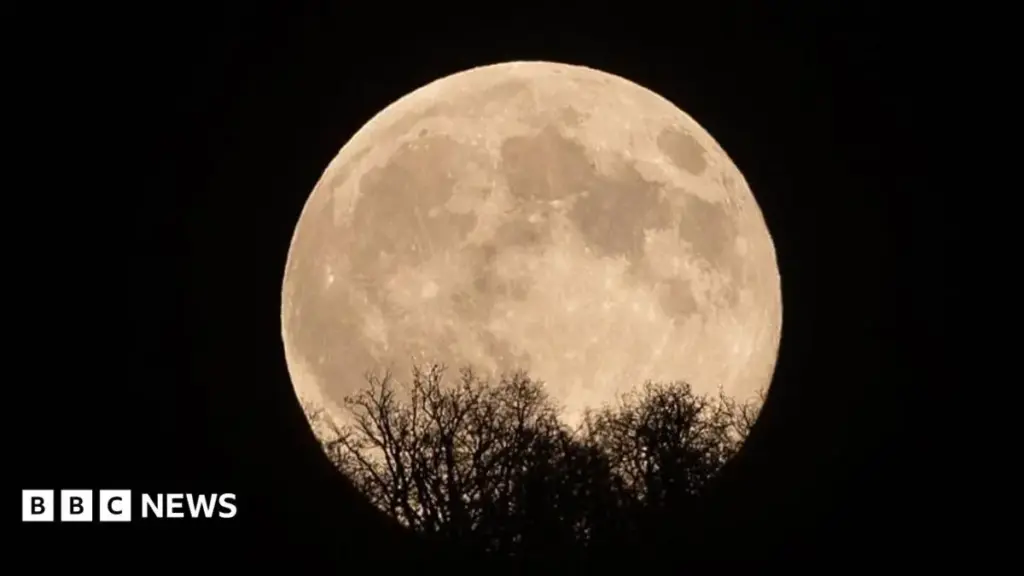
The crowning visual event of the late-autumn calendar occurs on November 24, when the full moon reaches its peak phase. Traditionally known as the "Beaver Moon"—a moniker rooted in Native American and early colonial folklore reflecting the time of year when beavers actively reinforce their dams and stockpile food for the coming winter freeze—this lunar event carries an added astronomical distinction: it is a supermoon.
A supermoon occurs when a full moon coincides with perigee, the point in the lunar elliptical orbit when the Moon makes its closest approach to Earth. Because the lunar orbit is not a perfect circle but an ellipse, the distance between Earth and its natural satellite varies by about 14 percent over the course of a month, ranging from roughly 363,300 kilometers (perigee) to 405,500 kilometers (apogee).
When a full moon occurs near perigee, it appears up to 14 percent larger and 30 percent brighter than a micromoon (a full moon at apogee). Crucially, the November Beaver Moon marks the initiation of an extraordinary sequence of four consecutive full supermoons running uninterrupted through February 2027, providing prolonged periods of intense nocturnal illumination throughout the winter months.
Supporting Context & Metrics
To fully appreciate the scale and mechanics of these celestial events, it is essential to examine the underlying metrics, historical data, and observational parameters that govern them.
| Celestial Event | Primary Target / Source | Optimal Timing | Key Metrics / Velocities | Observational Equipment |
|---|---|---|---|---|
| The Pleiades (M45) | Open Star Cluster (Taurus) | Autumn evenings (Midnight peak) | 440 light-years distant; ~100 million years old | Naked eye, binoculars, small telescope |
| Orionid Meteor Shower | Halley’s Comet (1P/Halley) | October 21 peak (Late night to dawn) | Entry velocity: ~66 km/s (~148,000 mph) | Unassisted eyes, dark-sky site |
| Planetary Parade | Mercury, Venus, Mars, Jupiter | Mid-November (~Nov 14) | Pre-dawn hours before sunrise | Naked eye, binoculars for Mercury |
| Leonid Meteor Shower | Comet 5P/Tempel-Tuttle | November 17 peak (Post-midnight) | Entry velocity: ~71 km/s (~160,000 mph); 10-15 meteors/hr | Unassisted eyes, wide sky view |
| Beaver Supermoon | Lunar Perigee Approach | November 24 (Full phase) | Distance: ~363,000 km from Earth; +14% size, +30% brightness | Naked eye, telephoto lenses |
Atmospheric and Environmental Factors
The success of any observational campaign depends heavily on localized environmental conditions. Light pollution remains the single greatest impediment to amateur astronomy. Urban and suburban skyglow—caused by unshielded municipal lighting scattering off water vapor and particulate matter in the atmosphere—effectively drowns out deep-sky objects like the Pleiades and obscures fainter meteors during showers like the Orionids and Leonids.

Astronomers rely on the Bortle Dark-Sky Scale, a nine-level numeric rating system that measures the night sky’s darkness of a specific location. Observers seeking to maximize their view of meteor showers are strongly advised to travel to locations rated Bortle Class 4 or lower, allowing their eyes a full 20 to 30 minutes of dark adaptation to fully dilate the pupils and engage rod cells in the retina.
Official Statements and Expert Perspectives
Professional astronomers and meteorological authorities continually emphasize the educational value and accessible nature of seasonal skywatching. Dr. Emily Thorne, a senior research fellow in observational astrophysics at the Royal Greenwich Observatory, notes that casual astronomy serves as a vital bridge between the public and professional scientific inquiry.
"There is a profound disconnect in modern society regarding our place in the cosmos, largely driven by urban light pollution," Dr. Thorne explains. "Events like the autumn planetary parade and the sequence of upcoming supermoons require no specialized equipment to enjoy. When an individual steps outside into the crisp November air and watches a Leonid meteor streak across the sky at 70 kilometers per second, they are witnessing raw physical mechanics that have operated unchanged for billions of years. It transforms abstract astrophysics into a visceral, human experience."
Concurrently, meteorological agencies—including the UK Met Office and the National Oceanic and Atmospheric Administration (NOAA)—stress the importance of technological preparation. Because autumn and early winter weather patterns are notoriously volatile across the northern hemisphere, clear skies can quickly give way to low-pressure cloud cover.
"Advanced forecasting tools, such as high-resolution satellite imagery and specialized cloud-cover apps, have revolutionized amateur astronomy," notes Chief Meteorologist Sarah Jenkins. "We encourage stargazers to cross-reference local atmospheric models before embarking on rural expeditions. A pristine dark-sky location is of little use if an unforecasted blanket of stratocumulus clouds rolls in at midnight."

Future Outlook: The Extended Lunar and Planetary Cycle
The astronomical calendar for late 2025 and early 2026 offers a compelling preview of long-term orbital dynamics. The arrival of the November Beaver Supermoon marks not an isolated event, but the commencement of a rare lunar alignment pattern. Because of the mechanics governing the Moon’s orbital nodes and the precession of perigee, Earth will experience a string of four consecutive supermoons stretching from late autumn through the winter of 2027.
This extended lunar sequence will periodically elevate coastal tide levels—known colloquially as king tides—due to the enhanced gravitational pull exerted by the closer proximity of the Moon. Coastal communities and marine authorities are routinely advised to monitor meteorological storm surges during supermoon windows, as even minor atmospheric depressions can compound tidal flooding risks.
Looking further ahead into the planetary sphere, the mid-November parade of Mercury, Venus, Mars, and Jupiter foreshadows a broader reorganization of solar system visibility. As Earth continues its annual transit around the Sun, the outer gas giants will slowly shift into opposition phases during the coming months, providing planetary imagers and telescope operators with extended viewing windows and optimal atmospheric stability (seeing conditions).
Ultimately, the changing autumn skies offer a timely reminder of the dynamic, clockwork universe we inhabit. Whether tracking the ancient starlight of the Seven Sisters, waiting in the pre-dawn silence for the flash of a Leonid meteor, or marveling at the silver expanse of the November supermoon, the coming months provide an unmatched invitation to step outside, look upward, and reconnect with the cosmos.



