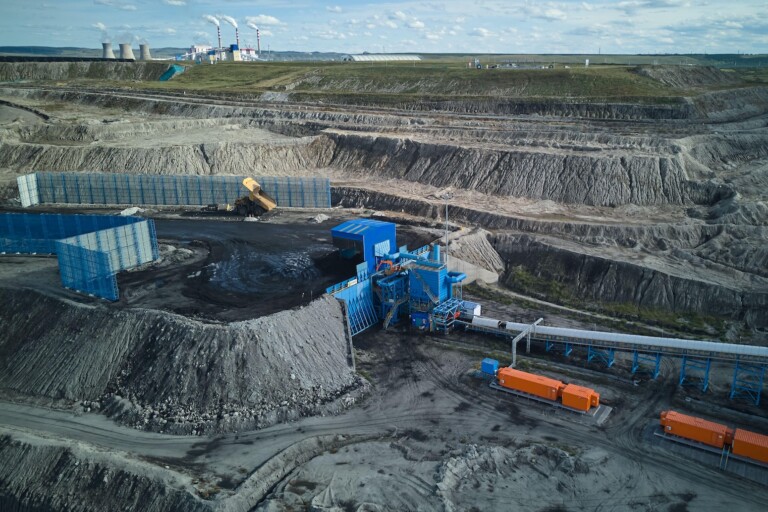
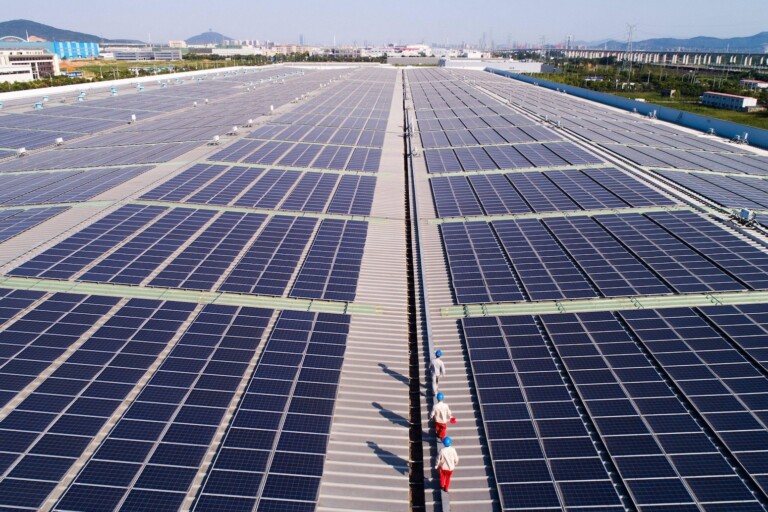
On August 10, 2026, China’s top economic planning body, the National Development and Reform Commission (NDRC), alongside the National Energy Administration (NEA), officially published the 15th Five-Year Plan for Coal Industry Development (2026–2030). Arriving at a critical juncture in global geopolitical instability and domestic energy transformation, the strategy provides a blueprint for how the world’s largest carbon emitter intends to manage its primary fuel source in the final run-up to its self-imposed deadline to peak carbon dioxide emissions "before 2030."
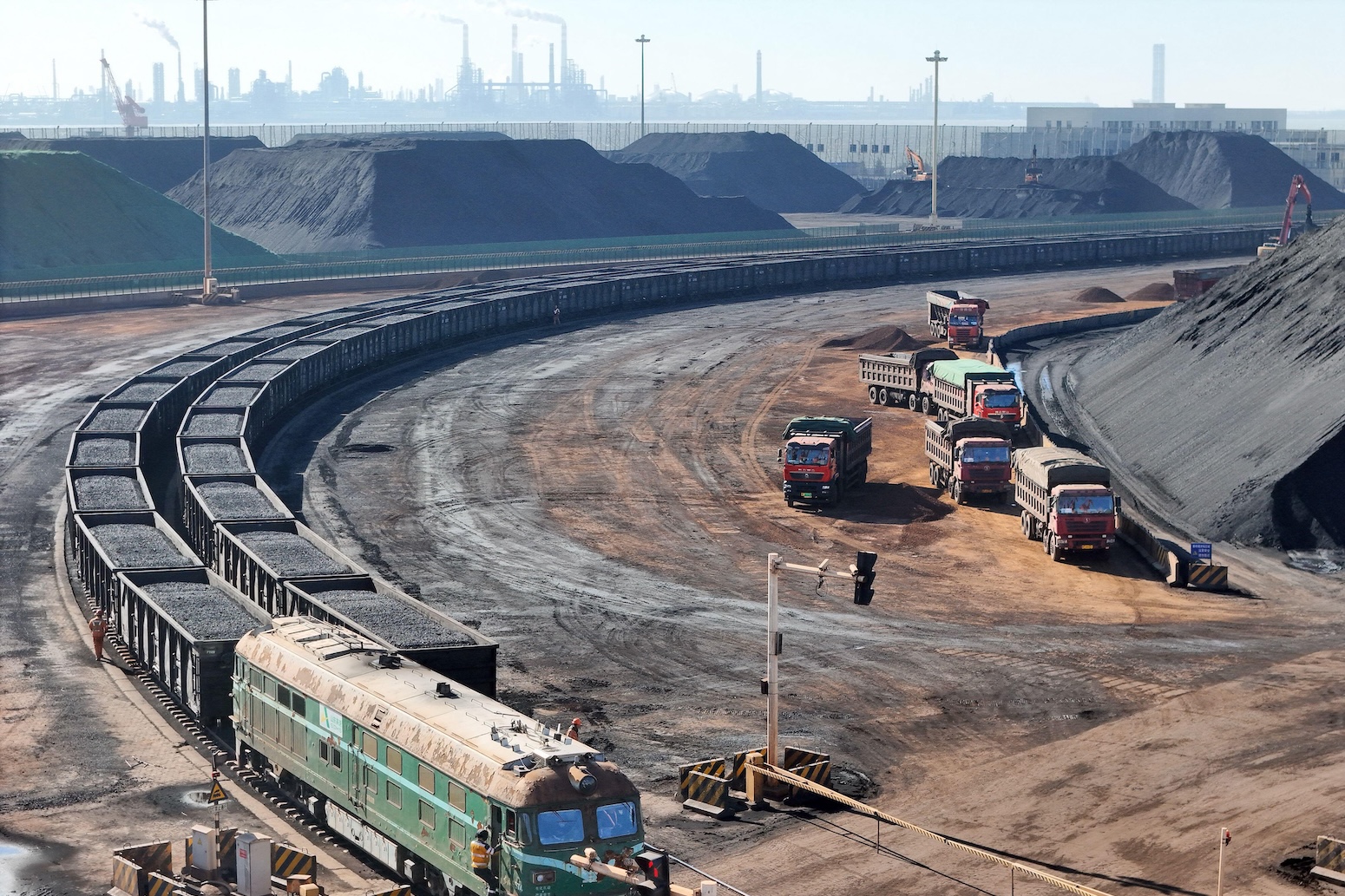
Rather than signaling an abrupt phase-down or setting a rigid target year for coal consumption to peak—such as the previously speculated 2027 window—the document cements coal’s role as China’s ultimate "bottom-line guarantee" for energy security. Influenced heavily by ongoing volatility in international oil and gas markets sparked by Middle East conflicts, Beijing’s latest policy framework prioritizes systemic resilience, structural efficiency, and supply chain consolidation over aggressive phase-out mandates.
Simultaneously, the plan acknowledges the imperative of the low-carbon transition. It mandates a structural evolution for the industry: tightening central approval over new capacity, scaling down production reserve mandates, capturing non-CO2 greenhouse gases such as coalbed methane, and accelerating the shift of coal from a primary power fuel to an industrial chemical feedstock.
                                  CHINA COAL DUAL TENSION
                                             │
                       ┌─────────────────────┴─────────────────────┐
                       ▼                                           ▼
            [ ENERGY SECURITY ]                          [ DECARBONIZATION ]
   • Middle East geopolitical volatility        • 2030 Carbon Peaking Target
   • "Bottom-line guarantee" role               • Renewable penetration > 50%
   • Chemical feedstock expansion               • Centralized "Single Ledger" control
Detailed Chronology
To understand the 15th Five-Year Plan for Coal, it is essential to trace the policy evolution leading up to its release:
[ 2024 ] ───► Beijing establishes initial Coal Reserve System target (300Mt/yr)
   │
[ April 2026 ] ─► Directives issued for "strict control" of fossil fuels & regional grading
   │
[ June 2026 ] ──► Release of 15th FYP for "New-Type Energy System" (sets 100Mt reserve target)
   │
[ July 2026 ] ──► NEA unveils Ordos Basin Action Plan targeting deep coalbed methane
   │
[ Aug 10, 2026 ] ─► Official publication of 15th FYP for Coal Industry Development
The Trajectory of Coal Governance
12th & 13th Five-Year Plans (2011–2020): Policy frameworks established explicit cap numbers for national coal output to combat domestic overcapacity and reduce severe urban air pollution.
Early 14th Five-Year Plan Period (2021–2023): Power shortages and global energy crises led Beijing to recalibrate its approach, prioritizing mine safety, capacity expansion, and grid stabilization alongside massive clean energy deployment.
April 2024: The central government introduced the coal reserve-production capacity system, aiming to build a buffer of 300 million metric tonnes per year to absorb demand surges and supply disruptions.
April 2026: Policy directives called for the "strict control" of fossil fuel growth, laying the groundwork for a performance grading framework evaluating provincial governments on local coal intensity.
June 2026: NDRC and NEA published the 15th Five-Year Plan for building a "New-Type Energy System," formally revising reserve capacity targets downward to 100 million metric tonnes annually while emphasizing renewable integration.
July 2026: The NEA released a targeted action plan for the Ordos Basin, directing a major push into non-conventional gas recovery from coal seams.
August 10, 2026: NDRC and NEA formally released the dedicated 15th Five-Year Plan for Coal Industry Development, codifying energy policy priorities through 2030.
Supporting Context & Metrics
China’s reliance on coal remains deeply intertwined with its macroeconomic infrastructure, even as clean energy installations break global records. The 15th Five-Year Plan operates against a backdrop of shifting statistical benchmarks across generation, regional concentration, and emissions management.
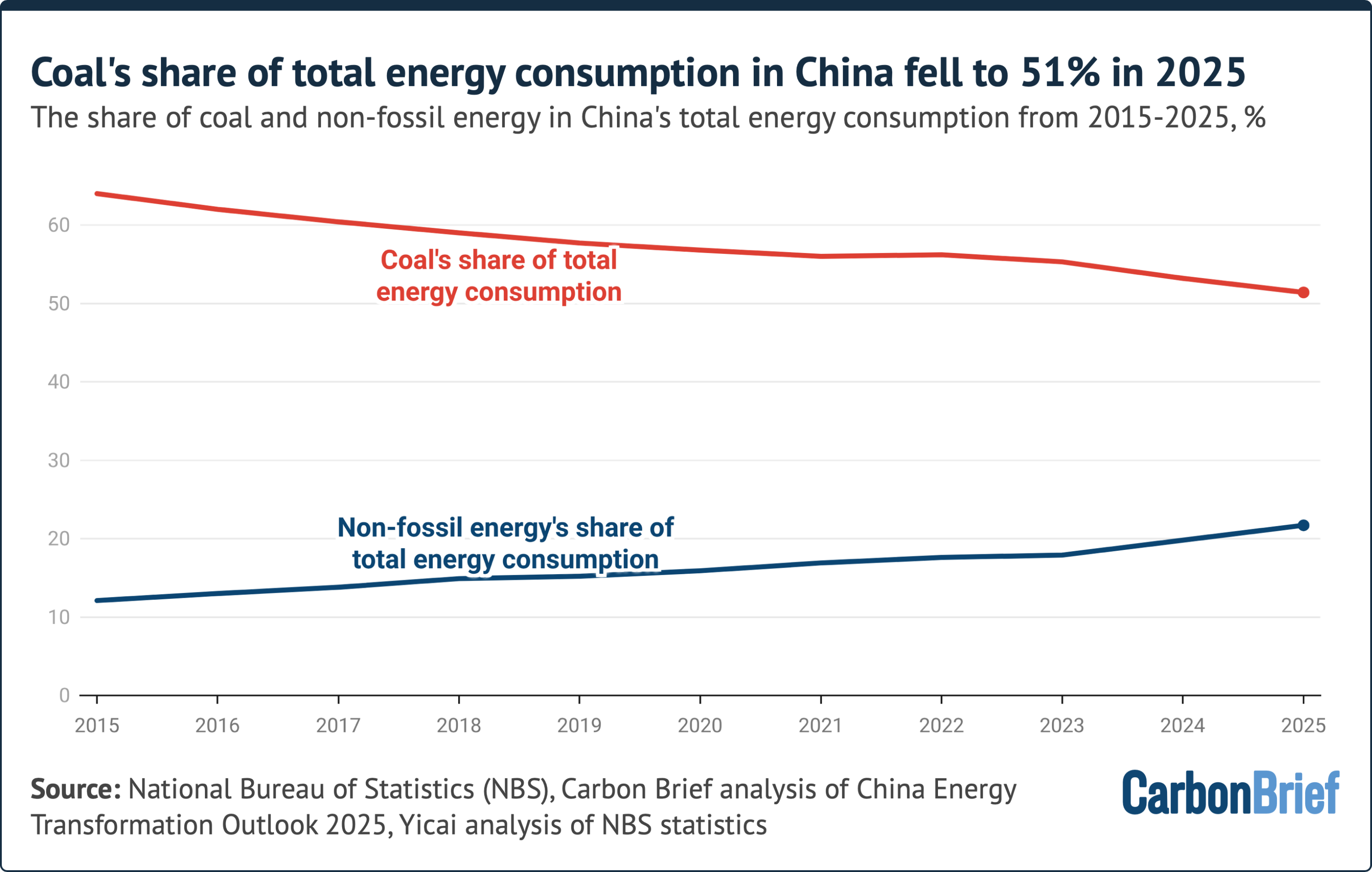
       CHINA'S ENERGY TRANSFORMATION REALITY (2015 vs 2025/2026)
       =========================================================

       [ Total Energy Consumption Share ]
       2015:  ████████████████████████████████  ~64% Coal
       2026:  ███████████████████             51.4% Coal

       [ Power Mix Milestones ]
       2025:  Non-fossil generation exceeds 50% of installed base
       H1 2026: Coal supplies under 50% of total electricity generated
Key Policy Metrics and Structural Benchmarks
Metric / Indicator
Baseline / Historical Target
15th FYP Target (2026–2030)
Strategic Implications
Share of Coal in Total Energy
64% (2015) $rightarrow$ 51.4% (H1 2026)
Continual structural decline
Non-fossil sources increasingly dominate new energy additions.
Regional Supply Concentration
82% from Shanxi, Inner Mongolia, Shaanxi, Xinjiang (2025)
Focuses on non-CO2 emissions abatement while securing gas supply.
Coal Mine Gas Utilization
Variable local targets
$6.5text Billion textm^3text/year$
Directly captures fugitive methane emissions for clean power/heating.
The "Single Ledger" Governance Mechanism
To prevent regional authorities from approving excess capacity ahead of national carbon peaking deadlines, the 15th Five-Year Plan introduces a mandatory central approval process known as the "single ledger" system.
Under this regime, any new coal production capacity planned between 2026 and 2030 must be vetted and logged into a unified national ledger administered directly in Beijing before construction can commence. This centralized filter aims to stop provincial "rush-to-build" behaviors aimed at locking in legacy capacity before federal caps take effect.
Official Statements & Expert Analysis
The text of the plan and subsequent reactions from government officials and energy experts illustrate a tension between energy independence and carbon abatement goals.
Official Government Stance
In official coverage published by the People’s Daily, Wang Hongzhi, Head of the National Energy Administration (NEA), addressed the strategic imperative driving the plan amidst global market shocks:
"Coal is China’s greatest source of confidence in ensuring a stable energy supply… Amid severe volatility in international energy markets, China’s energy system has withstand these shocks by anchoring itself on domestic resources."
The document itself introduces coal not as an industry on the retreat, but as a foundational stabilizing force:
"[Coal is] vital to the national economy, people’s livelihoods and national energy security, playing a crucial role in providing foundational support and systemic regulation within the energy supply system."
Independent Expert Evaluation
Reactions from climate policy experts, economic analysts, and think tanks highlight the plan’s pragmatic approach:
1. On Energy Security vs. Phase-Out Reality
Kevin Tu, non-resident fellow at Columbia University’s Center on Global Energy Policy, notes that the document clarifies China’s strategy to preserve maneuverability:
"This is clearly neither a coal phase-out nor phase-down plan… It grants China considerable flexibility over the pace of the transition while confirming the continuity of China’s strategy: safeguarding energy security while advancing the low-carbon transition."
"The signal is not simply about reducing the quantity consumed, but creating a more concentrated, efficient, flexible, and resilient coal system."
2. Market Dynamics vs. Regulatory Mandates
Li Shuo, Director of the China Climate Hub at the Asia Society Policy Institute, points out that external market signals will outweigh state directives in setting the exact consumption peak:
"The Middle East conflict will reinforce coal’s role in China’s energy system… Market dynamics and technological progress, rather than state directives, will determine exactly when coal consumption and emissions peak. Beijing’s regulatory interventions, if any, will be limited to making sure the peaking timelines do not blow past 2030."
3. Shift to Industrial Feedstocks
Analyzing the plan’s directives on chemical processing, Tu adds:
"One of the most consequential parts of the plan is promoting the shift to coal being used equally as a fuel and a feedstock… The policy signal is not to exit coal chemicals, but to make them more efficient, higher-value, and potentially less carbon-intensive through CCUS and green hydrogen integration."
4. Critical Gaps in Emissions Targets
Tom Wang, Executive Director of People of Asia for Climate Solutions, argues that the strategy centers primarily on resource optimization rather than deep decarbonization:
"This is more of a coal exploration plan rather than a coal transition plan. While several policies call for ‘green’ or ‘smart’ development, the plan does not address the absolute greenhouse gas emissions underpinning each step of extraction, processing, and combustion."
Sun Xiaopu, Senior China Counsel at the Institute for Governance & Sustainable Development (IGSD), underscores the absence of hard methane caps:
"While the plan expands coalbed methane utilization goals, it does not establish an absolute methane-emissions reduction target. The true climate impact will depend heavily on the upcoming implementation frameworks."
Future Outlook
The 15th Five-Year Plan establishes a transitional framework that balances state security priorities with market-driven decarbonization trends. Looking ahead to 2030, several structural shifts will define the trajectory of China’s coal landscape:
                          POST-2026 STRATEGIC SHIFTS
                          ==========================

  FROM: Direct Power Generation  ──────► TO: System Balancing & Reserve Load
  FROM: Distributed Mine Network ──────► TO: 4 Concentrated Northern Hubs
  FROM: Primary Energy Source    ──────► TO: Dual-Role Fuel & Chemical Feedstock
1. The Functional Pivot: Power Generation to Grid Regulation
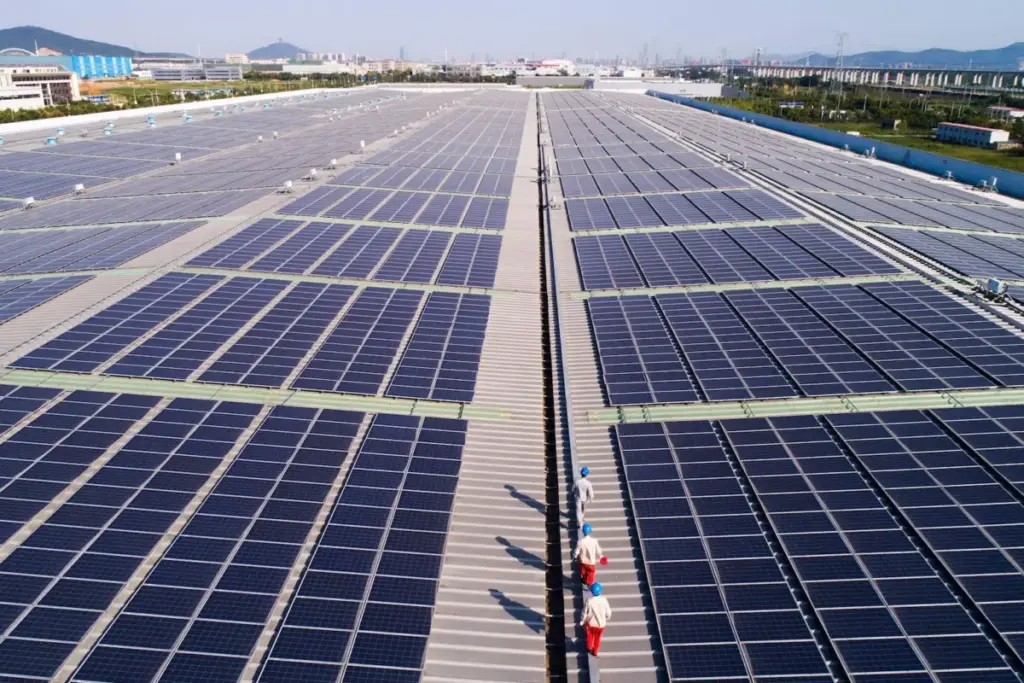
Coal’s role in the power sector will continue migrating from baseload generation to system flexibility and back-up capacity. As solar, wind, and nuclear generation push non-fossil capacity past 50% of the total generation mix, coal-fired plants are being re-engineered to provide peaking power and frequency control, compensating for variable renewable output.
2. Dual-Role Usage: Coal as a Strategic Feedstock
The push to utilize coal equally as a fuel and a chemical feedstock will accelerate. In response to global petro-chemical supply fluctuations, Chinese industrial strategy favors coal-to-chemicals, coal-to-olefins, and coal-to-gas facilities, particularly in resource-rich regions like Shanxi, Inner Mongolia, Shaanxi, and Xinjiang. To reconcile this with climate objectives, the state will incentivise the integration of Carbon Capture, Utilisation, and Storage (CCUS) and zero-carbon green hydrogen into chemical synthesis processes.
With methane identified as a key target for global non-CO2 greenhouse gas mitigation, China’s targets for coalbed methane recovery (26 bcm) and coal mine gas utilization (6.5 bcm)—led heavily by deep-seam exploitation in the Ordos Basin—will serve as testing grounds for industrial methane controls. The deployment of advanced drainage technology will be crucial for meeting these targets.
4. Transition Management for Mining Enterprises
State energy majors and traditional coal enterprises are directed to diversify corporate portfolios into clean energy, power transmission, and advanced materials. Major state-owned operators are establishing dedicated renewable energy units to develop utility-scale solar and wind farms directly on reclaimed mining land, subsidizing their transition and mitigating stranded asset risks.
Summary
Ultimately, the 15th Five-Year Plan for Coal does not attempt an abrupt break from legacy fossil fuels. Instead, it codifies a controlled transition strategy designed to ensure that China’s domestic energy security remains resilient against global economic and geopolitical shocks, even as market forces and renewable expansion move the nation toward its 2030 climate commitments.