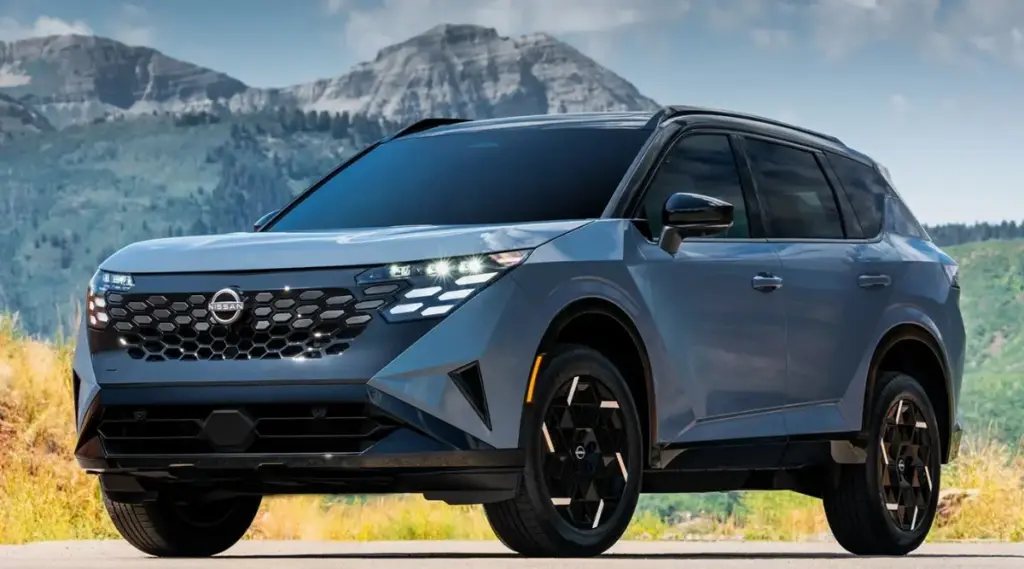
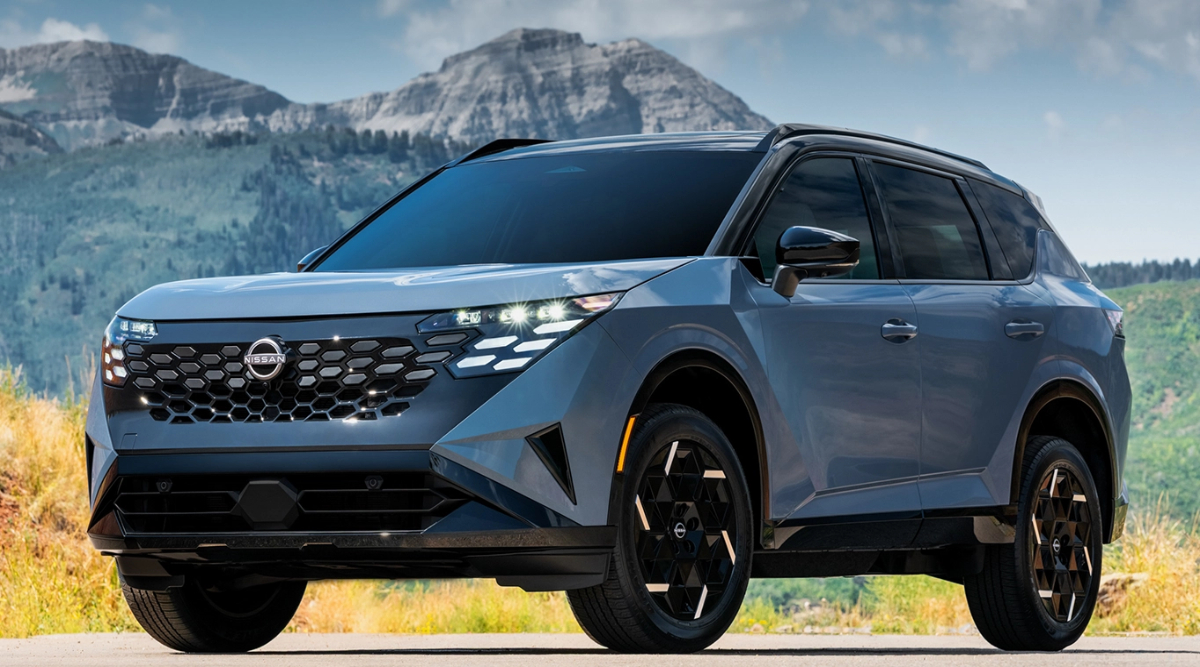
The automotive landscape in the United States is undergoing a convoluted transition. As traditional internal combustion engine (ICE) manufacturers struggle to balance tightening emissions regulations with shifting consumer demands, a new wave of hybrid options has hit the market. Among the most intriguing—and controversial—arrivals is the 2027 Nissan Rogue Hybrid.
Utilizing Nissan’s proprietary e-POWER technology, this vehicle arrives in North America with a premise that sounds remarkably futuristic: an SUV that drives with the instant torque and silent operation of a true electric vehicle (EV), yet never needs to be plugged in. Instead, it relies entirely on a gasoline engine to generate its electricity.
However, beneath the polished marketing terms and sleek interior trims lies a familiar reality: the Rogue Hybrid is, fundamentally, a gasoline-powered vehicle. With industry experts and EV advocates alike scrutinizing the terminology used to describe these powertrains, the launch of the Rogue Hybrid has reignited debates over consumer confusion, greenwashing, and whether series hybrids represent a meaningful bridge to electrification or a costly detour.
Priced competitively between $37,065 and $45,065, the Rogue Hybrid attempts to thread the needle between traditional family hauling and modern EV-like performance. Yet, a closer examination of its specifications reveals a modest battery pack, a reliance on fossil fuels, and performance metrics that require careful unpacking. This report delves into the mechanics, marketing, and real-world implications of Nissan’s new American offering.
Detailed Chronology & Market Context
Nissan’s journey toward introducing the e-POWER system to the United States has been a long time coming, even if the technology itself has experienced widespread adoption globally.
Global Rollout: Nissan has spent several years promoting its e-POWER systems internationally. The company reports that over 4 million vehicles equipped with this technology have been sold across more than 68 countries worldwide.
The US Pivot: While international markets enjoyed e-POWER variants of models like the Qashqai and Note, American consumers were largely shielded from the technology as Nissan focused on its pure EV initiatives (such as the pioneering Leaf) and traditional ICE crossovers. However, softening near-term EV adoption curves and persistent infrastructure gaps prompted Nissan to reconsider its US portfolio, culminating in the announcement of the Rogue Hybrid for the 2027 model year.
Release Schedule: The rollout for the 2027 Nissan Rogue Hybrid is structured in phases. Sales are slated to begin in the fall, starting with the top-tier Rogue Hybrid SR with Tech Package. The remaining trim levels—including the SV, SV Premium, standard SR, and the luxury-focused Platinum—will roll out to dealerships in early 2027.
The introduction of the Rogue Hybrid coincides with a broader market trend: major legacy automakers are diving headfirst into the hybrid space to capture buyers who want improved fuel economy without "range anxiety." Unfortunately, this rush has saturated the marketplace with overlapping terminology. Consumers are increasingly confused by the differences between series hybrids, parallel hybrids, plug-in hybrids (PHEVs), and mild hybrids.
Critics argue that by framing e-POWER vehicles as alternatives that blur the line between gas and electric, manufacturers risk repeating controversial marketing tactics—such as historic attempts by other brands to label standard hybrids as "self-charging electric cars."
Supporting Context & Technical Metrics
To understand how the 2027 Nissan Rogue Hybrid operates, one must look closely at how power is generated, stored, and delivered to the road.
How e-POWER Works: Series vs. Parallel
Unlike conventional hybrid vehicles—which typically utilize a parallel hybrid system featuring a direct mechanical connection from both the gasoline engine and the electric motor(s) to the wheels via a complex transmission—Nissan’s e-POWER is a series hybrid.
In the Rogue Hybrid:
Zero Mechanical Connection: The gasoline engine has absolutely no physical link to the wheels.
The Generator Role: The engine’s sole responsibility is to spin an onboard generator, which in turn feeds electricity directly to the battery pack and electric motors.
Transmission Elimination: Because the electric motors handle all propulsion, the vehicle does not require a traditional multi-speed transmission.
When a driver steps on the accelerator, the Rogue Hybrid responds with the instant torque characteristic of battery-electric vehicles, resulting in a nearly silent and seamless acceleration profile. Nissan has also integrated Smooth Stop, a system that automatically modulates brake pressure at the end of a stop to eliminate head-toss and refine the deceleration experience. Furthermore, the vehicle incorporates e-Pedal functionality, allowing for regenerative braking that captures kinetic energy to harvest electrons as the vehicle slows down.
The Power and Battery Disconnect
Despite its EV-like driving dynamics, the hardware underpinning the system reveals its compromises:
The Engine: Under the hood sits a turbocharged 1.5-liter, three-cylinder gasoline engine. Nissan highlights that this engine achieves an impressive 42 percent thermal efficiency.
The Battery: Buried within the technical specifications is a modest 1.67 kWh battery pack. Compared to historic plug-in hybrids like the Chevrolet Volt—which featured a 17 kWh battery enabling roughly 50 miles of pure electric range—the Rogue Hybrid’s battery is tiny.
Output Realities: The vehicle utilizes dual motors (a front motor producing 202 hp and 242 lb-ft of torque, and a rear motor generating 134 hp and 144 lb-ft of torque). However, total system output does not equal a simple mathematical addition of the two; the available total power peaks at 225 horsepower.
Fuel Economy: Internal testing estimates the Rogue Hybrid will achieve roughly 40 mpg in the city, 36 mpg on the highway, and 38 mpg combined (though official EPA numbers remain pending at the time of publication).
Efficiency Comparison
From a purist standpoint, advocates note that a true battery-electric vehicle operating on the grid is nearly three times more efficient than an internal combustion or series hybrid vehicle, often achieving EPA ratings around 120 MPGe. By contrast, the Rogue Hybrid remains tethered to the gas pump, relying entirely on fossil fuels refined into its 1.5-liter engine.
Trim Pricing Structure
For buyers weighing the financial commitment, Kelley Blue Book outlines the manufacturer’s suggested pricing for the 2027 lineup:
Trim Level & Package
MSRP
2027 Nissan Rogue Hybrid SV
$37,065
2027 Nissan Rogue Hybrid SV w/ SV Premium Package
$39,165
2027 Nissan Rogue Hybrid SR
$39,065
2027 Nissan Rogue Hybrid SR w/ SR Tech Package
$43,065
2027 Nissan Rogue Hybrid Platinum
$45,065
These figures position the Rogue Hybrid safely below the current average transaction price for a new vehicle in the United States, making it an accessible option for buyers seeking modern cabin technology and driver-assistance suites.
Official Statements
Nissan leadership remains bullish on the appeal of the e-POWER architecture, framing it as an ideal bridge for drivers who are curious about electrification but hesitant to commit to plugging in.
Ponz Pandikuthira, Chief Product and Planning Officer for Nissan Americas, emphasized the vehicle’s consumer-centric design in the official product press release:
"The all-new Rogue Hybrid is exactly what customers have been asking for: the functionality, technology, and packaging of a Rogue, now paired with an advanced hybrid powertrain that enhances efficiency while delivering a dynamic driving experience. By listening closely to customers and designing around their needs, we’ve created a hybrid SUV that delivers an agile and spirited driving experience while adding the benefits of a hybrid powertrain. The instantaneous torque delivery, with a quiet and efficient powertrain, will redefine what hybrid means in this segment."
Nissan’s official documentation also stresses features such as automated torque distribution—which continuously adjusts power between the front and rear wheels to optimize traction—and the sophisticated interior tech suites outfitted across the various trim levels.
However, industry analysts and environmental advocates offer a counter-narrative. Critics argue that branding a vehicle that runs strictly on gasoline as offering an "electric vehicle experience" creates unnecessary consumer confusion. They contend that while the drive mimics an EV, the vehicle’s long-term environmental footprint and operational mechanics remain firmly rooted in the fossil-fuel era, utilizing a generation-old series hybrid concept that fails to match the capabilities of historical plug-in hybrids like the Volt.
Future Outlook
The launch of the 2027 Nissan Rogue Hybrid raises important questions about the trajectory of the American automotive market over the next decade. As automakers navigate shifting regulatory frameworks and uneven public charging infrastructure, transition technologies like e-POWER will undoubtedly find a receptive audience among consumers looking to lower their fuel consumption without altering their refueling habits.
For Nissan, the success of the Rogue Hybrid in the US market will serve as a critical litmus test. If American buyers embrace the series hybrid configuration, it could pave the way for other e-POWER models to cross the Pacific.
However, the long-term viability of series hybrids remains contested. As battery manufacturing costs continue to decline and charging networks expand, consumers may increasingly demand vehicles with true plug-in capabilities or zero-emission tailpipes.
Ultimately, the 2027 Nissan Rogue Hybrid offers an intriguing drive, a comfortable interior, and respectable fuel economy figures. Whether it represents a revolutionary step forward or an expensive marketing exercise depends entirely on what buyers expect from their vehicles. For consumers who understand its nature—a gas-burning car wrapped in an electric driving sensation—it represents a compelling new choice in the crowded compact SUV segment. For EV purists, it remains a reminder of how difficult the industry’s path to complete decarbonization truly is.