

Executive Overview
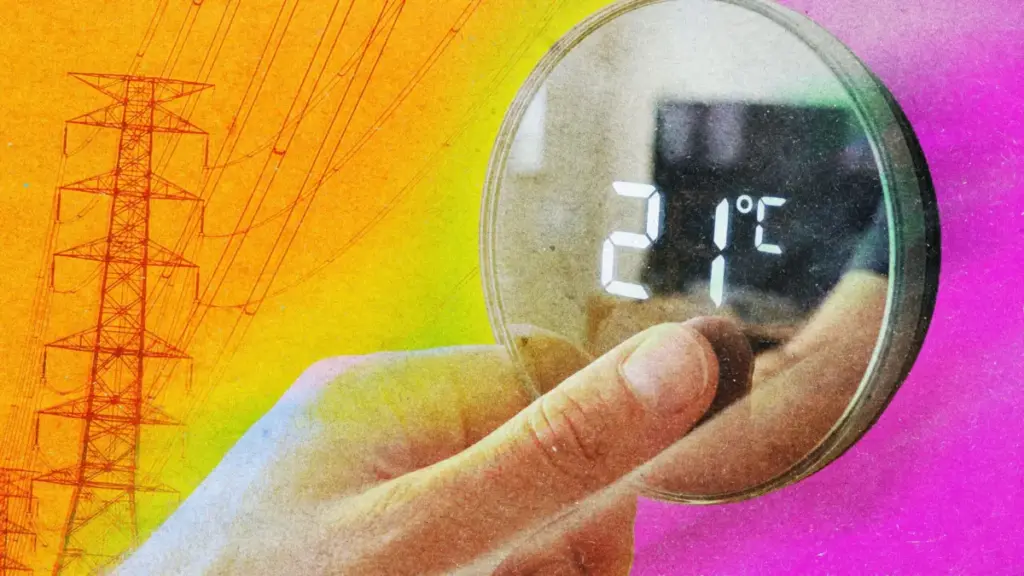
To the casual observer, a modern suburban home looks remarkably conventional. The HVAC system hums quietly in the utility closet, a smart thermostat glows softly from the hallway wall, and an electric vehicle rests plugged into the garage charger. Yet, across the United States and increasingly on a global scale, utility companies and energy grid operators are beginning to view these ordinary household appliances through a radically different lens. To them, your home is no longer merely a passive consumer of electricity; it is a vital, responsive building block of a Virtual Power Plant (VPP).
A virtual power plant is not a physical facility with towering smokestacks or sprawling solar farms. Instead, it is a sophisticated, software-orchestrated network of distributed energy resources—ranging from smart thermostats and home batteries to electric-vehicle (EV) chargers and rooftop solar panels. When millions of these devices are aggregated and coordinated by utilities, they can be commanded to draw less electricity during periods of peak demand, or even feed stored energy back into the local grid. The cumulative effect of these micro-adjustments is astonishingly profound, yielding a flexible capacity equivalent to firing up a massive, traditional fossil-fuel or nuclear power plant, but without the carbon emissions or multi-million-dollar infrastructure costs.
As the energy transition accelerates, VPPs have evolved from an experimental concept into a critical frontline defense against grid instability. With major technology titans like Google heavily investing in VPP architecture to power energy-hungry data centers, and with more than 500 active programs spanning the United States alone, consumer participation is surging. Last year alone, an estimated 4 million households with smart thermostats were enrolled in VPP initiatives.
However, transitioning millions of homes into a decentralized energy network is not without its friction points. Questions surrounding data privacy, equity of access, grid forecasting accuracy, and the daily inconvenience of lifestyle flexibility remain top of mind for energy economists and consumer advocates alike. This comprehensive guide explores the mechanics of virtual power plants, the economic incentives driving consumer adoption, the inherent trade-offs, and a practical framework to help homeowners determine whether joining a VPP is right for them.
Detailed Chronology: The Evolution of Demand-Side Energy Management
The conceptual roots of virtual power plants stretch back decades, evolving alongside the deregulation of electricity markets and the proliferation of digital microprocessors. To understand how we arrived at an era where a software platform can throttle your home’s heating and cooling system in real-time, it is helpful to trace the chronological milestones of demand-side energy management.
The Era of Passive Consumption (Pre-2000s)
For most of the 20th century, the electricity grid operated on a rigid, top-down paradigm. Power plants—primarily fueled by coal, natural gas, hydroelectric dams, or nuclear fission—generated electricity to meet demand instantaneously. Because electricity cannot be easily or cheaply stored at scale, utilities built massive excess generation capacity just to handle brief, unpredictable spikes in demand, such as a severe summer heatwave when millions of air conditioners roared to life simultaneously. Consumers were entirely passive participants; they consumed power whenever they flipped a switch, paying flat or tiered rates that bore little resemblance to the actual, volatile cost of generation at that exact second.
The Birth of Demand Response (2000s–2010s)
As grids aged and environmental regulations tightened, building new peaker power plants—plants that only run during peak demand hours—became economically and politically untenable. Utilities began experimenting with rudimentary "demand response" programs. These early iterations typically targeted large industrial and commercial facilities, offering them financial incentives to temporarily shut down operations or fire up on-site diesel generators when the grid strained under heavy loads.
By the late 2000s and early 2010s, the advent of the connected home began to change the landscape. The introduction of programmable and smart thermostats (such as early iterations of Nest) allowed utilities to experiment with residential demand response. These programs were blunt instruments: utilities would send a mass signal to thousands of homes, nudging temperatures up by two or three degrees during peak hours to shed load.
The Rise of Distributed Energy Resources (2015–2020)
The past decade witnessed an exponential boom in the adoption of distributed energy resources (DERs) behind the meter. Rooftop solar panels became mainstream, lithium-ion home battery systems (like the Tesla Powerwall) dropped in price, and electric vehicles transitioned from a luxury novelty to a rapidly expanding market segment.
Suddenly, millions of households were no longer just consuming power; they were generating and storing it. Forward-thinking software companies recognized that managing these disparate assets individually was inefficient. By developing cloud-based aggregation platforms, firms like EnergyHub and ChargeScape bridged the gap between legacy utility infrastructure and modern smart-home hardware, laying the operational foundation for true virtual power plants.
Mainstream Integration and Big Tech Investment (2020–Present)
Today, VPPs have entered the mainstream corporate and regulatory lexicon. Regulators in regions like California, Texas, New England, and the Mid-Atlantic actively look to VPPs as an alternative to expensive, carbon-intensive grid upgrades. Furthermore, the explosion of artificial intelligence and cloud computing has driven an unprecedented surge in electricity demand from data centers. Tech giants like Google are now injecting capital directly into VPP technologies, recognizing that aggregating household flexibility is one of the fastest, cleanest ways to stabilize the grid and power their facilities. What began as a niche utility experiment is now a cornerstone of modern energy policy.
Supporting Context & Metrics: The Scale and Economics of VPPs
To fully grasp why utilities are so eager to convert your living room thermostat and garage charger into grid assets, one must examine the underlying metrics and economic mechanics of virtual power plants.
The Power of Aggregation
Individually, the amount of power a utility throttles in a single home during a demand response event is negligible. Delaying an EV charge by an hour or cycling a central air conditioner off for fifteen minutes saves mere fractions of a megawatt-hour. However, math changes radically at scale.
According to Seth Frader-Thompson, CEO and co-founder of EnergyHub, aggregating hundreds of thousands or millions of connected devices generates an instantaneous load reduction that rivals or exceeds the output of a traditional peaking power plant. "When you put it together at the scale of hundreds of thousands, or millions, it has a pretty profound impact," Frader-Thompson notes.
Financial Incentives for Consumers
Utilities do not commandeer household devices for free; participation is entirely voluntary and incentivized through a tiered structure of rewards:
- Smart Thermostats: These represent the lowest barrier to entry. Initial signup bonuses typically range from $50 to $150, accompanied by annual performance or participation rewards of $25 to $50.
- Home Batteries and EV Chargers: Because these assets involve significantly greater electrical capacity and hardware investment, participating in advanced battery-to-grid or managed charging programs can yield hundreds or even thousands of dollars in annual savings, bill credits, or free charging incentives.
Regional Distribution and Growth
As of recent industry tracking, more than 500 distinct VPP programs operate across the United States. Geographic distribution heavily favors regions characterized by high renewable energy penetration, stressed grid infrastructure, supportive state regulations, and a high density of smart devices. Consequently, states like California and Texas, alongside the New England power pool, lead the nation in active deployments.
Despite this rapid growth, experts emphasize that the ecosystem is still maturing. Severin Borenstein, faculty director of UC Berkeley’s Energy Institute at Haas and a member of the board of governors of the California Independent System Operator (CAISO), points out that poorly designed programs can introduce market inefficiencies. If a utility miscalculates baseline energy usage, it might inadvertently pay consumers for curtailing energy they never intended to use in the first place, inadvertently inflating electricity bills for non-participating ratepayers. Conversely, Borenstein emphasizes that "if we do it well, I think it can really be a benefit," helping society bypass multi-billion-dollar transmission upgrades and emergency rolling blackouts.
Official Statements and Expert Perspectives
Navigating the transition toward decentralized energy requires balancing the optimistic projections of software developers against the cautious oversight of academic researchers and grid operators. Below is a synthesized overview of key insights from leading voices in the energy sector:
- On Grid Impact and Decarbonization:
Seth Frader-Thompson (CEO, EnergyHub) emphasizes the unique moral and environmental value proposition of VPP participation: "There are not that many things that you can do that directly contribute to decarbonizing the electric supply, or to improving affordability, or to improving reliability, and this is just a clearly effective way to do that. And you get paid for it." - On Technical Simplicity and User Experience:
Joseph Vellone (CEO, ChargeScape) highlights how automakers and software platforms are streamlining enrollment for EV owners. According to Vellone, modern integrations allow drivers to review terms and enroll in managed charging programs with "a click of a button" inside their native vehicle companion apps, utilizing data focused strictly on "the physics and the energy of the asset itself." - On Socioeconomic Equity and Household Flexibility:
Sanya Carley (Professor at the University of Pennsylvania and Faculty Director of the Climate Center for Energy Policy) sounds a note of caution regarding the accessibility of these programs. Carley points out that households working irregular night shifts, managing complex caregiving responsibilities, dealing with chronic health needs, or those who are already aggressively conserving energy out of financial necessity often "do not have the flexibility to engage in one of these programs." Without careful policy design, VPPs risk disproportionately rewarding affluent homeowners who own expensive EVs and home batteries while leaving lower-income populations behind.
Future Outlook: The Road Ahead for Virtual Power Plants
Looking toward the horizon, the trajectory of virtual power plants points toward deeper automation, bidirectional energy flows, and broader market integration.
The most prominent frontier in VPP evolution is Vehicle-to-Grid (V2G) technology. While the vast majority of consumer VPPs today operate on a unidirectional basis—meaning they simply pause or slow down energy consumption (such as delaying an EV charge)—V2G systems enable electric vehicles to actively push stored energy back into the home or the grid during emergencies. As EV adoption scales and bidirectional charging hardware becomes standardized, consumers will transition from mere load-shedders to active energy traders, capable of arbitrage during high-priced peak hours.
Furthermore, artificial intelligence and machine learning will revolutionize how aggregators predict weather patterns, human behavior, and grid constraints. Algorithms will anticipate when a heatwave will strain local transformers and micro-adjust thousands of smart water heaters, pool pumps, and refrigerators preemptively, smoothing out demand curves before grid operators even notice a spike.
However, realizing this utopian vision will require robust regulatory frameworks. Policymakers must establish strict data privacy guidelines to ensure that granular smart-home data—such as occupancy patterns, sleeping habits, and appliance usage—cannot be exploited by third-party advertisers or compromised by cyberattacks. Additionally, equitable program designs must ensure that renters, multi-family housing residents, and lower-income communities have access to the hardware subsidies necessary to participate.
Step-by-Step Guide: How to Sign Up and Determine if a VPP is Right for You
If you are a homeowner or renter equipped with smart home technology and wish to monetize your appliances while supporting grid resilience, follow this practical four-step evaluation process.
Step 1: Check Compatibility and Discover Programs
Finding a VPP program requires a bit of detective work, as utility companies rarely use the exact phrase "virtual power plant" in their consumer-facing marketing.
- Search Your Utility Website: Look beyond the obvious terminology. Search your utility’s portal alongside keywords such as demand response, peak rewards, connected solutions, battery storage, smart thermostat rewards, managed charging, or bring your own device (BYOD).
- Check Device Manufacturers: According to Seth Frader-Thompson, most consumers do not discover VPPs through their utility bills; they find them through device apps. Open your smart thermostat application (e.g., Google Nest, Ecobee), your EV manufacturer app, or your solar/battery inverter app to see if promotional banners or enrollment invitations are waiting in your notifications or email inbox.
- Verify Eligibility: Be prepared for hyper-specific requirements. A thermostat program may demand an approved Wi-Fi model; an EV program may hinge on your specific automaker, charger brand, utility territory, or time-of-use rate plan; and a battery program will depend heavily on your inverter type and installer compatibility.
Step 2: Assess Your Household’s Flexibility
Before committing to any program, honestly evaluate whether your daily routine can tolerate a software platform occasionally tweaking your home environment.
- Evaluate the Inconvenience: If your EV sits plugged in for ten hours overnight but only requires three hours to achieve a full charge, shifting that charging window via a VPP will be entirely invisible to you. Conversely, if your schedule is erratic, you work unconventional hours, or you run a home healthcare setup, letting a utility override your HVAC settings during peak hours may cause unacceptable discomfort.
- Weigh Battery Dynamics: If you own a home battery system, investigate how frequent cycling for grid support might impact your equipment warranty and how much emergency backup power is guaranteed to remain untouched in the event of an unexpected storm outage.
Step 3: Review Opt-Out Rules and Data Privacy Policies
Never sign an agreement without reading the fine print regarding your consumer rights and digital footprint.
- Check the Override Mechanism: Reputable VPP programs always grant participants the absolute right to "opt out" on an ad-hoc basis. Can you easily override a thermostat adjustment if you are hosting guests? Can you command your EV to charge immediately if you need to embark on an unexpected road trip? Ensure the opt-out process is frictionless.
- Interrogate Data Usage: Understand where your data is flowing. Smart devices generate granular insights regarding when you wake up, when you sleep, and when you are away from home. Ensure your utility and software providers anonymize and restrict data usage strictly to grid operations rather than commercial profiling.
Step 4: Evaluate the Financial Compensation
Finally, weigh the financial rewards against the constraints. Compensation structures vary widely, manifesting as upfront signup bonuses, gift cards, monthly bill credits, discounted hardware purchases, free charging sessions, or annual performance payouts.
Ultimately, the best VPP program is not necessarily the one that boasts the highest cash payout. It is the one that offers complete transparency regarding what it controls, provides effortless opt-out mechanisms, respects your personal privacy, and genuinely aligns with your community’s long-term clean energy goals. Your home may never look like a traditional power plant—but with the right smart devices working quietly in the background, it can act like an indispensable piece of one.



