Executive Overview
The modern global tourism industry stands at a critical moral and ecological crossroads. From the windswept, glacial ridges of Mount Everest to the pitch-black abyss of the Mariana Trench, human wanderlust has effectively left no geographic stone unturned. Travelers are continually drawn to the magnetic pull of the natural world: watching vast herds of elephants roam the golden expanse of the Serengeti, absorbing centuries-old forest preservation traditions from indigenous communities deep within the Amazon Basin, or marveling at the kaleidoscopic marine biodiversity housed within the Coral Triangle.
In theory, ecotourism offers a symbiotic mechanism to witness these wonders while simultaneously funding their long-term preservation. By translating natural beauty into economic capital for local stewardship, travelers can ostensibly protect the very environments they cross oceans to see.
Yet, over the past decade, "ecotourism" has devolved into a ubiquitous corporate buzzword—a hollow marketing prefix slapped onto virtually any vacation that features an outdoor element or a green-tinted logo. This linguistic dilution enables pervasive "greenwashing," masking operations that actively disrupt local wildlife corridors, degrade fragile habitats, and exploit indigenous cultures. When commercial enterprises brand a standard wilderness excursion as "ecotouristic" simply because it occurs outdoors, they obscure the rigorous operational standards required to protect these ecosystems.
This raises an urgent, foundational question: What is ecotourism, really?
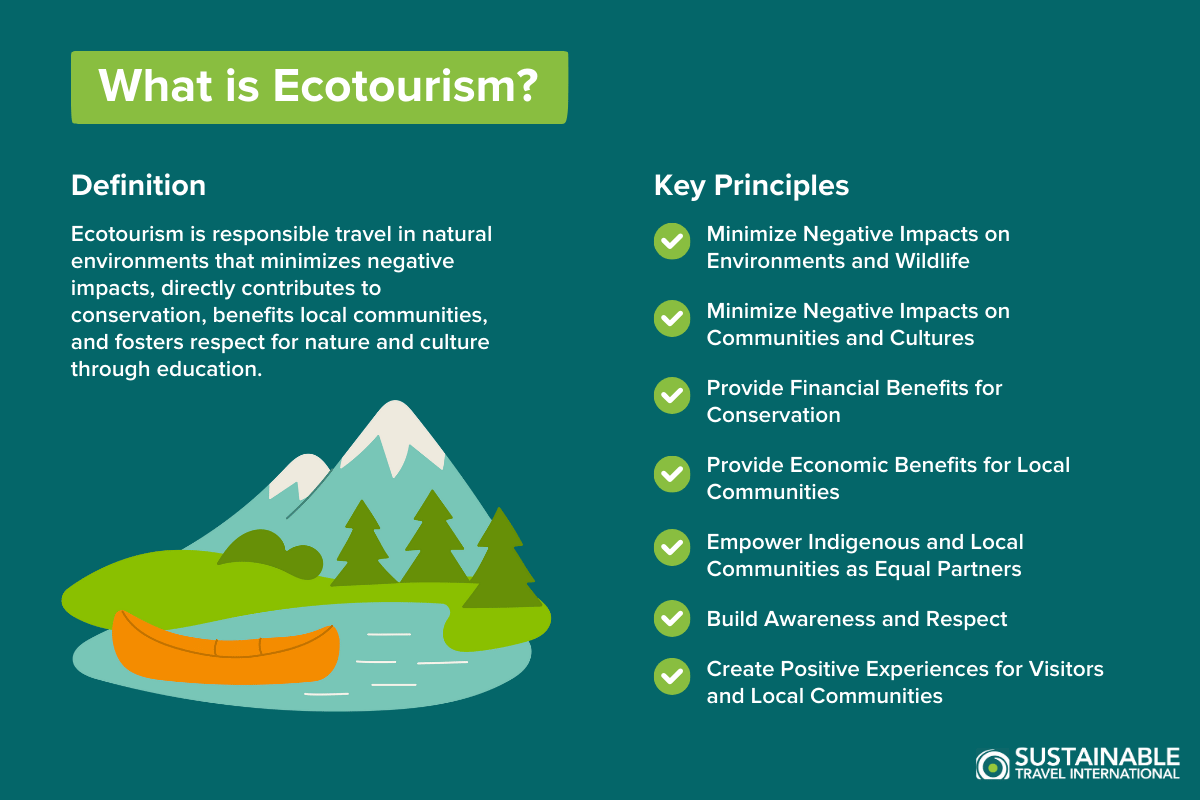
True ecotourism is not merely about passively occupying natural spaces. At its core, genuine ecotourism is a deliberate, highly structured form of responsible travel to natural areas that actively prioritizes environmental conservation, safeguards the socio-economic welfare of host communities, and fosters a profound, educational appreciation for unique landscapes and cultures.
As the industry navigates a post-pandemic surge in global mobility, distinguishing between authentic, regenerative ecotourism and superficial nature travel has never been more critical. This comprehensive investigative guide explores the definitive meaning of ecotourism, its historical evolution, its core operational principles, and how visionary destinations from Costa Rica to Kenya are proving that tourism can be an active force for planetary healing.
Detailed Chronology: The Genesis and Evolution of Ecotourism
To understand where ecotourism is heading, one must trace its intellectual and structural origins. While the impulse to protect nature while traveling has deep roots, the formalization of ecotourism as a distinct socio-economic discipline is a relatively recent development.
The 1980s: Conception and Definition
The term "ecotourism" was formally coined and conceptualized in the mid-1980s by the pioneering Mexican architect, environmentalist, and academic Héctor Ceballos-Lascuráin. At a time when mass tourism development frequently meant paving over pristine coastlines and displacing local wildlife for concrete resorts, Ceballos-Lascuráin introduced a transformative alternative. He defined ecotourism as low-impact travel to relatively undisturbed natural areas with the specific objective of studying, admiring, and enjoying the scenery and its wild plants and animals, while simultaneously promoting active socio-economic involvement and protection of local populations.
Ceballos-Lascuráin’s vision was disarmingly simple yet radically effective: outdoor activities such as birdwatching, hiking, and botanical study could provide sustainable, non-extractive livelihoods for local populations, thereby replacing destructive industries like logging, poaching, or slash-and-burn agriculture without degrading the ecological assets upon which those livelihoods depended.
The 1990s: Mainstreaming and Global Discourse
Throughout the 1990s, as global awareness of climate change and environmental degradation accelerated, sustainability moved from the fringes of political discourse to center stage. International bodies began recognizing that unbridled economic development was incompatible with planetary survival. Ecotourism emerged during this decade as a vanguard sector, transitioning from academic theory into localized pilot projects across Latin America, Africa, and Southeast Asia. Governments began to realize that protected areas could generate self-sustaining revenue streams through specialized, low-impact visitor programs rather than relying solely on heavily constrained state budgets.
2002: United Nations Recognition
A monumental milestone arrived in 2002, which the United Nations designated as the International Year of Ecotourism. Culminating in the World Ecotourism Summit in Québec, Canada—where delegates from over 130 countries gathered—the UN officially codified ecotourism as a vital driver of sustainable development. This global endorsement elevated ecotourism from a niche hobby for backpackers into a recognized, strategic tool for poverty alleviation and biodiversity conservation, prompting nations worldwide to integrate ecotourism frameworks into their national development strategies.
The Modern Era (2010s–Present): Market Explosion and Accountability
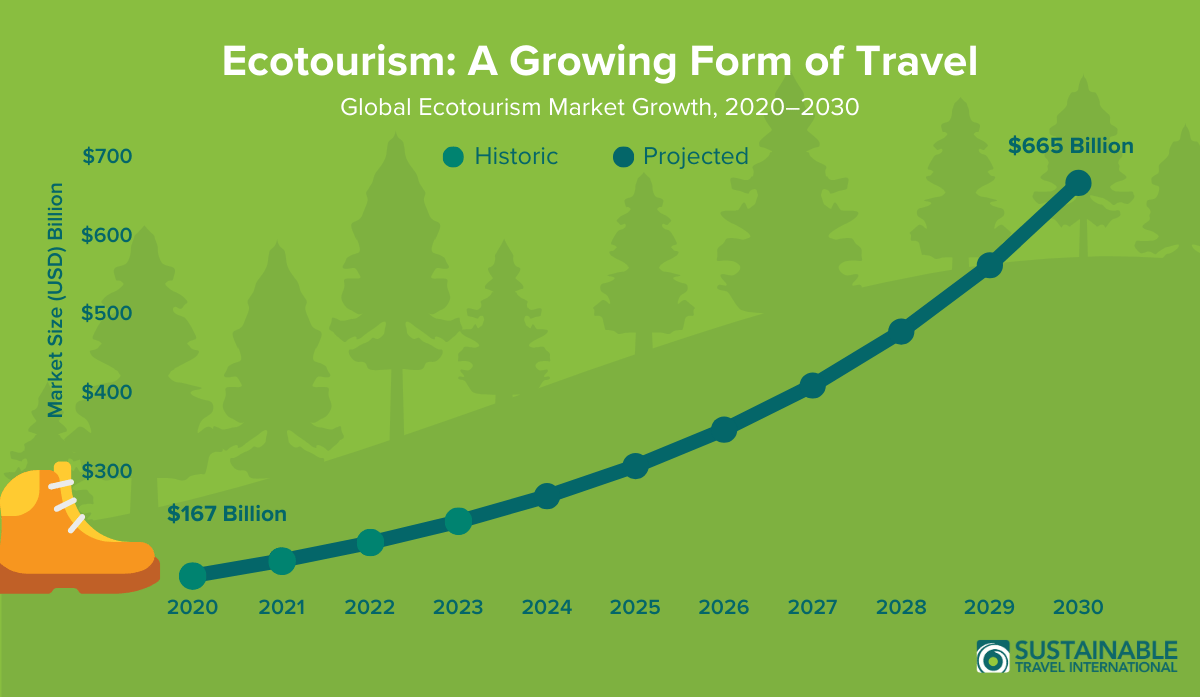
Today, ecotourism stands as one of the fastest-growing sectors within the global tourism economy. Driven by a conscious demographic of travelers who prioritize ethical consumption and environmental integrity, the global ecotourism market is projected to skyrocket, surpassing $665 billion by 2030. This exponential growth reflects a profound cultural shift: travelers are increasingly demanding transparency, seeking out experiences that not only minimize their carbon footprint but actively regenerate the destinations they visit.
Supporting Context & Metrics: The Imperative for Responsible Travel
Many of the planet’s most visually breathtaking and psychologically inspiring tourism destinations are simultaneously home to its most fragile ecosystems. In Costa Rica, lush rainforests pulse with unmatched biodiversity, sheltering endangered species such as Baird’s tapirs and resplendent quetzals. In Raja Ampat, Indonesia, vibrant coral reefs face relentless thermal stress induced by warming ocean temperatures and changing chemical compositions.
When travel is conducted without oversight, it leaves an indelible, often damaging imprint. While well-managed tourism can inject critical capital into conservation and community empowerment, unchecked growth inevitably triggers the destructive phenomenon known as overtourism. Overcrowding, improper waste management, habitat fragmentation, and the commodification of local cultures can leave permanent scars on the very landscapes travelers journey thousands of miles to admire.
Defining the Pillars: Ecotourism, Sustainable Tourism, and Nature Tourism
To navigate the modern travel landscape, industry professionals and consumers must untangle three terms that are frequently—and erroneously—used interchangeably:
- Nature Tourism: This category describes where travel takes place. Nature tourism encompasses any recreational activity that depends on or occurs within natural environments, such as hiking a national park, skiing down a mountain resort, or sunbathing on a tropical beach. Crucially, nature tourism is not inherently sustainable; unmanaged nature tourism can easily result in severe habitat degradation, wildlife harassment, and resource depletion.
- Sustainable Tourism: This framework focuses on how travel is conducted. Sustainable tourism is a broad, cross-cutting concept aimed at balancing economic viability, community well-being, environmental health, and visitor satisfaction across any destination—whether it is a remote rainforest lodge, an urban metropolis, or a bustling industrial city. It governs practices such as renewable energy adoption in museums, fair labor standards in urban hotels, and comprehensive municipal waste reduction.
- Ecotourism: Ecotourism sits squarely at the intersection of nature and sustainability, but with a heightened, specialized mandate. It is defined as responsible travel specifically within natural environments that actively minimizes negative impacts, directly contributes to ongoing conservation finance, enriches local communities, and fosters deep-seated respect for nature and culture through immersive education.
Furthermore, the industry is increasingly moving toward regenerative travel—a paradigm that goes beyond merely "doing no harm" to actively restoring and enhancing the biological and social fabric of a destination, ensuring that visitors leave the community and ecosystem demonstrably healthier than they found it.
Official Statements and Global Frameworks
The definition of ecotourism utilized by leading international authorities is not arbitrary; it is synthesized from the core principles established by the world’s most respected conservation and tourism governance institutions.
Major global organizations—including The International Ecotourism Society (TIES), the International Union for Conservation of Nature (IUCN), the Global Ecotourism Network (GEN), and UN Tourism (formerly the World Tourism Organization)—unanimously emphasize that true ecotourism must adhere to a strict ethical framework.
According to these governing bodies, a legitimate ecotourism initiative must integrate the following operational pillars:
- Biological Conservation: Direct financial and operational contributions to the protection of flora, fauna, and fragile habitats.
- Community Empowerment: Direct socio-economic benefits, democratic participation, and decision-making power granted to local and indigenous populations.
- Environmental Interpretation and Education: Programs designed to instill both visitors and hosts with a deeper understanding of local ecology and cultural heritage.
- Low-Impact Infrastructure: Strict adherence to sustainable architecture, renewable energy, water conservation, and zero-waste protocols.
Ecotourism in Practice: Global Case Studies
Theory transforms into powerful reality when examined through the lens of successful, ground-level execution. Around the world, pioneering nations and localized initiatives are demonstrating how ecotourism can save ecosystems from destruction while uplifting human lives.
Costa Rica: The Pioneer of Biodiversity Preservation
When discussing global ecotourism, Costa Rica is universally recognized as the gold standard. The Central American nation has systematically converted its staggering biodiversity—housing roughly 5% of the world’s total species—into both a national economic asset and an educational masterclass.
Over a quarter of Costa Rica’s land territory is officially protected within a robust network of national parks, biological reserves, and wildlife refuges. Moreover, Costa Rica pioneered one of the world’s earliest and most rigorous governmental sustainability initiatives: the Certification for Sustainable Tourism (CST), which now governs more than 400 certified businesses. This standard evaluates companies on everything from waste management to socio-economic integration with local towns.
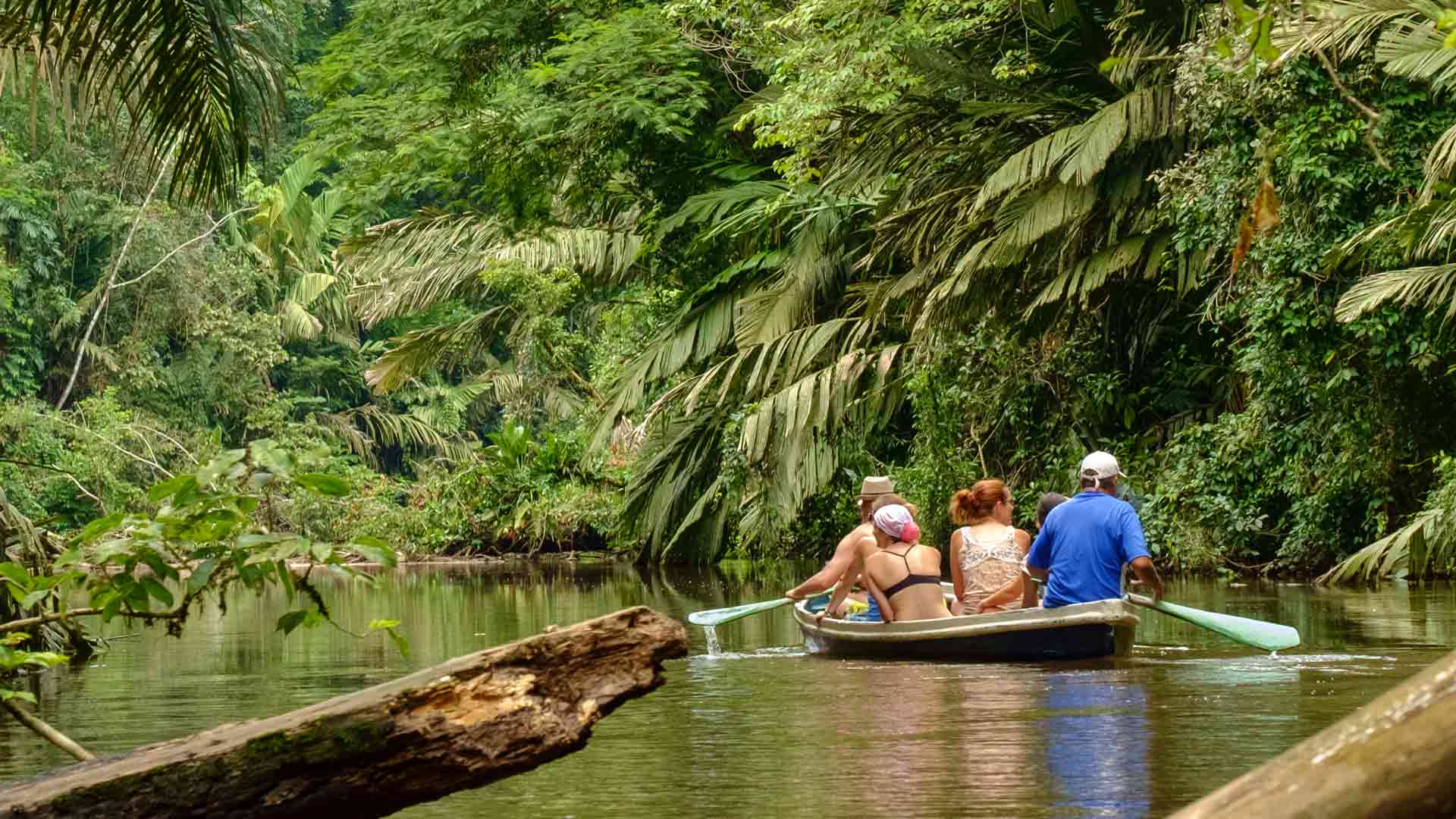
In practice, this looks like expert-led, specialized birdwatching excursions in the cloud forests of Monteverde, where local families manage private reserves funded directly by visitor permit fees. In Tortuguero, community-led sea turtle monitoring programs transform former poachers into dedicated conservation rangers, utilizing tourism revenue to fund nightly beach patrols that safeguard endangered nesting turtles.
Raja Ampat, Indonesia: Marine Conservation in the Coral Triangle
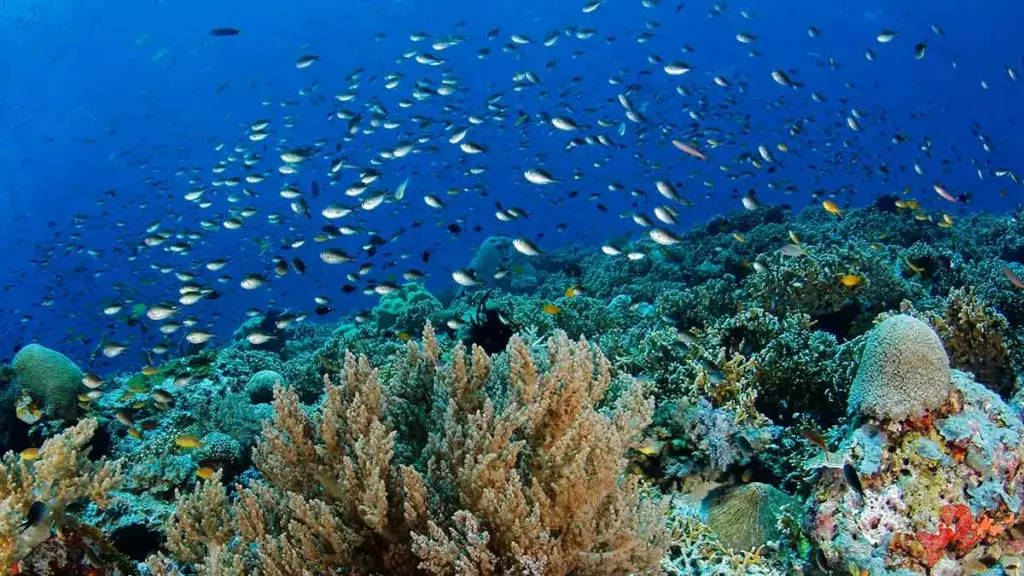
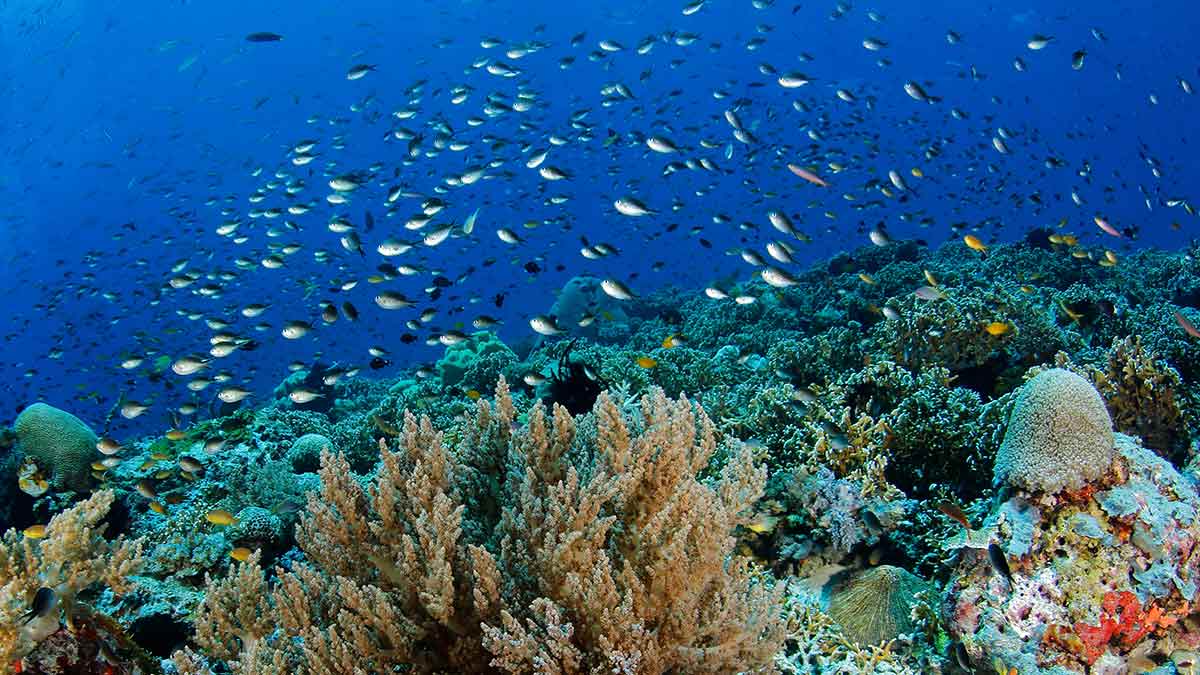
In the eastern reaches of Indonesia lies the Raja Ampat archipelago, situated directly in the heart of the Coral Triangle—widely celebrated as the "Amazon of the Seas." Its crystalline waters harbor an astonishing 1,700 species of fish and an estimated 76% of all known coral species on Earth.
Here, ecotourism serves as the primary financial engine maintaining marine protected areas that span more than 4.9 million acres (2 million hectares). A prime example is the Misool Foundation on a private island in southern Raja Ampat. Misool operates a conservation-focused dive resort that successfully established a vast, privately managed no-take marine reserve.
By channeling 100% of its tourism revenue and philanthropic donations into local conservation enforcement, Misool has achieved staggering ecological recovery. In a region historically plagued by destructive dynamite fishing and brutal shark fining, fish biomass within the reserve has surged by over 250%, reef shark populations have multiplied twenty-fivefold, and overall live coral cover has expanded by 60%.
Bhutan: High Value, Low Impact
The Kingdom of Bhutan has long charted its own unique developmental course, famously measuring national success not by Gross Domestic Product, but by Gross National Happiness. This philosophy extends directly into its tourism policy via a strict "High Value, Low Impact" model.
Through partnerships such as the UNDP Biodiversity Finance Initiative (BIOFIN), Bhutan utilizes sustainable adventure tourism—including regulated river rafting—as a multifaceted tool for environmental defense. Certified river guides are trained to act as active environmental monitors, patrolling waterways to intercept illegal poaching, remove accumulated waste, and protect critically endangered avian species such as the white-bellied heron.
Kenya: Community Conservancies and Wildlife Coexistence
Kenya stands as the undisputed birthplace of community-based conservation in Africa and was the first nation on the continent to establish a national ecotourism society. Today, Kenya boasts more than 200 community-owned conservancies protecting nearly two-thirds of the country’s large mammal populations that reside outside formal state-run national parks.
At conservancies like the LUMO Community Wildlife Conservancy, multiple local ranching communities have voluntarily united to protect vital migratory wildlife corridors while continuing to sustainably graze their livestock. Degraded rangelands have remarkably rebounded, once again supporting healthy populations of elephants, cheetahs, and rare antelopes. Tourism revenue generated from guided walking safaris, cultural exchanges, and tented camps directly funds community clinics, local school scholarships, and secure employment, proving to local stakeholders that living alongside wildlife is far more profitable than destroying it.
Future Outlook: The Path Ahead for Conscious Travel
As the global ecotourism market races toward its projected 2030 valuation, the industry faces an existential challenge. Unchecked scaling risks diluting the very tenets that make ecotourism successful, turning conservation areas into theme parks and treating community empowerment as an afterthought.
However, the proliferation of strict international certifications, community-owned land models, and rising consumer demand for radical transparency suggest a more promising trajectory. Ecotourism is evolving from a specialized travel niche into an essential blueprint for global land management and economic resilience.
For travelers, navigating this landscape requires active due diligence: looking past greenwashed marketing to research tour operators, verify local community partnerships, and support enterprises that demonstrably funnel revenue back into ecological defense. For industry professionals, adopting rigorous, impact-driven design checklists is no longer optional—it is the baseline requirement for operating in a warming, resource-constrained world.
Ultimately, true ecotourism reminds us that travel is a profound privilege. When approached with humility, accountability, and a commitment to reciprocity, exploring the natural world ceases to be an act of consumption and becomes one of the most powerful tools we have to protect it.