

Executive Overview
Water sustains every known biological process, structuring cellular frameworks, shuttling vital nutrients, and facilitating the complex biochemistry necessary for life. Yet, while water universally unites the natural world, it simultaneously serves as one of the most profound geopolitical, social, and physical dividers in human history.
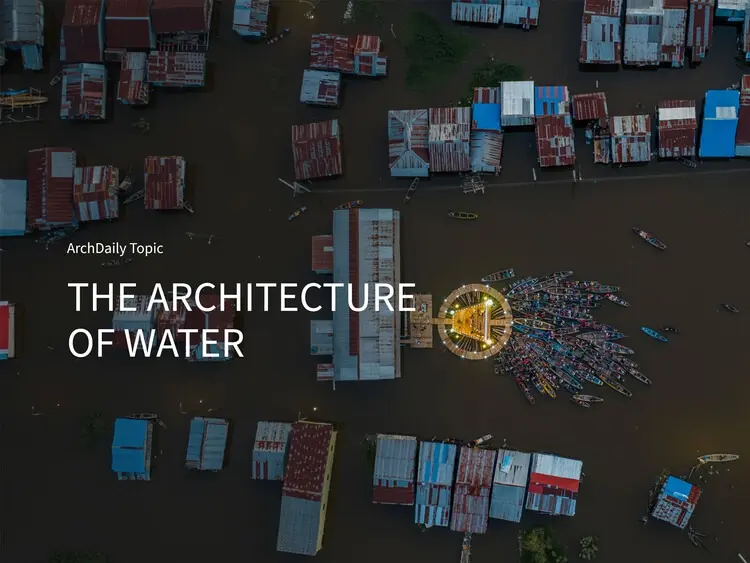
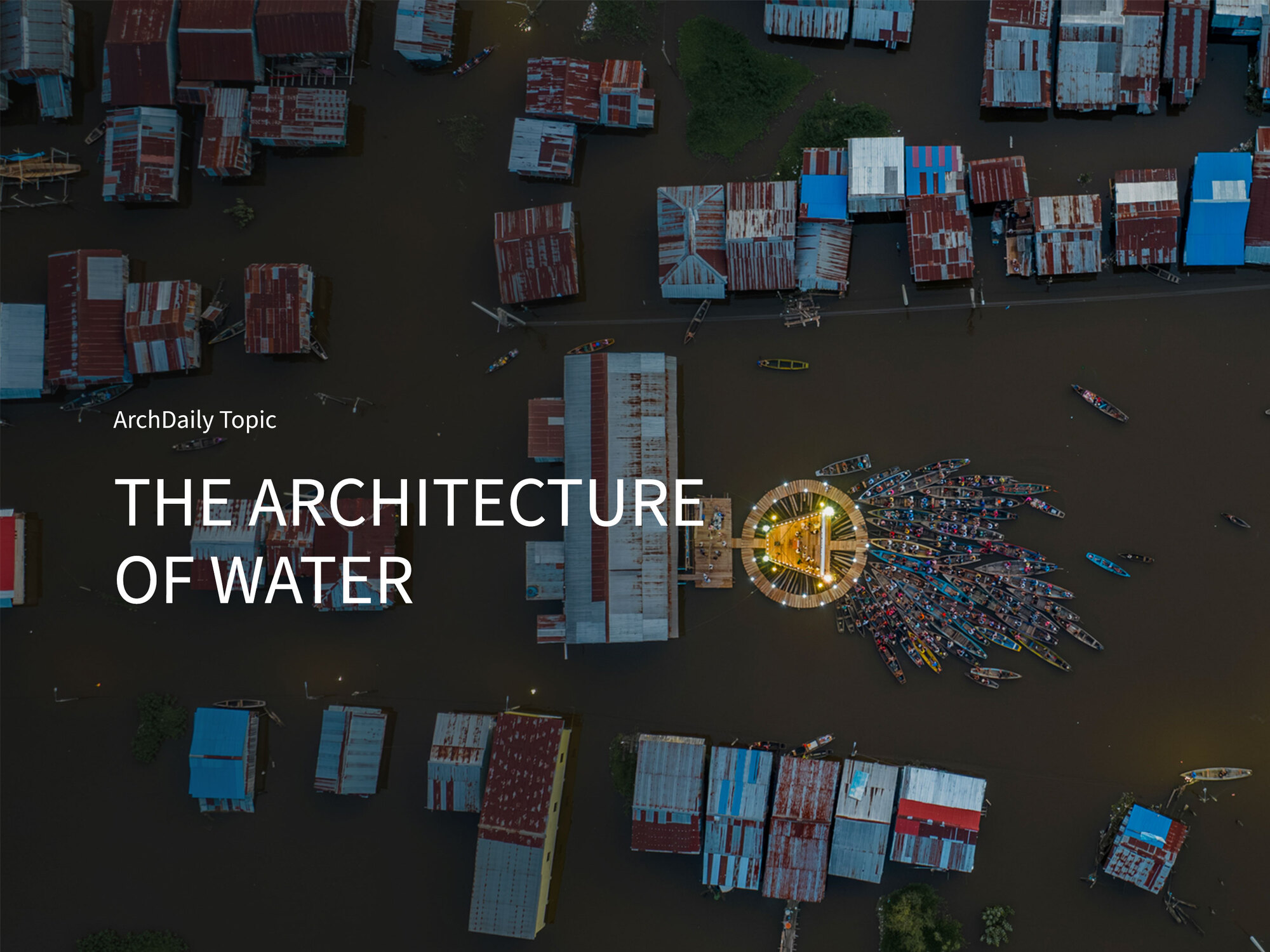
As part of its ongoing exploration of critical global issues, ArchDaily has dedicated its editorial focus to "The Architecture of Water: Territories, Tensions & Transformations." Launched in October 2026, this month-long thematic deep-dive examines how humanity’s relationship with water is rapidly shifting. From the rising seas swallowing low-lying coastal mega-cities to the geopolitical flashpoints of maritime straits and the humanitarian crises playing out across treacherous open waters, architecture and urban design can no longer afford to treat water as a mere resource to be controlled. Instead, designers, planners, and policymakers are being forced to rethink water as a dynamic, sovereign entity—a commons to be shared, respected, and integrated into the built environment through regenerative frameworks.
Detailed Chronology: A History of Human Intervention and Current Realities
To understand the urgency of contemporary aquatic architecture, one must trace the historical trajectory of how human settlements have interacted with hydrological systems over millennia.
From River Valleys to Coastal Megacities
Human civilization has always gravitated toward water. The earliest agrarian societies flourished along the predictable, life-giving floodplains of major river systems—the Tigris and Euphrates, the Nile, the Indus, and the Yellow River. These early civilizations engineered the first rudimentary canals, dikes, and irrigation channels, proving that the management of water was inextricably linked to the rise of political power and social hierarchy.
Over centuries, this relationship evolved. Industrialization shifted population centers toward major trade routes and coastlines. Today, a staggering proportion of the world’s largest cities and economic powerhouses sit precariously at the water’s edge. For generations, the prevailing architectural and engineering paradigm was one of aggressive mastery: building concrete seawalls, straightening natural rivers into concrete sluices, and reclaiming land from the sea through intensive dredging and infill projects.
The Turning Point: Climate Realities and Geopolitical Friction
Entering the mid-2020s, the illusion of total hydrological control has fundamentally shattered. Climate change has accelerated sea-level rise, intensified extreme weather events, and made severe, unpredictable flooding an existential threat. Ironically, the worst impacts are increasingly borne by developing nations that have historically contributed the least to global greenhouse gas emissions, exposing deep global inequities.
At the same time, water has taken center stage in modern geopolitics. The Mediterranean Sea continues to serve as a deadly frontier for thousands of migrants fleeing North Africa, transforming open water into a contested political barrier. Meanwhile, critical maritime chokepoints—such as the Strait of Hormuz, which historically handled roughly a quarter of the world’s seaborne crude oil before regional conflicts disrupted global supply chains—demonstrate how control over bodies of water dictates global economic stability.
Supporting Context & Metrics: The Global Water Crisis in Numbers
The multifaceted nature of water is underscored by stark metrics that define the modern environmental and humanitarian landscape:
- Migration and Loss: According to international monitoring organizations such as the International Organization for Migration (IOM) Missing Migrants Project, more than 30,000 people have died or gone missing in the Mediterranean Sea alone since 2014 while attempting dangerous crossings toward Europe.
- Global Energy and Trade Chokepoints: Prior to the escalation of conflict in early 2026, the Strait of Hormuz accounted for approximately 25% of the world’s seaborne crude oil trade, proving that international security and energy markets remain deeply tethered to specific marine corridors.
- Ecosystem Degradation and Coastal Vulnerability: Coastal development and land reclamation projects have steadily eroded natural buffers. Traditional urban expansion often relies on concrete infrastructure that disrupts natural tidal flows, exacerbating erosion and magnifying storm surge damage during severe weather events.
- The Shift toward Regenerative Frameworks: Modern urban initiatives are moving away from hard-engineered gray infrastructure. Cities across Southeast Asia and Latin America are increasingly retrofitting urban drainage systems, turning dangerous stormwater run-offs and stagnant canals into interconnected ecological corridors and public recreational networks.
Official Perspectives and Editorial Insights
ArchDaily’s October editorial focus gathers critical perspectives from architects, landscape urbanists, and environmental theorists who are challenging traditional design methodologies.
The discourse centers on several pivotal, unresolved questions facing the design community:
- The Ethics of Land Reclamation: Should vulnerable coastal zones and shallow marine ecosystems continue to be sacrificed through aggressive land reclamation to expand buildable urban land, and what are the long-term ecological costs?
- Stewardship versus Ownership: Where does legal property ownership end and ecological stewardship begin in regions prone to shifting shorelines and seasonal flooding?
- Accepting Uncertainty: Can the architectural profession move away from rigid permanence—the historic impulse to build fortifications against nature—and instead embrace a posture of adaptability, designing structures that anticipate water as a cyclical visitor that rises, recedes, and returns?
Transforming the Urban Waterscape
Across various geographies, innovative case studies highlight a shift toward the Blue Economy, prioritizing regeneration over extraction:
- Living Barriers: In coastal regions, landscape architects are championing the restoration of mangrove forests. Functioning as living barriers, mangroves naturally dissipate wave energy, trap sediment, and rival the efficacy of expensive, environmentally sterile concrete seawalls while restoring local biodiversity.
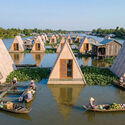
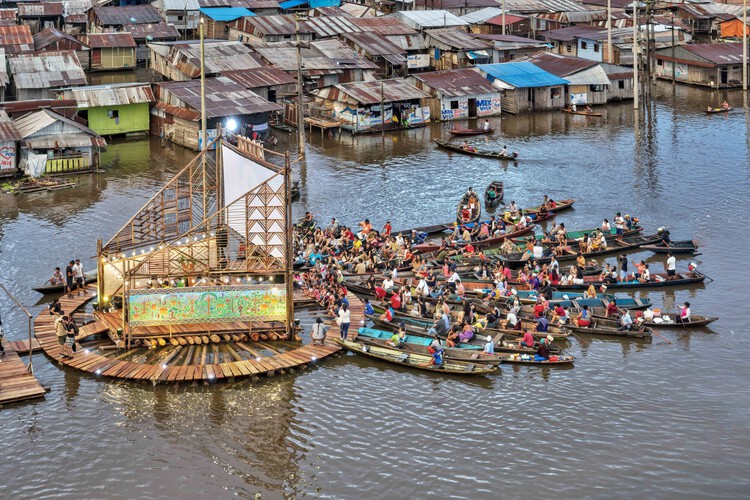
- The Resilient Bayou: In delta regions and bayous, contemporary design is abandoning the notion of keeping water out. Instead, projects are utilizing strategic retention basins and floating neighborhoods that gracefully negotiate fluctuating water levels.
- Daylighting Urban Canals: In rapidly developing Southeast Asian cities, historic canals—long neglected and relegated to open drainage ditches—are being reclaimed as vital public green spaces and ecological filtration networks.
- Plazas That Flood: In Latin American urban centers, visionary public spaces are engineered to intentionally flood during heavy downpours, serving as temporary water retention zones that protect surrounding neighborhoods before safely draining away.
- Atmospheric Water Harvesting: In hyper-arid regions where surface water is virtually non-existent, designers and engineers are exploring technologies that capture moisture directly from the air, balancing technological promise against energy limitations and spatial equity.
Future Outlook: Reimagining Water as a Commons
As the architecture and urban design sectors look toward the remainder of the 21st century, the conversation around water must evolve from tactical engineering solutions to profound philosophical shifts.

The traditional view of water as a resource to be harvested, piped, channeled, and privatized has proven ecologically unsustainable and socially inequitable. The path forward demands that water be treated as a global commons—a shared resource that binds human communities, non-human ecosystems, and planetary systems together.
Achieving this requires architects, urban planners, and civil engineers to collaborate across disciplines. By integrating ecological science, indigenous land-management wisdom, and advanced adaptive technologies into the core of spatial design, the built environment can transition from a posture of defense to one of symbiosis.
Ultimately, ArchDaily’s exploration of "The Architecture of Water" serves as both a diagnostic of current global fractures and a roadmap for future resilience. It challenges the global design community to answer a defining question for our era: What would it mean to build not against the water, but with it?



