Executive Overview
The global movement for product longevity and consumer choice has entered a crucial new phase, shifting from legislative debates in statehouses to high-stakes courtroom showdowns. At the center of this transition is Acme Revival, a prominent refurbishing and independent repair entity that has launched a series of aggressive lawsuits against major hardware and technology manufacturers.
Targeting companies such as Toast, Owl Labs, and Blackmagic, Acme Revival’s legal actions are designed to test the real-world enforcement of state-level right-to-repair legislation—specifically in Colorado, which has emerged as a vanguard for consumer and independent repair advocacy.
For years, the recycling and refurbishing industries have championed right-to-repair frameworks not merely as consumer-friendly policies, but as vital mechanisms for diverting electronic scrap (e-scrap) away from municipal landfills. Beyond waste reduction, expanding access to repair documentation, diagnostic tools, and OEM (original equipment manufacturer) replacement parts is viewed by safety experts as an essential strategy for mitigating the escalating risk of fires caused by volatile lithium-ion batteries within the modern waste stream.
However, passing legislation is only half the battle. Independent repair providers have long complained that major brands routinely bypass, ignore, or overtly violate statutory mandates requiring them to make repair materials available to the public and third-party technicians. Acme Revival’s recent complaints aim to shatter this status quo. By taking legal action, the company seeks to demonstrate that independent repair organizations are fully prepared to hold multinational brands legally accountable for withholding essential repair ecosystems.
As these lawsuits wind their way through the judicial system, they carry massive implications for how consumer electronics, commercial hardware, and specialized digital tools are maintained, reused, and ultimately discarded.
Detailed Chronology of the Legal Actions
The mounting friction between independent repair networks and original equipment manufacturers has crystallized into a distinct wave of litigation, led primarily by Acme Revival’s systematic targeting of non-compliant brands.
The Toast Lawsuit: Commercial Hardware Under the Microscope
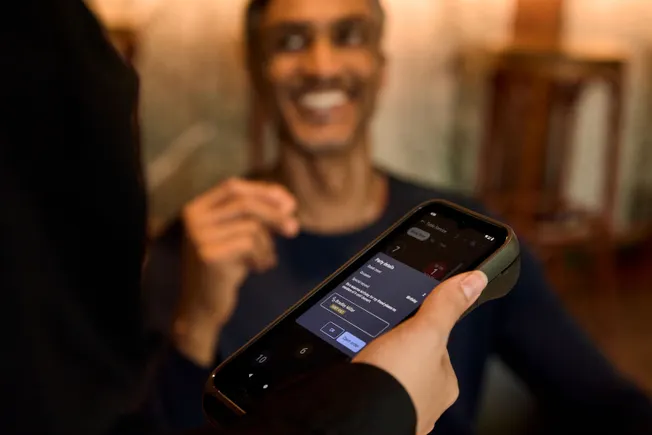
The legal offensive gained major momentum with Acme Revival’s complaint filed against Toast, a prominent provider of point-of-sale (POS) terminals, digital card readers, and restaurant management hardware. According to court filings, Acme has been flooded with "hundreds of requests" from commercial clients—primarily restaurants and retail businesses—seeking professional repairs for vital hardware.
The scope of the requested repairs spans a wide operational spectrum. Clients reported hardware failures including:
- Failed internal batteries and compromised charging systems.
- Physically damaged device housings and shattered touchscreens.
- Malfunctioning card readers, unresponsive physical buttons, and degraded internal circuit boards.
- Broken or frayed data connectors and specialized cables.
In its complaint, Acme details a consistent pattern of proactive outreach. The company submitted numerous formal, written requests to Toast demanding access to essential service manuals, detailed hardware schematics, specialized proprietary tools, replacement parts, as well as necessary software and firmware updates. These materials, Acme argued, were indispensable for successfully executing safe and reliable repairs on customer-owned devices.
According to the lawsuit, Toast completely ignored these overtures, refusing to provide the requested guidance, tools, or components. Acme’s legal team characterized this behavior not as an isolated administrative oversight or a private dispute, but rather as indicative of a systemic corporate policy designed to systematically withhold repair materials from independent service providers.
Expanding the Front: Owl Labs and Blackmagic
Building on its legal challenge against Toast, Acme Revival quickly expanded its litigation strategy to encompass manufacturers in the collaborative technology and professional video production sectors. Similar lawsuits were filed against Owl Labs and Blackmagic Design.
In its Colorado-based filings, Acme revealed a steady accumulation of consumer demand for these specific brands. For the 2026 calendar year alone, the company documented:
- At least 25 distinct repair requests for Owl Labs hardware.
- At least 27 repair requests for Blackmagic equipment.
These figures do not include a substantial volume of prior requests logged before the turn of the year, underscoring a persistent, unmet market demand.
- The Owl Labs Grievances: Customers approached Acme seeking remedies for critical device failures, including total power supply failures, structurally damaged or completely broken conferencing cameras, and malfunctioning internal microphones that crippled hybrid meeting spaces.
- The Blackmagic Grievances: Users of Blackmagic’s high-end video production gear requested specialized interventions for delicate image sensors, broken or misaligned camera mounts, malfunctioning video processing modules, and other complex technical anomalies.
Following the playbook established in the Toast dispute, Acme formally requested that both Owl Labs and Blackmagic supply the necessary component assemblies, proprietary software interfaces, and diagnostic tools required to complete the requested restorations. In both cases, Acme alleges that the manufacturers "failed or refused to provide" the necessary items or technical guidance, effectively locking independent repair technicians out of the service ecosystem.
Supporting Context & Metrics: The E-Scrap Crisis and Lithium-Ion Safety
To fully understand the gravity of Acme Revival’s legal campaign, one must examine the broader environmental and economic realities confronting the global electronics recycling industry.
The modern economy is drowning in electronic waste. According to international trade and environmental assessments, tens of millions of tons of e-scrap are generated annually, driven by aggressive consumer upgrade cycles and planned obsolescence. Historically, traditional recyclers viewed right-to-repair legislation as a golden opportunity to divert functional or repairable electronics away from destructive shredding and smelting processes, channeling them instead into refurbishment pipelines.
However, the stakes extend far beyond resource conservation and the circular economy. The proliferation of compact, energy-dense lithium-ion batteries across virtually all categories of consumer and commercial electronics has introduced a terrifying hazard to municipal waste management and recycling facilities. When crushed in standard waste collection vehicles or sorting centers, damaged or unstable lithium-ion batteries routinely spark catastrophic, high-intensity fires that endanger workers, destroy multi-million-dollar recycling infrastructure, and release toxic smoke into surrounding communities.
By empowering certified independent refurbishers and local repair shops to safely service, battery-swap, and maintain hardware, right-to-repair laws help keep energy storage units out of the general waste stream. When devices can be easily repaired—such as replacing a degraded battery in a commercial POS terminal or an enterprise conferencing device—their operational lifespan is extended exponentially. This keeps hazardous materials out of landfills and dramatically reduces the incidence of catastrophic facility fires.
Furthermore, economic data underscores the massive consumer demand driving these legal battles. Independent repair providers frequently offer turnaround times and pricing structures that are vastly superior to manufacturer-mandated depot repairs, which often require shipping equipment across the country or coercing consumers into purchasing brand-new replacement units. When manufacturers restrict access to parts, they create artificial monopolies that penalize businesses and everyday consumers alike, forcing premature capital expenditures and accelerating the global e-scrap crisis.
Official Statements and Industry Perspectives
The legal offensive launched by Acme Revival has sent shockwaves through advocacy groups, corporate boardrooms, and legal circles alike. Industry leaders and trade association executives are closely monitoring the proceedings to gauge whether state-level right-to-repair statutes possess the legal teeth required to compel corporate compliance.
Gay Gordon-Byrne, executive director of the prominent consumer advocacy organization The Repair Association, offered valuable perspective on the burgeoning legal landscape. In an electronic correspondence, Gordon-Byrne noted that while tracking the exact number of active right-to-repair legal challenges in individual jurisdictions like Colorado remains a moving target, utilizing the courts to enforce statutory rights is becoming an increasingly common tactic across states with robust repair legislation.
While declining to comment on the specific merits or legal strategies of Acme Revival’s ongoing lawsuits against Toast, Owl Labs, and Blackmagic, Gordon-Byrne emphasized that The Repair Association has consistently "encouraged people to file complaints in their state" whenever manufacturers obstruct independent repair operations. She suggested that these private enforcement actions could serve as a powerful catalyst, potentially inspiring state attorneys general to take a more active role in investigating and prosecuting manufacturers that flout active right-to-repair statutes.
Acme Revival has made it abundantly clear that its recent lawsuits are not isolated PR stunts, but rather the opening salvos in a sustained, long-term enforcement campaign. Kaye Cantutay, brand coordinator for Acme Revival, reinforced this resolute corporate posture in a statement:
"We intend to continue pursuing manufacturers that fail to comply with [right-to-repair] requirements."
Cantutay’s remarks signal a shifting paradigm within the independent service sector. Rather than passively absorbing the economic losses caused by OEM lock-outs, repair providers are weaponizing statutory frameworks to force compliance through the judicial system, signaling to multinational technology firms that non-compliance carries severe legal and financial risks.
Future Outlook: The Ripple Effects Across Industries
As Acme Revival’s lawsuits work their way through the legal system, their ultimate resolution will likely establish a powerful legal precedent that extends far beyond the borders of Colorado or the specific product categories currently under review.
The Legislative Domino Effect
Colorado has long positioned itself as a progressive leader in the national right-to-repair movement. Beyond general consumer electronics, the state has successfully enacted landmark legislation safeguarding the repair rights of owners of specialized, high-stakes machinery, including:
- Powered wheelchairs (HB22-1031), ensuring that individuals with mobility impairments are not trapped by predatory manufacturer repair monopolies.
- Complex farm and agricultural equipment (HB23-1011), granting farmers the legal right to diagnose and fix multi-million-dollar tractors and combines without being forced to wait for OEM technicians.
The success—or failure—of Acme Revival’s lawsuits will directly influence how lawmakers in other states draft subsequent waves of right-to-repair legislation. If independent entities can successfully sue manufacturers for withholding schematics and parts, other states are virtually guaranteed to incorporate robust private rights of action into their own statutory drafts, enabling swift legal penalties, injunctions, and financial damages for non-compliant brands.
Corporate Compliance vs. Proprietary Defense
For original equipment manufacturers, these legal developments pose a profound strategic dilemma. For decades, many technology companies have relied on closed-ecosystem business models—often euphemistically framed around "intellectual property protection," "device security," and "user safety"—to justify restricting access to diagnostic software, firmware updates, and modular replacement parts.
However, as state legislatures strip away the legal cover for anti-competitive repair restrictions, manufacturers face a stark choice: voluntarily open up their supply chains and service documentation to independent providers, or face mounting legal liability, expensive class-action lawsuits, and aggressive regulatory scrutiny from state attorneys general.
Ultimately, the actions taken by Acme Revival against Toast, Owl Labs, and Blackmagic represent a watershed moment for the right-to-repair movement. By translating legislative victories into active courtroom enforcement, independent repair advocates are transforming abstract legal rights into tangible operational realities. Whether technology giants choose to adapt willingly or fight bitterly in court, the era of unbridled repair monopolies is facing its most formidable existential challenge to date.