As the golden haze of late summer slowly surrenders to the crisp, amber mornings of autumn, a peculiar and age-old phenomenon occurs across households: spiders suddenly seem to be everywhere. From delicate, dew-draped webs stretching across garden shrubbery to large, intimidating shadows scurrying hastily across living room carpets, the eight-legged inhabitants of our natural world command our attention in unprecedented numbers.
For arachnophobes and the easily startled, this seasonal shift can feel like a coordinated indoor siege. However, leading entomologists, evolutionary biologists, and wildlife specialists assure us that this perception of a sudden population explosion is largely an illusion. The spiders are not multiplying overnight; rather, they are simply reaching maturity, and their seasonal quest for survival—and romance—brings them directly into our domestic spheres.
This comprehensive investigative report explores the biological realities behind the autumnal spider surge. By dispelling long-held urban myths, examining expert commentary from the Zoological Society of London and the University of Nottingham, and profiling the ten most common species encountered during the fall months, we aim to transform fear into fascination. Understanding these remarkable creatures not only alleviates unnecessary anxiety but also highlights the vital ecological roles they play in our homes and gardens.
Detailed Chronology: The Lifecycle of the Autumnal Spider
To truly understand why our homes experience an influx of spiders precisely as the weather turns, one must examine the biological clock that governs these ectothermic (cold-blooded) organisms over the course of an entire year.
Spring: The Microscopic Beginning
The spider calendar begins in earnest during the spring months. As the temperature rises and the frost recedes, tiny spiderlings hatch from silken egg sacs left protected over the winter. At this stage, a single egg sac can release hundreds of microscopic offspring. However, because these newborns are fractions of a centimeter in size and largely translucent, they remain virtually invisible to the human eye. They disperse quietly via ballooning—riding the wind on fine silken threads—to establish their early territories in gardens, woodlands, and urban green spaces.
Summer: The Great Growth Period
Throughout the long, warm months of summer, these juvenile spiders feed voraciously on an abundance of flying insects, midges, and garden pests. Supported by a rich food supply and favorable temperatures, they undergo multiple molting cycles, shedding their rigid exoskeletons to grow progressively larger. By late August, the surviving spiders have reached their maximum biological size. Consequently, the webs they spin scale up in size, transforming from subtle, delicate traps into prominent architectural obstacles stretched across doorways, garden paths, and fence posts.
Autumn: The Migration and Mating Urge
As summer officially draws to a close, a dramatic behavioral shift occurs. The arrival of cooler nocturnal temperatures triggers the biological imperative to reproduce. This is the primary catalyst for the sudden indoor sightings.
The large, hairy spiders frequently spotted dashing across skirting boards are typically adolescent and adult males on an urgent, desperate mission. Driven by evolutionary compulsion, these "lost teenagers"—as described by evolutionary geneticists—abandon their secluded outdoor retreats to search for prospective mates. Their geographical and emotional wanderings inevitably lead them through open doors, window frames, and air vents, bringing them face-to-face with startled human homeowners.
Supporting Context & Metrics: Habitat Realities and Ecosystem Metrics
Centralized home heating systems and modern building designs create environments that are fundamentally hostile to most native and naturalized spiders. Centrally heated homes are typically far too dry and lack the sustainable insect food chains required to support long-term survival.
Contrary to popular nomenclature, species labeled as "house spiders" do not actually require human dwellings to survive; they simply tolerate them better than other species and are frequently observed indoors due to their sheer physical size. When homeowners gently evict a spider into a garden shed, porch, or garage, they are not condemning it to a harsh wilderness; rather, they are returning it to an environment far better suited to its physiological needs.
Furthermore, the ecological impact of these creatures is profoundly beneficial. Across a typical suburban garden and home ecosystem, spiders act as frontline pest controllers, consuming millions of flies, mosquitoes, aphids, and agricultural pests annually. Without them, human populations would face significantly higher densities of disease-carrying insects.
Official Statements and Expert Insights
To contextualize the science of the autumn spider migration, prominent authorities in zoology and genetics have weighed in on the psychological and biological dimensions of the phenomenon.
Dave Clarke, an ectotherm specialist at the Zoological Society of London, clarifies the numerical misconception:
"There are actually more spiders around in the spring, because that’s when they hatch from their egg sacs, and there are hundreds of babies in each egg sac. But they’re small and not very obvious. They grow up during the summer and, at this time of year, reach their maximum size."
Elaborating on the behavioral motivations behind indoor encounters, Dr. Sara Goodacre, professor of evolutionary biology and genetics at the University of Nottingham, sheds light on the wandering males:
"The ones you see in your home at the minute, the really big, fat, hairy ones, they’re usually teenage males that are lost—emotionally, geographically—and are just hoping they might find a female so they can continue the life cycle."
Addressing the common panic surrounding venomous misconceptions—particularly regarding false widow spiders—Dr. Goodacre emphasizes that public hysteria far outweighs actual physical risk:
"It doesn’t fly like a wasp, so you’d have to try really hard to get bitten. The level of hysteria is the worst bit—people feel ill because they’re so worried about the concept of a spider bite."
On the matter of domestic sovereignty, Dr. Goodacre offers practical reassurance to anxious homeowners:
"It’s your home. You decide who you share it with."
The Top 10 Spiders Encountered This Autumn
For those seeking to identify their temporary eight-legged house guests, here is a detailed breakdown of the ten most prevalent species active during the autumn season.
1. House Spider (Tegenaria domestica)
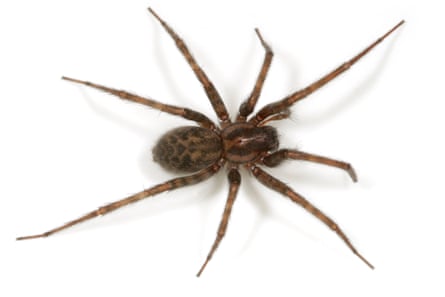
Characterized by its pale-to-dark brown coloration, black markings, and banded, hairy legs, this species is the quintessential indoor visitor. Despite its common name, it thrives outdoors just as well. If eviction is desired, a simple glass and a piece of card will safely transfer it to a sheltered garage or porch.
2. Cardinal Spider (Tegenaria parietina)
The largest native spider species in the UK, the cardinal spider belongs to the Tegenaria genus. Adult specimens can achieve a staggering leg span of up to 14 centimeters. Legend attributes its name to Cardinal Wolsey, who allegedly held strong feelings—whether of terror, reverence, or superstition—toward them. They are primarily distributed across the south of England.
3. Cellar Spider (Pholcus phalangioides)
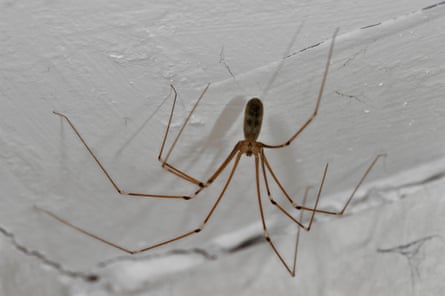
Often colloquially termed the "daddy-longlegs spider," this species features legs roughly five times the length of its delicate body. Originally subtropical, it has colonized human structures globally. When disturbed in its untidy web near ceiling corners, it engages in rapid gyration, creating a visual blur designed to confuse predators.
4. Garden Spider (Araneus diadematus)
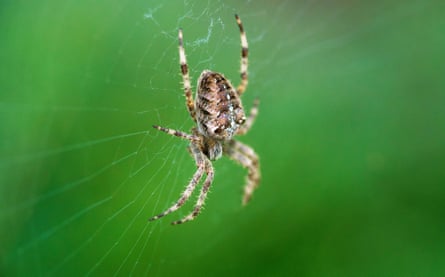
Famous for building intricate orb webs directly across human walking paths, the garden spider sits prominently at the center of its creation. Exhibiting a distinctive white, speckled cross on its abdomen, females can reach body lengths of up to 1.8 centimeters, dwarfing their male counterparts.
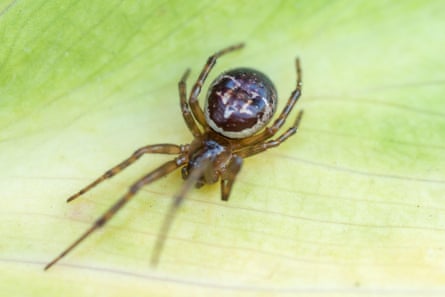
While native species like the cupboard and rabbit hutch false widows keep quietly to themselves, the noble false widow—arrived from the Canary Islands in the late 19th century—frequently dominates tabloid headlines. Dubbed "Britain’s most dangerous spider," the moniker is heavily sensationalized. They are solitary, non-aggressive, and their bites produce localized reactions comparable to a wasp or nettle sting.
6. Missing Sector Orb Weaver (Zygiella x-notata)
Readily identified by its classic circular web featuring a distinctive missing "pie slice," this silver-grey spider does not sit in the center of its trap. Instead, it hides on nearby windowsills, maintaining a single alert foot on a central signaling thread to detect incoming prey vibrations.
7. Tube Web Spider (Segestria florentina)
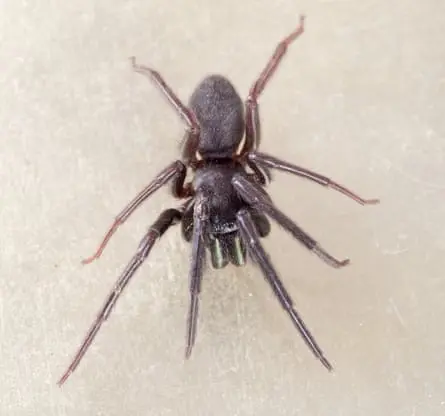
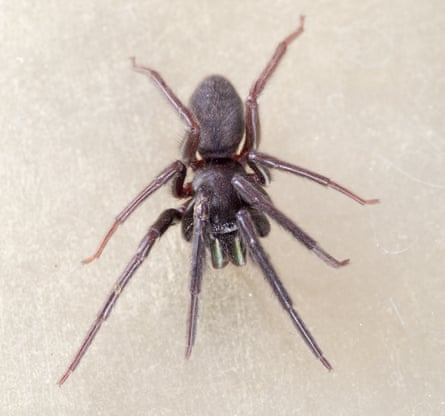
Easily recognized by its striking iridescent green chelicerae (mouthparts) and robust frame reaching up to 2.2cm, the tube web spider constructs vortex-shaped retreats within brickwork and masonry. While equipped with a painful venomous bite for subduing prey, it is deeply reclusive and rarely engages humans unless severely provoked.
8. Zebra Jumping Spider (Salticus scenicus)
Measuring between 5mm and 9mm with striking black-and-white zebra stripes, this miniature predator possesses exceptional vision and can leap ten times its own body length. Featuring prominent, forward-facing primary eyes, it offers a curious and undeniably endearing encounter when it turns to look back at observers.
9. False Wolf Spider (Zoropsis spinimana)
Also known as the "Nosferatu spider" due to vampire-like markings on its cephalothorax, this Mediterranean native relies on human structures to survive northern winters. Rather than spinning webs, it actively hunts its prey on foot, making use of urban warmth to expand its range.
10. Woodlouse Spider (Dysdera crocata)
Displaying a striking reddish-orange body and prominent, oversized fangs specifically adapted to pierce the armored carapaces of woodlice, this demure hunter prefers hidden spaces beneath stones and logs rather than active open roaming.
Future Outlook: Coexistence in a Changing Climate
As urbanization expands and global climate patterns shift, our relationship with domestic wildlife will continue to evolve. Species like the false wolf spider and noble false widow demonstrate how non-native arachnids adapt to human-made microclimates, utilizing centrally heated buildings as ecological refuges against harsh winters.
Looking forward, public education remains the most effective tool in mitigating unnecessary fear. Entomological research consistently demonstrates that native and naturalized spiders pose virtually no systemic threat to human health. By recognizing the vital role these eight-legged predators play in maintaining balanced local ecosystems, society can move past outdated phobias and embrace a posture of informed, tranquil coexistence.