

Executive Overview
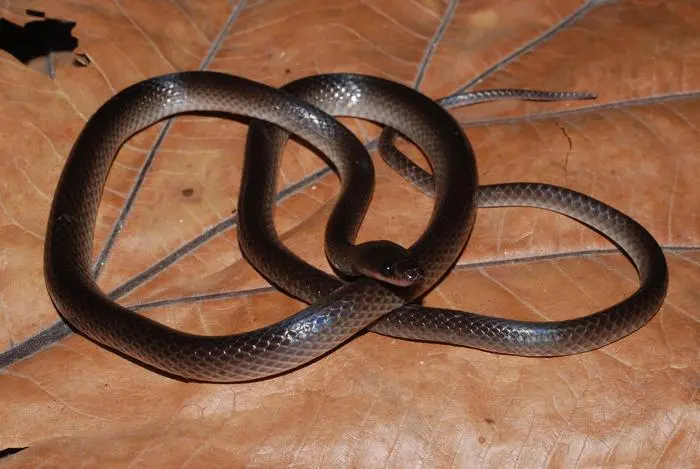
In the remote, mist-shrouded forests of Papua New Guinea, science has unveiled a striking new resident. Researchers have officially identified a new-to-science, reddish-brown groundsnake species, christening it Lielaphis slashi—commonly known as Slash’s groundsnake—in honor of Saul Hudson, the legendary lead guitarist of the iconic rock band Guns N’ Roses. Published recently in the scientific journal Zootaxa, the discovery expands the Lielaphis genus to twenty confirmed species, highlighting the incredible yet fragile biodiversity harbored on the world’s second-largest island.
The honor was bestowed upon Hudson not merely as a nod to his global musical stardom, but in recognition of his lifelong, passionate advocacy for reptiles, zoos, and natural history museums. For Slash, a self-proclaimed "herpephile" who has famously kept venomous and non-venomous snakes as companions throughout his life, the tribute bridges the worlds of rock music and rigorous biological conservation.
However, beneath the rock-and-roll novelty lies a stark and urgent ecological reality. Slash’s groundsnake was discovered in a primary target zone of severe environmental pressure. As industrial coffee farming, large-scale mining, commercial timber harvesting, and expanding plantations encroach deeper into the rainforests of Sandaun Province, researchers emphasize that naming and cataloging these secretive creatures is a critical first step in protecting them. Without swift conservation interventions, many endemic species in this biological hotspot risk vanishing before science even knows they exist.
Detailed Chronology: From a 2006 Rainforest Encounter to Taxonomic Revelation
The story of Lielaphis slashi began nearly two decades before its formal scientific description, unfolding across international borders, high-stakes nocturnal field expeditions, and meticulous laboratory analyses.
July 2006: The Initial Discovery in Sandaun Province
The timeline of discovery traces back to July 2006, when Dr. Christopher Austin, a professor of natural science and curator of amphibians and reptiles at Louisiana State University (LSU), embarked on a research expedition to Papua New Guinea. Operating within a largely undisturbed secondary forest in Sandaun Province, Austin was tracking regional herpetofauna when he encountered a small, reddish-brown groundsnake.
Reptile fieldwork in New Guinea is rarely straightforward. The island is renowned for harboring a dense population of venomous elapids and other dangerous reptiles, requiring researchers to operate with extreme caution during nocturnal surveys. Because snakes in general are elusive, finding them requires sharp observation, and hunting for nocturnal species in pitch-black jungle conditions escalates the difficulty significantly.
Upon capturing the specimens, Austin and his field team made an understandable initial assumption: they believed they had found an already known species. Based on external morphology and physical appearance, the snakes were provisionally cataloged under an existing species within the same group, Lielaphis parvus. At the time, the subtle anatomical distinctions that separate New Guinea’s groundsnakes were simply too masked by the creatures’ uniform appearance to raise immediate red flags in the field.
Years in the Drawer: The Genetic Turning Point
The specimens were transported back to institutional facilities, where they sat preserved while broader taxonomic work on New Guinea reptiles continued. Years later, as genetic sequencing technologies matured and became more accessible, researchers began revisiting museum collections to re-examine historical specimens using modern molecular tools.
When Austin and his colleagues performed genetic analysis on the 2006 Sandaun Province specimens, the DNA data told a surprising story. The genetic makeup of the snakes diverged significantly from Lielaphis parvus and all other recognized members of the genus. What had been filed away as a routine variant was, in fact, an entirely distinct, undescribed species.
Morphological Verification and the Path to Publication
Genetics provided the initial alarm bell, but rigorous taxonomy requires robust physical confirmation. Following the genetic breakthrough, Austin’s team initiated a comprehensive morphological assessment. They analyzed the specimens’ physical architecture, meticulously counting and measuring scale rows, checking body proportions, and comparing these metrics against extensive museum archives of other known Lielaphis species.
This morphological deep-dive confirmed what the DNA had suggested: the 2006 specimens were structurally distinct. Due to the high degree of morphological conservatism within the Lielaphis genus—meaning different species share remarkably similar color patterns and physical builds—distinguishing them requires minute, expert examination of scale structures.
With the species formally differentiated, the research team prepared their manuscript, culminating in the official description of Lielaphis slashi in Zootaxa.
Supporting Context & Metrics: Navigating the Biodiversity and Taxonomy of New Guinea
To understand the magnitude of discovering Lielaphis slashi, one must examine the unique ecological landscape of New Guinea and the notoriously complex taxonomy of its groundsnakes.
The Geography of New Guinea and the Lielaphis Genus
New Guinea is a geographical and biological marvel. Split politically between the independent nation of Papua New Guinea to the east and the Indonesian provinces of West Papua and Papua to the west, the island features towering alpine mountains, vast lowland rainforests, extensive river systems, and isolated valleys. This rugged topography has created countless isolated ecological niches, making New Guinea one of the most biologically diverse regions on Earth.
Within this landscape, the genus Lielaphis represents a prominent radiation of groundsnakes found primarily on the island. Prior to this study, the genus contained nineteen recognized species. With the addition of Lielaphis slashi, the count rises to twenty.
Physical Characteristics of Lielaphis slashi
- Dorsal Side: The snake features a uniform, unpatterned reddish-brown back. This coloration likely provides camouflage among the leaf litter and forest floor debris of its jungle habitat.
- Ventral Side: The underside is unmarked, displaying a clean white or cream coloration that contrasts sharply with its darker back.
- Habits: Like others in its genus, Lielaphis slashi is nocturnal and secretive, spending daylight hours hidden beneath logs, rocks, or soil, and emerging at night to forage.
Taxonomic Complexities: A Crypto-Diversity Challenge
Herpetologists working in New Guinea face a daunting taxonomic hurdle. Many snakes on the island exhibit what scientists call "cryptic diversity" or high morphological conservation. This means that two entirely different species can look almost identical to the naked eye.

Because Lielaphis groundsnakes look exceptionally similar, share cryptic nocturnal habits, and possess a tangled taxonomic history, they have remained historically understudied. Field researchers note that this combination of factors leaves a remarkably high potential for additional, undiscovered species waiting to be formally described across New Guinea’s vast interior. Without continuous funding for genetic sequencing and museum-based morphological research, countless species may remain hidden in plain sight.
Official Statements: Rock Icons Meet Field Herpetology
The naming of Lielaphis slashi has generated widespread media attention, bridging pop culture and conservation science in a rare and celebratory way.
Saul "Slash" Hudson’s Response
Upon learning of the honor, Saul Hudson expressed his profound gratitude and lifelong affinity for reptiles. In an official press release issued by the Field Museum, the legendary guitarist shared his enthusiasm:
"As a long-time herpephile, I am extremely honored and humbled to have Lielaphis slashi from New Guinea named after me," Slash said. "It is really exciting, I never would have imagined this moment would arrive."
Slash’s public advocacy for reptiles is well-documented. Long before he was selling out stadiums with Guns N’ Roses, the musician harbored a deep fascination with snakes and exotic wildlife. Over the decades, he has frequently used his global platform to advocate for zoos, natural history institutions, and the proper understanding and conservation of misunderstood animals like snakes.
Perspectives from the Research Team
The scientists behind the discovery emphasize that while naming a snake after a rock star brings fun and public visibility to taxonomy, the underlying science addresses urgent global conservation challenges.
Dr. Sara Ruane, Associate Curator of Herpetology at the Field Museum and co-author of the study, highlighted the direct link between species discovery and environmental protection:
"The habitats that Slash’s groundsnake is from are under threat from industries like coffee farming and mining," Ruane noted in the press release. "That’s part of why describing the species that live there is important."
Dr. Christopher Austin echoed these sentiments, pointing out the immense logistical challenges of fieldwork in New Guinea and the race against time to document biodiversity before industrial expansion alters the landscape irrevocably.
Future Outlook: Conservation Realities and the Race Against Time
The formal description of Lielaphis slashi is a triumph for taxonomy, but it serves as a glaring warning bell for conservationists. New Guinea is facing an unprecedented wave of environmental degradation driven by global commodity demands.
Imminent Threats to New Guinea’s Ecosystems
While New Guinea remains a globally recognized biodiversity hotspot, its rainforests are increasingly fragmented by:
- Industrial Coffee Farming: Expanding agricultural plots clear vast tracts of secondary and primary forest.
- Mining Operations: Large-scale mineral extraction projects disrupt local watersheds, displace wildlife, and introduce heavy infrastructure into pristine wilderness.
- Commercial Timber Harvesting: Logging roads penetrate deep into previously inaccessible forest interiors, opening up fragile habitats to further exploitation.
Because Lielaphis slashi is currently known from very few specimens collected in specific localities within Sandaun Province, little is known about its total geographic range, population density, or ecological requirements. This lack of natural history data places the species in a precarious position.
The Path Forward for Herpetological Conservation
Conservation biologists stress that effective protection policies rely entirely on baseline scientific data. Governments, international conservation bodies, and local communities cannot protect an animal if they do not know it exists, where it lives, or what resources it needs to survive.
Initiatives like the naming of Lielaphis slashi play a vital role in this framework. By attaching a recognizable cultural icon to a remote jungle snake, the discovery captures public imagination, drawing eyes away from traditional charismatic megafauna and toward the humble, cryptic creatures that form the foundation of tropical ecosystems.
As researchers continue to analyze museum archives and venture back into the rugged terrain of Papua New Guinea and Indonesia, the hope is that Lielaphis slashi will become a symbol not just of rock-and-roll cool, but of a renewed global commitment to preserving the irreplaceable biodiversity of the world’s vanishing rainforests.



