Australia is confronting an unprecedented socioeconomic reckoning. Following the Reserve Bank of Australia’s (RBA) decision to elevate the cash rate to 4.6%—marking its highest tier since 2011—households, regional producers, and urban workers alike are finding themselves trapped in an unrelenting cycle of financial pressure. Once viewed as temporary pandemic-era shocks, soaring inflation, unyielding energy expenses, and compounding mortgage rates have thoroughly eroded the financial buffers of everyday Australians.
Far from being mere balance-sheet adjustments, these macroeconomic forces are instigating a widespread public health crisis. Longitudinal data from the landmark Household, Income and Labour Dynamics in Australia (HILDA) survey, alongside specialized research from the University of Melbourne, reveal a stark reality: financial hardship is no longer just a metric of depleted savings accounts; it is systematically dismantling the mental health, sleep hygiene, and emotional stability of the population.
This report investigates the compounding human cost of Australia’s economic trajectory. By examining the lived experiences of agricultural producers, single parents, urban renters, and young professionals planning their futures, this feature uncovers how the nation has pressed far past its economic tipping point—and why working harder is no longer enough to get ahead.
Detailed Chronology: The Escalation of Economic Strain
To understand the severity of the current climate, one must trace the compounding timeline of fiscal pressures that have pushed Australian households to the edge.
The Pandemic Baseline (2020)
The baseline for modern financial tracking was established during the global disruptions of 2020. While government stimulus packages temporarily cushioned the blow of lockdowns, underlying vulnerabilities began to take root. Food insecurity—defined by researchers as a persistent inability to secure adequate, nutritious meals—stood at 13.7%. At this stage, while anxiety surrounding the future was palpable, most households still maintained liquid savings buffers and accessible safety nets.
The Post-Pandemic Inflationary Surge (2021–2022)
As global supply chains fractured and geopolitical conflicts drove international energy markets into chaos, domestic inflation spiked. To curb this trajectory, the Reserve Bank embarked on an aggressive monetary tightening cycle, rapidly escalating interest rates from historic lows.
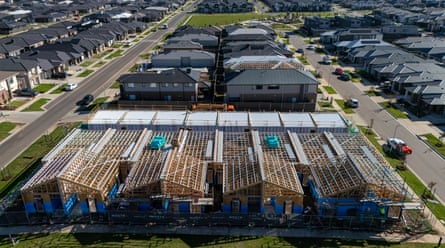
The Housing Squeeze: Homeowners and renters alike watched mortgage repayments and lease agreements soar.
The Dual-Income Imperative: Traditional markers of security—such as holding a stable, full-time salary—lost their protective value. By late 2022, an increasing number of Australians began taking on second jobs, driving the rate of multi-employed workers to historic peaks.
The Depletion of Buffers (2023–2024)
By 2024, HILDA survey metrics confirmed that food insecurity had surged from its 2020 baseline to 17.9%. Offset accounts and emergency savings had been entirely exhausted. Families who had previously relied on credit cards to bridge monthly gaps found themselves facing unmanageable debt servicing costs. Crucially, researchers note that this data captured conditions prior to the succession of subsequent rate hikes and fuel price surges.
The 2026 Tipping Point: Reaching 4.6%
The RBA’s recent confirmation of a 4.6% cash rate has dealt a devastating psychological and financial blow. For regional producers like Justin Everitt, a third-generation grains farmer in southern New South Wales, the adjustment represents the absolute outer boundary of operational sustainability.
"You’re already pushing the boundaries of anything you can do," Everitt reflects on the impossibility of working longer hours to outpace inflation. "It’s unsustainable. This is the onslaught of the punches after you’ve been knocked out. You can’t shut down from the cost-of-living crisis."
Supporting Context and Metrics: The Statistical Reality of Hardship
The anecdotal struggles of individual Australians are validated by a convergence of rigorous academic and institutional data sets.
The HILDA Survey Insights
The Melbourne Institute’s HILDA survey, which has tracked over 17,000 Australians annually since 2001, provides a comprehensive look at the nation’s psychological and financial decline:
Financial Wellbeing: Average financial wellbeing has visibly deteriorated for 24.1% of females and 20.8% of males.
Cashflow Problems: The General Social Survey revealed that one in four Australian households experienced at least one cashflow crisis over the past year—a figure that nearly doubled among single-parent households.
Perceptions of the Future: Public optimism regarding the national economic outlook has reached historic lows, with Lowy Institute polling indicating that pessimists now outnumber optimists for the first time.
The Public Health Nexus
A pivotal study co-authored by Dr. Lay San Too and Dr. Yamna Taouk from the University of Melbourne’s School of Population and Global Health establishes a direct causal link between financial hardship and escalating mental health disorders.
According to Dr. Taouk, the psychological damage inflicted during the current crisis far surpasses that of previous economic downturns:
"Financial hardship was associated with poorer mental health before the crisis, but that association became significantly stronger during 2022–24. In other words, the same experience of hardship appears to have been more damaging to mental health in the cost-of-living crisis than it was previously."
Dr. Too emphasizes that the study’s indicators—ranging from the inability to heat a home to missed utility bills and skipped meals—serve as concrete markers of societal distress. When households lose their financial buffers and can no longer perceive a credible path back to stability, the psychological toll compounds, significantly raising the risk of chronic anxiety and clinical depression.
Official Statements and Expert Perspectives
As economic indicators worsen, experts from fields spanning public health, agriculture, and urban sociology are issuing urgent calls for systemic acknowledgment of the crisis.
The Agricultural Sector Warning
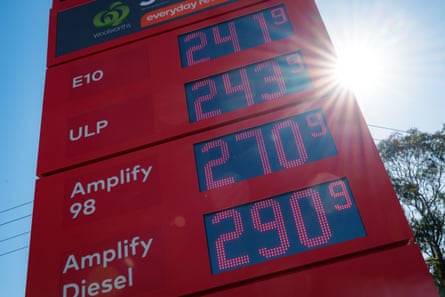
From an agricultural standpoint, the macroeconomic pressures facing farmers carry direct implications for national food security and supply chain stability. Justin Everitt, serving as vice-president of NSW Farmers, highlights how soaring fuel costs infiltrate every tier of production.
"If we can’t harvest in the right time, there’s no wheat for bread or barley for beer," Everitt warns. "It’ll come at a cost to us, but if freight doesn’t move, then the food doesn’t get into the markets."
Farmers who once absorbed minor market fluctuations are now operating at margins so thin that any adverse weather event or sudden fuel hike threatens total insolvency.
The Urban Realities: Renters and Single Parents
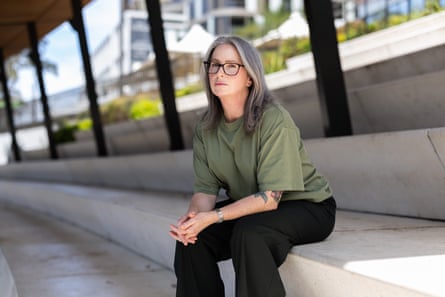
In metropolitan centers like Sydney, the housing crisis has mutated into an all-encompassing lifestyle contraction. Taylor*, a renter in Parramatta and a practicing therapist, describes the constant cognitive load of financial survival. Despite securing a long-term lease to avoid the volatility of the open rental market, the sheer cost of daily existence dominates her sleep and mental clarity.
"I feel hopeless about it," she shares. "It’s affected my sleep the most, especially when my credit card payment is due. [I keep thinking] am I going to be able to pay it? What does it look like for the month ahead?"
Taylor’s household has abandoned full-price purchasing entirely. Shopping late at night for discounted meats, socializing exclusively via walks rather than paid outings, and substituting birthday requests for supermarket gift cards have become standard operating procedures. Crucially, she has even resorted to taking prescription medication every second day to stretch out refills—a harrowing compromise reflecting the impossible choices forced upon insured, employed citizens.
Similarly, Lauren Bennett, a single mother holding a full-time government job in Sydney, illustrates the inadequacy of traditional financial benchmarks. Having purchased a modest apartment in the city’s inner west via the single-parent loan scheme in 2021, Bennett watched interest rate hikes systematically devour her savings after her fixed-rate period expired.
"I have a full-time government job and jump from pay to pay," Bennett says. "My salary is enough for us to ‘get by’ but we have given up so much. This city isn’t made for single salary households, especially single parents."
To protect her eight-year-old child’s specialist medical appointments, Bennett has canceled gym memberships, eliminated streaming services, and sacrificed her own healthcare needs. "I always say ‘we can do hard things,’" she notes, "but like most people, I’d really appreciate less hard things."
The Deferred Future of Millennial Families
Beyond those currently managing mortgages and children, the crisis is fundamentally altering life milestones for younger generations. Erin Richardson, a 31-year-old living in Newcastle, has spent five years mentally ready to start a family, only to repeatedly postpone the decision due to fiscal intimidation.
"I’ve heard having kids tanks your borrowing capacity," Richardson explains. "Everyone says that you manage, and I want to believe that you just survive and you just get by… [but] it feels like uncharted waters because it’s such a different climate to what it has ever been. We’re in this state of affairs where prices jump frequently, and that just feels so unfair."
Future Outlook: Navigating Beyond the Tipping Point
The convergence of high interest rates, persistent inflation, and deflated consumer confidence leaves Australia at a critical crossroads. The traditional economic assumption that households will naturally absorb monetary tightening through moderate spending cuts no longer applies; instead, consumers have cut discretionary spending to the bone, turning their frugality toward essential health, nutrition, and housing needs.
Public health advocates and economists argue that without targeted fiscal interventions and a stabilization of monetary policy, the long-term societal fallout will be profound. The erosion of preventive healthcare—evidenced by individuals rationing medications and delaying specialist visits—will inevitably translate into increased strain on the public health system. Furthermore, the systematic postponement of family planning among young Australians threatens demographic stability and long-term economic growth.
As the RBA attempts to balance inflation targets against economic stagnation, the human toll continues to accumulate across suburban apartment blocks and regional farming homesteads alike. For millions of Australians, the primary objective is no longer prosperity or upward mobility, but mere endurance in a landscape where the rules of financial security have been irrevocably rewritten.
(Note: Certain names have been changed to protect the privacy of the individuals interviewed.)*