As nations navigate the complex transition toward net-zero greenhouse gas emissions, Carbon Capture and Storage (CCS) has emerged as one of the most heavily backed—and intensely debated—technologies on the global climate agenda.
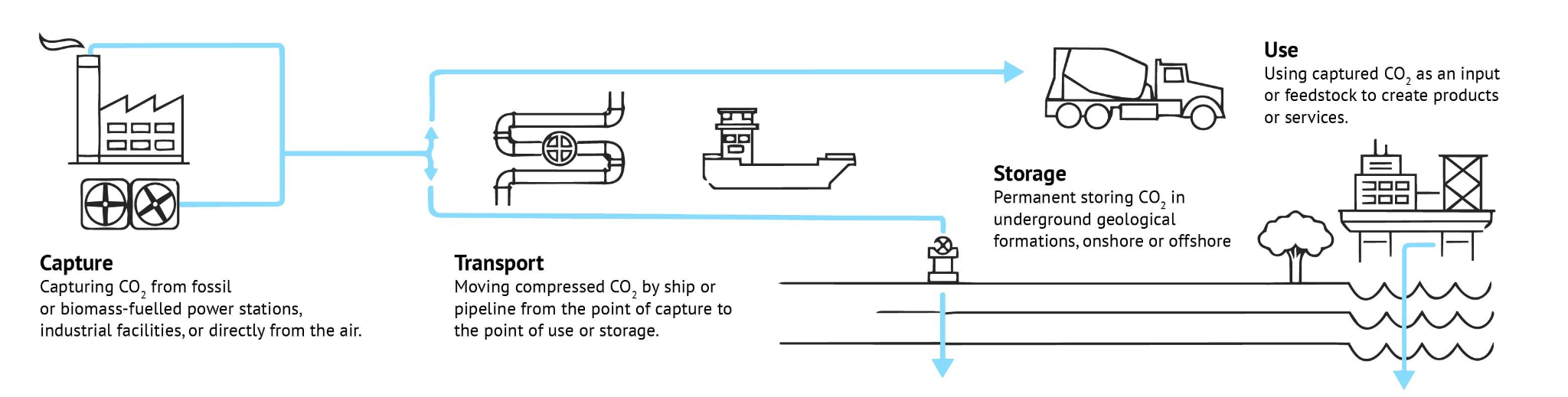
At its core, CCS isolates carbon dioxide ($textCO_2$) from the exhaust streams of heavy industrial facilities, power plants, and gas purification hubs, compressing the gas into a liquid state before pumping it deep underground for permanent geological isolation. Proponents, including the Intergovernmental Panel on Climate Change (IPCC) and the International Energy Agency (IEA), categorize CCS as a vital tool for deep decarbonization, particularly for heavy manufacturing sectors such as cement, steel, and chemicals where direct electrification remains technically difficult or economically prohibitive.
Yet, despite decades of advocacy and billions of dollars in public and private capital commitments—highlighted by the UK government’s flagship £21.7 billion backing—the technology faces severe criticism. Opponents and financial analysts describe CCS as an expensive, underperforming distraction that risks extending the operational lifespan of fossil-fuel infrastructure under the guise of climate action.
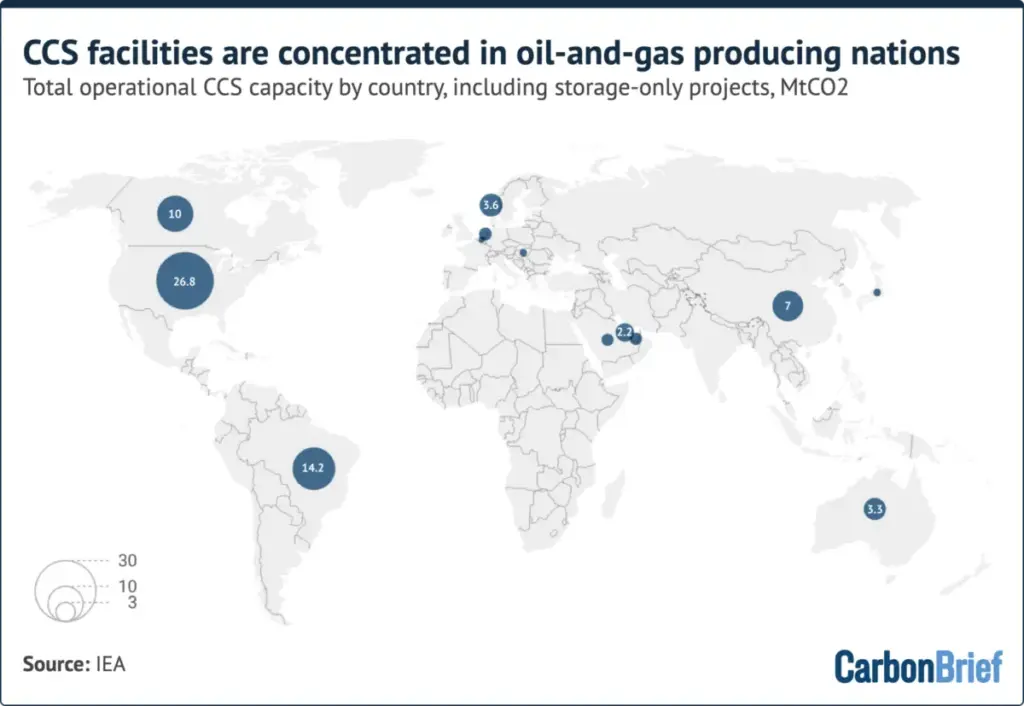
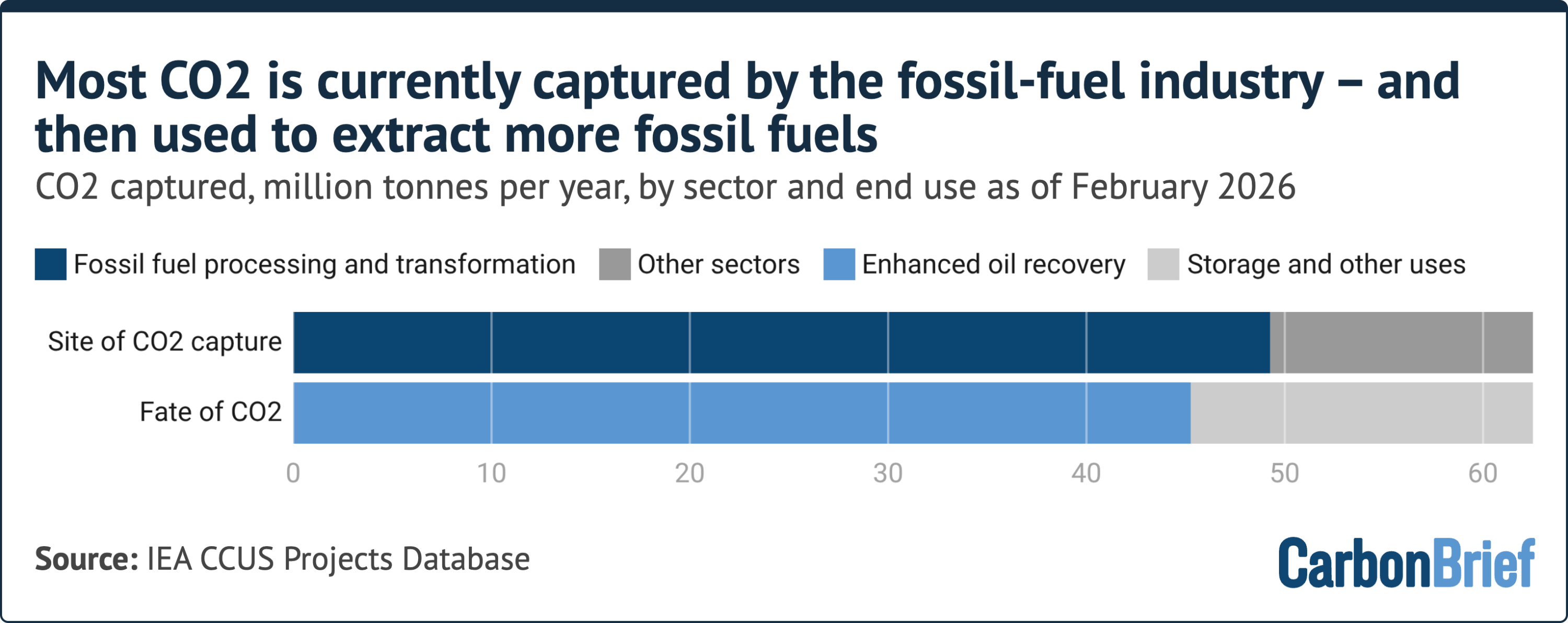
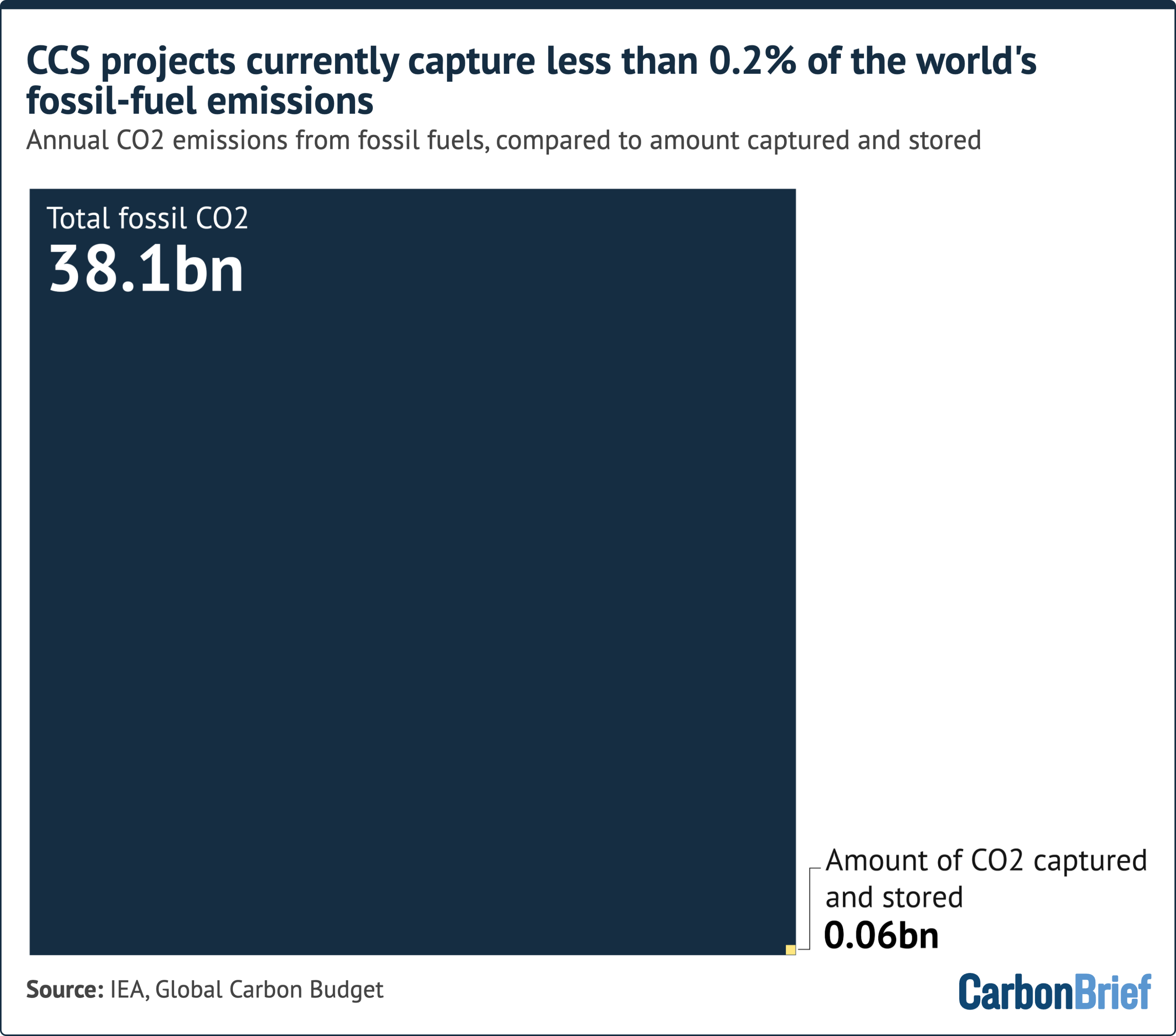
As of early 2026, global CCS capacity accounts for less than 0.2% of world fossil-fuel emissions, with roughly three-quarters of all captured carbon actively utilized by energy companies for Enhanced Oil Recovery (EOR). This central contradiction—between CCS as a theoretical climate savior and its real-world implementation as an enabler of oil and gas extraction—lies at the heart of an escalating policy battle shaping national energy strategies worldwide.
Detailed Chronology: From Subsurface Engineering to Net-Zero Pillar
The evolutionary path of carbon capture spans more than half a century, shifting from an industrial tool for oil extraction to a contested pillar of international climate policy.
Early 1970s: Carbon capture technology was first commercialized in North America. Its original objective was not climate mitigation, but Enhanced Oil Recovery (EOR). Oil operators injected captured $textCO_2$ into depleted wells to pressurize reservoirs and extract previously unrecoverable crude oil.
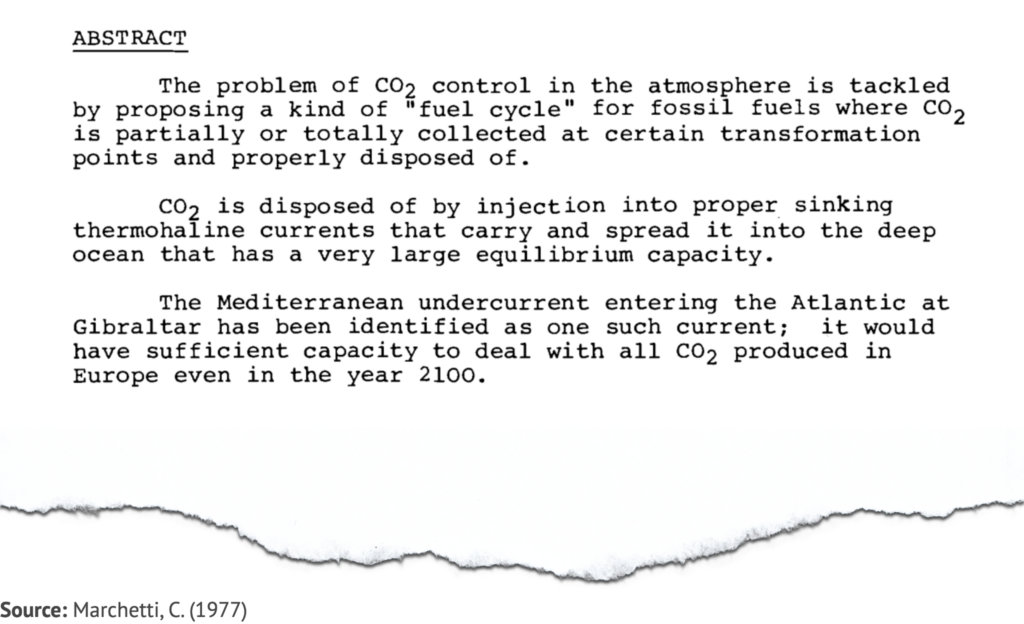
1976: Italian physicist Cesare Marchetti published a seminal academic paper proposing the systematic capture and geological/oceanic disposal of fossil-fuel emissions, marking the concept’s formal introduction to environmental management literature.
Policy Emergence and "Clean Coal" (2000s–2010s)
2005: The IPCC issued its milestone Special Report on Carbon Dioxide Capture and Storage, formally establishing CCS within global climate scenarios. At the time, only three small-scale projects dedicated to permanent geological storage existed worldwide.
Mid-to-Late 2000s: Governments in North America and Western Europe turned toward CCS as a way to yield "clean coal" power. However, as the levelized cost of wind and solar energy fell precipitously over the following decade, the economic viability of coal plants equipped with costly capture systems eroded, leading to widespread project cancellations.
The Post-Paris Resurgence (2015–Present)
2015: The adoption of the Paris Agreement, combined with widespread commitments to achieve net-zero emissions by mid-century, renewed political interest in CCS.
Early 2020s: Policy priorities shifted away from coal toward decarbonizing heavy industry (cement, lime, steel), manufacturing low-carbon "blue" hydrogen from natural gas, and deploying Carbon Dioxide Removal (CDR) frameworks like Direct Air Capture (DACCS) and Bioenergy with CCS (BECCS).
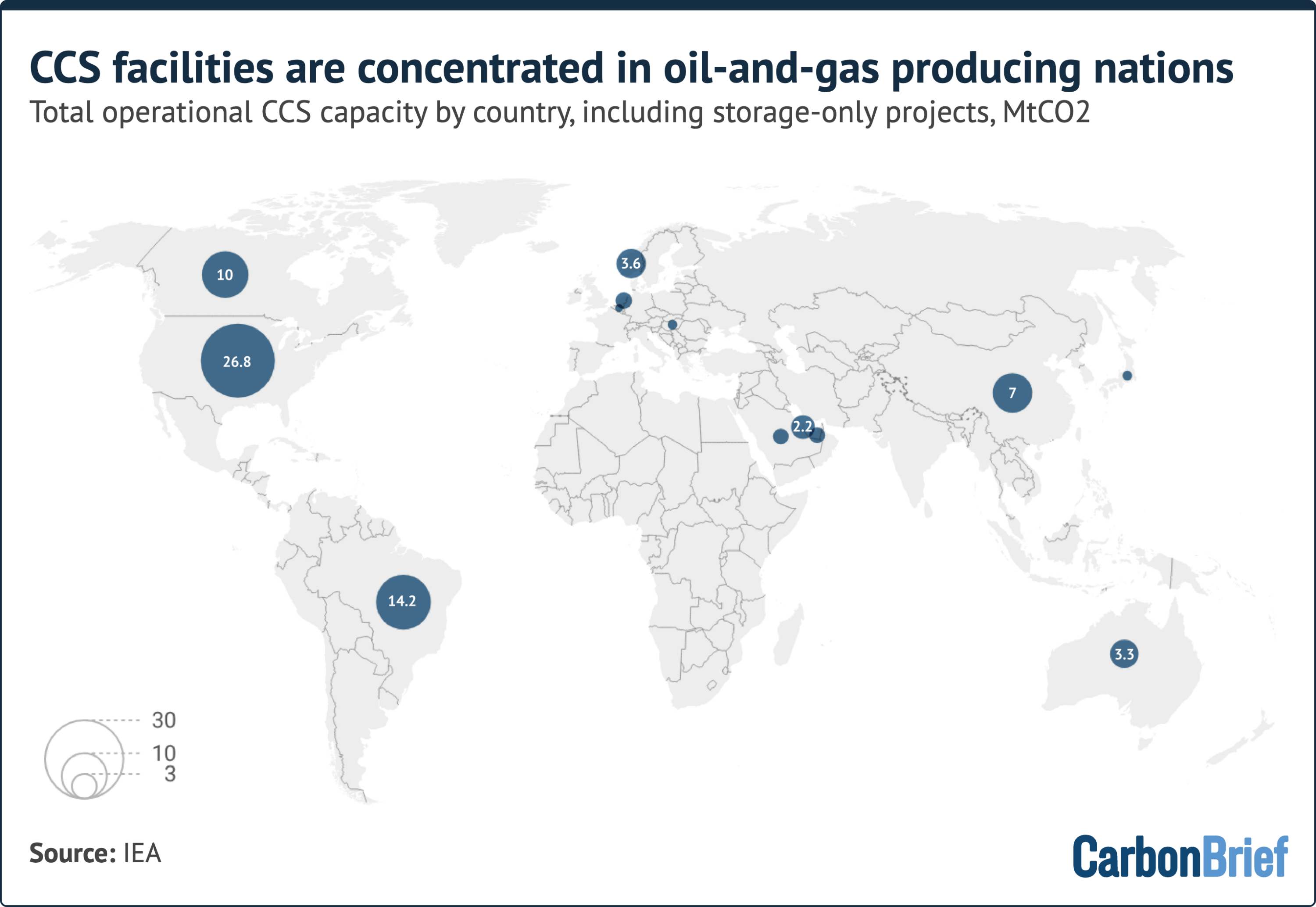
2024–2026: Major economies formalized large-scale funding packages. The UK government locked in up to £21.7 billion over 25 years to establish industrial CCS "clusters." Concurrently, global monitoring bodies reported 75 operational CCS facilities worldwide capturing a total of 62.5 million tonnes of $textCO_2$ ($textMtCO_2$) annually—a figure still dwarfed by global fossil fuel emissions of over 38 billion tonnes per year.
Supporting Context & Metrics: Operational Realities vs. Net-Zero Projections
Analyzing the functional state of CCS requires contrasting its current global footprint against the aggressive performance assumptions embedded within mainstream climate models.
Global Operational Disparity
Data maintained by the International Energy Agency (IEA) reveals that despite expanding project pipelines, actual deployment remains small relative to global fossil fuel output:
Metric / Parameter
Current Global Status (2026)
Net-Zero Scenario Requirements (2035–2050)
Operational Facilities
75 active projects globally
Hundreds of utility & industrial scale hubs
Annual Captured $textCO_2$
~62.5 $textMtCO_2$ / year
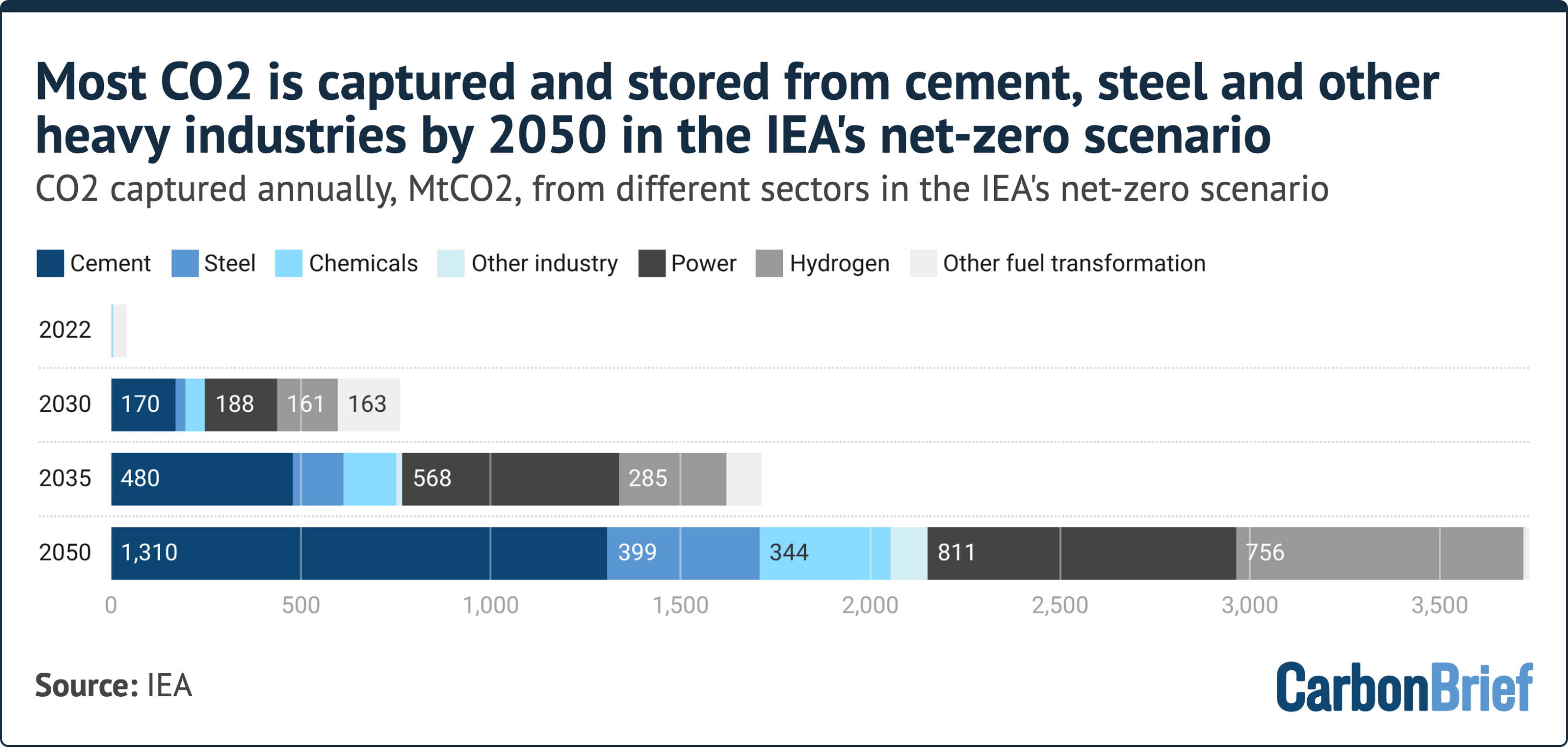
~1,700 $textMtCO_2$ / year by 2035 (IEA NZE)
Share of Fossil Emissions
$< 0.2%$ captured globally
$10% – 15%$ total mitigation contribution
Primary End Use
$sim 75%$ used for Enhanced Oil Recovery
$> 90%$ stored in dedicated geological formations
Global Annual CO2 Emissions vs. Captured Volume (MtCO2)
======================================================
Global Fossil CO2 Emissions : [████████████████████████████████████████] 38,100 Mt
Captured and Stored CO2     : [█] 62.5 Mt (<0.2%)
Sectoral Distribution and Capture Rate Deficits
Historically, gas purification and natural gas processing have dominated capture stats because separating $textCO_2$ is a routine technical requirement for producing marketable natural gas.
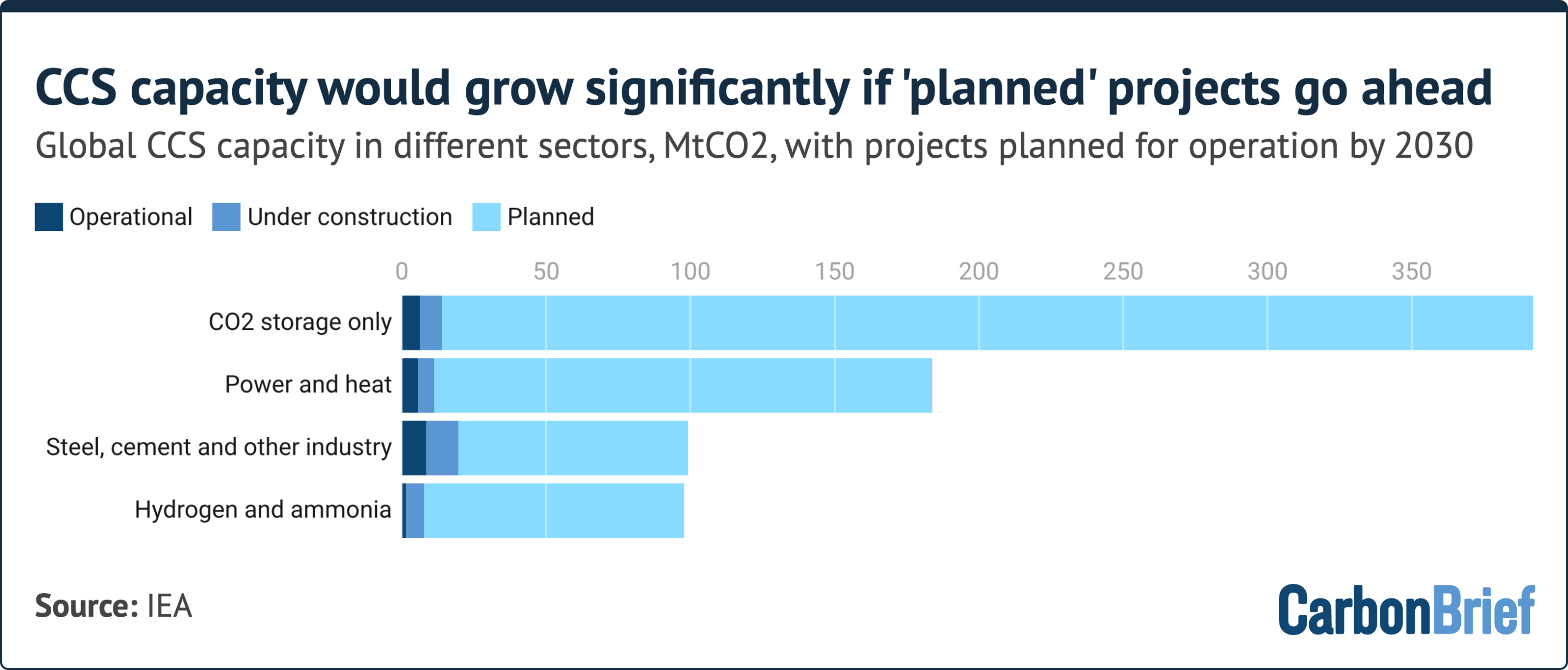
Current Capture by Sector (Total ~62.5 MtCO2/yr)
================================================
Gas Processing / Fossil Fuel Extraction : [████████████████████████████████] ~49 Mt
Fertilizer, Ethanol, & Other Industry   : [███████] ~10.5 Mt
Power Generation                        : [█] ~3 Mt
Heavy Industry (Cement/Steel)           : [░] <1 Mt
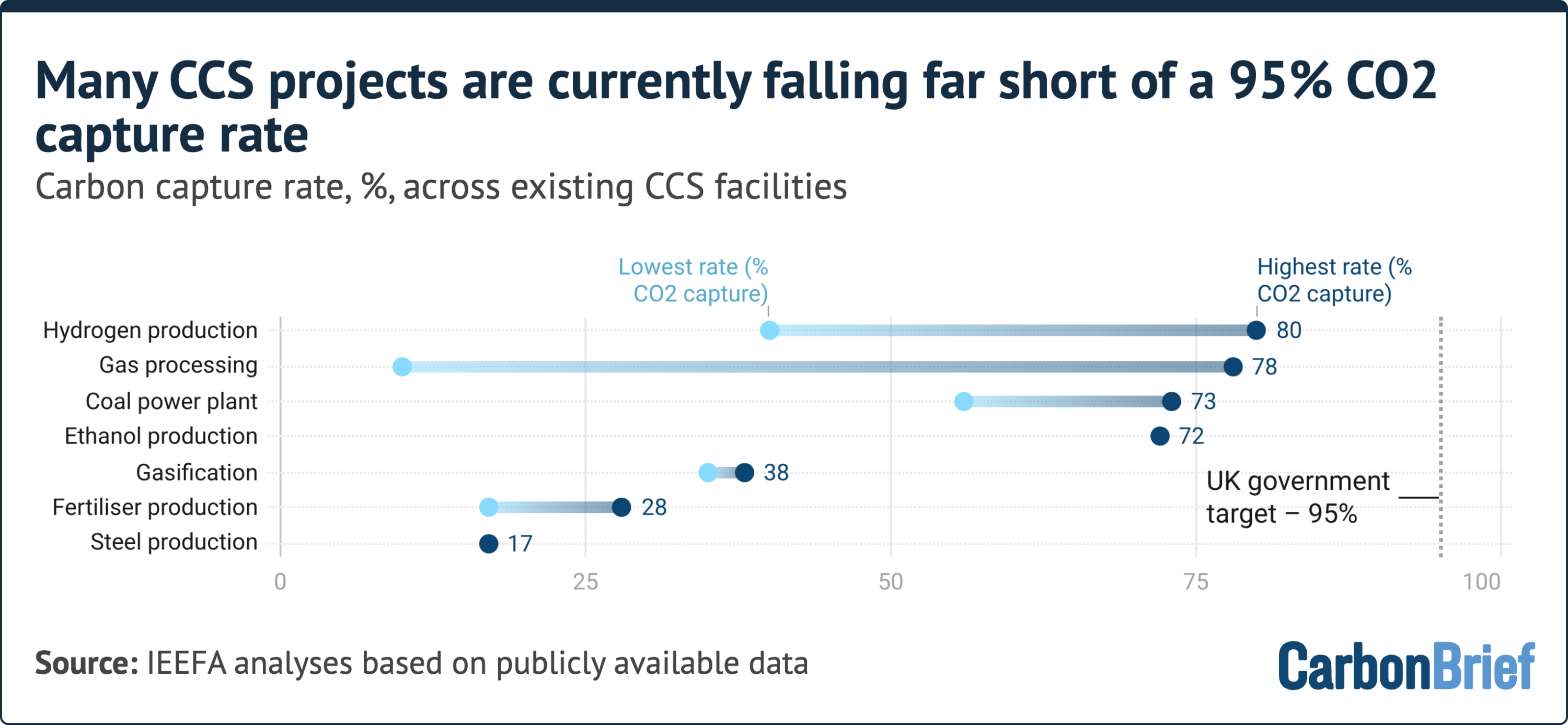
While regulations in jurisdictions like the UK mandate minimum target capture efficiencies of 95% for new projects, real-world evaluations by institutions like the Institute for Energy Economics and Financial Analysis (IEEFA) paint a starkly different picture:
Real-World Capture Efficiency: Many operational industrial and hydrogen CCS plants historically achieve actual capture rates ranging between 17% and 80%, routinely falling below initial design specifications due to technical downtime, solvent degradation, and variable stream pressures.
The Cost Penalty: Economic modeling from the University of Oxford’s Smith School of Enterprise and the Environment indicates that relying on a "high-CCS" transition pathway to reach net-zero could cost the global economy approximately $1 trillion more per year than a "low-CCS" pathway dominated by direct electrification, energy efficiency, and renewables.
Target vs. Real-World CO2 Capture Efficiency
=============================================
UK Regulatory Guidance Target : [███████████████████████████████████████] 95%
Industry Standards Baseline   : [█████████████████████████████████] 90%
Observed Real-World Range     : [██████████████████] 17% - 80% (Variable)
Scaling Back in the Power Sector
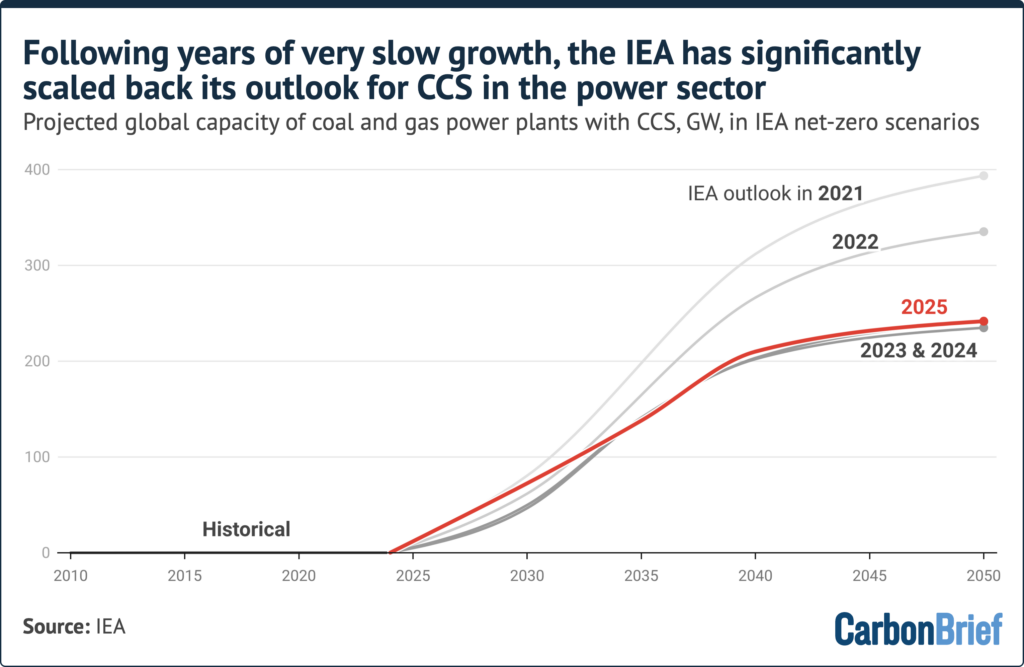
Recognizing the rapid drop in renewable energy costs, the IEA reduced its 2050 outlook for power-sector CCS capacity by roughly one-third between its 2021 and 2025/2026 projection cycles.
Instead, modelers increasingly restrict high-value CCS applications to "hard-to-abate" manufacturing sectors—with cement production topping the priority list, given that over half of cement emissions stem directly from chemical calcinating processes rather than fossil-fuel combustion.
Official Statements & Expert Perspectives
The global debate over CCS features contrasting views from energy researchers, policymakers, independent watchdogs, and industrial representatives.
The Case for CCS: Essential for Residual Emissions
Supporters contend that achieving absolute net-zero without sub-surface engineering is mathematically and structurally impossible given global industrial demand.
The Intergovernmental Panel on Climate Change (IPCC, AR6): "CCS is a critical mitigation option for hard-to-abate sectors… CCS will be required to mitigate remaining $textCO_2$ in industrial sectors such as cement and chemicals."
Dr. Jennifer Roberts, Deputy Director at the UK Carbon Capture and Storage Research Centre (UKCCSRC): "From an IPCC climate modelling perspective… reaching net-zero without CCS is far more expensive, disruptive and potentially out of reach… CCS is critical for net-zero, but is intrinsically tied with an industry sector that is climate polluting and historically anti-climate lobbying."
Prof. Stuart Haszeldine, University of Edinburgh: "If we’re going to burn gas, then we should be fitting CCS on that… Otherwise we’re just going to say it’s OK for us to burn lots of gas and carry on emitting."
The Case Against CCS: Cost, Performance, and Lock-In Risks
Opponents argue that CCS acts as a financial sinkhole that diverts capital from proven renewable solutions while giving fossil-fuel companies social license to continue extracting oil and natural gas.
Centre for International Environmental Law (CIEL): "Abated fossil fuels only exist in models… The outlook for the roll-out of CCS has been scaled back time and again as technology has failed to deliver as quickly as expected."
Andrew Reid, Energy Finance Analyst at IEEFA: "Is there really any point in trying to decarbonise fossil fuels, which comes with significant technical, timing and additional cost risk? As for cement and chemicals, again, there are alternatives, but these are nascent and expensive. CCS may be a solution here and if investment is going to be made in any area, it most likely should be these."
Lina Lefstad, Ecological Economist at Lund University: "These [integrated assessment] models have been quite instrumental in bringing CCS back onto the agenda… People seem really worried that the fossil-fuel industry is going to come out the winner again, but if that was the case I think we would have large-scale CCS by now."
Future Outlook & Strategic Implications: The UK Benchmark and Global Path Forward
The path forward for carbon capture will likely be defined by regional policy frameworks, structural reforms in project selection, and rigorous lifecycle carbon accounting.
       Priority Focus: High Climate Value
   ┌─────────────────────────────────────────┐
   │ 1. Cement & Lime Production             │ (Process emissions; few alternative paths)
   │ 2. Chemical Processing                  │
   ├─────────────────────────────────────────┤
   │ 3. Blue Hydrogen Production             │ (Requires strict upstream methane controls)
   │ 4. Dispatchable Power Generation        │ (Declining viability vs. Renewables + Storage)
   └─────────────────────────────────────────┘
        Low Priority / Decreasing Value
Case Study: The UK’s £21.7 Billion Strategy
The UK has established one of the world’s most aggressive public-private deployment frameworks, committing up to £21.7 billion over 25 years. The approach centers on geographically concentrated "industrial clusters" designed to share shared pipeline and offshore geological storage infrastructure:
Track-1 Clusters (Late 2020s Target): The East Coast Cluster (Teesside and the Humber) and HyNet (North West England and North Wales).
Track-2 Clusters (~2030 Target):Acorn (North East Scotland) and Viking (Humber region).
   [UK Offshore CO2 Storage: Saline Aquifers & Depleted Gas Fields]
                                 ▲
                                 │ (Offshore Pipelines)
        ┌────────────────────────┴────────────────────────┐
        │                                                 │
[East Coast Cluster]                                  [HyNet]
 (Teesside / Humber)                          (North West / North Wales)
  ├─ Gas Power + CCS                           ├─ Blue Hydrogen Production
  ├─ Industrial Processing                     ├─ Industrial Facilities
  └─ Net Zero Teesside                         └─ Storage Infrastructure
Despite its ambition, the UK strategy faces headwind on several fronts:
Funding Structure and Public Scrutiny: Approximately three-quarters of the £21.7 billion financing package is structured to be drawn from consumer utility bills and levy mechanisms rather than direct treasury disbursements, drawing criticism from consumer advocacy groups.
Upstream Methane Leaks: Environmental litigation—such as legal challenges mounted against the proposed Net Zero Teesside gas-power-with-CCS project—highlights that relying on imported Liquefied Natural Gas (LNG) brings high lifecycle methane emissions. If upstream fugitive methane emissions remain high, net lifecycle greenhouse gas reductions could drop from an anticipated 75% to as low as 25%.
Sectoral Misallocation: In early 2025, the UK Parliament’s Public Accounts Committee criticized the government’s cluster approach for prioritizing gas power and blue hydrogen over hard-to-decarbonize industrial sectors like cement, where alternative mitigation paths are virtually non-existent.
Global Strategic Imperatives
To ensure CCS contributes meaningfully to climate targets without delaying the energy transition, policy experts and environmental economists point to four key requirements:
Strict Application of the "CCS Ladder": Governments must prioritize funding and infrastructure access for non-substitutable sectors (cement, lime, process chemicals) while scaling back subsidies for sectors where direct electrification and renewable generation are already commercially superior.
Enforcing Polluter-Pays Regulations: Instead of indefinitely relying on public subsidies or billpayer levies, regulatory regimes need to transition toward statutory mandates that require fossil fuel producers and heavy emitters to fund and execute capture operations at their own expense.
Auditing Lifecycle Methane & Minimum Capture Efficiency: Real-world performance standards must mandate minimum verified capture rates of 90–95% alongside strict upstream methane controls. Projects that fail to meet these parameters risk being reclassified as unabated fossil-fuel infrastructure.
Ending EOR Reliance for Climate Credits: Regulators must separate climate mitigation subsidies from projects engaged in Enhanced Oil Recovery, ensuring that captured $textCO_2$ is placed in permanent geological storage rather than utilized to extract additional fossil fuels.