Executive Overview
The portable power station market has evolved rapidly over the past half-decade, transitioning from bulky, noisy emergency backup units to sophisticated, modular ecosystems capable of handling demanding residential, professional, and recreational needs. Jackery, a pioneer in this space, has consistently pushed the boundaries of mobile energy storage. With the recent launch of the Jackery HomePower 1000 Plus v2, the company aims to redefine what a mid-sized portable power station can achieve.
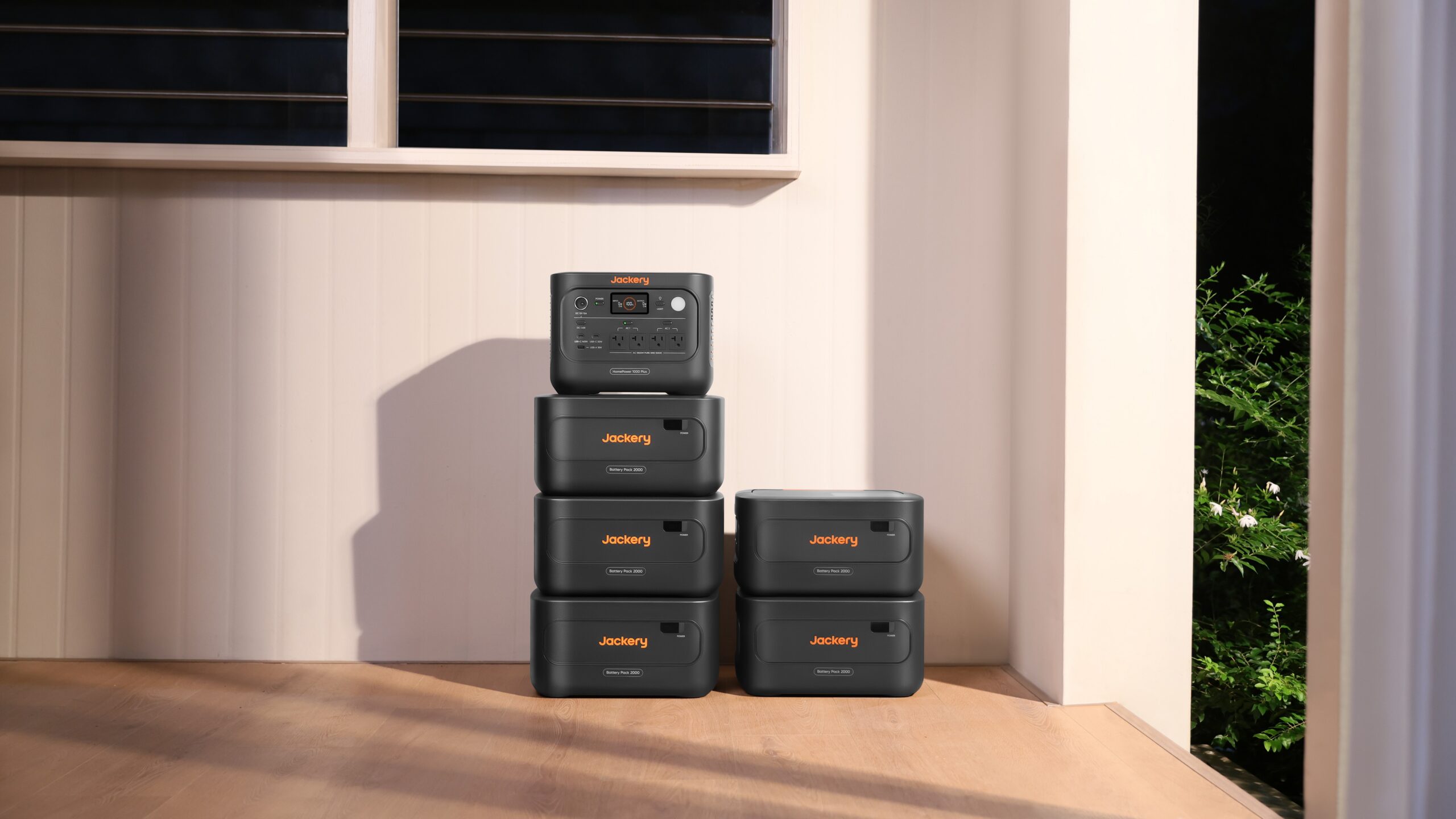
Out of the box, the HomePower 1000 Plus v2 packs 1024 kWh of energy storage into a remarkably compact frame. However, its defining characteristic—and the primary differentiator from its predecessor—is its newfound expandability. Unlike earlier iterations locked to a fixed capacity, this second-generation unit allows users to scale up by integrating up to five 2 kWh expansion packs, pushing the total potential capacity to a massive 11 kWh.
Combined with robust LFP (lithium iron phosphate) chemistry, advanced cell-to-pack construction, an upgraded 1800W continuous output, and lightning-fast charging speeds, the HomePower 1000 Plus v2 is designed to bridge the gap between portable convenience and whole-home resilience. This comprehensive review examines the hardware, technical specifications, real-world testing benchmarks, and practical applications of Jackery’s latest energy storage solution.
Detailed Chronology and Hardware Evolution
From Fixed Capacity to Modular Ecosystem
The original iteration of Jackery’s 1000 Plus model earned a strong reputation for reliability, user-friendliness, and solid build quality. However, power demands in modern households, job sites, and off-grid setups frequently exceed initial expectations. Recognizing that consumer energy requirements fluctuate—often scaling dramatically during emergencies, remodeling projects, or extended camping trips—Jackery engineered the v2 to be fundamentally modular.

The deployment of the HomePower 1000 Plus v2 introduces a scalable architecture. A user can start with the base 1024 kWh unit for lightweight grab-and-go tasks and later scale the system incrementally by adding up to five 2-kWh expansion modules. This modular flexibility ensures that users are never paying for more capacity than they need upfront, yet they retain a clear upgrade path as their power demands grow.
Engineering and Build: The Cell-to-Pack Advantage
One of the most noteworthy engineering upgrades in the v2 model is the transition to a cell-to-pack (CTP) construction methodology. Traditionally, portable power stations utilize a multi-tiered assembly where individual cells are grouped into modules, which are then wired into a final battery pack. CTP bypasses the module phase entirely, integrating the cells directly into the structural housing of the battery pack.
This design strategy, heavily favored in modern electric vehicle (EV) manufacturing, yields immediate dividends for a portable unit:
- Space Efficiency: Eliminating internal module casings frees up volume for active energy storage, shrinking the overall footprint.
- Weight Reduction: Fewer internal framing components mean a lighter overall product. The HomePower 1000 Plus v2 measures a modest 12.4 inches by 7.9 inches by 9.2 inches and weighs just 23.8 pounds—making it lighter and more compact than a standard 30-pack of canned beverages.
- Structural Integrity: Fusing the cells into the core structure creates a rugged, shock-resistant chassis capable of surviving the bumps and bruises of job site transportation or outdoor adventures.
While the integrated handle is sturdy and comfortable for short carries, users traversing longer distances on foot may find themselves wishing for an optional shoulder strap or custom backpack accessory.

Supporting Context & Technical Metrics
Power Output and Circuit Compatibility
Performance under load is where the HomePower 1000 Plus v2 truly separates itself from smaller consumer power banks. Jackery has increased the continuous AC power output to 1800 W, with a peak surge capability of 3600 W distributed across four 120V AC outlets tailored for the North American market. This represents a significant step up from the 1500W continuous / 3000W peak limit of its predecessor.
While 1800 watts cannot power an entire house simultaneously (barring perhaps a micro-cabin or tiny home), it hits a vital engineering sweet spot: it can handle any electrical load that can be safely drawn from a standard 120V, 15A residential circuit.
This capability unlocks numerous practical applications:
- Workshops and Job Sites: Mechanics and contractors can power heavy-duty power tools without dragging out hazardous, miles-long extension cords or enduring the noise, exhaust, and fuel transport hassles of traditional gas generators.
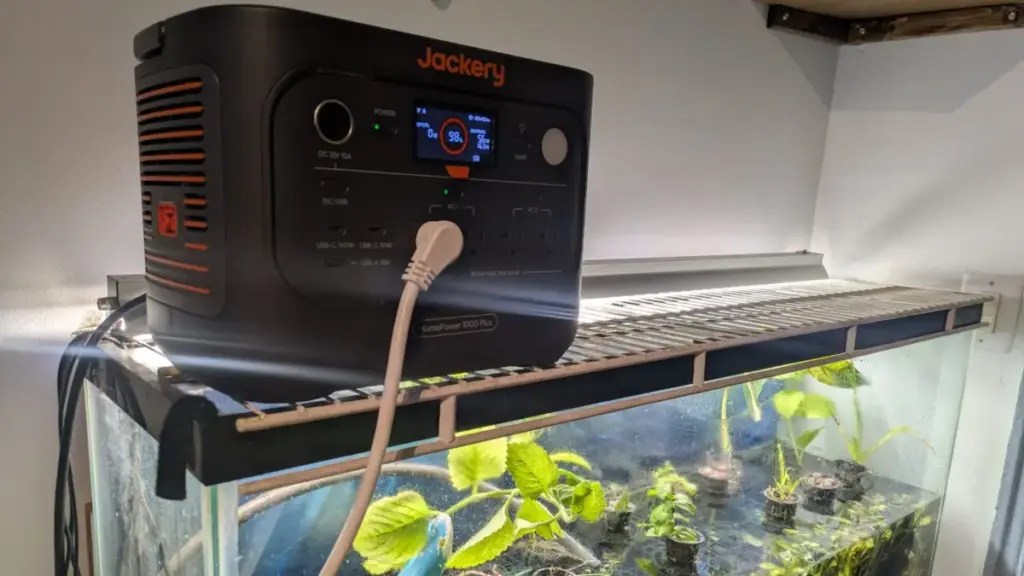
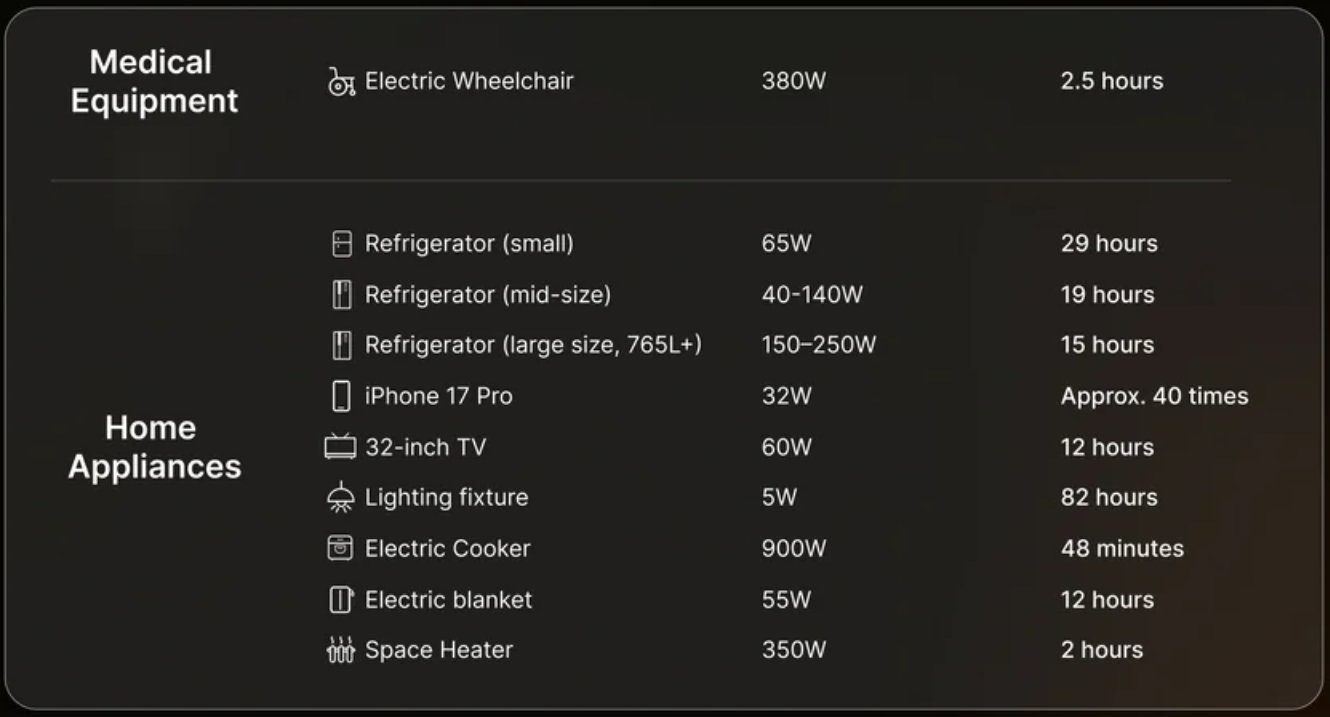
- Critical Appliance Backup: During a blackout, it can keep gas furnace blowers, control panels, igniters, aquarium oxygen pumps, or essential medical devices running smoothly.
- Point-of-Use Resilience: Even households equipped with whole-home battery storage can utilize point-of-use units like the Jackery to keep specific high-priority devices operational long after primary reserves are stretched thin.
Input/Output Versatility & Safety Protocols
In addition to its four AC outlets, the front panel features a comprehensive array of DC connections designed to eliminate the clutter of individual power bricks:
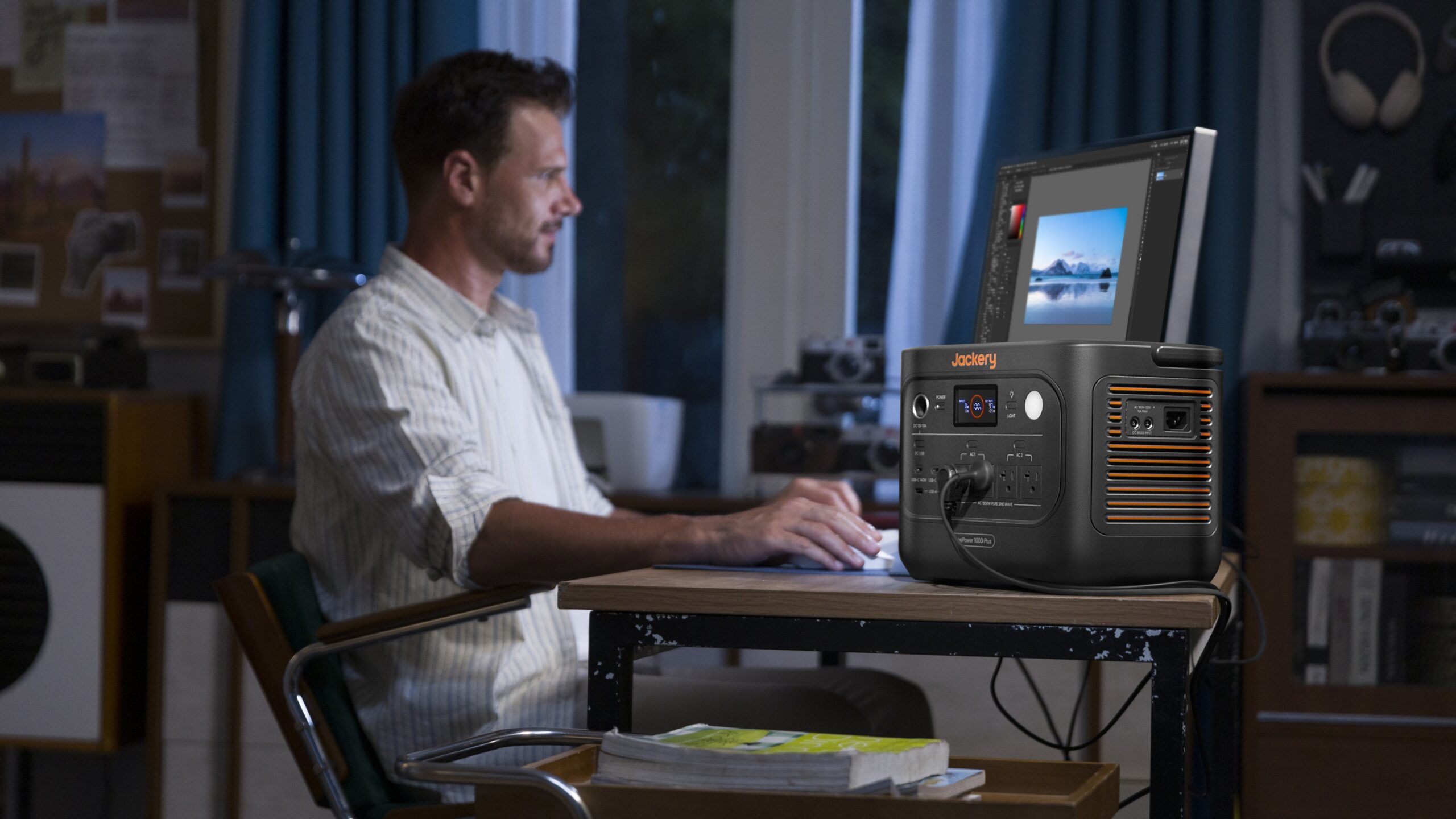
- One 12V 10A DC automotive-style plug
- One high-output 140W USB-C port (ideal for fast-charging modern laptops)
- One 30W USB-C port
- One 18W USB-A port
- An integrated emergency LED light capable of continuous illumination or flashing an S.O.S. pattern in Morse code.
Safety is managed by an advanced Battery Management System (BMS) capable of detecting micro-fluctuations in voltage and current. If instability or a short circuit is sensed, the system instantly cuts power to prevent thermal runaway or equipment damage. Furthermore, the outer casing is fabricated from certified fire-resistant materials.
Charging Speeds and Solar Integration
When it comes to replenishing its energy reserves, the HomePower 1000 Plus v2 wastes little time. Connected to a standard AC wall outlet, the battery can charge from zero to 80% in a mere 36 minutes, reaching a full 100% charge in just 50 minutes. Intelligent internal logic ensures that if AC power is actively passing through the unit to run external electronics while charging, the input current throttles back automatically to protect the wall circuit from overloading.
For off-grid and renewable energy enthusiasts, the unit accepts DC input via two separate DC8020 ports:
- A single port accepts 16–60V at 12A.
- Dual ports operated simultaneously can handle up to 21A for a 400W maximum solar input, capable of fully recharging the base unit in under three hours.
When both AC and solar inputs are active, a dedicated "self-powered" mode prioritizes renewable solar generation, minimizing grid draw. For automotive charging, the DC port accepts up to 8A, though charging times via a vehicle cigarette lighter will naturally be longer due to lower wattage limits.
Official Statements and Market Positioning
Jackery’s engineering and product development teams emphasize that the HomePower 1000 Plus v2 was built with versatility and consumer autonomy in mind. By leveraging high-grade LFP (Lithium Iron Phosphate) battery cells, the unit is rated for an impressive 6,000 charge cycles while maintaining a standard 5-year manufacturer warranty. This longevity ensures that the device can withstand years of daily cycling, whether used for emergency backup, outdoor recreation, or peak-rate energy shifting.
Time-of-Use (TOU) Arbitrage and Urban Living
Beyond emergency preparedness, Jackery has positioned the HomePower 1000 Plus v2 as a financial tool for urban dwellers and homeowners facing complex utility pricing structures.
For residents under Time-of-Use (TOU) electricity plans, energy costs skyrocket during late-afternoon and evening peak hours. By charging the battery during off-peak hours (or via daytime solar panels) and discharging it during peak hours to run energy-intensive devices—such as window air conditioners or home office setups—users can actively shave dollars off their monthly utility bills. Over the multi-thousand-cycle lifespan of the LFP cells, the unit has the potential to pay for itself entirely.
Crucially, this modular approach opens up energy storage benefits to apartment renters and urban dwellers. Traditional whole-home storage systems require complex, expensive electrical panel modifications that landlords rarely approve. The portable, plug-and-play nature of the HomePower 1000 Plus v2 allows renters to capture solar or off-peak grid energy at the point of use, enjoy backup protection during outages, and simply unplug and take the system with them when they relocate.
Pricing and Bundles
The Jackery HomePower 1000 Plus v2 starts at an MSRP of $749, though introductory promotional pricing often lowers the barrier to entry to $619. Modular bundles scale based on user needs:
- Base Unit + 200W Portable Solar Panel: Adds a $200 premium.
- Base Unit + 2000 kWh Expansion Battery: Retails at an MSRP of $1499 (promotional price $1269).
- Comprehensive Bundle (Base Unit, 2 Expansion Batteries/High Capacity, and Two 200W Solar Panels): Retails at an MSRP of $2139 (promotional price $1809).
Real-World Testing & Performance Analysis
Putting the hardware through preliminary paces reveals an exceptionally resilient machine that frequently exceeds its conservative technical ratings.
Appliance Benchmarks
- Climate Control: Running a 12,000 BTU Midea U window air conditioner in an uninsulated, high-ceilinged corner apartment proved surprisingly easy for the unit. The air conditioner dropped ambient temperatures efficiently over several hours, drawing power smoothly without triggering overcurrent protections.
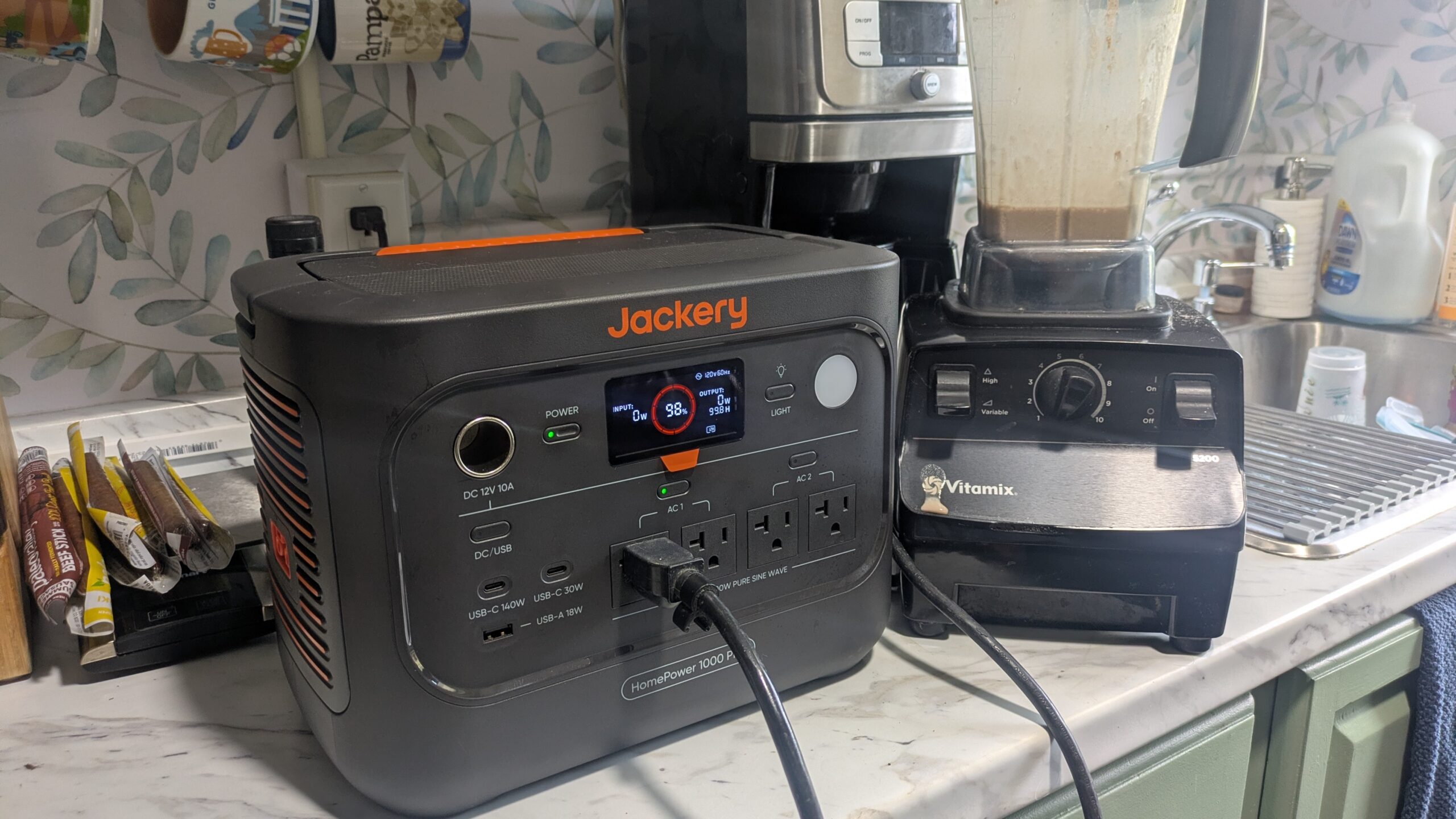
- Heavy Kitchen Loads: Testing the unit with a high-powered Vitamix blender, a rice cooker, and an electric pressure cooker demonstrated that the inverter easily handles motor-driven inductive loads and resistive heating elements alike. Campouts featuring crockpots of chili, blender margaritas, and electric grills are well within the unit’s operational envelope.
- Heavy Appliances: Pushing the limits further, running a standard household dishwasher through a normal cycle—which involves energy-intensive water heating phases—resulted in successful completion, confirming that the unit can comfortably operate at or slightly above its advertised 1800W continuous threshold all the way down to a 1% state of charge.
Uninterruptible Power Supply (UPS) Performance
Acting as a UPS, the HomePower 1000 Plus v2 features a rapid 10-millisecond switchover time, delivering clean, pure sine-wave AC power. During sudden grid dropouts or brownouts, sensitive electronics such as desktop computers, 3D printers, and studio audio-visual gear remain powered without interruption or data corruption. Furthermore, its 3kV/1000J built-in surge protection safeguards connected equipment against violent lightning strikes or grid voltage spikes.
Future Outlook: Redefining Portable Clean Energy
As climate change accelerates extreme weather events and strains aging electrical grids, localized energy resilience is shifting from a luxury hobby to an essential household strategy. At the same time, outdoor enthusiasts are increasingly seeking ways to enjoy nature without the noise, air pollution, and wildfire risks associated with traditional combustion engines and campfires.
The Jackery HomePower 1000 Plus v2 occupies a vital intersection in this transition. By combining EV-grade cell-to-pack construction, massive modular expandability up to 11 kWh, rapid charging capabilities, and intuitive smart app controls, Jackery has delivered a tool that excels across diverse environments.
Whether deployed as an intelligent urban load-shifter to beat soaring utility rates, a silent job-site power source for contractors, or a reliable off-grid companion for remote work and emergency preparedness, the HomePower 1000 Plus v2 proves that high-performance energy storage no longer needs to be permanently bolted to a utility wall. As smart energy ecosystems continue to mature, modular units like this will undoubtedly anchor the decentralized power grid of the future.