Executive Overview
For decades, the global conversation surrounding Canada’s energy exports has been dominated by a single, monolithic resource: oil. From endless debates over cross-border pipelines to volatile swings in Western Canadian Select pricing, fossil fuels have long anchored Canada’s identity as an energy superpower. However, a seismic shift in the global economy is underway. As nations worldwide accelerate their transition toward net-zero emissions, a new category of commodities has emerged as the definitive currency of the 21st century: critical minerals.
This changing of the guard was underscored recently when British Columbia Premier David Eby floated a bold, unconventional bargaining chip in ongoing trade negotiations under the Canada-United States-Mexico Agreement (CUSMA). Rather than leveraging traditional oil and gas reserves, Eby threatened to restrict a key B.C.-produced critical mineral export. It was a stark reminder that as geopolitical friction intensifies with traditional partners, Canada’s mineral wealth is becoming an increasingly potent instrument of statecraft.
Yet, despite holding vast reserves of the transition minerals that the world so desperately needs, Canada’s economic strategy remains dangerously tethered to North American markets—markets where trade partners are increasingly prone to protectionism and volatile political winds. With the United States showing signs of policy unpredictability, Canada faces a critical juncture. The path forward requires diversification, and the most logical destination is the European Union.
The EU represents the world’s third-largest economy and is executing the world’s most ambitious clean energy transition. Desperate to decouple its industrial base from authoritarian suppliers like China, Europe is actively seeking reliable, values-aligned trading partners. Canada, with its clean energy grid, robust environmental standards, and expanding framework of Indigenous-led mining projects, fits the European blueprint almost perfectly.
However, translating diplomatic handshakes and memorandums of understanding (MOUs) into actual, high-volume trade has proven difficult. As Canada prepares for high-stakes economic summits and navigates turbulent North American trade talks, federal and provincial leaders must pivot from vague ambitions to aggressive commercial execution. By focusing public investment on a core group of six essential transition minerals and integrating more deeply with European financial institutions, Canada can secure its economic resilience and cement its status as a trusted global supplier for decades to come.
Detailed Chronology: The Shifting Geopolitics of Energy and Trade
To understand Canada’s current strategic dilemma, one must trace the rapid evolution of global supply chains over the past ten years.
The Last Decade: The Rise of the Mineral Economy
Historically, global energy security was defined by petroleum barrels and natural gas pipelines. However, the proliferation of clean technologies—spanning electric vehicles (EVs), wind turbines, solar panels, and grid-scale battery storage—has radically rewritten the geopolitical rulebook. Unlike fossil fuels, which are consumed continuously, clean energy technologies require a massive upfront deployment of mineral inputs. An electric vehicle, for instance, demands roughly six times the mineral inputs of a conventional internal combustion vehicle.
Recognizing this vulnerability, major global powers have spent the last several years scrambling to secure access to these finite resources. China’s near-monopoly on the extraction and processing of rare earth elements, graphite, and lithium has long alarmed Western capitals. In response, Washington has aggressively ramped up its domestic and international mining strategies. Most recently, the United States administration announced more than $2 billion in domestic and international investments aimed at shoring up critical mineral supply chains, expanding its reach deep into Latin America and other resource-rich regions.
The CUSMA Friction and Premier Eby’s Warning
Against this backdrop of intensifying resource nationalism, Canada finds itself locked in tense trade dynamics with its largest trading partner. The trilateral framework of CUSMA is slated for continuous review, and protectionist industrial policies south of the border have frequently disadvantaged Canadian industries.
It was within this charged atmosphere that B.C. Premier David Eby deployed an unprecedented warning during CUSMA trade positioning, threatening to withhold vital critical mineral exports. Eby’s gambit laid bare a growing sentiment among Canadian provincial leaders: Canada’s mineral wealth is too valuable, and global demand too diversified, to allow our resources to be taken for granted within a single, increasingly volatile continental market.
Europe’s Strategic Awakening
While North America bickers over trade terms, the European Union has faced an existential reckoning regarding its industrial supply chains. Having historically relied on imported fossil fuels from unstable or adversarial regimes, Europe resolved not to make the same mistake with the green transition.
Over the past three years, the EU has codified aggressive regulatory frameworks—such as the Critical Raw Materials Act (CRMA)—designed to cap its reliance on any single non-allied nation to no more than 65% for any strategic raw material. At the same time, Brussels has set strict benchmarks: aiming to extract 10% of its critical mineral needs domestically, while sourcing the remaining 90% from trusted, democratic partners that meet rigorous Environmental, Social, and Governance (ESG) standards.
Recognizing that Canada’s regulatory environment closely mirrors its own, European leaders have initiated a diplomatic blitz. Over the past twenty-four months, Canada has signed a flurry of bilateral critical mineral partnerships with key EU member states, including Italy, Germany, and Sweden. Yet, industry analysts note a glaring disconnect: despite the proliferation of MOUs, the actual volume of critical minerals flowing across the Atlantic has crawled at a frustratingly slow pace.
Supporting Context & Metrics: Demand, Supply, and the Transatlantic Opportunity
The economic logic underpinning a Canada-EU critical mineral corridor is rooted in hard data. The numbers demonstrate a monumental mismatch between European industrial demand and domestic supply capabilities.
The Scale of European Demand
The European Union’s commitment to electrification is staggering. To meet its legally binding climate targets and phase out internal combustion engines, the EU’s demand for lithium—critical for both EVs and energy storage systems—is projected to skyrocket by a factor of nine to twelve by 2030. Similar exponential surges are forecasted for cobalt, nickel, graphite, and rare earth elements.
Yet, Europe’s geology cannot support this green industrial revolution entirely on its own. Brussels acknowledges that domestic extraction will satisfy only a fraction of its total requirements. Consequently, the EU is scouring the globe for partners who can deliver refined, low-carbon materials without compromising on human rights or environmental protection.
Where Canada Ranks
In a comprehensive comparative analysis conducted by Clean Energy Canada evaluating how well various global suppliers meet the EU’s stringent trade, sustainability, and governance criteria, Canada placed second globally, trailing only Norway.
Canada’s competitive advantages are manifold:
- Clean Electricity Grids: Unlike many competing mining jurisdictions that rely on coal-fired power to extract and process ores, Canadian mining operations—particularly in provinces like British Columbia, Manitoba, and Quebec—draw upon abundant hydroelectricity, resulting in a substantially lower carbon footprint per ton of mineral extracted.
- Indigenous Partnerships: Canadian mining is increasingly characterized by co-ownership and equity partnerships with Indigenous communities, ensuring that resource development translates into localized economic reconciliation and generational wealth.
- Existing Trade Infrastructure: The Comprehensive Economic and Trade Agreement (CETA) between Canada and the EU provides an existing legal and tariff-free architecture to facilitate the seamless movement of goods.
The Strategic Focus: The "Big Six" Minerals
Despite these clear advantages, Canadian public policy has historically suffered from dispersion, spreading federal and provincial capital investments thin across dozens of disparate minerals. To truly capture the European market, policy experts argue that Canada must streamline its focus.
Specifically, Canada should concentrate its public investment, permitting acceleration, and diplomatic capital on six essential minerals that underpin both the global energy transition and European industrial needs:
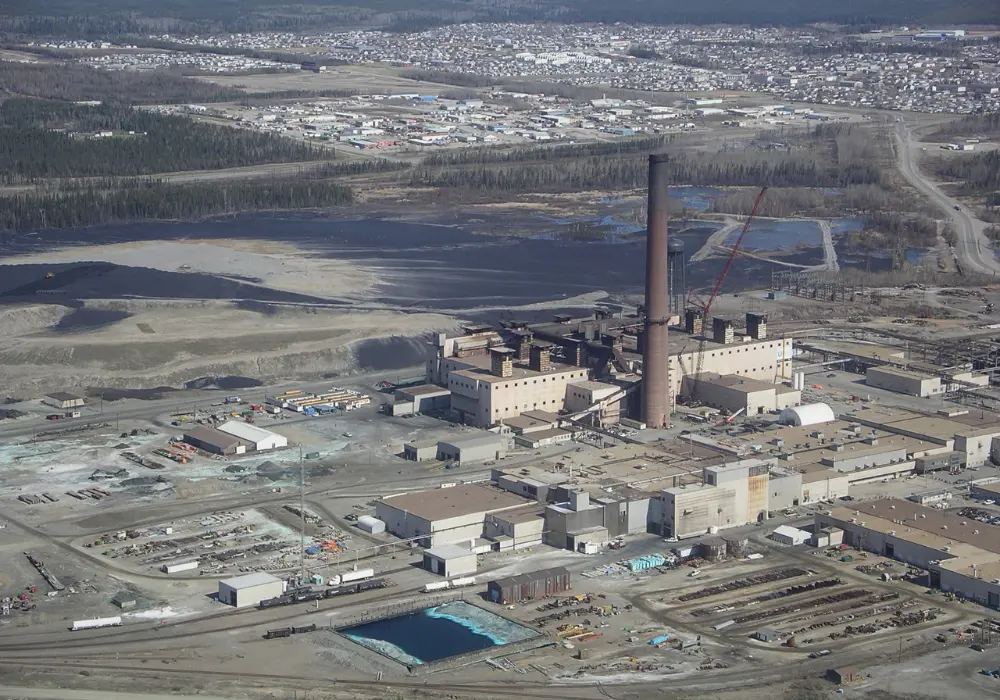
- Cobalt: Essential for high-density EV batteries. Canada can leverage its production—such as Vale Base Metals’ operations in Thompson, Manitoba—to supply refineries in countries like Finland, thereby directly displacing Europe’s reliance on the Democratic Republic of Congo.
- Copper: The undisputed backbone of electrical grids, renewable energy generation, and wiring.
- Graphite: A vital anode material for lithium-ion batteries. Canadian graphite deposits represent a prime opportunity to supply German and broader European automotive manufacturers, reducing their heavy dependence on Chinese supply chains.
- Lithium: The core component of modern battery chemistry.
- Nickel: Crucial for advanced battery chemistries and stainless-steel production, with significant Canadian deposits in Ontario, Manitoba, and Quebec.
- Rare Earth Elements: Indispensable for permanent magnets used in wind turbines and EV motors.
Official Statements and Institutional Alignment
Realizing the full potential of a transatlantic critical mineral corridor requires more than private-sector ambition; it demands deep institutional alignment between Ottawa, provincial capitals, and European financial heavyweights.
The Push for Institutional Financing
Financing multi-billion-dollar mining projects is notoriously complex, requiring immense upfront capital expenditure with long gestation periods. Recognizing this, Canada has already established foundational instruments, such as a letter of intent with the European Investment Bank (EIB)—one of the world’s largest multilateral financial institutions—to cooperate on critical raw material resilience.
Policy advocates emphasize that the immediate next step is to convert this letter of intent into a signed, binding operational framework and execute the first wave of joint transactions. Furthermore, the Canadian federal government must actively assist domestic mining firms in securing placements on the EU’s official Strategic Projects under the Critical Raw Materials Act (CRMAs) list. Securing this designation would unlock accelerated permitting within Europe and open access to lucrative European capital pools.
The Upcoming Canada Investment Summit
With the Canada Investment Summit scheduled for mid-September, the federal government faces a golden opportunity to operationalize these diplomatic ambitions. Policy leaders are urging the Prime Minister’s Office to ensure that European industrial investors, automotive offtakers, and clean-energy purchasers occupy prime seating at the negotiating tables.
Joanna Kyriazis, Director of Policy and Strategy at Clean Energy Canada, highlighted the urgency of the moment:
"As CUSMA negotiations continue to stall, and Canada prepares to host investors from around the world at next month’s summit, European investors and potential offtakers looking at Canadian critical mineral projects should be at the top of the prime minister’s invite list."
Echoing this sentiment, Evan Pivnick, Associate Director of Public Affairs at Clean Energy Canada, noted that moving beyond symbolic agreements is now an economic imperative:
"While MOUs represent real progress, we need to move past the MOU stage and focus on key areas of EU demand while leveraging Canada’s existing strengths. We have the resources, the clean grid, and the partnerships—now we need the commercial execution."
Future Outlook: Navigating the Road Ahead
The trajectory of Canada’s economy over the next decade will be heavily dictated by how adeptly the nation navigates the restructuring of global trade. Relying indefinitely on a frictionless North American economic partnership is no longer a viable baseline assumption. Protectionist trade policies, shifting administrations in Washington, and the weaponization of supply chains mean that Canada must diversify its economic portfolio.
The transition to a clean-energy global economy offers Canada a once-in-a-generation opportunity to redefine its international role. By shedding its historical fixation on raw fossil fuel exports and strategically pivoting toward refined, low-carbon critical minerals, Canada can insulate itself from continental trade shocks.
The roadmap is clear. Ottawa must stop spreading its financial resources across an unwieldy array of minor projects and instead double down on the "Big Six" minerals that Europe’s industrial base is crying out for. It must translate letters of intent with the European Investment Bank into concrete financial flows, secure strategic project designations within the EU, and use upcoming platforms like the Canada Investment Summit to cement binding commercial off-take agreements.
The global race for the minerals of tomorrow is moving at breakneck speed. If Canada acts decisively, it can transcend its historical identity as a regional resource hinterland and emerge as an indispensable pillar of European and global energy security. If it hesitates, it risks being sidelined in a rapidly evolving geopolitical landscape where the new oil waits for no one.