

Executive Overview
As global temperatures continue to break historical records and persistent heatwaves define the modern summer, the search for reliable, cooling apparel has transformed from a seasonal shopping task into an urgent functional necessity. Within the vast ecosystem of warm-weather textiles, linen has firmly reclaimed its throne as the premier material for beating the heat. Celebrated for its exceptional breathability, moisture-wicking capabilities, and timeless aesthetic, linen offers a natural sanctuary against rising temperatures.
However, the modern consumer’s relationship with fashion is undergoing a paradigm shift. The growing climate crisis has heightened awareness around the ecological toll of the textile industry, prompting shoppers to look beyond mere aesthetic appeal and examine the lifecycle of their garments. While linen is widely championed as a lower-impact alternative to conventional cotton and synthetics, its production is not without environmental complexities. From the agricultural practices governing flax cultivation to the chemical-heavy processes of retting, dyeing, and finishing, the path from plant to wardrobe demands rigorous scrutiny.
To help consumers navigate this landscape, sustainability rating platforms—most notably Good On You—have curated comprehensive evaluations of brands that balance high environmental and ethical standards with exceptional design. This report provides an exhaustive investigation into the virtues of linen, the hidden nuances of its supply chain, strategic guidance on making conscious purchasing decisions, and an authoritative curation of 12 standout ethical linen dresses from globally recognized, high-rated labels such as PANGAIA, LA Relaxed, Artknit Studios, and JAN N JUNE.
Detailed Chronology: The Evolution of Linen from Ancient Staple to Modern Eco-Fabric
To fully understand the resurgence of linen in contemporary sustainable fashion, it is necessary to examine the historical and industrial timeline of this ancient textile.
Antiquity and Early Industrialization
Linen is one of the oldest textiles known to human civilization, with archaeological evidence tracing its usage back more than 30,000 years to prehistoric caves in Georgia, where wild flax fibers were spun and dyed. By ancient Egyptian times, linen was prized not only for its cooling properties in arid desert climates but also as a symbol of light, purity, and wealth. The fibers were painstakingly harvested by hand, stripped, combed, and woven into gossamer-thin fabrics that draped the pharaohs.
For millennia, the production of linen remained a localized, labor-intensive craft. The Industrial Revolution of the 18th and 19th centuries largely bypassed flax in favor of cotton, which was far easier to mechanize, spin, and weave using early industrial machinery. Cotton’s dominance was further cemented by exploitative global trade networks and colonial expansion. Consequently, linen was relegated to a niche luxury product or household textile for generations.
The 20th-Century Synthetic Shift
The mid-20th century marked the introduction of petroleum-derived synthetic fibers—such as polyester, nylon, and acrylic—which fundamentally disrupted the global textile market. These cheap, highly versatile materials promised wrinkle-free convenience and dominated mass-market fashion. However, as the environmental consequences of fossil fuel extraction, microplastic shedding, and overflowing landfills became impossible to ignore by the late 20th and early 21st centuries, a counter-movement began to take shape.
The Sustainable Renaissance
In the past two decades, the fashion industry has witnessed a dramatic revival of natural, biodegradable fibers. Driven by consumer demand for transparency and lower-impact alternatives to fast fashion, flax cultivation and linen production have undergone a technological and philosophical modernization. Innovations in mechanical softening, non-toxic enzyme treatments, and closed-loop water systems have transformed linen from a stiff, easily wrinkled novelty into a sophisticated, versatile staple of ethical wardrobes. Today, linen stands at the intersection of heritage craftsmanship and cutting-edge sustainability, championed by conscious brands committed to transforming how we dress for a warming planet.
Supporting Context & Metrics: The Science and Lifecycle of Flax and Linen
To evaluate whether a linen dress is truly sustainable, one must look closely at the biological properties of the flax plant and the industrial processes required to transform it into wearable fabric.
Agricultural Advantages: Why Flax Outperforms Cotton
Linen is derived from the inner stalk fibers of the Linum usitatissimum (flax) plant. Compared to conventional cotton—which is notoriously water-intensive and relies heavily on chemical pesticides and synthetic fertilizers—flax is remarkably resilient:
- Water Consumption: Flax is largely rain-fed, requiring minimal artificial irrigation. Studies indicate that producing a kilogram of linen uses a fraction of the water required to cultivate an equivalent amount of cotton.
- Soil Health and Adaptability: Flax can thrive in poor, nutrient-deficient soils that are unsuitable for food crops, preventing land competition. Furthermore, flax plants act as natural bio-accumulators, meaning they can help remediate contaminated soils.
- Pesticide Independence: Flax naturally resists many common agricultural pests, significantly reducing or entirely eliminating the need for chemical pesticides and heavy fertilizers, thereby protecting local biodiversity and watershed health.
The Hidden Environmental Toll: Retting, Dyeing, and Finishing
Despite these inherent agricultural benefits, the processing phase of linen manufacturing presents significant environmental challenges that conscious consumers must consider:
- The Retting Process: To separate the strong inner fibers from the woody stalk, the harvested flax must undergo "retting"—a process of rotting or breaking down the pectin binding agents. Water retting (submerging flax bundles in rivers or stagnant pools) can lead to severe biological oxygen demand (BOD) depletion in local aquatic ecosystems if wastewater is untreated. Modern sustainable producers increasingly rely on field retting (leaving flax spread across fields to decompose naturally via morning dew and rain), which dramatically reduces water pollution.
- Chemical Treatments and Dyeing: While raw, unbleached linen boasts a minimal environmental footprint, many commercial garments undergo intensive bleaching, softening agents, and synthetic dyeing processes. These treatments can introduce hazardous chemicals into wastewater systems and compromise the fabric’s ultimate biodegradability.
- The Blending Dilemma: Pure 100% linen is entirely biodegradable in its natural, untreated state. However, manufacturers frequently blend linen with cotton, spandex, or polyester to reduce its characteristic tendency to wrinkle or to achieve specific stretch qualities. While these blends can improve wearability, they create significant recycling roadblocks. Multi-fiber blends are notoriously difficult—if not impossible—to separate and recycle using current technology, ultimately steering garments toward landfills rather than circular economy streams.
Official Statements and Industry Insights
Industry experts, environmental scientists, and ethical fashion advocates emphasize that consumer awareness is the ultimate tool for driving accountability in the textile sector.
Dr. Elena Vance, a textile sustainability researcher at the Global Eco-Textiles Institute, notes: "Linen is fundamentally one of the most promising plant-based fibers we have at our disposal. Its low agricultural footprint is a massive win for biodiversity and water conservation. However, greenwashing remains prevalent. Brands often market a garment as ‘eco-friendly’ simply because it is made of linen, while ignoring the toxic dyeing processes or synthetic fiber blends used downstream. True sustainability requires end-to-end transparency."
Good On You, the world’s leading authority on fashion sustainability ratings, highlights the importance of independent verification: "When shopping for linen, consumers should look beyond marketing buzzwords. Certifications like the Global Organic Textile Standard (GOTS) or OEKO-TEX provide verified assurance that the flax was grown without harmful chemicals and that the processing facilities adhere to strict environmental and labor standards. Furthermore, supporting brands that publicly disclose their supply chain tiers ensures accountability across every stage of production."
Curated Guide: 12 Ethical Linen Dresses to Elevate Your Summer Wardrobe
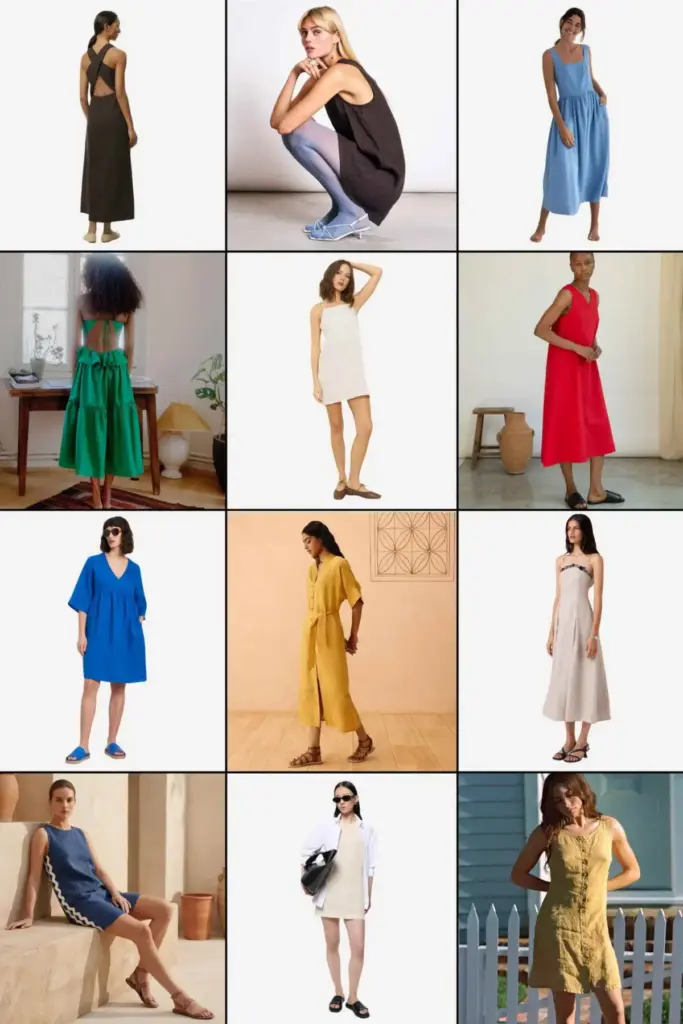
To assist conscious shoppers in making informed investments, we have compiled a curated selection of 12 exceptional linen dresses. Sourced from independent brands that have achieved high ratings through rigorous evaluations by Good On You for their impact on people, the planet, and animals, this list spans mini, midi, maxi, and tailored silhouettes.
1. Artknit Studios – The Linen Twill Special Back Dress (Café Noir)
- The Vibe: Sophisticated, minimalist elegance with an architectural twist.
- Why We Love It: Crafted from premium linen twill, Artknit Studios emphasizes slow fashion principles, producing garments on-demand to eliminate overproduction and waste. Their transparent supply chain and commitment to durable, artisanal craftsmanship make this café noir dress a timeless wardrobe anchor.
2. JAN N JUNE – Linen Mini Dress (Salvia Mud)
- The Vibe: Playful, contemporary, and effortlessly chic.
- Why We Love It: This German eco-label is renowned for its strict adherence to sustainable materials and fair labor practices. Their linen mini dress in an earthy salvia mud hue is constructed from certified fibers, offering a breezy, youthful cut ideal for peak summer days.
3. TWOTHIRDS – Formentera Linen Dress (Denim Blue)
- The Vibe: Coastal relaxed elegance inspired by ocean conservation.
- Why We Love It: TWOTHIRDS designs clothing with a deep commitment to protecting marine ecosystems. The Formentera dress, rendered in a soothing denim blue, showcases the brand’s dedication to using lower-impact, single-origin natural fibers that minimize microplastic shedding.
4. OhSevenDays – Holly Linen Dress
- The Vibe: Tailored urban utility meets breezy comfort.
- Why We Love It: Operating out of Istanbul, OhSevenDays champions a circular fashion model by utilizing deadstock fabrics alongside sustainably sourced linen. The Holly dress features smart structural lines and functional detailing, proving that slow fashion can be deeply modern and versatile.
5. Whimsy + Row – Lainey Striped Linen Mini Dress
- The Vibe: Retro coastal charm with sustainable credentials.
- Why We Love It: Based in Los Angeles, Whimsy + Row creates limited-run batches using locally sourced, low-impact materials. The Lainey striped mini dress combines classic summer stripes with breathable, lightweight linen, ensuring ethical production without sacrificing style.
6. Beaumont Organic – Imogen Cotton & Linen-Blend Dress (Scarlet)
- The Vibe: Bold, vibrant statement dressing for warm evenings.
- Why We Love It: A certified B Corporation, Beaumont Organic works exclusively with ethical factories in Europe. While featuring a thoughtful cotton-linen blend that softens the drape, the vibrant scarlet Imogen dress is crafted to stand the test of time, reflecting the brand’s ethos of durable, high-quality design.
7. Lanius – Organic Linen Dress
- The Vibe: Ethereal, conscious grace rooted in certified organic standards.
- Why We Love It: Lanius is a pioneer in sustainable German fashion, consistently utilizing GOTS-certified organic linen. This dress guarantees that no harmful pesticides or synthetic fertilizers were used in cultivation, and that workers throughout the supply chain were treated fairly.
8. Sui – Golden Palm Linen Maxi Shirt Dress
- The Vibe: Elegant resort wear designed for effortless transition from day to night.
- Why We Love It: Sui bridges the gap between India’s rich artisanal heritage and contemporary eco-conscious design. The Golden Palm maxi shirt dress highlights exquisite detailing, utilizing natural dyes and supporting local craft communities under fair-trade conditions.
9. The Summer House – Suhjan Embroidered Linen Dress
- The Vibe: Artisanal luxury characterized by delicate, thoughtful craftsmanship.
- Why We Love It: Based in India, The Summer House focuses on slow production cycles, using hand-woven and hand-embroidered natural textiles. The Suhjan dress showcases the beauty of artisanal handiwork, offering an airy, beige silhouette that celebrates cultural heritage and sustainability alike.
10. SeamsFriendly – Contrast-Detailed Linen Shift Dress
- The Vibe: Contemporary geometric contrast with inclusive sizing.
- Why We Love It: SeamsFriendly champions zero-waste initiatives and custom-made apparel to reduce inventory waste. Their contrast-detailed linen shift dress pairs crisp navy tones with conscious manufacturing, ensuring that sustainability is matched by versatile, flattering fit options.
11. PANGAIA – A-Line Linen Dress (Bone White)
- The Vibe: Clean, futuristic minimalism powered by material science.
- Why We Love It: A global leader in sustainable material innovation, PANGAIA utilizes high-tech, lower-impact botanical fibers. Their bone white A-line dress combines minimalist streetwear sensibilities with rigorous environmental accountability, setting a benchmark for scalable eco-fashion.
12. LA Relaxed – The Linen Pinafore
- The Vibe: Layered, casual comfort designed for everyday wear.
- Why We Love It: True to its name, LA Relaxed manufactures locally in Los Angeles using sustainable fabrics, ensuring reduced transportation emissions and fair labor conditions. The Linen Pinafore is a versatile, trans-seasonal layering piece that exemplifies circular, durable wardrobe planning.
Future Outlook: The Horizon of Sustainable Linen and Conscious Consumption
As the fashion industry grapples with the escalating realities of climate change, the trajectory of textiles like linen points toward deeper systemic changes. Looking toward the future, several key trends and innovations are set to redefine how we produce and consume linen garments:
- Traceability and Blockchain Integration: Emerging transparency technologies will allow consumers to scan garment QR codes and view the exact geographic origin of their linen—from the specific European farm where the flax was harvested to the certified water-treatment facility where the fabric was dyed.
- Advancements in Closed-Loop Processing: Textile engineers are rapidly scaling enzymatic retting and non-toxic, closed-loop water filtration systems that eliminate chemical runoff entirely, making industrial linen production a zero-pollution sector.
- Circular Design and Monomateriality: To address the recycling bottleneck caused by fiber blends, forward-thinking brands are returning to 100% monomaterial linen construction, ensuring that garments can be easily shredded and mechanically or chemically recycled back into virgin-grade yarn at the end of their lifecycle.
- The Shift Toward Timelessness: Ultimately, the most sustainable garment remains the one already in your closet—or the one you wear for decades. As consumer mindsets pivot away from fast-fashion micro-trends, high-quality linen dresses are emerging not just as seasonal purchases, but as enduring investments in personal style and planetary health.
By pairing rigorous curiosity with mindful purchasing habits, consumers can embrace the cooling relief of linen while actively supporting a regenerative, transparent, and ethical global fashion ecosystem.



