

Executive Overview
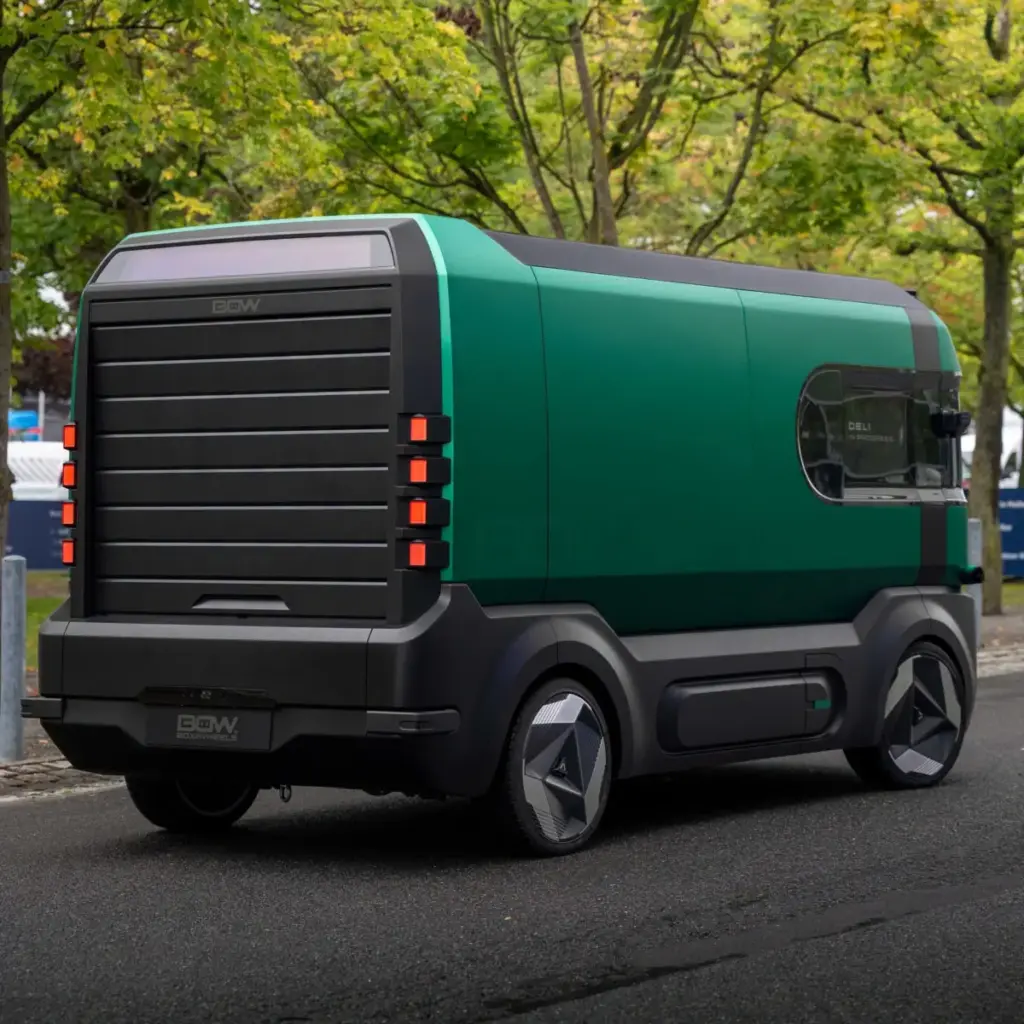
At the IAA Transportation exhibition in Hanover, Germany, amidst a sprawling landscape of conventional commercial vehicles, retrofitted electric vans, and hydrogen-powered heavy-duty haulers, one particular vehicle consistently stopped attendees in their tracks. Compact, distinctively green, and sporting an unapologetically utilitarian profile, the Stellantis BOW—short for Box-on-Wheels—represents a radical departure from a century of automotive design conventions.
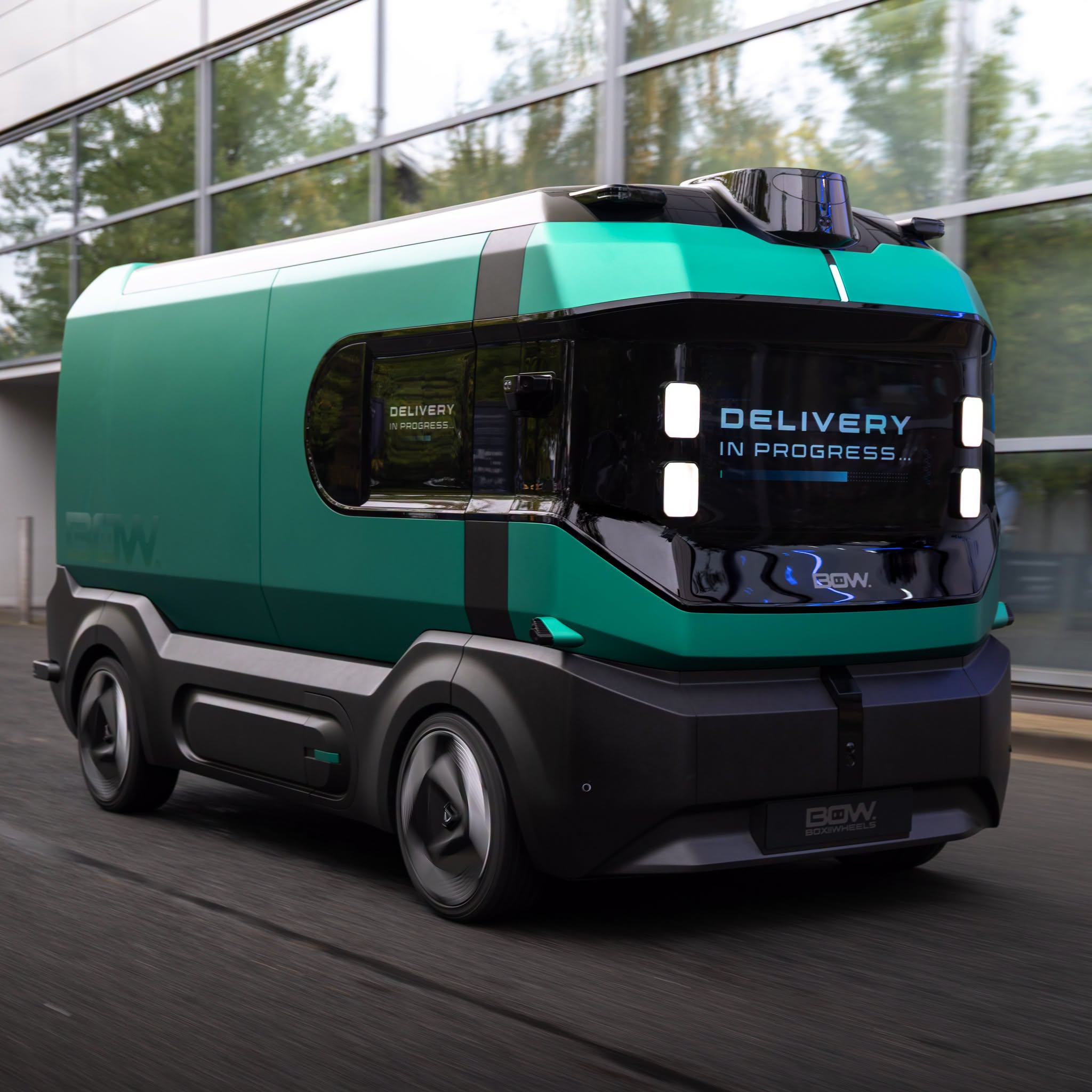
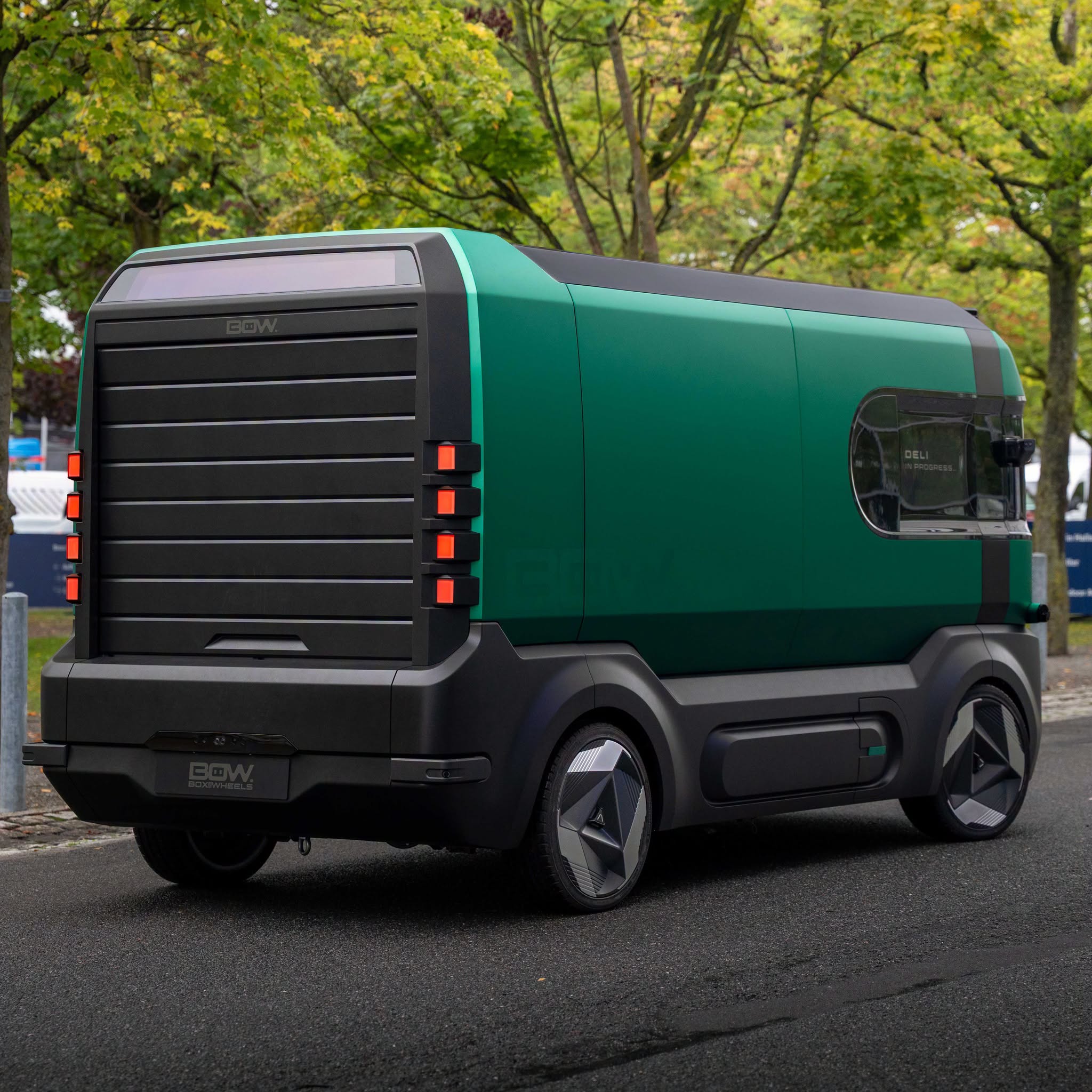
Developed as a collaborative concept by Stellantis Pro One and UQI Robotics, the BOW is an entirely autonomous, electric cargo transport vehicle built from a blank sheet of paper. Most crucially, it features no cab and no driver’s seat. Instead, its architecture is dictated purely by the logic of movement and storage: a secure cargo body suspended over four wheels, equipped with an intricate array of cameras, lidar, and a prominent sensor unit crowning its roof.
The unveiling of the BOW marks a pivotal psychological and engineering shift in the commercial vehicle sector. Rather than taking an existing diesel or electric van chassis and stripping away its steering wheel and pedals, Stellantis and UQI Robotics asked a fundamental question: If a vehicle never needs to accommodate a human driver, why should it look like a van?
While currently positioned as a developmental concept without a confirmed production timeline or public-facing performance metrics, the BOW serves as a clear window into the future of last-mile logistics, closed-campus supply chains, and the broader integration of artificial intelligence into commercial transport. This deep dive examines the genesis of the BOW, the technological philosophy underpinning its creation, the operational realities of autonomous logistics, and what this striking concept means for the future of urban and industrial mobility.
Detailed Chronology: The Road to Hanover 2026
The genesis of the BOW cannot be understood in isolation; it is the product of converging trends in the automotive and robotics industries. Over the past five years, major automotive conglomerates have faced mounting pressures: the rapid growth of e-commerce driving up last-mile delivery costs, urban centers tightening emissions and space restrictions, and a persistent global shortage of commercial drivers.

The Shift from Conversion to Conception
Historically, alternative-powertrain and autonomous vehicle development followed an iterative, conservative path. When electric delivery vans first emerged, manufacturers largely relied on "glider" platforms derived from internal combustion engine vehicles, swapping out the fuel tank and engine block for a battery pack and electric motor. Similarly, early autonomous vehicle experiments typically involved retrofitting existing consumer cars or commercial vans with aftermarket sensor suites, compute racks in the trunk, and drive-by-wire actuators.
Stellantis Pro One—the dedicated commercial vehicle business unit of Stellantis—recognized that this retrofitting approach creates inherent inefficiencies. A vehicle designed for a human operator must allocate substantial volumetric space to a cabin, a dashboard, climate control systems for the human zone, safety crumple zones for a front-impact collision involving a driver, and ergonomic seating adjustments.
By partnering with UQI Robotics, a firm specializing in advanced automation and robotics architecture, Stellantis shifted its developmental strategy. Instead of asking how to automate a van, the partners asked how to engineer a mobile container. The result was the BOW concept: a machine where 100% of the core volumetric footprint is theoretically dedicated to payload capacity, maximizing efficiency per square foot of road space.
The Debut at IAA Transportation
The choice of IAA Transportation in Hanover, Germany, as the global stage for the BOW’s debut was strategic. As one of the world’s premier trade fairs for logistics, commercial vehicles, and transport, IAA attracts fleet operators, supply chain directors, and municipal planners who grapple daily with the economics of urban freight.
When the BOW rolled out—or rather, was showcased in its static and dynamic demonstration formats—it immediately challenged the visual vocabulary of the show floor. Flanked by massive 40-tonne semi-trucks and bulky logistics vans, the compact, neon-green cube underscored the growing divide between traditional heavy transport and hyper-localized, automated micro-mobility solutions.
Supporting Context & Metrics: Decoding the Box-on-Wheels
To understand the engineering rationale behind the BOW, one must analyze its physical layout and the specific operational niches Stellantis envisions for it. Because the vehicle remains strictly a development project rather than a commercial product, Stellantis has intentionally withheld traditional automotive performance specifications. There are no official figures for battery capacity, volumetric payload limits, gross vehicle weight rating (GVWR), charging speeds, or range.
Industry analysts caution against assuming the BOW shares powertrain components with Stellantis’s existing electric van lineup (such as the Peugeot e-Expert, Citroën ë-Dispatch, or Ram ProMaster EV). Because the load profile, thermal management requirements, and duty cycles of an autonomous, un-cabbed pod differ dramatically from a human-driven delivery van, the underlying hardware architecture is likely custom-engineered from the ground up.
Architectural Advantages of the Cab-Less Design
- Volumetric Maximization: In a conventional delivery van, the driver’s cabin accounts for roughly 25% to 30% of the vehicle’s total footprint. By eliminating the cockpit entirely, the BOW achieves an unprecedented cargo-to-footprint ratio. Every linear inch of the vehicle’s body can be utilized for goods storage, sorting racks, or automated loading and unloading mechanisms.
- Aerodynamic and Spatial Efficiency: Urban delivery routes are choked with traffic, narrow alleys, and limited parking. A compact, boxy profile with tight overhangs allows the BOW to navigate constrained spaces far more fluidly than a traditional commercial van, reducing the frequency of blocked lanes and traffic snarls during deliveries.
- Hardware Integration: The sensor suite—strategically mounted on the roof and embedded along the vehicle’s perimeter—provides an uninhibited, 360-degree field of view. Without roof pillars (A, B, and C-pillars) designed to protect a human cabin during a rollover, the structural layout of the BOW allows for optimal placement of lidar, radar, and optical cameras without blind spots caused by a driver’s compartment.
Controlled Environments vs. Open Urban Jungles
One of the most pragmatic aspects of Stellantis and UQI Robotics’ presentation at IAA was their realistic framing of where autonomous delivery will actually succeed first.
Deploying a fully autonomous vehicle into the heart of a dense European metropolis—teeming with erratic pedestrians, aggressive cyclists, sudden roadworks, double-parked delivery trucks, and unpredictable local traffic laws—remains one of the most complex engineering challenges of the 21st century. While companies have spent billions chasing full urban autonomy (Level 4/Level 5), widespread commercial viability in chaotic public streets remains years, if not decades, away.
Recognizing this reality, Stellantis is deliberately looking at controlled and semi-controlled environments as the initial proving grounds for the BOW:
- Industrial Campuses and Manufacturing Plants: Large automotive, aerospace, or heavy machinery facilities often span square miles, requiring constant movement of parts, tools, and sub-assemblies between buildings. A fleet of BOW units operating on pre-mapped, geofenced campus roads can streamline internal logistics without human intervention.
- Airport Hubs: Major international airports are essentially self-contained cities with structured road networks, strict speed limits, and high volumes of cargo movement between cargo terminals, hangars, and aircraft. The BOW’s predictable environment makes it an ideal candidate for airside and landside freight transit.
- Hospitals and Medical Centers: Large medical campuses require the secure, rapid transport of pharmaceuticals, lab samples, and sterile supplies between different wings and laboratory buildings. A fleet of silent, electric, autonomous pods offers a reliable internal courier service.
Official Statements & Industry Perspectives
While formal press releases from Stellantis have focused on the collaborative nature of the project with UQI Robotics, industry commentary surrounding the vehicle highlights a broader transformation within the commercial transport sector.
Representatives from Stellantis Pro One emphasized that the BOW is designed to test the limits of what a logistics vehicle can become when stripped of legacy design constraints. By testing the vehicle’s autonomy software and hardware integration in controlled settings, the company aims to understand how automated transport alters fleet economics.
"A delivery vehicle normally requires someone to drive it from the depot to the customer and back again," noted automotive industry observers covering the IAA debut. "If the driving part can eventually be automated, the logistics operation can be organized around the movement of the goods rather than the working hours of the driver."
However, Stellantis leadership remains refreshingly transparent about the timeline. There is no rushed production schedule, no hyperbolic claims about overnight deployment on public streets, and no attempt to market the concept as an immediate consumer-ready product. Instead, the BOW is treated as a mobile laboratory—a physical manifestation of research and development intended to gather empirical data on sensor durability, software reliability, and fleet management integration.
UQI Robotics’ contribution is equally vital. While Stellantis brings decades of automotive manufacturing prowess, crash-safety compliance understanding, and global fleet customer relationships, UQI Robotics provides the neural architecture: the perception algorithms, sensor fusion software, and robotics control systems that allow the box to navigate its environment safely and autonomously.

Future Outlook: What Lies Ahead for Autonomous Logistics
The appearance of the Stellantis BOW at IAA Transportation 2026 points toward a fascinating horizon for the commercial transport sector. As cities become increasingly congested and labor shortages in the logistics sector persist, the pressure to innovate will only intensify.
1. The Separation of Goods and Drivers
The ultimate trajectory of concepts like the BOW suggests a future where freight transport is bifurcated. Long-distance trunking and complex urban deliveries may continue to rely on human drivers or highly supervised semi-autonomous systems for the foreseeable future. However, repetitive, high-frequency, closed-loop transport operations will inevitably transition to autonomous pods.
2. Redefining Fleet Management
For fleet managers, the rise of vehicles like the BOW requires a complete re-skilling of operations. Maintenance departments will shift from servicing internal combustion engines and traditional drivetrains to maintaining sensor arrays, updating edge-computing software, managing battery-swap or charging depots, and monitoring remote teleoperations centers that can take over guidance if a vehicle encounters an edge case it cannot resolve independently.
3. Regulatory and Infrastructure Hurdles
Before concepts like the BOW transition from trade show centerpieces to permanent fixtures of industrial and urban landscapes, significant regulatory hurdles must be cleared. Standards for autonomous vehicle operation within industrial parks, airports, and private commercial zones are becoming more standardized, but municipal regulations for sidewalk and road-sharing autonomous pods remain fragmented across global jurisdictions.
Conclusion
The Stellantis BOW may currently lack a spec sheet, a price tag, and a release date, but its impact at IAA Transportation 2026 was undeniable. It serves as a philosophical challenge to the automotive industry: a reminder that true innovation often requires abandoning the comfort of familiar form factors. By imagining a delivery vehicle where the driver has completely disappeared from the design equation, Stellantis and UQI Robotics have opened a compelling window into the future of automated, electric commerce. Whether the future of delivery arrives in a green box on four wheels or another form entirely, the baseline assumption of what a commercial vehicle looks like has officially been rewritten.



