

Executive Overview
Steel is the silent scaffolding of modern civilization. It holds up our skyscrapers, bridges our rivers, underpins our transit networks, and reinforces our energy grids. Yet, the foundational metal of the industrial age carries a staggering environmental cost. Conventional steelmaking relies heavily on coal, a dependency that generates approximately 7% of global carbon dioxide emissions—an environmental footprint roughly equivalent to that of the entire global fashion industry.
For decades, the decarbonization of the steel sector has been viewed as a nearly intractable engineering and economic problem. Traditional blast furnaces require monumental capital investments, operate on razor-thin profit margins, and boast service lives spanning decades. Consequently, steelmakers have been hesitant to embrace unproven, high-risk green transitions that threaten to spike production costs and render existing infrastructure obsolete overnight.
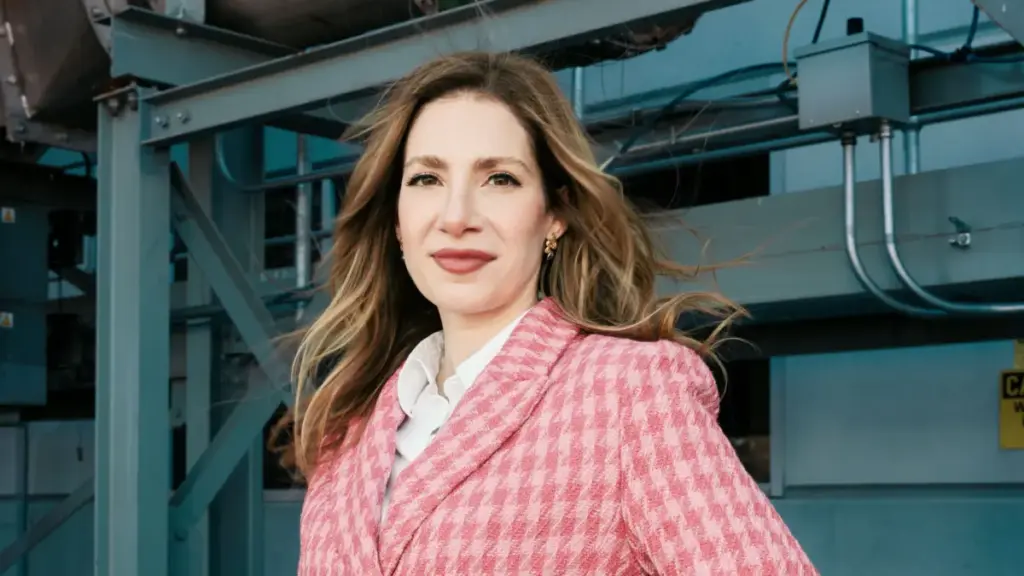
Enter Laureen Meroueh, a 34-year-old MIT-trained mechanical engineer and the founder of Hertha Metals. Meroueh has engineered a radical technological breakthrough that aims to clean up the steelmaking process without driving up consumer prices. By reimagining the chemistry of the crucible and consolidating multiple production phases into a single step, Hertha Metals has devised a novel furnace that swaps coal for natural gas. The result is a dual triumph: a slashed carbon footprint that cuts emissions by at least 50%, paired with a 25% reduction in production costs compared to business-as-usual operations.
Unlike ideological sustainability initiatives that demand an all-or-nothing leap to a zero-carbon future, Hertha’s pragmatic strategy focuses on fixing what is broken right now. By delivering immediate financial incentives alongside profound environmental benefits, Meroueh’s startup is positioning itself not as an idealistic disruptor, but as an indispensable partner to an industry desperate for realistic evolution.
Detailed Chronology: From Child Prodigy to Industrial Innovator
Pushing the boundaries of conventional wisdom is nothing new for Laureen Meroueh. Her trajectory from a precocious child fascinated by the natural world to a pioneering industrial chemist is defined by accelerated milestones and an unwavering commitment to environmental stewardship.
The Formative Years: A Non-Traditional Path
Meroueh’s academic journey broke the mold early. At just 12 years old, she was accepted into an elite pilot program through Florida Atlantic University, bypassing traditional secondary education entirely to dive straight into collegiate coursework. Immersed in advanced mathematics, calculus, and ocean wave energy physics, Meroueh was immediately captivated by the elegance and power of engineering.
Yet, her intellectual rigor was consistently balanced by a profound connection to the outdoors. Despite her heavy academic workload, Meroueh spent countless hours surfing and sitting high in the branches of trees along the Florida coast. This deep immersion in nature fostered an intuitive, visceral appreciation for the environment and a fierce desire to safeguard it against human degradation.
"I don’t know how you can’t be drawn toward trying to help protect that," Meroueh reflects, recalling the coastal landscapes that shaped her worldview.
Academia and Entrepreneurial Roots
That childhood passion eventually directed her professional ambitions. After earning her bachelor’s degree, Meroueh pursued a rigorous PhD in mechanical engineering at the Massachusetts Institute of Technology (MIT), where she honed her expertise in thermodynamics, materials science, and clean energy systems.
Upon completing her doctorate, she cut her teeth in the clean tech sector by leading a green hydrogen startup, gaining invaluable executive experience in scaling alternative energy frameworks. However, the urge to build something of her own lingered. As a first-generation Lebanese-American hailing from a family of entrepreneurs, launching her own enterprise felt less like a reckless gamble and more like a natural continuation of her heritage.
"Seeing how common it is to take that jump to start your own business is what made me feel like, ‘This is normal,’" Meroueh explains from her brightly lit office at Hertha’s pilot plant in Conroe, Texas, located just north of Houston.
In 2022, leveraging her academic pedigree and industrial insights, Meroueh officially founded Hertha Metals. Her mission was singular: to bridge the chasm between climate urgency and industrial economic reality by engineering a cleaner, cheaper steelmaking process.
Supporting Context & Metrics: Inside Hertha’s Technological Breakthrough
To understand the magnitude of Hertha Metals’ achievement, one must examine the inefficiencies of the legacy steel production model. Traditional blast furnaces are colossal, energy-intensive leviathans. They require massive inputs of coking coal to strip oxygen from iron ore, releasing vast plumes of carbon dioxide in the process. The sheer scale of these operations makes them notoriously difficult to modify or replace.
Reimagining the Crucible
Meroueh and her team tackled this systemic inefficiency by fundamentally simplifying the chemistry behind steelmaking. Hertha’s proprietary furnace converts raw iron ore directly into refined liquid steel in a single, streamlined step. Crucially, the process replaces carbon-heavy coal with cleaner-burning natural gas.
This dual modification yields staggering efficiency gains. By condensing multiple stages of metallurgy into a unified reaction and utilizing a cleaner fuel source, Hertha slashes greenhouse gas emissions by at least 50%. Simultaneously, the operational efficiencies and lower fuel costs drive down production expenses by 25% relative to conventional methods.
"There’s huge value in reducing the size of this production system," notes Iryna Zenyuk, director of the National Fuel Cell Research Center at the University of California, Irvine. "They’re massive. They’re inefficient and require a lot of energy input, so even if they just save energy efficiency, that’s already a big step."
Lean Capital and Outsized Output
In the capital-intensive world of clean technology, startups frequently burn through tens of millions of dollars before producing a single marketable unit. Hertha Metals, by contrast, has demonstrated remarkable fiscal discipline.
As of July 2026, the company has raised approximately $20 million in venture funding—a modest sum compared to the massive war chests commanded by many of its competitors. Despite this lean financial runway, Hertha’s pilot facility in Conroe, Texas, is already humming. The plant is capable of producing one metric ton of high-purity steel per day.
"One ton per day is a big metric for steel," says Rajesh Swaminathan, a partner at Khosla Ventures and one of Hertha’s key early investors. Swaminathan praises the company’s capital efficiency, pointing out that several competing green steel startups have consumed $50 million to $100 million in funding while yielding far lower production volumes. Hertha’s ability to maximize output on a tight budget has turned heads across the venture capital landscape.
Official Statements and Industry Perspective
Hertha’s pragmatic philosophy distinguishes it from other players in the green technology ecosystem. While many well-funded competitors are banking exclusively on green hydrogen—using zero-carbon hydrogen to free oxygen from iron ore—Meroueh has opted for a more flexible, incremental approach.
The Pragmatic Pivot: Fossil Fuels as a Bridge
Green hydrogen holds immense theoretical promise for a fully zero-carbon steel industry. However, the infrastructure required to produce, transport, and store green hydrogen at scale remains prohibitively expensive and underdeveloped. Waiting around for the hydrogen economy to mature is a luxury the planet—and struggling steel manufacturers—cannot afford.
Hertha Metals has intentionally chosen to rely on natural gas in the interim, prioritizing cost reduction and immediate commercial viability over unattainable zero-carbon purity. According to Meroueh, this calculated compromise is precisely what will allow the technology to achieve widespread adoption. Furthermore, the design of Hertha’s current pilot infrastructure is forward-compatible; if and when green hydrogen becomes economically viable and widely available, Hertha’s furnaces can transition to a fully decarbonized fuel system without requiring a drastic overhaul of the underlying hardware.
"Hertha’s approach focuses on what it can fix about the steel industry now, as opposed to waiting around for a zero-carbon system," notes industry analysts tracking the commercialization of low-emission metallurgy.
This pragmatic ethos has won praise from academic and financial stakeholders alike. By offering a solution that improves profit margins while simultaneously reducing emissions, Hertha bypasses the classic corporate resistance to environmental regulation. Steelmakers do not have to choose between financial ruin and ecological responsibility; Hertha offers them both a cleaner conscience and a healthier balance sheet.
Future Outlook: Scaling Up for Global Impact
Having successfully proven its concept at the one-ton-per-day scale in Conroe, Hertha Metals is aggressively plotting its next chapter of expansion.
The Roadmap to 2030
The immediate horizon includes the construction of a new, expanded plant situated directly adjacent to Hertha’s existing Texas facility. This upcoming site is engineered to scale production dramatically, targeting an output of 10,000 metric tons of high-purity steel per year. Company leadership expects this facility to reach full operational capacity by the end of 2027.
Looking further ahead, Meroueh has laid out an ambitious roadmap for the decade. By 2030, Hertha plans to commission a third, much larger production site, driving total annual output to 500,000 metric tons.
To put that figure in perspective, the United States alone produces approximately 80 million metric tons of steel annually. Hertha’s projected 2030 output represents a fraction of domestic production. Yet, industry experts emphasize that raw volume is not the primary metric of success at this stage. Proving that low-emission, cost-effective steel can be produced at scale establishes a viable blueprint that massive legacy steel corporations can eventually license, replicate, or integrate into their own legacy supply chains.
"Making even one metric ton is still an achievement," Dr. Zenyuk reiterates, underscoring the immense technical barriers that have kept metallurgical chemistry largely unchanged for over a century.
Redefining the Industrial Future
Ultimately, Laureen Meroueh’s vision is anchored by a fundamental realization: humanity is not going to outgrow its reliance on steel. The material is far too essential to modern infrastructure, renewable energy installations, and urban development to be phased out.
Instead of asking how society can survive without steel, Meroueh is posing a much more constructive question: "How can we be smarter about how we make things… so that it’s also not going to harm us in the long term?"
By answering that question with thermodynamic ingenuity, fiscal prudence, and pragmatic flexibility, Hertha Metals is proving that the green industrial revolution does not require a blank slate. Sometimes, true innovation lies simply in building a better furnace, one ton at a time.



