

Executive Overview
The conversation surrounding automotive safety has evolved significantly over the past century. From the widespread integration of the three-point seatbelt in the late 1950s to the mandatory introduction of front-impact airbags in the late 1990s, the automotive industry has continually grappled with balancing life-saving innovations against their inherent physical risks. Today, a new paradigm is unfolding on public roadways: driving automation.
As software-driven driver assistance systems—most notably Tesla’s Full Self-Driving (FSD) technology—mature, society faces profound technological, economic, and moral questions. Proponents argue that autonomous and semi-autonomous systems could eventually eliminate the vast majority of human-error-induced traffic fatalities. Conversely, critics and everyday drivers point to the complexities of real-world implementation, software monetization models, and the ongoing debate over supervision versus true autonomy. This article examines the historical trajectory of automotive safety innovations, weighs the promise and pitfalls of modern autonomous driving software, and explores whether the industry is approaching a tipping point where advanced driver-assistance systems (ADAS) transition from premium novelty features to universally mandated lifesavers.
Detailed Chronology: Milestones in Automotive Safety
To understand the current debate surrounding automated driving systems, it is necessary to trace the historical lineage of vehicle safety mandates. Throughout automotive history, safety technologies have followed a distinct trajectory: emerging as novel luxuries, proving their efficacy through data, and ultimately becoming legally or morally required standards.
The Seatbelt Evolution
The foundational architecture of modern vehicular restraint began with the three-point seatbelt, patented by Nils Bohlin for Volvo in 1958. Prior to this innovation, lap belts offered limited protection and frequently caused severe abdominal trauma during high-speed collisions. Bohlin’s design distributed the force of a crash across both the chest and the pelvis.
Crucially, Volvo made the patent openly available to other manufacturers in the interest of public safety—a watershed moment of corporate altruism that undoubtedly saved hundreds of thousands of lives. What started as an optional, unfamiliar novelty gradually became a cultural norm, leading to legislative mandates requiring seatbelt usage across the globe.
The Airbag Era
Decades later, secondary restraint systems underwent a similar evolutionary arc. Following the Intermodal Surface Transportation Efficiency Act of 1991, airbags became legally mandatory in all new passenger cars sold in the United States starting September 1, 1998.
While airbags have prevented countless fatalities, their integration underscored a persistent reality of safety engineering: lifesaving interventions can occasionally introduce new vectors of injury. Airbag deployment involves explosive chemical reactions capable of fracturing bones or causing severe abrasions, illustrating the delicate balance designers must strike between mitigation and harm reduction.
The Advent of Automated Driving Systems
As mechanical safety systems reached a plateau of effectiveness, the focus of automotive innovation shifted toward active safety and accident prevention. Advanced Driver Assistance Systems (ADAS) emerged, introducing features like automated emergency braking, lane-keeping assistance, and adaptive cruise control.
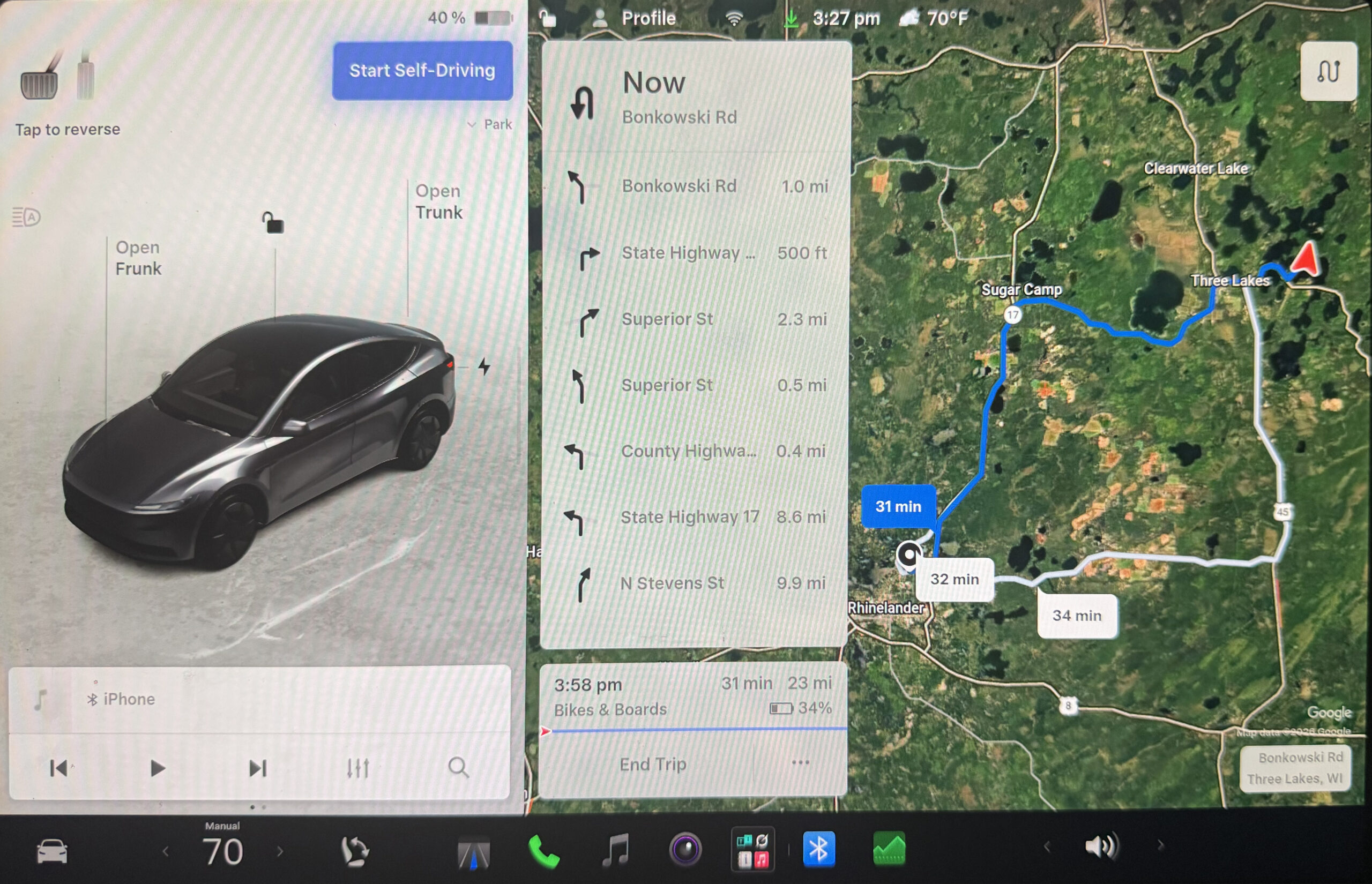
Today, systems like Tesla’s Full Self-Driving (FSD) represent the bleeding edge of this evolution. Operating via neural networks trained on massive compute clusters, FSD attempts to replicate and surpass human perception and decision-making capabilities. Yet, just as early seatbelts and airbags faced skepticism, regulatory hurdles, and transitional growing pains, modern autonomous software sits firmly at the crossroads of technological ambition and public safety accountability.
Supporting Context & Metrics: The Human and Economic Toll
The urgency driving the development of automated driving systems is underscored by grim statistical realities. In 2025 alone, an estimated 36,640 traffic fatalities were reported in the United States. Globally, the toll is catastrophic, with roughly one million lives lost annually in automobile crashes.
Human Error vs. Machine Consistency
The vast majority of these accidents stem from human error—distracted driving, fatigue, chemical impairment, and poor split-second decision-making. Software systems do not text, fall asleep, or drive under the influence. Proponents of autonomous technology argue that even imperfect automated systems can drastically reduce these figures simply by maintaining constant vigilance.
Recent comparative data highlights this potential. Studies examining autonomous deployment, such as operational data from companies like Waymo, suggest that automated driving systems consistently avoid numerous collision scenarios that would have otherwise resulted in injury.
However, transitioning from human-controlled to machine-controlled driving is not without friction. Consider a personal account from June 2025 in Madison, Wisconsin: while operating an older Tesla Model 3 utilizing FSD, a driver intervened at an intersection and overrode the system, inadvertently running a stop sign. A perpendicularly crossing vehicle, whose driver was similarly distracted, struck the rear of the car. The driver noted a strong conviction that had the vehicle remained under uninterrupted FSD control, it would have halted at the stop sign, entirely averting the collision.
Conversely, incidents involving FSD misbehavior or misinterpretations of complex road layouts remind the public that current software remains imperfect. The lack of uniform, transparent, and publicly accessible safety data across all autonomous platforms leaves regulators and consumers navigating a gray area of statistical validation.
Official Statements and Industry Perspectives
As artificial intelligence rapidly reshapes the automotive landscape, industry leaders, regulatory bodies, and consumers are locked in intense debates over safety claims, monetization strategies, and ethical obligations.
The Vision of Accelerated Safety
In April 2026, Tesla CEO Elon Musk asserted that the latest iterations of FSD possess a safety profile so vastly superior to human drivers that the technology could theoretically prevent up to 90% of the world’s annual traffic fatalities. While ambitious, this claim forms the ideological core of Tesla’s development strategy: rapid, iterative software deployment driven by massive real-world fleet data collection.

Critics, however, raise valid ethical concerns regarding commercial practices during the transitional phase. For instance, Tesla’s decision to charge a recurring subscription fee of $99 per month for FSD—while simultaneously altering standard equipment packages by removing certain automated lane-centering features from base models—has sparked sharp criticism. Observers question the moral defensibility of gatekeeping potentially lifesaving active-safety technologies behind paywalls, even as billions of dollars are poured into research, development, and supercomputer training clusters.
Hardware, Weather, and System Philosophies
A persistent architectural debate divides automakers regarding the ideal sensor suite for full autonomy. Tesla maintains an all-camera, vision-only approach, arguing that human drivers navigate using biological eyes and a neural net brain, and that automated systems should do the same. Other industry competitors insist that redundant sensor systems incorporating lidar and radar are mandatory to ensure safe operation during severe weather events, such as blinding snowstorms or torrential downpours.
While Tesla’s vision-only system may face limitations in extreme meteorological conditions, defenders argue that human drivers similarly pull off the road during severe weather. More importantly, the vision-based approach offers a vastly more economical pathway to mass deployment, scaling software updates to millions of vehicles already equipped with the requisite camera hardware.
Future Outlook: The Moral Imperative of Open Standards
As drivers log millions of miles on advanced iterations like FSD V14, the automotive industry finds itself confronting a historic question: Will autonomous driving technology eventually follow the path of the three-point seatbelt and the North American Charging Standard (NACS)?
The Supervised Era and Beyond
Current iterations of Tesla’s software are officially designated as "FSD Supervised" due to occasional navigation errors, lane-selection mistakes during complex stoplight sequences, and imperfections in parking maneuvers. Yet, highway performance has achieved a level of reliability that suggests unsupervised highway autonomy may not be far off.
The speculative horizon involves milestones that once sounded like science fiction: vehicles capable of executing entire journeys while occupants read, work, or rest; automated fleet vehicles dispatched to pick up children from school; and urban transit entirely mediated by artificial intelligence.
The Moral Obligation of Safety
The ultimate realization of this technology brings us back to the legacy of Nils Bohlin. If an autonomous driving system proves statistically safer than the average human driver, does a manufacturer acquire a moral obligation to make that software standard equipment across all capable vehicles? Furthermore, when will the industry reach a consensus where proprietary safety software is licensed or shared freely—much like Tesla recently opened its Supercharger network under the NACS banner—to maximize societal benefit?
The road ahead is complex, fraught with regulatory hurdles, edge-case technical challenges, and ongoing public skepticism. However, the fundamental calculus remains unchanged. In a world where tens of thousands of lives are lost on roadways annually, the push toward perfecting automated driving systems is no longer merely a commercial enterprise; it is one of the defining safety imperatives of the twenty-first century.



