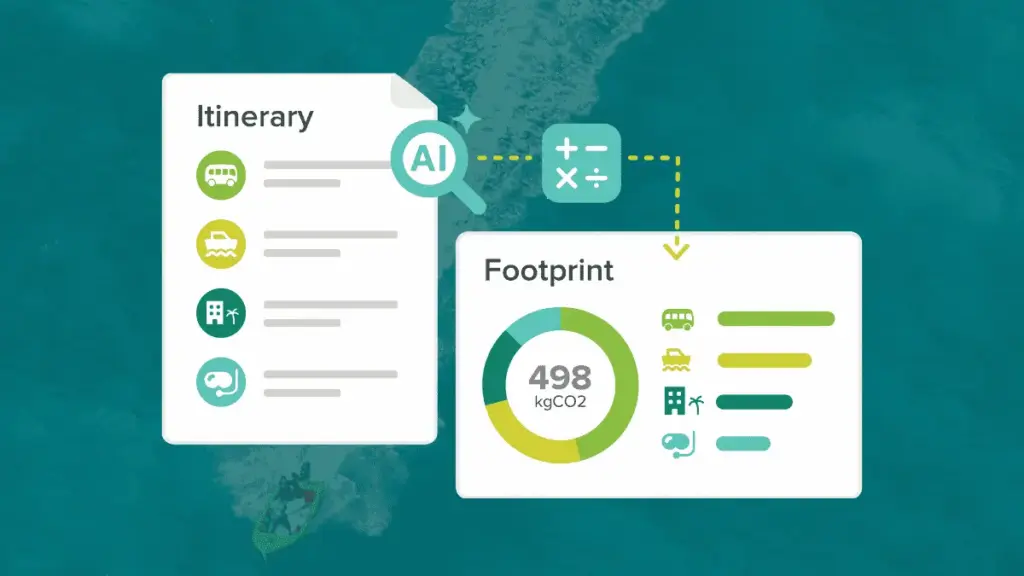
SEATTLE, WA — In an era where the global tourism industry faces an existential reckoning over its environmental footprint, Sustainable Travel International has introduced a technological breakthrough designed to eliminate one of the sector’s most persistent operational bottlenecks. On June 10, 2026, the organization officially launched Humí, an advanced, artificial intelligence-powered carbon footprinting platform explicitly engineered for tour operators.
By translating complex travel itineraries into precise emissions reports within seconds rather than weeks, Humí threatens to disrupt traditional sustainability consulting models. It replaces arduous manual data collection, fragmented spreadsheets, and guesswork with an automated workflow. Built on Sustainable Travel International’s proprietary, two-decade-old tourism emissions methodology, the tool is currently available to tour operators for free during a limited promotional release.
As regulatory landscapes shift and consumer demand for radical transparency accelerates, Humí arrives as a timely intervention. It promises to democratize climate action for travel businesses of all sizes, bridging the gap between ambitious net-zero pledges and the grueling reality of data accounting.
Executive Overview: Solving the Tourism Industry’s Data Dilemma
To understand the significance of Humí, one must first recognize the structural barriers that have historically stymied decarbonization efforts within the tourism sector. Unlike manufacturing or corporate logistics—where supply chains are relatively fixed and easy to parameterize—the tourism industry is characterized by fluid, highly fragmented, and deeply heterogeneous supply chains.
A single multi-day tour package might involve a patchwork of domestic charter flights, specialized ground transport, independent boutique hotels, localized boat charters, and niche third-party excursions like wildlife safaris or guided snorkeling tours. Historically, calculating the carbon emissions of such an intricate itinerary required weeks of manual research, exhaustive emails to regional suppliers, and custom mathematical modeling. For mid-sized and independent tour operators, the financial and technical burden of hiring specialized carbon accountants or building internal methodologies has made comprehensive emissions tracking virtually prohibitive.
Humí directly targets this pain point. By combining generative language models with decades of rigorous environmental data, the platform automates the heavy lifting of data ingestion. Users need only paste a public URL of a tour itinerary or upload a PDF document. Within moments, the AI parses the raw text, extracts critical travel parameters, and outputs a granular carbon report.
Detailed Chronology & Technological Mechanics: How Humí Works
The development of Humí represents a convergence of modern artificial intelligence and specialized environmental science. The operational workflow of the platform has been designed for maximum friction reduction, transforming what was once a multi-week administrative ordeal into a seamless, digital-first experience.
The Ingestion and Parsing Phase
When an operator inputs an itinerary link or document, Humí’s underlying architecture initiates a multi-step parsing process:
- Natural Language Processing (NLP) Extraction: The AI scans the text for semantic cues related to transport, lodging, and activities. It identifies specific verbs and nouns denoting movement (e.g., "train from Milan," "transfer via 4×4 vehicle," "domestic flight to regional airstrip").
- Standardization of Variables: The tool automatically translates these unstructured descriptions into standardized metrics required for accurate carbon accounting, including exact transport distances, specific vehicle classifications (electric, hybrid, diesel coach, internal combustion car), and tiered accommodation categories (e.g., luxury resort vs. eco-lodge).
- Smart Assumptions and Confidence Scoring: Recognizing that tour itineraries are frequently marketed with poetic or vague language ("scenic drive through the valley" or "afternoon boat excursion"), Humí applies intelligent algorithmic assumptions based on geospatial data and historical industry norms. Crucially, the platform assigns confidence scores to every data point. These scores transparently indicate where the AI has filled in gaps, allowing operators to immediately audit the output and iteratively improve data precision as additional supplier facts become available.
Bypassing Generic AI Limitations
Standard, off-the-shelf generative AI models and generic carbon calculators routinely fail when applied to complex travel itineraries. They frequently miscalculate or entirely omit specialized tourism vectors—such as low-altitude bush flights, heavy diesel safari vehicles idling on rough terrain, marine vessels operating at varying speeds, or remote camps relying on off-grid diesel generators.
Humí avoids these pitfalls because it is not a generic language model bolted onto a basic calculator. Instead, it is underpinned by Sustainable Travel International’s proprietary calculation engine, refined over 20 years of field research and academic collaboration. This domain-specific foundation ensures that niche tourism activities are measured with high fidelity, reflecting the true ecological cost of adventurous and remote travel experiences.
Supporting Context, Metrics, and Enterprise Scale
While individual tour operators can utilize Humí to evaluate single itineraries, Sustainable Travel International has also architected the platform for institutional scalability.
Enterprise-Grade Portfolio Management
For large-scale tour operators, wholesalers, and destination management companies (DMCs) handling hundreds or thousands of unique packages, manual measurement is a non-starter. Humí addresses this via robust Enterprise plans. Key features of these enterprise tiers include:
- Bulk Portfolio Analysis: The capacity to ingest and analyze hundreds of tour itineraries simultaneously, drastically slashing the man-hours required for baseline greenhouse gas (GHG) inventories.
- Centralized Dashboards: A master interface where sustainability managers can view cross-portfolio analytics, compare the carbon intensities of different product lines, and track year-over-year emissions reductions.
- Expert Validation: Access to professional review services provided by Sustainable Travel International’s team of environmental scientists, ensuring that enterprise disclosures withstand internal and external scrutiny.
- Communications and Reporting Support: Tailored guidance on how to translate technical measurement data into consumer-facing marketing and regulatory compliance reports without running afoul of emerging truth-in-advertising laws.
Official Statements & Industry Perspectives
The release of Humí comes at a critical inflection point for the travel and tourism industry. Speaking on the motivations behind the platform’s development, Sustainable Travel International CEO Paloma Zapata emphasized the urgent need to lower the barrier to entry for climate accountability.
"Carbon measurement is the first step to taking climate action, but tour operators have been stuck with a system that makes emissions measurement far harder than it should be," stated Zapata. "We built Humí to significantly reduce the time and technical effort required to measure tour emissions without compromising accuracy, making it easier for businesses to understand their impacts and start taking action."
Industry analysts note that Zapata’s comments resonate with a growing chorus of frustration within the travel trade. For decades, sustainability has been treated as an elite luxury—something accessible only to multinational hospitality chains with dedicated corporate social responsibility (CSR) departments. By automating the data-gathering phase, tools like Humí democratize environmental stewardship, shifting the operational focus away from bureaucratic data entry and toward actual carbon reduction strategies, such as supplier engagement, route optimization, and investments in regenerative local projects.
Future Outlook: Navigating the Regulatory Storm and Consumer Demands
Humí enters the global market amidst a rapidly hardening regulatory environment. Tour operators are no longer operating in a "wild west" of self-declared sustainability claims.
The Regulatory Landscape
In Europe, the European Union has moved aggressively to crack down on corporate greenwashing. Incoming directives—such as the EU’s Green Claims Directive and stricter consumer protection laws—place the legal burden of proof squarely on businesses. Companies making environmental assertions regarding their tours (e.g., "eco-friendly," "carbon-neutral," or "sustainable adventure") must substantiate these claims with robust, verifiable, science-based data. Failure to do so exposes operators to severe financial penalties, mandatory product recalls, and catastrophic reputational damage.
Simultaneously, traveler behavior is undergoing a structural transformation. Post-pandemic consumer research consistently shows a surging demand for authentic, responsible travel. However, modern travelers have grown increasingly skeptical of corporate "greenhushing" and vague marketing slogans. Armed with higher expectations for transparency, consumers are actively seeking data-backed proof of a company’s environmental claims.
The Path Ahead
Humí positions tour operators to navigate this turbulent transition successfully. By providing an auditable, transparent trail of how emissions are calculated—complete with algorithmic confidence scores and expert backing—the platform equips travel companies with the evidentiary foundation required to withstand regulatory audits and satisfy discerning consumers.
As Sustainable Travel International continues to onboard users through its limited-time free release at sustainabletravel.org/humi, the broader implications for the tourism sector are profound. If widely adopted, tools that leverage domain-specific AI to streamline carbon accounting could permanently alter the economics of sustainability in travel, transforming carbon measurement from an expensive administrative burden into an accessible, standard operating procedure.
About Sustainable Travel International
Sustainable Travel International is a pioneering non-profit organization dedicated to protecting vulnerable destinations and transforming tourism’s impact on nature and people. Engaging travel businesses, destination management leaders, and consumers alike, the organization has spent more than 20 years advancing climate action and environmental stewardship within the global tourism economy.
Through practical technology tools, data-driven impact measurement systems, inclusive stakeholder engagement programs, and expert advisory services, Sustainable Travel International helps organizations solve complex challenges ranging from greenhouse gas emissions and overtourism to broader ecological and community degradation.
To learn more about Sustainable Travel International or to try the new Humí carbon footprinting tool, visit www.sustainabletravel.org.