Executive Overview
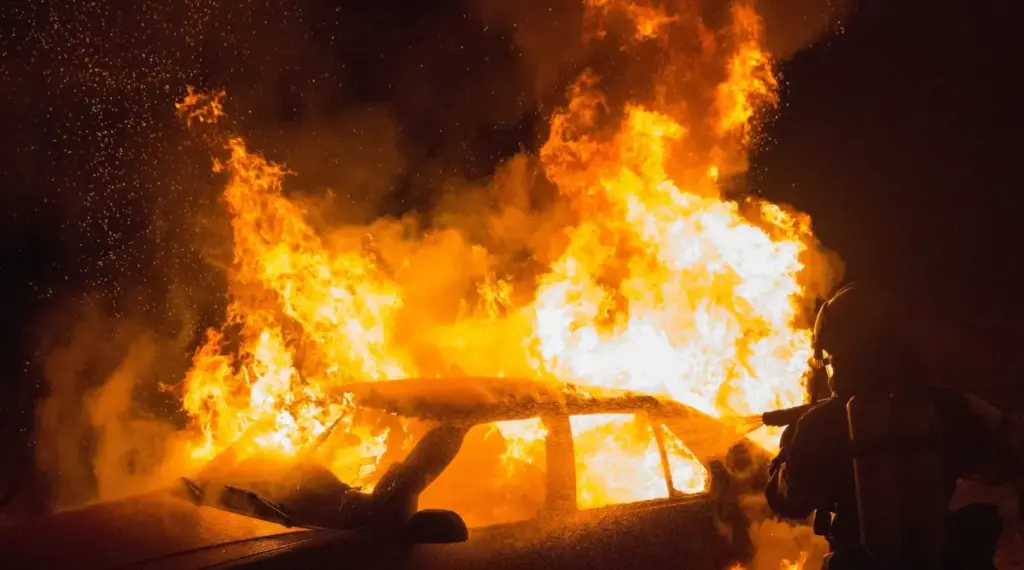
For over a decade, a persistent narrative has dominated public discourse: electric vehicles (EVs) are ticking time bombs, uniquely prone to catastrophic, uncontrollable thermal runaway events. Vivid, viral footage of burning Teslas on highways or charging lots has shaped anti-EV sentiment for millions, fueling restrictive homeowners association (HOA) bans and widespread consumer hesitation. First responders faced steep learning curves regarding high-voltage lithium-ion fire suppression, and sensationalized headlines ensured that every single EV combustion became global breaking news.
However, recent automotive safety data paints a radically different picture—one that flips conventional wisdom on its head. According to a landmark analysis of National Highway Traffic Safety Administration (NHTSA) recall data by The Washington Post and automotive research firm CarFax, millions of vehicles currently circulate on U.S. roads under urgent "park outside" safety warnings due to spontaneous fire risks. The vast majority of these vulnerable automobiles are not electric. They are traditional internal combustion engine (ICE) vehicles powered by gasoline and diesel.
Behind these warnings lies an evolving automotive vulnerability: "key-off" fires. Driven by an exponential increase in onboard computers, always-on control modules, power seats, and auxiliary electronic components, modern vehicles of all powertrains are packed with circuits that remain energized long after the ignition is switched off. While early EV battery issues—such as those affecting a limited generation of Chevy Bolts—cost manufacturers dearly, the sheer volume of fossil-fuel vehicles recalled for spontaneous combustion dwarfs the electric sector.
This deep dive investigates the mechanics of modern vehicle fires, analyzes federal regulatory data, contrasts the media spotlight on EVs versus gas cars, and explores how data transparency is finally exposing the reality of automotive fire risks.
Detailed Chronology: The Evolution of the "Park Outside" Mandate
To understand how the modern automotive landscape arrived at millions of vehicles being banned from standard home garages, it is necessary to trace the regulatory and technological shifts that have occurred over the past decade.
2015–2019: The Genesis of Federal Warnings
In 2015, the National Highway Traffic Safety Administration (NHTSA) formally established the "park outside" designation. This specialized safety alert was created to flag catastrophic defects that could ignite a vehicle even when it was completely shut down, unoccupied, and parked. During the late 2010s, this designation was a rare regulatory tool, with automotive manufacturers averaging roughly one such recall per year between 2015 and 2019.
During this era, high-profile EV fires—particularly involving early-generation Teslas involved in high-speed battery impacts—captured the media’s attention. The psychological impact of these violent thermal events overshadowed the far more common, yet quiet, combustion of gasoline-powered vehicles.
2020–2023: The Surge in Electronic Complexity
As vehicles evolved into "computers on wheels," the frequency of key-off fires began to surge. Regulators logged an increasing number of alerts, culminating in a massive wave of recalls in late 2023. In September 2023, Hyundai and Kia issued massive recalls affecting a combined 3.38 million vehicles ($1.65$ million for Hyundai and $1.73$ million for Kia) due to an anti-lock brake system (ABS) module defect. Brake fluid could leak onto internal circuit boards, triggering an electrical short that could spark an engine fire whether the vehicle was actively driven or parked and turned off.
Automakers issued explicit warnings: the safest place to store these vehicles was outside, safely away from residential homes and structures. Notably, the vast majority of the vehicles implicated in these multibillion-vehicle safety actions relied exclusively on internal combustion engines.
2024–2026: Modern Sprawling Recalls and the 3.2 Million Milestone
By mid-2026, the scale of vehicles operating under active "park outside" advisories reached 3.2 million units in the United States alone, according to CarFax safety analyses. The first seven months of 2026 alone saw 17 new park-outside recall campaigns issued by federal authorities—encompassing 1.7 million vehicles and marking the second-highest volume since the classification’s inception.
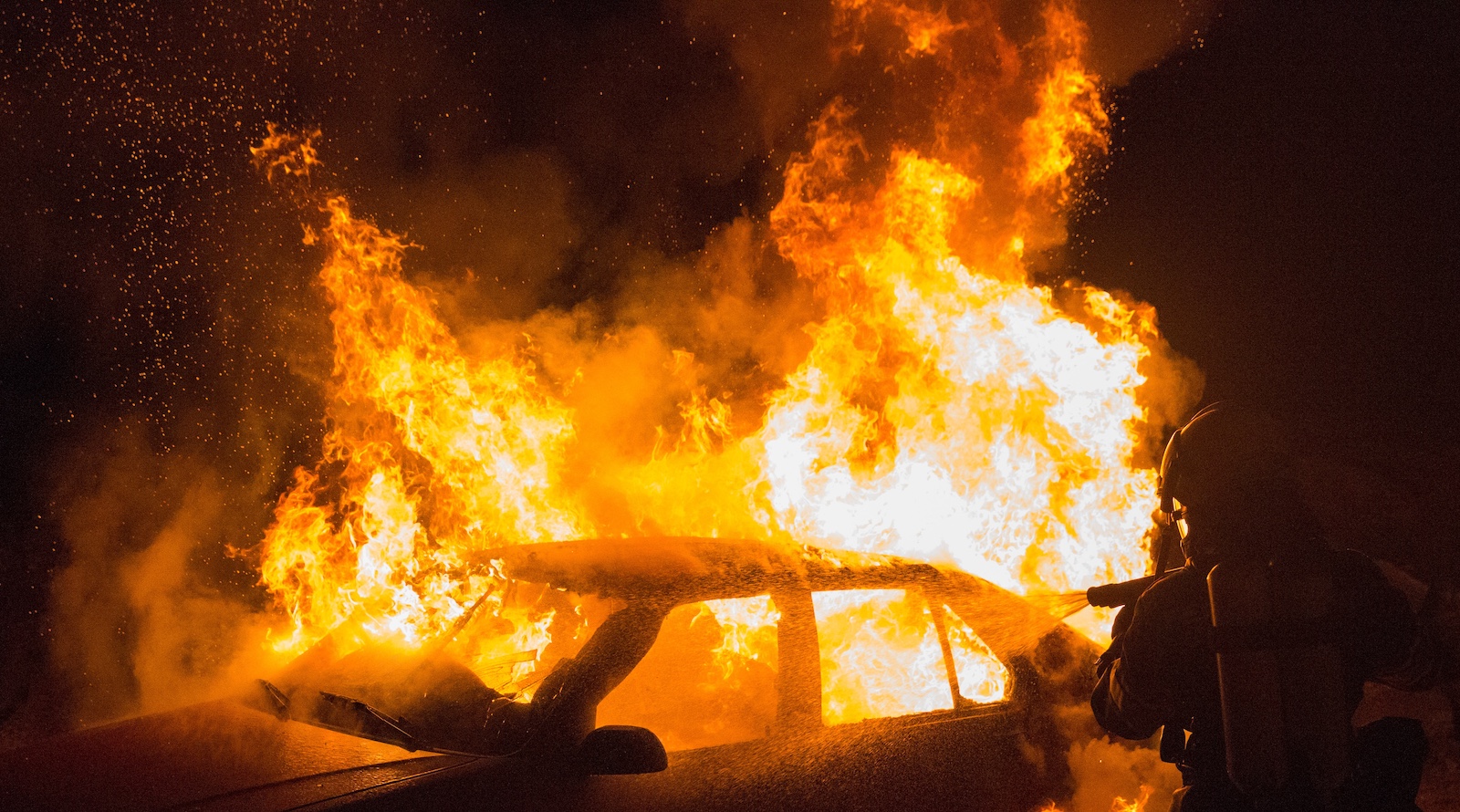
Concurrently, automakers continued to grapple with auxiliary electrical components. Kia recalled 463,000 Telluride SUVs for a second time after initial fixes failed to stop front power-seat switches from overheating and igniting. Similarly, Ford recalled tens of thousands of Expeditions and Lincoln Navigators because short-circuiting battery junction boxes were spontaneously catching fire in quiet suburban driveways.
Supporting Context & Metrics: Breaking Down the Data
Public perception often lags far behind statistical reality. While the psychological footprint of an EV fire is massive, statistical analysis reveals a stark imbalance in actual fire frequencies across vehicle powertrains.
Gas vs. Electric Fire Frequencies
According to data compiled by the National Fire Prevention Association (NFPA), the United States witnesses more than 170,000 vehicle fires annually—averaging out to roughly one vehicle fire every three minutes. These blazes account for significant property damage and loss of life, yet they occur with such monotonous regularity that they rarely make the evening news. Conversely, a single EV fire frequently dominates national headlines.
When normalized against market adoption, the statistical divergence is profound:
- Internal Combustion Engine (ICE) Vehicles: Experience approximately 1,500 fires per 100,000 vehicles sold.
- Electric Vehicles (EVs): Average approximately 25 fires per 100,000 vehicles sold.
This means that conventional gas and diesel cars are statistically far more likely to catch fire than electric vehicles. Part of this disparity relates to market share—approximately 94% of light-duty vehicles on U.S. roads feature internal combustion engines, while hybrids and fully electric vehicles make up the remaining 6%. However, even when adjusting for market penetration, the raw volumetric risk underscores that the legacy internal combustion engine is a much more volatile combustion machine than a solid-state battery pack or managed lithium-ion array.
The Mechanics of "Key-Off" Fires
Why are modern gas-powered cars increasingly subjected to park-outside advisories? Industry experts point to the proliferation of "always-on" electronic architecture.
Frank Borris, a former NHTSA investigator and current safety consultant, explained to The Washington Post that modern cars are plagued by "key-off" fires. "The engine is off," Borris noted, "but the circuits are still hot and they stay hot all the time."
Unlike older vehicles that completely cut power to auxiliary systems upon turning the ignition key, modern vehicles maintain continuous power delivery to power-seat motors, power-steering pumps, infotainment hard drives, cellular modems, and control modules. Over time, moisture intrusion, component degradation, manufacturing defects, or thermal fatigue can cause these continuously energized circuits to short-circuit, triggering fires long after the driver has walked away.
For instance, in June, Stellantis was forced to recall Jeep Wrangler and Gladiator models due to fire risks directly traced to power steering pump wiring connections—a classic example of auxiliary electronics failing independently of the primary propulsion system.
Official Statements and Regulatory Shifts
The lack of granular, standardized data has historically hindered fair comparisons between EV and ICE safety records in North America. Unlike regions such as Norway—where robust national registries revealed that gas and diesel vehicles had a fire incidence rate four times higher than electric vehicles between 2016 and 2021—U.S. federal regulators traditionally tracked vehicle fires without separating them by powertrain category.

This data gap is finally closing. Adam Barowy, principal research engineer for the Fire Safety Research Institute, highlighted a major shift occurring across the emergency services sector:
"Right now there’s pretty limited data on whether they are more likely to catch fire—at least for North American cars. Starting this year, fire agencies nationwide switched to a new federal reporting system that includes information about vehicle powertrains that should make more granular data available."
Safety analysts emphasize that the root causes of vehicle fires are diversifying beyond simple fuel leaks or battery faults. Sean Kane, president of Safety Research and Strategies, describes the current regulatory environment as complex and multifaceted:
"It’s a mix of things causing this. It’s messy. It doesn’t lend itself to a simple description of what’s happening. But it boils down to growing electronic systems and the number of components."
Kane pulled no punches regarding specific legacy manufacturers, pointing out that certain automakers have engineered cascading points of electrical failure across millions of units: "They’ve figured out more ways to catch fire than any other vehicle."
Future Outlook
As the global automotive fleet transitions toward electrification, the conversation surrounding vehicle safety must mature beyond sensationalism and fear-mongering (often termed Fear, Uncertainty, and Doubt, or FUD).
The psychological ghost of early EV battery hiccups—such as the high-profile Chevrolet Bolt battery manufacturing defects that cost General Motors and LG Chem over $1 billion—created an enduring public bias. However, the data collected through 2026 demonstrates that the modern automotive fire hazard is systemic rather than powertrain-specific. It stems from the relentless digitization of automobiles, the integration of millions of microchips, and the reliance on continuous auxiliary power networks across all types of vehicles.
Moving forward, the implementation of advanced federal reporting systems tracking powertrain-specific fire incidents will provide consumers with objective, transparent safety metrics. As these verified datasets enter the mainstream, vehicle buyers will increasingly realize that the humble gasoline car parked in their garage poses a statistically higher fire risk than its electric counterpart. Education, backed by rigorous engineering data, remains the ultimate antidote to automotive misinformation.