

Executive Overview
The landscape of American energy infrastructure is currently defined by a profound paradox. On one side of the ledger, clean energy developers are racing against time, aggressively pushing utility-scale solar, wind, and battery storage projects through the pipeline to secure federal incentives before a restrictive policy deadline hits. On the other side, an expanding wave of project cancellations, manufacturing slowdowns, and regulatory headwinds threatens to choke off the supply of domestic green technology just as power demand across the United States reaches historic highs.
According to a comprehensive new data report titled “Clean Economy Works” released by E2 (Environmental Entrepreneurs), the first quarter of 2026 laid bare this bifurcated reality. Between January and March, clean energy developers announced 54 new utility-scale renewable energy and storage projects. This staggering figure represents nearly double the number of active projects announced during the entirety of 2025. These fresh initiatives account for more than $18 billion in planned capital investment and promise to inject over 12 gigawatts (GW) of new electricity generation and storage capacity onto the national grid—enough to power approximately two million American homes.
Yet, this surge in announcements is heavily front-loaded and defensive. Industry insiders and analysts warn that developers are scrambling to break ground ahead of a looming July 4 federal deadline. Tied directly to the contentious Omnibus Budget and Appropriations (OBBA) legislation passed last year, this legislative pivot threatens to make future clean energy tax incentives exponentially harder to access and finance.
Simultaneously, the sector is experiencing a severe contraction. During that exact same three-month window, companies scrapped 38 major utility-scale generation and storage projects. These cancellations erased nearly $13 billion in local investments and shelved upwards of 33,000 potential construction jobs. When juxtaposed against the explosive growth of energy-hungry artificial intelligence (AI) data centers, industrial reshoring, and transportation electrification, the stakes for the U.S. power grid have never been higher.
Detailed Chronology: The Q1 2026 Landscape
To understand the current volatile state of the U.S. clean energy economy, it is essential to examine the sequence of events and regulatory shifts that culminated in the Q1 2026 data.
January 2026: The Rush Begins
As the new calendar year opened, renewable energy developers faced an immediate wake-up call regarding the implementation timeline of the OBBA legislation. With structural rollbacks to federal clean energy tax credits slated to take effect at mid-year, executive boards across the energy sector initiated a frantic sprint to lock down financing, secure land leases, and order long-lead equipment. January saw a disproportionate volume of utility-scale solar and battery storage announcements, particularly in the desert Southwest and the Electric Reliability Council of Texas (ERCOT) market, where interconnection queues, despite being backlogged, offer faster pathways to deployment compared to tightly regulated regional transmission organizations (RTOs) in the East.
February 2026: Cancellations Mount and Manufacturing Dips
By the middle of the quarter, the chilling effect of political opposition and congressional rollbacks began to visibly manifest in project cancellations and industrial downsizing. E2’s tracking data revealed that while boardrooms were authorizing new generation sites to beat the clock, developers were simultaneously pulling the plug on projects that lacked finalized power purchase agreements (PPAs) or faced localized permitting roadblocks.
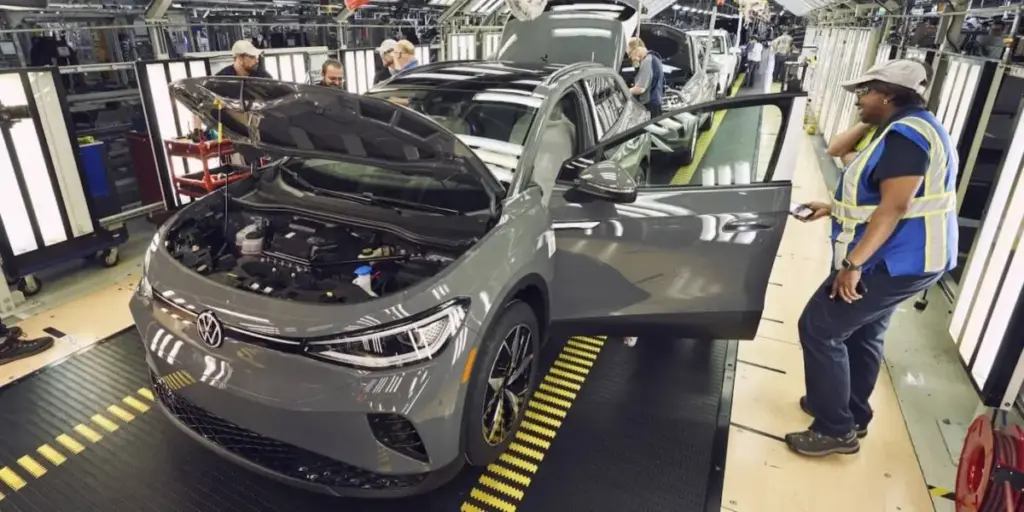
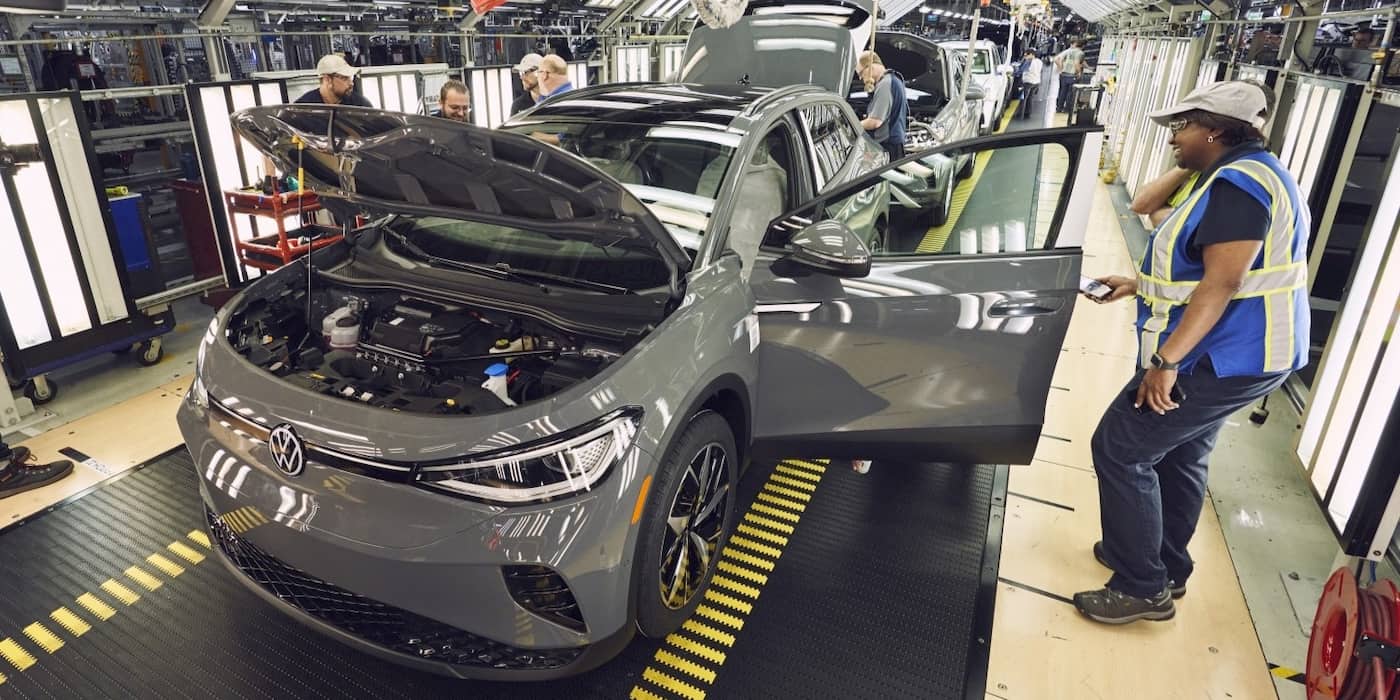
Concurrently, the manufacturing sector hit a severe speed bump. February data underscored a dramatic cooling in factory announcements. While previous years—most notably 2023 and 2024—enjoyed a steady cadence of more than 60 new clean energy manufacturing facilities announced every quarter, Q1 2026 saw a paltry 12 new major facility announcements nationwide.

March 2026: The EV and Battery Sector Chill
As Q1 drew to a close, the concentration of distress within specific sub-sectors became undeniable. Electric vehicle (EV) supply chain investments and stationary battery manufacturing bore the brunt of the market correction. States like Ohio, North Carolina, Georgia, and Oklahoma—which had previously positioned themselves as the industrial heartland of the American electric vehicle revolution—reported multiple downsized or entirely canceled factory projects.
By March 31, the cumulative data painted a picture of an industry desperately attempting to outrun a changing legislative tide, even as the structural foundations of its manufacturing supply chain faced unprecedented turbulence.
Supporting Context & Metrics
The quantitative data compiled in the E2 Clean Economy Works report provides a granular look at the sheer scale of both the boom and the bust currently occurring across the American energy sector.
Utility-Scale Generation: The Numbers Behind the Sprint
- New Q1 2026 Projects: 54 utility-scale solar, wind, and battery storage projects announced.
- Capital Investment: Over $18 billion in planned private sector investment.
- Capacity Additions: More than 12 GW of new generation and storage capacity (sufficient to power roughly 2 million homes).
- Comparison to Previous Year: The 54 projects announced in just the first three months of 2026 nearly match the total active project announcements recorded throughout the entire 12 months of 2025.
The Cost of Retrenchment: Cancellations and Lost Capital
Despite the aggressive push to initiate projects, the rate of cancellations remains a significant drag on net infrastructure growth:

- Q1 2026 Cancellations: 38 utility-scale projects scrapped in a single quarter (nearly half of the 85 total cancellations recorded during all of 2025).
- Lost Capacity: Nearly 8 GW of potential electricity generation wiped off the drawing boards—enough power for 2.5 to 3 million homes.
- Economic Losses: Approximately $13 billion in lost local investments and nearly 33,000 lost construction jobs. (For comparison, total cancellations for the full year of 2025 accounted for $27 billion in lost investment and 45,000 jobs).
Manufacturing Sector Slowdown: A Divergent Reality
The contraction in clean energy manufacturing highlights a stark divergence between traditional renewable components and grid-enabling infrastructure:
- Canceled/Downsized Manufacturing Projects (Q1 2026): 7 major projects across Oklahoma, Ohio, North Carolina, and Georgia.
- Lost Industrial Investment: $1.35 billion.
- Lost Manufacturing Jobs: Approximately 8,100 positions.
- New Manufacturing Announcements (Q1 2026): Only 12 new factories announced, totaling roughly $758 million in investment and creating fewer than 2,000 jobs.
Sector-Specific Vulnerabilities
- Electric Vehicles (EVs): EV manufacturing remains the hardest hit sector overall. Since 2022, E2 has tracked 58 canceled, closed, or downsized EV manufacturing projects representing roughly $25.5 billion in lost investment—accounting for nearly 25% of all cumulative EV manufacturing capital ever announced.
- Battery Energy Storage Manufacturing: This sector has suffered the highest proportional cancellation rate relative to total announced investment. Out of $16.9 billion in active battery manufacturing investments tracked, over $8.6 billion across 18 separate projects has been canceled or downsized. Roughly one-third of all announced battery storage manufacturing wealth has evaporated.
- Renewables Manufacturing (Solar & Wind): This sector has demonstrated greater resilience. Accounting for roughly 116 active projects and $20.4 billion in investment, solar and wind manufacturing has seen less than $2 billion in total project cancellations (under 10% of announced capital).
- Grid and Transmission Equipment: Proving to be the most stable segment of the clean energy economy, grid-related manufacturing has amassed over $6.4 billion in active investment across 58 projects since 2022, with only a single project cancellation totaling $150 million recorded to date.
Future Outlook: Navigating the Policy Cliff
The trajectory of the American energy transition over the next several years will be dictated by how federal policymakers, regional grid operators, and private enterprises navigate the immediate legislative hurdles standing in front of them.
Surging Electricity Demand vs. Policy Headwinds
The fundamental driver of renewable energy deployment remains unshakeable: the American grid requires massive, immediate injections of new generation capacity. The rapid expansion of artificial intelligence data centers, ongoing industrial reshoring, and the electrification of commercial and passenger fleets have triggered unprecedented load growth across nearly every major RTO and independent system operator. According to recent data from the U.S. Energy Information Administration (EIA), renewable energy installed capacity is projected to outpace natural gas by 2027, highlighting the undeniable speed and cost-effectiveness of solar, wind, and storage technologies.
However, political resistance and federal policy uncertainty are actively working against these economic imperatives. The E2 report highlights an acute irony: despite administrative and legislative efforts aimed at curtailing clean energy subsidies, the geographic areas bearing the brunt of both the investments and the project losses are overwhelmingly Republican-held congressional districts. Local economies that stood to benefit from multi-million-dollar tax bases, agricultural lease payments, and high-paying construction jobs are instead absorbing the economic blow of policy-induced cancellations.

The July 4 Deadline and Beyond
As the July 4 legislative deadline approaches, industry analysts expect a final, frantic wave of groundbreakings and financial closures as developers fight to lock in grandfathered tax protections under prior statutory rules. Once that threshold is crossed, accessing capital for new utility-scale and manufacturing projects will require navigating a significantly more complex and restrictive federal rulebook.
Ultimately, the Q1 2026 data serves as both a warning and a testament to corporate resilience. While policy headwinds are successfully slowing down capital deployment and manufacturing growth in vulnerable sectors like EVs and batteries, the sheer market demand for electricity ensures that renewable energy developers will continue to push forward wherever and whenever economic viability allows. Whether federal policymakers choose to support or hinder this necessary infrastructure expansion will determine whether the U.S. grid successfully meets the demands of the 21st-century digital and industrial economy, or stumbles into a self-inflicted power crisis.



