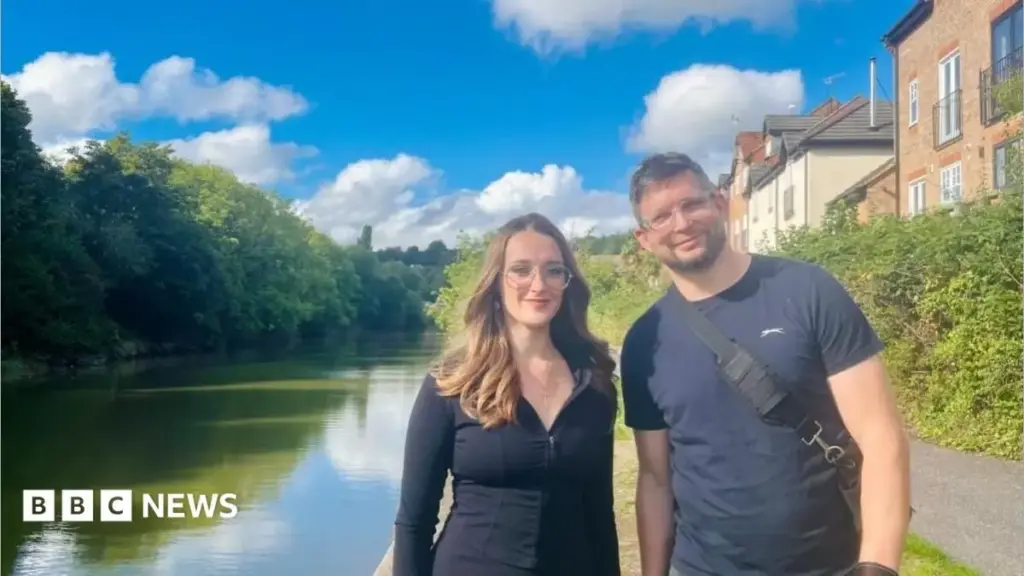
For years, a persistent and deeply alarming ecological crisis has been unfolding along the banks of the River Avon in Bristol. Local residents, wildlife campaigners, and daily walkers have watched in growing distress as a foul-smelling, oil-like substance continually bubbles up from the riverbed, leaving a shimmering rainbow slick across the water’s surface. This chemical contamination—suspected to be linked to industrial legacies of the past—has turned sections of a once-vibrant waterway into a graveyard for local wildlife, littering the banks with dead fish, distressed waterfowl, and decimated populations of native species.
Yet, despite escalating community reports, photographic evidence, and severe health complaints from nearby homeowners, the response from regulatory authorities has been sluggish and disjointed. Led by frustrated residents such as Nicola Irvine and Toby White, communities in areas like Crews Hole have described extracting action from the Environment Agency (EA) as akin to "pulling teeth." Classified officially as a "Category 3" minor pollution incident because its immediate impacts are localized where the contamination enters the watercourse, the crisis highlights a wider, systemic breakdown in environmental oversight. As local frustration boils over, questions are mounting over how long this toxic upwelling can be dismissed as a low-priority issue while local ecosystems—and human health—suffer the consequences.
Detailed Chronology of an Environmental Crisis
The timeline of pollution on this stretch of the River Avon is marked by prolonged official inaction contrasted against meticulous community documentation.
Early to Mid-2025: The First Signs
The modern phase of public awareness began in early 2025. Nicola Irvine, a resident of the Crews Hole area, first noticed an unusual, acrid chemical odor hanging heavily in the air, accompanied by a thick, rainbow-tinted oily film shimmering across the surface of the River Avon. Initially, casual observers and authorities alike frequently attributed such surface phenomena to leisure craft, road runoff, or routine urban pollution.
However, by July 2025, Irvine recognized that the substance was not washing in from the banks or boats; rather, it was actively bubbling up from deep beneath the riverbed. She formally reported the recurring phenomenon to the Environment Agency, providing initial descriptions of the overpowering stench and the visual disruption to the watercourse.
Summer 2025 to May 2026: Dismissal and Escalation
Despite repeated alerts, early interactions with regulators yielded little progress. The EA initially dismissed the reports as routine surface run-off—a classification that local residents argued failed to account for the scale and source of the contamination.
Unwilling to let the matter drop, Irvine and her partner, Toby White, took it upon themselves to document the unfolding disaster. They began logging occurrences, capturing photographs of thick oil slicks, and, most harrowingly, photographing dead wildlife. Irvine noted a dramatic plummet in local waterfowl populations: "This stretch of the Avon used to regularly have 30 to 40 ducks, but now it’s unusual to see more than a handful."
The relentless stream of photographic evidence—featuring deceased fish, floating ducks, and struggling ducklings—finally forced the EA to reopen its formal investigation in May 2026.
The Summer 2026 Heatwave and Health Impacts
The crisis reached a psychological and physical peak during the severe heatwaves of summer 2026. High ambient temperatures exacerbated the volatility of the subterranean chemicals, causing the oily substance to bubble up more aggressively.
For residents living directly on the riverfront, the consequences were immediate and debilitating. Toby White described the living conditions bluntly: "It’s hard to describe how bad the smell is—at times it’s like you’re living on a petrol station and you start getting headaches." For Nicola Irvine, the continuous chemical vapors triggered severe migraines, requiring medical intervention and prescription medication. Even with intense heat amplifying the toxic vapor clouds, the regulatory apparatus continued to frame the event through a lens of administrative minimization.
Supporting Context & Metrics: History, Wildlife, and Regulatory Failures
To fully understand the gravity of the River Avon contamination, investigators and local campaigners must examine the historical context of the land, the rich biodiversity currently under threat, and the regulatory frameworks governing pollution incidents in the United Kingdom.
Industrial Ghosts: The Legacy of Tar Works
Preliminary investigations by the Environment Agency point toward a compelling historical culprit: legacy contamination from former industrial sites. Specifically, a historic tar works operated in the Crews Hole area from the mid-19th century well into the 1980s.
Industrial operations of this era frequently left behind subterranean pockets of toxic byproducts, including coal tar, polycyclic aromatic hydrocarbons (PAHs), and heavy oils. Over decades, these dense, viscous chemicals can settle into underlying geological strata. Environmental engineers suggest that rising water tables, shifting soil pressures, or historical ground disturbances can cause these trapped industrial residues to breach underground containment boundaries, eventually forcing their way up through riverbeds as pressurized bubbles of oil. While this historical link provides a logical explanation for the persistent upwelling, comprehensive remediation work remains stalled as authorities debate the precise liabilities.
Devastation of Local Biodiversity
The stretch of the River Avon experiencing this contamination runs dangerously close to Conham River Park, a celebrated local amenity and popular wild swimming spot where communities have fought long and hard to protect local waters. The river ecosystem supports a diverse web of wildlife, including herons, kingfishers, eels, and even otters.
The presence of a persistent, toxic petroleum-like substance has severely disrupted this delicate habitat. Local dog walkers, such as Dominic Linnell—who has tracked the slick for over two years—report witnessing recurring chemical stenches two to three times a week. Linnell noted seeing dead fish floating upside down alongside deceased ducks, emphasizing the widespread sorrow felt by those who cherish the local environment. Tristan Dhalla, another long-term resident, noted that while he has tracked the pollution for five years, local folklore among neighbors suggests the issue may stretch back a decade or more.
The Controversy of "Category 3" Classifications
At the heart of the community’s fury lies the EA’s official classification of the incident as a "Category 3" pollution event. Under Environment Agency guidelines, Category 3 incidents are defined as those with minor, localized impacts on water quality or the environment, requiring limited emergency response compared to catastrophic Category 1 or 2 disasters.
Residents find this designation deeply insulting and scientifically absurd. Irvine expressed her disbelief: "I can’t believe that even with all the health concerns and the fact there are otters in this river as well, it’s still deemed minor."
This regulatory friction occurs against a backdrop of institutional resource constraints. In 2022, a leaked internal EA report surfaced, instructing agency staff to effectively ignore lower-impact Category 3 and 4 pollution reports due to severe funding and staffing shortages. For communities fighting to save urban rivers, this bureaucratic triage feels less like environmental protection and more like managed neglect.
Official Statements and Inter-Agency Responses
As public pressure mounts, various local stakeholders, utility providers, and municipal bodies have weighed in on their respective roles—or lack thereof—in the ongoing River Avon contamination saga.
The Environment Agency (EA)
The EA maintains that it is actively addressing the issue, albeit within the confines of its investigative mandate. An EA spokesperson stated:
"We have visited the site and are continuing to investigate the source of contamination and its damage to the environment. While minor impacts have been found where the contamination has entered the watercourse, we have not found wider environmental effects downstream. We continue to work with landowners, the local authority and partner organisations to take action to protect the local environment."
Despite these assurances, residents argue that the pace of inquiry is glacial and fails to match the acute health and ecological risks posed by the ongoing bubbling tar.
Wessex Water
Given the proximity of subterranean infrastructure to rivers, water utility companies are frequently scrutinized during pollution events. However, Wessex Water has definitively distanced its assets from the current crisis. A company spokesperson confirmed that comprehensive internal investigations found "no issues" with any company assets, verifying explicitly that the mysterious oily substance does not pass through their local sewerage network.
Bristol City Council
Local municipal authorities are currently playing a supporting, collaborative role. A spokesperson for Bristol City Council confirmed that municipal officers visited the site recently and are actively supporting the EA’s ongoing investigation by providing historical land-use records, drainage maps, and municipal data to help pinpoint the exact geological pathway of the contamination.
Future Outlook: A Critical Test for Urban River Protection
The ongoing scandal on the River Avon represents more than just a localized environmental nuisance; it serves as a litmus test for the future of urban waterway governance in the United Kingdom. With local groups increasingly mobilizing—such as recent campaigns pushing for formal charters of rights for the river—communities are signaling that they will no longer passively accept the slow degradation of their local natural spaces.
For Nicola Irvine, Toby White, and their neighbors in Crews Hole, the path forward demands absolute accountability. They are calling for:
Accelerated Source Identification: A comprehensive, intrusive geological survey to definitively link the bubbling oil to the historic tar works or alternative contamination zones.
Immediate Remediation Engineering: Implementation of containment booms, absorbent skimming technologies, or sub-surface interception trenches to stop the oily substance from entering the river in real-time.
Re-evaluation of Severity Metrics: A systemic overhaul of how regulatory bodies classify localized chemical pollution, ensuring chronic, multi-year exposures are not dismissed simply because their downstream footprint is temporarily mitigated by tidal flows.
Until concrete engineering solutions are deployed to seal off the subterranean pollutant source, residents along the Avon will continue to live with the sickening smell of petroleum in the air and the heartbreaking sight of dead wildlife on their shores. The River Avon, a vital artery of Bristol’s natural heritage, stands at a crossroads: it can either be rescued through rigorous, transparent intervention, or it can be left to languish as another casualty of bureaucratic apathy and historic industrial neglect.