

Executive Overview
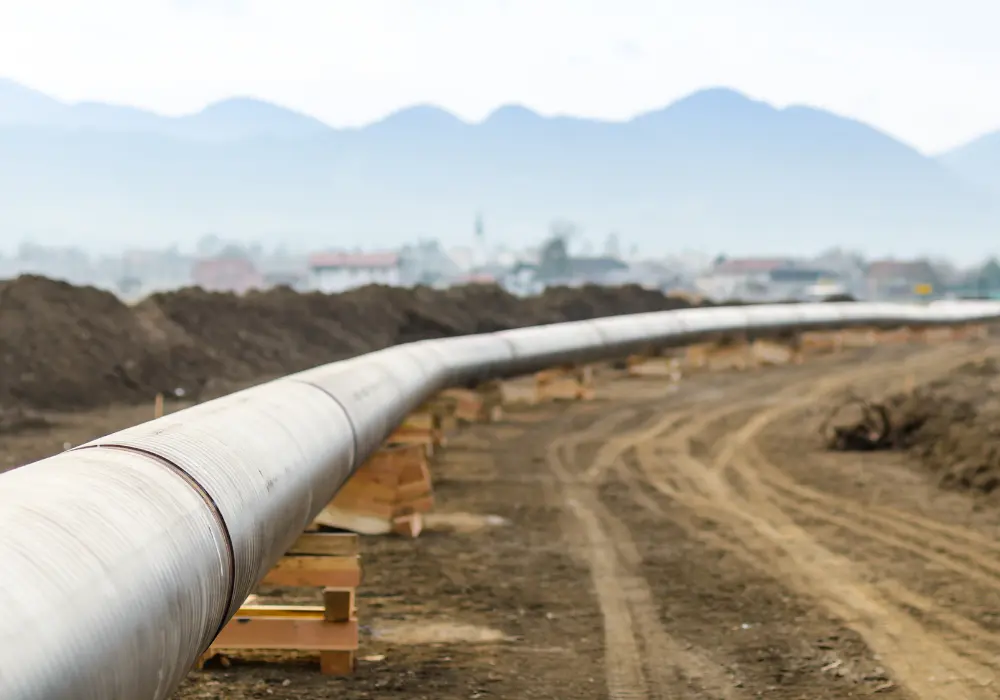
In July, Prime Minister Mark Carney and Alberta Premier Danielle Smith jointly announced a landmark project: a multi-billion-dollar West Coast oil pipeline designed to surge Canadian bitumen to global markets. On paper, the initiative is framed as a masterclass in national sovereignty, export diversification, and economic resilience. Yet, beneath the polished rhetoric of national unity lies a profound and troubling economic contradiction: not a single private oil company is willing to foot the bill.
While the project is spearheaded by the federally owned Trans Mountain Corporation along the existing Trans Mountain corridor, Canadian taxpayers are expected to absorb roughly 90 percent of the staggering capital cost—estimated between $35.2 billion and $43.7 billion, before financing and escalation. When factoring in complementary infrastructure like the Roberts Bank marine terminal expansion and mandatory carbon-capture initiatives, the total public exposure could easily eclipse $100 billion.
This financial backing is not an isolated miscalculation or a mere technicality of modern project finance. Instead, it serves as the starkest indicator yet of a high-stakes, fraught economic strategy for Canada’s near future. By rolling back environmental safeguards, gutting climate policies, and fast-tracking dozens of "nation-building" extraction initiatives through the federal Major Projects Office, Ottawa and provincial allies are doubling down on an extractive economy.
This deep-dive investigation examines the mechanics of this massive public gamble, the quiet retreat of private capital, the widening gulf between oil-sector windfalls and worker prosperity, and the generational risks of locking Canada into the fossil-fuel architecture of a past century while the rest of the world races toward electrification.
Detailed Chronology: How the Extraction Strategy Unfolded
The genesis of the West Coast pipeline was not conceived in isolation; it was part of a rapid, highly coordinated sequence of policy announcements and regulatory overhauls executed during the summer months.
- May 14: The federal government rolls out a proposed national electricity strategy, alongside significant structural changes to impact assessment rules and environmental oversight.
- May 15: Canada and Alberta finalize an implementation agreement under an existing memorandum of understanding, committing both levels of government to regulatory frameworks explicitly designed to enable substantial oil-sands growth.
- July 2: Prime Minister Mark Carney and British Columbia representatives announce billions in public investments earmarked for liquefied natural gas (LNG) development, critical mineral mining, and the expansion of the Roberts Bank port terminal south of Vancouver—the designated marine terminus for the upcoming Alberta pipeline.
- Later on July 2: Prime Minister Carney and Alberta Premier Danielle Smith officially unveil the West Coast pipeline project proposal. Under the structure, the federal Trans Mountain Corporation and the Alberta Petroleum Marketing Commission will hold equal controlling stakes, flanked by a modest, non-binding 10 percent equity placeholder for Calgary-based Pembina Pipeline.
- The Following Week: Proving the strategy extends beyond a single province, Alberta and Ontario propose a second trans-provincial pipeline. Much like its West Coast counterpart, this second line lacks a private proponent and is widely anticipated to require massive injections of public funds.
- August 1: Ottawa officially gazettes a proposal to designate the pipeline as a formal "project of national interest," fast-tracking its legal and regulatory pathways while overriding standard environmental friction.
Today, the federal Major Projects Office is aggressively fast-tracking 23 distinct "nation-building" initiatives valued at well over $130 billion, spanning nuclear energy, mining, LNG, and heavy transportation. The common denominator across nearly all of them is heavy reliance on the public balance sheet.
Supporting Context & Metrics: A Bet the Industry Won’t Make
The most telling indictment of the West Coast pipeline project is the behavior of the very industry it aims to enrich. Highly profitable oil-sands producers, sitting on massive capital reserves following recent commodity price booms, have unequivocally declined to risk their own capital on the expansion.
The Economics of Bitumen vs. Global Reality
Bitumen remains among the highest-cost sources of crude oil on earth. It is exceptionally sensitive to global price volatility and dangerously exposed to declining long-term demand as global decarbonization accelerates. According to the International Energy Agency (IEA), global oil demand is projected to peak before 2030, with future supply capacity comfortably outpacing consumption. Because the proposed West Coast line is unlikely to be operational before the early-to-mid 2030s, the project carries a catastrophic risk of becoming a stranded asset.
Major energy corporations are reading these macroeconomic signals clearly. During the recent multi-year price boom (2021–2024), the four largest oil-sands producers actually cut capital expenditures to an average of $15.9 billion annually, down sharply from $27.9 billion a year during the previous boom (2011–2014). Instead of plowing capital into risky, long-term extraction infrastructure, these firms funneled cash directly to shareholders via historic dividends and massive share buybacks. If the oil majors do not believe in the long-term economic viability of expansion, it begs the question: why should Canadian taxpayers?
The Mounting Public Bill
The financial exposure for Canadians is unprecedented for a peacetime industrial project:
- Pipeline Construction: Estimated by Alberta’s submission at $35.2 billion to $43.7 billion, excluding financing and regulatory escalation.
- Roberts Bank Marine Terminal: Roughly $10 billion.
- Carbon Capture and Storage (CCS): Officially budgeted at $16.5 billion, though independent financial analysts like TD Economics warn that technical and operational overruns could push this figure past $20 billion.
- The Trans Mountain Precedent: It is worth remembering recent history. Ottawa acquired the original Trans Mountain system in 2018 precisely when private investors fled. The subsequent expansion ballooned to roughly $34 billion—more than six times its original cost estimate.
Market-oriented critics and fiscal watchdogs warn that when accounting for inevitable overruns, the total public commitment for this new tranche of fossil infrastructure could easily exceed $100 billion.
Profits, Payrolls, and Foreign Ownership
Proponents argue that the energy sector drives broad national prosperity. However, economic data from the 2021–2024 period paints a starkly different picture:
- The Profit-to-Wage Ratio: A joint report by the Alberta Federation of Labour and Canadians for Tax Fairness revealed that between 2021 and 2023, the oil and gas sector raked in $135.2 billion in operating profits while paying out $43 billion in wages. This translates to $3.14 in corporate profit for every $1 paid to workers—a massive leap from the $0.92 profit-per-dollar ratio seen in the 2011–2014 boom.
- Shrinking Employment: The sector currently employs roughly 30,000 fewer workers than it did at its peak in 2014, demonstrating that increased production no longer translates into equivalent job growth.
- Foreign Leakage: The economic windfalls are largely slipping past Canadian borders. The report estimates that the big four oil-sands producers are 73 percent foreign-owned and 60 percent U.S.-owned. Between 2021 and 2024, an estimated $58 billion in dividends and share buybacks flowed directly out of Canada to foreign shareholders.
Official Statements and Political Realities
The political alignment driving this strategy is as notable as its financial architecture. By partnering closely with conservative premiers like Alberta’s Danielle Smith and Ontario’s Ford, Prime Minister Carney has bypassed traditional regional friction to build a consensus around resource extraction.
Federal and provincial officials maintain that the infrastructure package is essential for national sovereignty. In official press releases, Ottawa frames the initiative as a multi-pronged success: "strengthening our sovereignty, diversifying our exports, reducing emissions, and building a stronger economy."
Yet, this vision relies on a calculated dismantling of existing environmental safeguards. To clear the runway for these multi-billion-dollar bets, regulatory hurdles are actively being dismantled:
- Regulatory Rollbacks: Canada and Alberta’s cooperation agreement streamlines and adds "flexibility" to impact assessments. Federal proposals now push for faster approvals, pre-designated development zones, and a drastically narrowed scope for environmental reviews.
- Policy Defunding: Over the past year, Ottawa has quietly scrapped or weakened several core climate pillars, including the consumer carbon price, the planned oil and gas emissions cap, the federal electric vehicle mandate, clean-electricity regulations, and the industrial carbon price stringency.
The justification offered for these rollbacks is the multi-billion-dollar Pathways carbon capture project—an initiative designed by a consortium of major oil-sands companies to capture 16 million tonnes of carbon dioxide annually by 2045 (and 6 million tonnes by 2035).
However, energy analysts point out a glaring mathematical flaw: roughly 80 percent of a barrel of oil’s life-cycle emissions come from burning the fuel, not from extracting, refining, and transporting it. The proposed pipeline is sized to carry one million barrels a day—translating to 365 million barrels a year, which, when combusted, will release roughly 157 million tonnes of CO2. Even if every single carbon capture target is miraculously met, the "decarbonized oil" touted by political leaders represents a token reduction of less than 10 percent of total life-cycle emissions.
Furthermore, Indigenous communities along the proposed southern pipeline route have pushed back forcefully. Representatives note they were kept entirely in the dark prior to the July announcements, and at least 14 First Nations are currently challenging the federal fast-tracking legislation (Bill C-5) in court. While the project framework includes a vague Indigenous equity purchase right drawn from government shares, its timeline, valuation, and governance remain entirely unspecified.
Future Outlook: The Path Not Taken
As Canada commits historic sums of public capital to the fossil-fuel architecture of the 20th century, the long-term opportunity cost is coming into sharp focus.
Fiscal and political capital are finite resources. Committing hundreds of billions of dollars over the coming decade to extractive megaprojects, nuclear development, and escalating military expenditures will inevitably exert immense pressure on every other sector of society. Healthcare, public education, affordable housing, climate adaptation, and the care economy are already grappling with hiring freezes and service reductions.
More critically, locking public policy into fossil fuel extraction through the 2030s—with assets designed to seek returns into the 2060s—guarantees structural friction as the world decarbonizes. Canada is already off-track for its legally binding climate targets, even as extreme weather events, catastrophic wildfires, unseasonal floods, and prolonged droughts devastate local infrastructure and public finances.
The Alternatives
Other major global economies—including parts of Europe, advanced Asian markets, and China—are executing 21st-century industrial strategies built on aggressive electrification, renewable energy grids, electric mobility, and low-carbon manufacturing. These investments employ significantly more workers per dollar spent, build compounding economic value, and cannot be rendered obsolete by shifting global energy demand.
Canada possesses all the raw materials, technical expertise, and financial capacity to build a resilient, low-carbon future. That alternative path would see public capital directed toward:
- A fully integrated national electricity grid and large-scale renewable storage.
- Massive building retrofits and comprehensive urban energy efficiency programs.
- Electrified public transportation and zero-emission freight networks.
- A circular economy and robust domestic critical mineral processing.
- A genuine "just transition" framework to support energy-dependent workers and northern communities.
Conclusion
Before Canadian taxpayers are asked to underwrite another generation of high-risk public financing for the industries of the past, federal and provincial architects owe the public an honest accounting. They must explain why a multi-billion-dollar bet on shrinking foreign-owned oil markets represents a superior investment in Canada’s future compared to the modern, sustainable alternatives competing for the exact same capital.
Thus far, amid the rapid rollbacks of environmental laws and the quiet signing of blank cheques, that justification remains glaringly absent.



