


Executive Overview
Across the rolling hills and agricultural heartlands of England, a quiet ecological revolution is taking root. The ancient, labor-intensive craft of hedge laying—a cornerstone of rural management that peaked during the agricultural booms of the 18th and 19th centuries—is experiencing a remarkable contemporary renaissance. Driven by a pressing need to combat the escalating climate crisis, reverse catastrophic biodiversity loss, and build climate resilience, British farmers are returning to time-honored traditions to manage their landscapes.
This resurgence is not merely romantic nostalgia. Backed by substantial governmental backing, approximately 2,500 farmers across England have applied for environmental capital grants this year to restore and maintain mature hedgerows. If approved, these initiatives will see the revitalization of roughly 1,300 kilometers (800 miles) of mature hedgerows—a staggering expanse of living green infrastructure stretching from Land’s End to Hadrian’s Wall and back.
Far from being simple rural boundaries, these restored living walls function as formidable environmental workhorses. Mature, expertly maintained hedgerows act as powerful carbon sinks, trapping greenhouse gases at rates that can exceed even those of traditional forests. They provide critical habitats for thousands of native species, shelter livestock from extreme weather, prevent topsoil erosion, and play a vital role in mitigating downstream flooding by slowing, absorbing, and storing vast quantities of rainwater.
As the agricultural sector navigates a post-Brexit landscape and grapples with extreme weather events driven by global heating, hedge laying has emerged as a beacon of sustainable farming. It bridges the gap between historical land stewardship and modern ecological science, offering a practical, hands-on solution to some of the planet’s most complex environmental challenges.
Detailed Chronology: From Prehistoric Boundaries to Modern Revival
Roots in Antiquity and Peak Victorian Engineering
The practice of hedge laying is far older than the modern British countryside, with roots stretching back thousands of years. Early agrarian societies quickly recognized that a living, impenetrable barrier was far superior to wooden fencing or stone walls for containing livestock and keeping out predators.
However, the golden age of hedge laying occurred during the 18th and 19th centuries, galvanized by the Parliamentary Enclosure Acts. As common land was carved up into private, intensively farmed plots, hundreds of thousands of miles of new hedges were planted across Britain. To ensure these young whips matured into dense, livestock-proof barriers, agricultural workers perfected the physical craft of laying: partially cutting through mature stems, laying them over at an angle, and weaving them together to stimulate vigorous new growth from the base.
The Post-War Decline and the Unraveling of the Countryside
For generations, this intricate knowledge was handed down from parent to child, master to apprentice. This unbroken chain of tradition, however, was shattered in the wake of the Second World War.

Driven by post-war food shortages and government policies that prioritized maximum agricultural output and mechanization, British farming underwent a radical transformation. Huge fields were cleared to accommodate massive machinery, and labor-intensive practices like hedge laying were cast aside in favor of cheap chemical inputs, wire fencing, and mechanized flail-mowing.
Over the course of a single generation, millions of miles of historic hedgerows were ripped out, neglected, or over-managed. Without proper intervention, these vital linear ecosystems began to age, thin out at the base, and eventually transform into sparse lines of aging individual trees, losing their defensive and ecological functions entirely.
The Contemporary Resurgence and Policy Shifts
The tide began to turn at the dawn of the 21st century, accelerated recently by the rollout of post-Common Agricultural Policy environmental land management schemes. Recognizing the multi-faceted value of hedgerows, the UK government introduced targeted capital grants designed to reward farmers for practical environmental improvements.
This year’s funding round—drawing from a substantial £225 million pot—saw hedge laying rocket to become one of the top four most popular categories selected by farmers. What began as isolated pockets of conservation work by dedicated enthusiasts has now exploded into a mainstream agricultural movement, supercharged by digital connectivity, community knowledge-sharing, and urgent financial incentives.
Supporting Context & Metrics: The Science of Living Infrastructure
To fully understand why conservationists and agricultural experts are so enthusiastic about the return of hedge laying, one must examine the profound ecological metrics underpinning mature hedgerows.
Carbon Sequestration and Biodiversity Hotspots
According to environmental scientists, mature, actively managed hedgerows are remarkably efficient carbon sinks. Per hectare, they can sequester more carbon than many traditional woodland forests, locking away greenhouse gases in both their woody biomass and the undisturbed soils beneath them.
Furthermore, hedgerows function as the primary ecological networks or "wildlife corridors" of the British countryside. While making up a fraction of the total land area, they support an estimated 80% of Britain’s woodland birds, 50% of its mammals, and 30% of its butterflies.

Flood Mitigation and Soil Protection
In an era marked by increasingly volatile weather patterns and catastrophic flash floods, hedgerows serve as natural sponges. The root systems and the dense, undisturbed soil beneath managed hedges act as hydrological buffers. They intercept surface runoff, dramatically slow the velocity of rainwater as it travels across sloping fields, and enhance soil permeability—reducing the risk of downstream flooding in rural and urban communities alike.
The Mechanics of the Craft
Hedge laying itself is a masterclass in botanical manipulation. The process involves making a diagonal slash—known as a "pleach"—almost completely through the stem of a mature shrub, such as hawthorn, blackthorn, hazel, ash, or willow. The stem is then gently laid down at an angle (usually around 35 to 45 degrees) without breaking it off completely, and staked in place using wooden binders.
By keeping a sliver of bark and the cambium layer intact, the plant receives enough sap to survive while tricking its biological system into viewing the cut as a form of severe damage. In response, the shrub unleashes a torrent of vigorous new growth from the base, rapidly filling in gaps and creating a dense, impenetrable, and rejuvenated barrier that is simultaneously stock-proof and teeming with life.
Official Statements and Frontline Perspectives
The resurgence of hedge laying is championed not only by government officials but, crucially, by the farmers and practitioners on the frontline of land management.
Protecting Ancient Ecosystems
Megan Gimber, key habitats officer for the People’s Trust for Endangered Species (PTES), emphasizes the urgency of the current intervention:
"Hedge laying really stopped after the war, so it has been over a generation since it was a normal part of farm management, and we have seen a huge decline in hedgerows as a result. These grants will give 1,300 kilometers of potentially ancient hedges a new lease of life, to help plug the gap, and it is fantastic that it is such a popular grant application."
Gimber also points out a critical nuance in modern conservation: planting new hedges is only half the battle. Without proper management, young hedges inevitably succumb to natural succession.
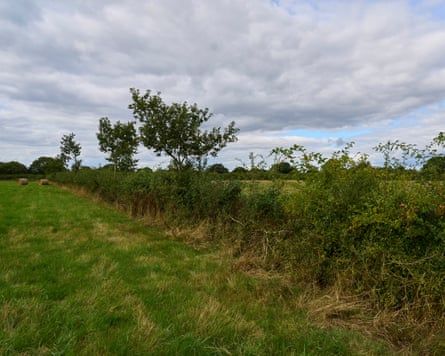
"Hedgerows are succession habitats, made up of trees and shrubby woody species, that naturally change over time. They require management to maintain the valuable mid-succession stage of bushy, low growth and prevent them developing into lines of trees."
A Surge in Practical Demand
Stephen Budding, chair of the National Hedgelaying Society, notes that while public enthusiasm is at an all-time high, structural support remains indispensable:
"They are massively important. The greatest biodiversity gain is from hedge laying older hedges. Our members are seeing quite a surge in work, but I don’t think this would be happening without the government grants available."
Farmer Testimonies: From Trial and Error to Community Movement
On the ground, farmers are witnessing the tangible benefits firsthand. Robert Rose, who farms 220 acres of grassland for beef cattle alongside arable fields at Rosewood Farm in Ellerton, Yorkshire, is currently awaiting Defra approval for a grant to lay old blackthorn, hawthorn, ash, and willow hedgerows across his land.
Working alongside his brother and wife, Rose has spent decades refining his land management techniques:
"We lay the hedges in a modern conservation style that retains more of the bushy growth for the benefit of nesting birds as well as stock-proofing. We taught ourselves how to do the laying, which was a bit of trial and error. It is only recently that we have noticed how much other farmers are talking about hedge laying online, in community groups; it really seems to be taking off."
For Rose, hedge laying acts as a catalyst for wider ecological stewardship:
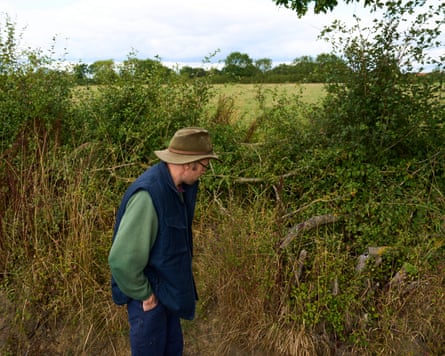
"There are so many benefits with hedge laying—for wildlife, for livestock, for conservation. We see a lot more birds using the hedges and a lot more small mammals around the bottom of mature managed hedges. I think hedge laying is, if you like, a bit of a gateway drug into more conservation. It spreads around the communities to other farmers; the talk about it is everywhere. So this grant scheme is exactly what is needed."
Government Commitment
A spokesperson for the Department for Environment, Food and Rural Affairs (Defra) underlined the administration’s ongoing support for the agricultural sector:
"This government is putting its full weight behind farmers—giving them the funding, tools, and opportunities they need to succeed. In July, we opened a new round of environmental land management capital grants with increased funding of up to £225m available to support investment in infrastructure that boosts productivity, strengthens resilience, and supports environmental outcomes, which has now closed following strong uptake."
Future Outlook: Challenges and Long-Term Sustainability
While the current enthusiasm and high uptake of government grants mark a major victory for British conservation, significant challenges remain on the horizon.
Data from the UK Centre for Ecology and Hydrology highlights a sobering reality: despite record numbers of new hedges being planted across the country, Britain continues to experience a net loss of hedgerows due to over-trimming, mechanical damage, and chronic undermanagement. A 2023 survey revealed that a staggering 61% of newly planted hedges assessed had been lost since a baseline survey in 2007, often failing to survive their critical early years without dedicated care.
Furthermore, the physical labor involved in traditional hedge laying is immense. As the peak hedge laying season runs tightly from October to February—avoiding the nesting season of vulnerable farmland birds—skilled practitioners face intense time constraints. The survival of the craft relies heavily on passing these intricate skills onto a new generation of agricultural workers, a challenge being actively addressed through local training workshops, regional events, and high-profile competitions such as the upcoming National Hedgelaying Championships in Chipping Norton.
Looking forward, the integration of traditional crafts like hedge laying into modern agricultural policy points toward a more resilient, multifunctional future for farming. By recognizing that ancient wisdom often holds the key to solving contemporary ecological crises, Britain’s agricultural sector is proving that sustainability and productivity can walk hand in hand down the very paths they helped carve centuries ago.



