

Executive Overview
Maine is caught in a compounding environmental and industrial paradox. Across the pine tree state, a booming construction aggregate industry—fueled directly by the cascading impacts of climate change—is colliding with the peaceful realities of rural and coastal communities. As rising seas, devastating storm surges, and intense precipitation batter the state’s geography, property owners and municipalities are scrambling to armor shorelines with rock, stone, and riprap. Simultaneously, the demand for foundational infrastructure, roads, and housing has sent the value of crushed stone, sand, and gravel soaring past $220 million annually.
Yet, this unprecedented demand for raw earth materials comes with a heavy local toll. In inland towns like Gorham, Berwick, and Alfred, residents live within earshot of commercial quarries where supersonic shockwaves rattle historic farmhouses and heavy trucks rumble by the dozens each day. Along the coast, the rush to construct hard armor against rising tides has triggered a destructive domino effect, accelerating erosion on neighboring properties and prompting dramatic legislative pushback.
Faced with what many perceive as lax state oversight and unresponsive industrial developers, Maine towns are fighting back. From emergency construction moratoriums and sweeping zoning bans to citizens launching dark-horse campaigns for local office, communities are drawing a hard line. This comprehensive report explores the economic drivers, regulatory battles, and environmental fallout of Maine’s modern mineral and shoreline crunch.
Detailed Chronology: A State Interlaced with Conflict
The Spark: Winter Storms and the Armor Rush
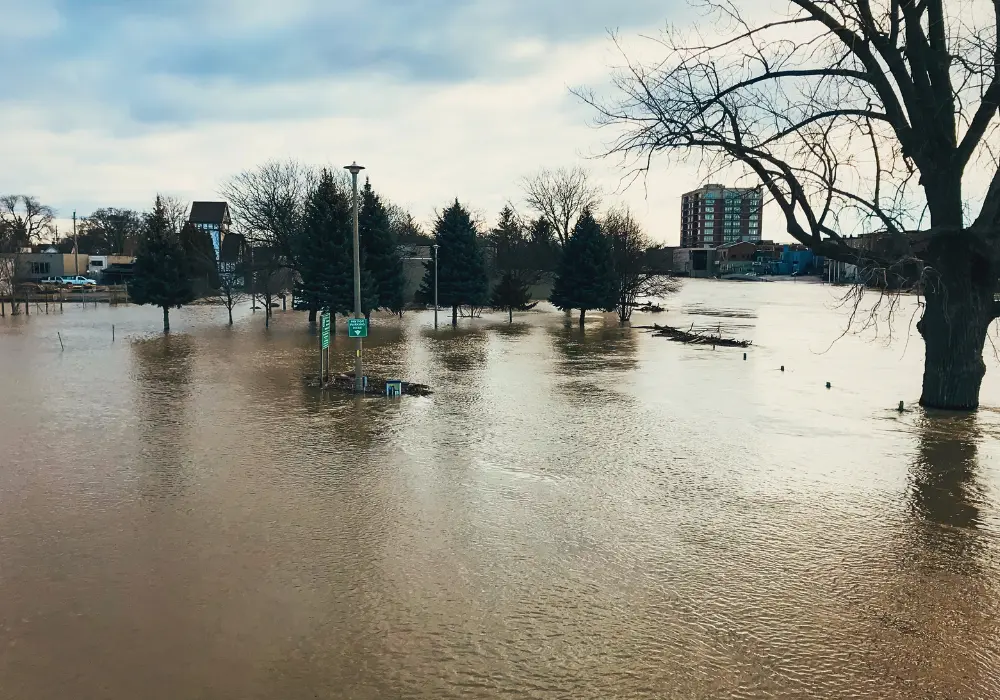
The roots of Maine’s current aggregate crisis trace back sharply to a trio of destructive winter storms that battered the state’s coastlines and inundated its central foothills. These weather events laid bare the stark vulnerability of Maine’s private properties and public infrastructure to climate-amplified storm surges.
In the immediate aftermath, state lawmakers and federal agencies greased the wheels for rapid recovery. Armed with emergency permitting provisions from the Maine Department of Environmental Protection (DEP) and an influx of Federal Emergency Management Agency (FEMA) relief funds, property owners rushed to fortify their land. According to a rough analysis of state permit data, applications for shoreline stabilization permits nearly tripled, jumping from 118 in 2022 to a staggering 313 by 2024. Most of these applications relied heavily on "riprap stabilization"—mass quantities of quarried stone slabs and crushed rock designed to deflect incoming waves.
The Inland Backlash: Quarries Move In
While coastal residents scrambled for rock, inland communities experienced an industrial gold rush. Between 2015 and 2021, Maine averaged a modest three new quarry registrations per year. That figure jumped to roughly 10 per year between 2022 and 2025, excluding ongoing expansions at pre-existing operations.
In Gorham, a vibrant town of nearly 20,000 residents just west of Portland, local frustration over industrial extraction reached a boiling point. Charlie Hamblen, a resident living half a mile from the active Brickyard Quarry operated by Shaw Brothers Construction, endured supersonic shockwaves shaking his historic farmhouse more than a dozen times in a single year. When town leadership repeatedly rebuffed neighbor concerns regarding weak local ordinances, Hamblen took matters into his own hands. Running a populist campaign driven by local grievances, Hamblen won a seat on the Gorham Town Council in November 2025.
Regulatory Tug-of-War and Municipal Defiance
As development applications multiplied across the state, municipal governments began pushing back against both state-sanctioned extraction and unmitigated shoreline hardening:
- Gorham (2025–2026): Shaw Brothers Construction’s proposal to expand its Brickyard Quarry onto a 26-acre parcel faced sustained political friction. Although the Gorham planning board recommended approval for rezoning in August 2026 following prior revisions, local councilors and citizen-politicians like Hamblen continue pushing for tighter local mineral extraction ordinances, looking to rein in an operation that owners argue is already "regulated to the hilt."
- Winthrop & South Thomaston: Confronted with aggressive quarry applications, the central Maine town of Winthrop adopted some of the state’s most stringent mineral extraction regulations in late 2023, capping annual blasts, limiting expansion sizes, and enhancing monitoring. Voters in South Thomaston followed suit in June 2026, passing similar restrictive provisions.
- Camden (June 2026): Moving decisively against the proliferation of private shoreline armor, voters in the tourist hub of Camden approved a landmark 180-day moratorium on all coastal shoreline armoring projects via a landslide referendum. Sparked by the heavy truck traffic and ecological disruptions of heavy riprap installations along Sherman Cove, the town paused all hard engineering to develop comprehensive best practices.
Supporting Context & Metrics: The Numbers Behind the Boom
The numbers underlying Maine’s aggregate boom reflect a statewide and regional industrial transformation.
- The Valuation Surge: According to data published by the U.S. Geological Survey (USGS), the economic value of crushed rock, construction sand, and gravel produced within Maine has more than doubled over the decade. While hovering consistently around $100 million annually through 2021, the market value ballooned to over $220 million in recent years.
- Regional Parallels: This phenomenon is not isolated to Maine. Across New England, construction aggregate demand is soaring. On the Massachusetts islands of Nantucket and Martha’s Vineyard, barge-delivered construction aggregate has surged by 125 percent over the past ten years, paralleled by a frantic wave of coastal resilience engineering.
- Permit Volatility: In Maine, the rush for hard shoreline stabilization peaked in 2024 with 313 applications before dropping back down to approximately 190 permits by 2025. This normalization was driven partly by a lengthy, nine-month approval timeline introduced by environmental regulators, compared to the historical six-month turnaround.
- The Transportation Crunch: Adding a complex financial wrinkle to the market, the Maine Department of Transportation—historically one of the state’s largest bulk buyers of construction aggregate—announced a massive budget shortfall that forced it to slash up to $400 million in road construction projects. This sudden pullback threatens to undercut a significant sector of aggregate demand just as local pits seek new avenues for expansion.
Official Statements and Industry Perspectives
The friction between industrial necessity and residential preservation has drawn impassioned commentary from developers, environmental experts, and municipal officials alike.
Dan Shaw, Owner of Shaw Brothers Construction:
Defending his company’s operations amid local regulatory pushback in Gorham, Shaw emphasized the unavoidable economic reality of state growth. At a planning board meeting, Shaw argued that his company is already tightly controlled by existing rules and has integrated sustainable energy sources, such as powering extraction machinery via a nearby solar farm.
"We need quarries for construction in Maine," Shaw told the Gorham planning board. "We need concrete. We need hospitals. We need roads."
Charlie Hamblen, Gorham Town Council Member and Quarry Neighbor:
Hamblen encapsulates the grassroots frustration of residents living in the shadow of heavy industry. His transition from aggrieved homeowner to elected official highlights the political cost of industrial expansion without local consensus.
"The town was not willing to listen to the neighbors and work on ordinances to make it a safer place for people, so I got crazy and I ran for town council," Hamblen reflected. He estimates that an expanded quarry in his district will directly impact at least 300 existing residential homes, not counting new housing developments.
Jeremy Martin, Camden Planning and Development Coordinator:
Addressing the ecological feedback loop of coastal riprap installation, Martin pointed out the short-sighted nature of uncoordinated private shoreline defense.
"It impacts the natural environment, abutting property owners, and public infrastructure, and that’s why I think voters overwhelmingly approved the moratorium ordinance," Martin explained, noting that private sea walls frequently bounce destructive wave energy onto neighboring properties, initiating a destructive domino effect.
Craig Coolidge, Principal Engineer at Summit Geoengineering:
Commenting on the state’s shift toward nature-based shoreline solutions, Coolidge acknowledged the administrative and engineering hurdles facing property owners. While his firm increasingly incorporates restorative plantings and regenerative sediments, he noted the limitations of soft engineering against extreme weather.
"The vision was good, but the execution is just not there yet," Coolidge stated regarding the DEP’s updated nature-based shoreline rules.
Future Outlook: Navigating the Intersection of Climate and Community
As Maine moves deeper into an era defined by climate instability, the state faces a difficult balancing act. On one hand, the physical realities of rising sea levels, more intense precipitation, and deteriorating coastal infrastructure dictate an undeniable need for building materials. Roads must be maintained, culverts repaired, and vulnerable coastal assets shielded from catastrophic storm surges. Without domestic quarries producing sand, gravel, and riprap close to home, the economic cost of importing these heavy materials from afar would cripple municipal budgets.
On the other hand, the collateral damage inflicted by unmitigated industrial expansion is no longer politically or socially acceptable to local communities. The physics of shoreline armoring dictates that every new sea wall built to protect one parcel merely redirects wave energy, accelerating erosion for adjacent, unarmored neighbors. Similarly, industrial quarries running heavy blasting operations near dense residential neighborhoods threaten property values, structural integrity, and public peace.
The path forward for Maine lies in a delicate evolution of local and state governance. As demonstrated by towns like Winthrop, South Thomaston, and Camden, the era of passive municipal oversight is drawing to a close. Communities are no longer willing to let state-level minimums dictate their local quality of life. By implementing rigorous planning boards, science-based nature-based shoreline criteria, strict blasting monitors, and temporary moratoriums, Maine municipalities are attempting to write a new playbook.
Ultimately, resolving this tension will require industrial operators, state environmental regulators, and municipal leaders to synchronize their goals. If Maine cannot successfully reconcile its desperate need for climate resilience materials with the protection of the very neighborhoods those materials are meant to save, the state risks trading one environmental crisis for another right in its own backyard.



