

Executive Overview
For over two decades, the state of Nevada has cast itself as the diplomatic anchor of the Colorado River basin—a steadfast voice for compromise, conservation, and pragmatic survival. Home to two-thirds of the state’s population and the economic powerhouse of Las Vegas, southern Nevada has transformed into a global paradigm of urban water efficiency. Driven by decades of climate-exacerbated drought and over-allocation, local planners implemented aggressive restrictions on turf and ornamental fountains while building state-of-the-art water reuse and recycling facilities. The result has been nothing short of staggering: a 58 percent drop in per capita water use over the past twenty years.
Within the high-stakes interstate negotiations that dictate the management of the Colorado River, Nevada officials routinely positioned themselves as bridge-builders. Often styling themselves as the "middle basin" between the deeply divided upper and lower basin states, Nevada’s water diplomats championed consensus as the ultimate remedy for a vanishing river.
That carefully cultivated posture of conciliation was abruptly punctured this month. Following the federal government’s unveiling of a sweeping new management plan for the Colorado River—formulated after two years of failed consensus-building among the seven basin states—Nevada shocked water experts across the American West by becoming the first state to file a formal lawsuit against the Interior Department.
While many industry observers anticipated that Arizona, facing the most immediate and painful supply cuts, would be the first to litigate the federal directive, Nevada’s preemptive strike has fundamentally upended the political landscape of the river. At the heart of Nevada’s legal challenge is a stark, existential fear: that the federal plan forces the Las Vegas metropolitan area to shoulder a disproportionate and catastrophic share of future water cuts—theoretically as high as 71 percent.
This comprehensive report examines the anatomy of Nevada’s surprise lawsuit, the structural vulnerabilities of the federal river management plan, the stark realities of urban versus agricultural water rights, and what this unprecedented legal maneuver means for the future of the American Southwest.
Detailed Chronology: From Stalled Talks to the Federal Hammer
The path to the current courtroom showdown has been paved by decades of ecological decline, punctuated by intense, high-stakes negotiations that ultimately broke down.
The Lead-Up: Two Years of Deadlocked Negotiations
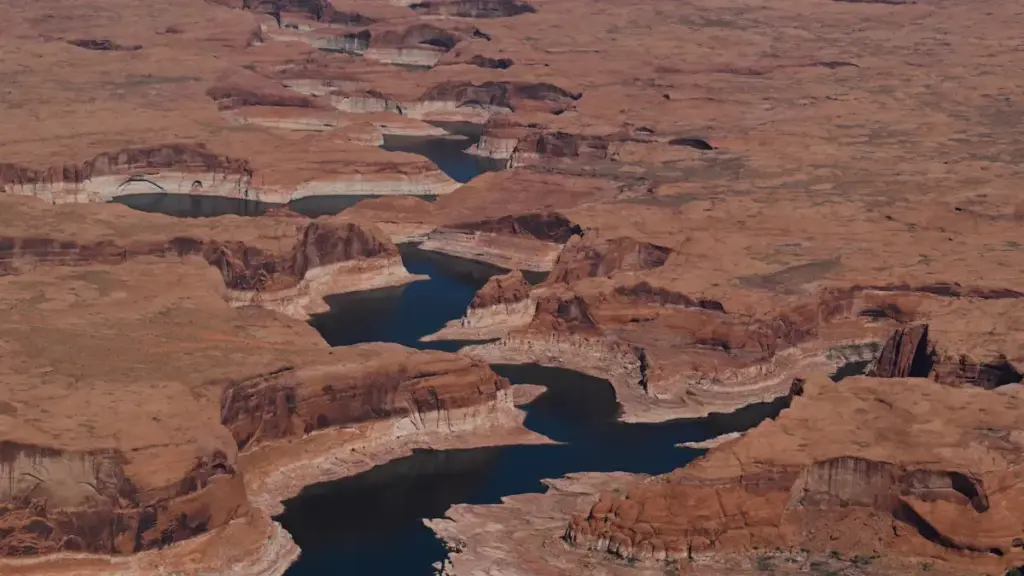
For more than two years, representatives from the seven Colorado River basin states—Colorado, New Mexico, Utah, Wyoming, Arizona, Nevada, and California—sat alongside federal officials in grueling negotiations. Their mandate was to craft a long-term, post-2026 operational guideline to replace expiring management procedures. The central crisis driving these talks has been the alarming depletion of the river’s principal storage vessels: Lake Mead and Lake Powell. Over-allocation and historic aridification have drained these reservoirs so drastically that plunging water levels threatened to compromise hydropower generation and dam operations within months without decisive intervention.
Despite the existential threat, the seven states failed to forge a unified, long-term agreement before the previous management guidelines reached their expiration date in October. This systemic deadlock forced the hand of the Department of the Interior, compelling the federal government to step into the vacuum and impose its own interim operational plan.
The Federal Plan and Its Fallout
The newly announced federal management blueprint relies heavily on mandatory water-use reductions across the Lower Basin states—Arizona, Nevada, and California—to artificially prop up reservoir elevations. However, because the states failed to deliver a cohesive alternative, the federal plan defaults to strict legal interpretations of preexisting water rights and compacts.
Under the federal framework, Arizona absorbs the largest immediate cuts. However, the plan also introduces a dangerous structural vulnerability for Nevada. If reservoir levels continue to plummet, and if Nevada fails to successfully negotiate supplementary shortage-sharing agreements with its Lower Basin neighbors (Arizona and California) past their current expiration in 2028, the federal framework opens the door to devastating volumetric reductions for the Silver State.
The Lawsuit That Shocked the West
When the federal plan dropped, conventional wisdom dictated that Arizona would immediately rush to the courthouse. Instead, Nevada filed its complaint in federal court, catching seasoned Colorado River veterans completely off guard.
"I expected that there would be litigation, but it was surprising to me that Nevada fired the first shot," remarked Anne Castle, former chair of the Upper Colorado River Commission.
The lawsuit immediately injected a volatile layer of uncertainty into the management of the river. While Nevada has not yet petitioned the court for an immediate restraining order or injunction to halt the implementation of the plan, the mere existence of the litigation threatens to unravel the fragile peace governing the Lower Basin.
Supporting Context & Metrics: The Urban Vulnerability
To understand why Nevada pulled the trigger on a federal lawsuit, one must examine the unique structural mechanics of the state’s water portfolio and the socio-economic profile of southern Nevada.
A Stark Urban vs. Agricultural Divide
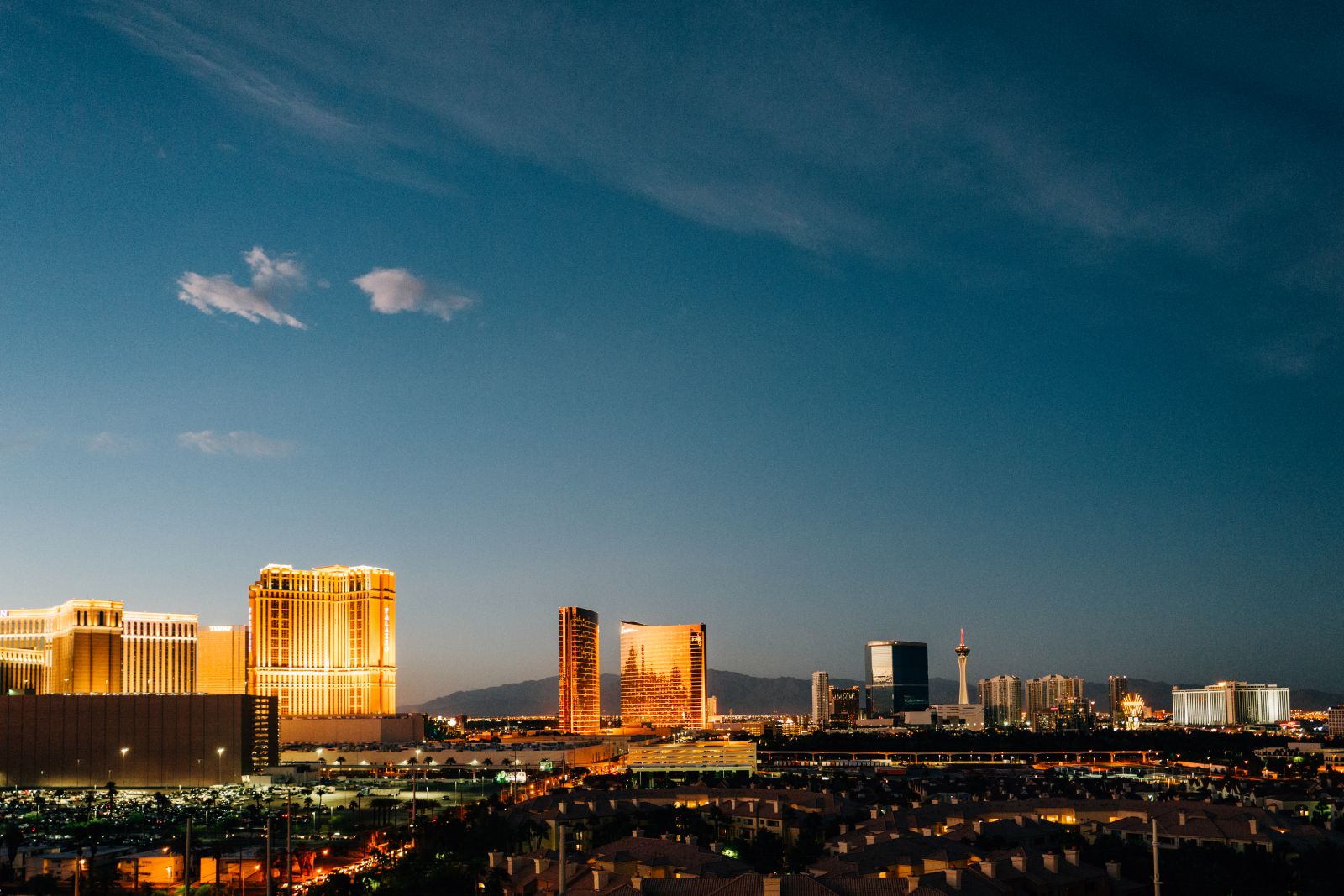
Unlike its neighboring basin states, which rely heavily on massive agricultural irrigation networks to consume the lion’s share of their Colorado River allocations, Nevada’s water usage is distinctly urbanized. Nearly all of the state’s Colorado River water flows directly into the Las Vegas metropolitan area, supporting residential homes, commercial enterprises, tourism, and a burgeoning service economy.
When agricultural states face water cuts, the blow is often cushioned by fallowing fields—paying farmers to temporarily take land out of production. While economically painful for agrarian communities, this mechanism allows states like California and Arizona to shed large volumes of water use without devastating dense urban populations.
Nevada possesses no such luxury. A volume cut to Nevada’s Colorado River allocation does not hit remote farmland; it strikes directly at the taps of millions of urban residents and the commercial heartbeat of the Las Vegas Strip.
The "Existential" 71 Percent Cut
In its legal filing, Nevada argues that the federal management plan fundamentally misinterprets federal law and relies on a flawed environmental review process. In a worst-case scenario outlined in the state’s legal brief—triggered if reservoir levels drop past critical thresholds and interstate agreements collapse—the federal plan could theoretically expose the Las Vegas area to a staggering 71 percent reduction in its water supply.
Water experts and authors have been unequivocal in describing the unfeasibility of such a metric. "There is an absurdity to a plan that would require Las Vegas to cut 71 percent. That’s existential. Of course Nevada sued," wrote John Fleck, a water expert and author-in-residence at the University of New Mexico’s Utton Center.
Flawed Environmental Reviews Under NEPA
Nevada’s legal strategy centers heavily on the argument that the federal government botched the decision-making process required under the National Environmental Policy Act (NEPA). Under NEPA, federal agencies are legally mandated to gather comprehensive public input and rigorously analyze the socioeconomic and environmental consequences of major infrastructural and operational decisions.
Nevada claims that the Interior Department’s environmental impact statement failed to adequately account for the catastrophic economic fallout a 71 percent cut would inflict upon the Las Vegas metropolitan area. Furthermore, the state argues the federal government neglected to evaluate creative engineering and operational alternatives—such as modifications to the structural operations of Glen Canyon Dam—that could have circumvented the need for draconian municipal water restrictions.
"Nobody can deny that the federal government did a ton of modeling and scenario analyses, but in terms of where the rubber meets the road, what were all the inputs, and what were some of the other analyses that could have been done?" asked Kyle Roerink, former director of the Great Basin Water Network, a rural Nevada water advocacy organization.
Legal analysts note that navigating these NEPA claims will be exceptionally complex, particularly in light of recent U.S. Supreme Court rulings that have reshaped and restricted federal environmental review obligations regarding massive, multifaceted infrastructure systems.
Official Statements and Stakeholder Reactions
The legal challenge has sparked intense reactions across the American West, dividing water attorneys, tribal representatives, and state negotiators.
Nevada’s Dual Strategy: Diplomacy Meets Defense
For years, John Entsminger, Nevada’s chief Colorado River negotiator, has championed the virtues of multi-state cooperation. Just one week prior to filing the lawsuit, Entsminger told attendees at a Las Vegas water conference that negotiation, compromise, and cooperation remained the state’s "first, second, and third choice."
Seen through this lens, the lawsuit may not represent a complete abandonment of Nevada’s conciliatory ethos, but rather a continuation of it by other means. With collaborative avenues temporarily stalled and the federal government pressing forward with a top-down mandate, Nevada is utilizing the judicial system to advance its core argument: that any management framework forged without full buy-in and accommodation of all basin stakeholders is fundamentally unviable.
Tribal Nations and Regional Concerns
The lawsuit has also sent ripples through tribal communities holding senior water rights along the river.
"We are disappointed to see Nevada filing suit here, and are concerned about what the ramifications will be for the operations plans in 2027 and potentially 2028," noted Jay Weiner, counsel for the Fort Yuma Quechan Indian Tribe, whose reservation spans the California-Arizona border along the Colorado River.
However, experienced voices within the basin emphasize that litigation and negotiation are not mutually exclusive pathways. Highlighting this dynamic at the 2024 Colorado River Water Users Association conference in Las Vegas, Navajo Nation Chief Counsel Bidtah Becker reminded stakeholders: "You can get along and argue at the same time, and you develop long-term relationships through that."
Future Outlook: Navigating Uncharted Legal Waters
As the legal proceedings unfold, water managers across the West are assessing the broader implications for the basin’s fragile stability.
The Looming Specter of the Compact Battle
It is worth noting that Nevada’s lawsuit is not the apocalyptic "cannonball-splash" that water attorneys have feared for years. That distinction belongs to a prospective, far more explosive legal battle: an anticipated challenge by Arizona against the Upper Basin states (Colorado, New Mexico, Utah, and Wyoming) regarding whether those states have fully met their delivery obligations under the foundational 1922 Colorado River Compact.
Should Arizona launch that particular litigation, it could force federal judges to adjudicate foundational, decades-old questions regarding liability for the river’s hydrological decline. Such a trial could consume years, stripping state leaders of their self-determination and transferring management authority entirely to the judicial branch. Anne Castle identifies that potential scenario as the true epicenter of risk for the basin.
What Lies Ahead for 2027 and Beyond?
In the near term, Nevada’s lawsuit casts a long shadow over the operational plans slated for 2027 and 2028. While the state has not sought an immediate injunction to freeze federal operations, a substantive ruling against the Interior Department could throw a wrench into the transitional arrangements keeping the Lower Basin afloat.
Despite these legal frictions, consensus among experts remains clear: the system’s physical realities demand cooperation. No single lawsuit or court order can manufacture water where none exists. Even as litigation proceeds in federal court, Lower Basin states will likely be forced back to the negotiating table to hammer out shortage-sharing protocols that protect urban centers like Las Vegas while keeping Lake Mead from dropping past the point of no return.
Nevada has drawn its line in the sand, signaling that while it is willing to compromise, it will not quietly accept an existential threat to its citizens. The test for the American West will be whether this legal salvo shatters the remnants of cooperation—or forces a recalibration toward a more equitable, resilient future for the Colorado River.



