

Executive Overview
The serene landscapes, rugged coastlines, and rich biodiversity of the island of Guernsey are facing a stealthy, creeping threat from beneath the undergrowth. A comprehensive, long-term ecological study spearheaded by researcher Leah Cottell has brought to light a significant and previously underestimated population of feral ferrets thriving across the island. While popular culture often views ferrets as docile, domesticated pets or quaint rural companions, their presence in the wild on Guernsey tells a far more concerning story—one of ecological disruption, predation on vulnerable native wildlife, and the ongoing challenges of managing invasive species in isolated island habitats.
Over recent months, Cottell and her team have waded through an immense backlog of field data, trail camera imagery, and ecological observations to map out the distribution and habits of these elusive predators. The findings indicate that Guernsey’s ferrets have established a self-sustaining population that heavily favors wetland and coastal habitats, where they pose a direct, lethal threat to ground-nesting seabirds and other native fauna.
This investigative report delves deep into the origins of Guernsey’s feral ferret population, exploring how a combination of historical pet releases, historical misidentifications with native polecats, and favorable island habitats allowed these animals to slip under the radar for decades. Furthermore, we examine the meticulous methodology behind Cottell’s study, the broader implications for Guernsey’s Strategy for Nature conservation framework, and the urgent measures required to mitigate the ecological fallout before irreversible damage is done to the island’s unique natural heritage.
Detailed Chronology: Uncovering the Island’s Hidden Carnivores
The journey to understanding Guernsey’s ferret population did not begin with a grand scientific expedition, but rather with a quiet realization of a profound knowledge gap. For years, anecdotal sightings of long, low-slung, dark-furred mammals flitting through hedgerows and coastal paths were dismissed, misattributed, or simply ignored. It was only when Leah Cottell initiated her dedicated study that the true scale of the phenomenon began to take shape.
Phase One: The Initial Inquiries and the Data Mountain
When Cottell first set out to investigate the island’s mustelid populations, she faced a daunting wall of ambiguity. "I knew that we had ferrets on the island, but we didn’t really know anything about them," Cottell admitted in an interview with BBC Guernsey. This admission highlights a critical vulnerability in island conservation management: species can quietly establish themselves in the wild long before formal scientific apparatuses register their presence.
The methodology deployed by Cottell and her research team involved setting up motion-activated trail cameras across diverse ecological zones, from dense inland woodlands to sensitive coastal wetlands. These cameras operated continuously, capturing hundreds of thousands of images over extended periods.
As the SD cards rolled in, the research team was confronted with a staggering volume of visual data. Sifting through this colossal digital archive proved to be, in Cottell’s own words, "incredibly time-consuming." Every single frame had to be manually reviewed, categorized, and cross-referenced to filter out false triggers caused by wind-blown foliage or larger native animals, while isolating the fleeting, nocturnal, or crepuscular movements of the ferrets. Despite the tedious nature of the work, Cottell noted that the steep learning curve provided invaluable insights into animal behavior, camera-trap optimization, and local ecology.
Phase Two: Mapping the Habitat Preferences
As the data was systematically processed, distinct behavioral patterns began to emerge. The researchers discovered that Guernsey’s ferrets are not randomly distributed across the island; rather, they exhibit a pronounced affinity for specific micro-habitats.
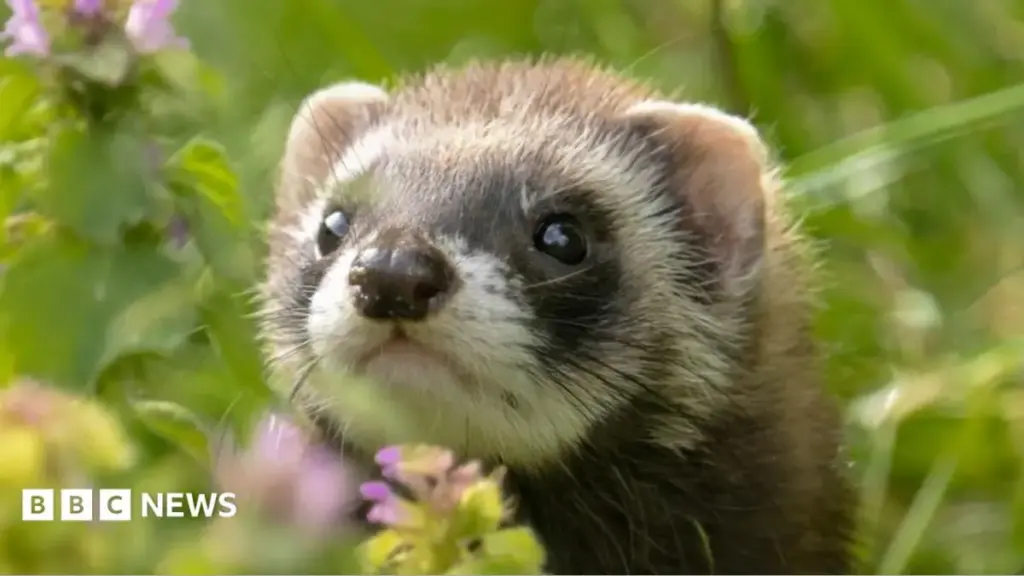
Cottell and her team observed that the animals "seem to like being around water sites because they like eating things like eggs, and so they’ll go for the nests of ground-nesting birds." Wetlands, marshes, and the margins of freshwater reservoirs provide ideal hunting grounds for these agile carnivores. In these environments, they find not only abundant sources of drinking water but also a rich bounty of nesting birds, amphibians, small mammals, and invertebrates.
This habitat preference places the ferrets on an immediate collision course with some of Guernsey’s most vulnerable wildlife. Ground-nesting species—which often lay their eggs in vulnerable depressions in the soil or among tall reeds—are entirely unadapted to dealing with an aggressive, highly efficient mammalian predator like the ferret. Unlike mammalian predators that evolved alongside local bird species, introduced ferrets possess an optimized predatory drive that can quickly devastate local breeding pairs, leading to rapid declines in avian populations across targeted wetlands.
Phase Three: Tracing the Genetic and Historical Roots
One of the most complex dimensions of Cottell’s study involves untangling the origins of the population. Ferrets (Mustela furo) are domestic descendants of the European polecat (Mustela putorius). However, they are not native to the island of Guernsey. Their presence raises pressing questions: How did they get here, and how long have they been breeding in the wild?
Cottell posits two primary hypotheses regarding the establishment of the feral population. The first points to historical continuity: "They look like their polecat wild counterparts, so they have been out there for a very long time." Because ferrets frequently interbreed with polecats or revert to wild-type colorations (often referred to as polecat-hybrids), animals that escaped captivity decades ago may have adapted to the wild seamlessly, blending in with historical misconceptions about native wildlife.
The second, more heavily weighted hypothesis points to the cultural shifts of the late 20th century. "Or ferret owners in the 1980s might have let some go and over time it’s expanded," Cottell suggested. During the 1970s and 1980s, keeping exotic or working pets experienced waves of popularity, followed by corresponding waves of abandonment when owners could no longer care for them or lost interest in hunting and pest control. A small number of deliberate or accidental releases during this era would have been more than sufficient to establish a resilient founding population. Over the span of four decades, unhindered by significant natural predators on the island, this small pool of escapees multiplied, quietly expanding their territory across Guernsey’s interconnected green corridors.
Supporting Context & Metrics: The Ecology of Island Invasions
To fully grasp the gravity of Leah Cottell’s findings, it is essential to contextualize the threat of invasive mammalian predators within the broader framework of island biogeography. Islands like Guernsey possess closed, highly sensitive ecosystems where native species have evolved in the absence of aggressive terrestrial carnivores. When non-native predators are introduced into these systems, the ecological consequences are frequently catastrophic.
The Island Vulnerability Index
In evolutionary biology, island species often display traits that make them uniquely vulnerable to invasive predators. For instance, many island birds lose their innate fear of ground predators—a phenomenon known as island tameness. Ground-nesting birds on Guernsey, such as various species of waders, gulls, and passerines, do not possess the sophisticated anti-predator defenses required to deter a relentless mustelid.
Ferrets are obligate carnivores possessing an elongated, flexible body morphology designed to infiltrate burrows, dense brush, and nests. Their high metabolic rate requires them to hunt constantly, making them disproportionately destructive predators relative to their body size. A single family of feral ferrets can systematically clean out the nests of an entire wetland area within a single breeding season, wiping out years of reproductive output for localized bird populations.
Quantitative Challenges in Processing Field Data
The logistical hurdles faced by Cottell and her team reflect the broader challenges of modern wildlife monitoring. Quantifying an elusive, nocturnal invasive species requires heavy reliance on proxy metrics, such as camera-trap capture rates, footprint analysis, and scat collection.
While the exact population census of Guernsey’s ferrets remains a work in progress, the density of captures in targeted zones suggests a robust, widely distributed population. Processing the data requires months of meticulous analytical work:
- Image Sorting: Over 70% of the research timeframe is dedicated to filtering out non-target movements (livestock, domestic cats, humans, and weather disturbances).
- Individual Identification: Where possible, researchers attempt to distinguish individual animals based on pelage variations, facial markings, and physical scars, though this remains notoriously difficult with mustelids.
- Spatial Modeling: Combining camera locations with habitat mapping to project population heatmaps across Guernsey.
Cottell noted that completing this analytical phase will take "months and months," emphasizing that rigorous conservation science cannot be rushed if policy decisions are to be built on solid, defensible empirical data.
Official Statements and Conservation Perspectives
The implications of the Guernsey ferret study extend far beyond academic curiosity; they sit squarely at the intersection of public policy, animal welfare, and conservation funding. As the findings are compiled into an official report, local environmental authorities and funding bodies are taking notice of the pressing need for strategic intervention.
Leah Cottell on the Ground Realities
Reflecting on the grueling research process, Leah Cottell maintains a pragmatic and educational perspective. Her work has transformed a vague public suspicion into a documented ecological reality. By engaging directly with local media outlets like BBC Guernsey, she has successfully raised public awareness about the nuanced difference between domestic pets and invasive ecological actors.
"They are an invasive species," Cottell emphasized, cutting through any romantic notions about wild-roaming mustelids. By highlighting their specific threat to ground-nesting birds, she has provided conservationists with a clear target for future mitigation strategies. Whether the population originated from deliberate 1980s releases or a longer-standing feral lineage matters less now than the immediate imperative to manage their numbers and protect fragile nesting sites.
Institutional Support and the Strategy for Nature Framework
Addressing invasive species requires coordinated institutional backing and, crucially, financial resources. Fortunately, the release of Cottell’s initial findings coincides with a pivotal moment in local environmental funding cycles.
Representatives from Guernsey’s environmental administration have confirmed that the next round of the Strategy for Nature funding initiative is currently open. This funding stream is specifically designed to support grassroots conservation projects, ecological research, habitat restoration, and species management across the island.
Fund bosses have issued a clear call to action for local researchers, conservation charities, and environmental groups: individuals and organizations wishing to apply for financial grants must submit their proposals before the fast-approaching deadline of 25 October.
The alignment between Cottell’s ongoing reporting and the availability of Strategy for Nature grants offers a golden opportunity. Charities and research entities looking to transition from exploratory studies—such as counting and mapping feral ferrets—into active management, trapping, or habitat protection programs now have a clear pathway to secure the necessary capital.
Future Outlook: Managing the Menace and Preserving Guernsey’s Biodiversity
As Leah Cottell and her team put the finishing touches on their comprehensive research report, the conversation on Guernsey must inevitably shift from discovery to action. Recognizing that an invasive species is present is only the first step; formulating and executing an effective management strategy is the ultimate test of any island conservation framework.
Moving from Data to Action: The Path Ahead
The upcoming report, anticipated upon the completion of the photo-sorting and data-analysis phase, will serve as the definitive baseline document for Guernsey’s environmental policymakers. It will outline population hotspots, seasonal behavioral shifts, and specific ecological zones facing the highest risk of predation.
Armed with this data, local authorities and conservation charities will need to evaluate several strategic options:
- Targeted Trapping and Removal: Implementing humane, highly targeted removal programs in sensitive wetland and coastal reserves where ground-nesting birds are most at risk.
- Public Education Campaigns: Engaging pet owners, landowners, and the wider public to prevent the accidental or deliberate release of domestic ferrets, while raising awareness about the ecological impacts of loose pets.
- Habitat Hardening: Creating protected nesting zones, fencing off critical bird colonies, and improving natural cover to give native species a fighting chance against terrestrial predators.
- Continued Monitoring: Establishing a permanent, long-term camera-trap network to track population trends, evaluate the success of control measures, and detect any new incursions early.
Securing the Financial Engine
The success of these future initiatives will depend heavily on sustained funding. With the Strategy for Nature grant window closing on October 25, local conservationists are racing against the clock to draft robust, impact-driven funding applications. Proposals that build directly upon Cottell’s foundational research—translating camera-trap data into active predator-management protocols—are exceptionally well-positioned to secure backing.
Conclusion
Leah Cottell’s painstaking investigation into Guernsey’s feral ferret population has exposed a quiet crisis unfolding in the island’s wetlands and coastal margins. What began as an invisible presence captured on shadowy trail-camera frames is now a documented ecological challenge demanding a sophisticated, well-funded response.
As Guernsey stands at this critical ecological crossroads, the combination of rigorous scientific research, heightened public awareness, and dedicated conservation funding provides a powerful toolkit. By confronting the reality of invasive ferrets head-on, Guernsey can protect its irreplaceable ground-nesting birds, preserve the delicate balance of its natural habitats, and ensure that the island’s rich biodiversity endures for generations to come. The window for proactive intervention is open—and with the October 25 funding deadline looming, the time for decisive action is now.



