

Executive Overview
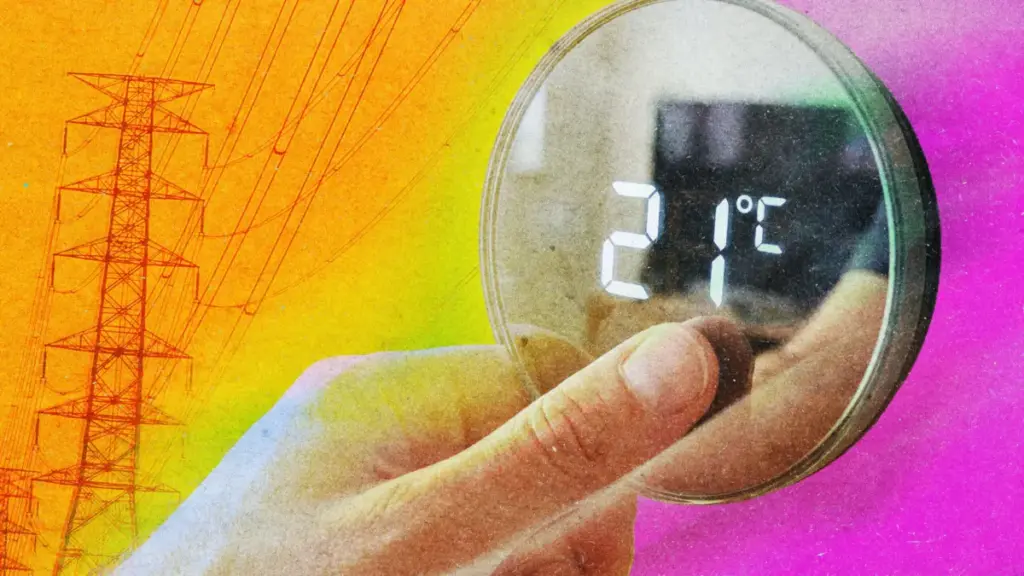
To the casual observer, the interior of a modern home looks remarkably conventional. The thermostat quietly hums on the hallway wall, maintaining a steady 72 degrees. An electric vehicle (EV) sits parked in the garage, plugged into a Level 2 charger. A sleek home battery system rests in the utility room, silently safeguarding against the next unexpected storm.
Yet, across the United States and in increasingly crowded global energy markets, utility companies and grid operators are beginning to look at these mundane domestic appliances through an entirely different lens. To them, your thermostat, your car, and your home battery are no longer just consumer electronics—they are nodes in a massive, distributed power plant.
This paradigm shift is driven by the rise of Virtual Power Plants (VPPs). Rather than relying exclusively on massive, centralized fossil-fuel plants or expensive new infrastructure projects to meet surging electricity demand, utilities are aggregating thousands—and sometimes millions—of household smart devices. By sending subtle, automated signals to these devices, grid operators can command them to draw less power during peak hours, effectively smoothing out spikes in demand. In exchange, participating homeowners receive financial incentives, bill credits, and the satisfaction of contributing to grid stability and decarbonization.
As major technology firms like Google invest heavily in VPP infrastructure to power energy-hungry data centers, and as the number of U.S. VPP programs rapidly scales past the 500 mark, the concept has moved from a theoretical engineering dream to a mainstream energy reality. However, navigating this new landscape requires careful consideration. From complex eligibility requirements and data privacy concerns to personal flexibility trade-offs, homeowners must weigh whether joining a VPP is right for them.
This guide explores the mechanics of virtual power plants, examines the explosive growth of the sector, and provides a step-by-step framework for consumers looking to turn their smart homes into grid assets.
Detailed Chronology: The Evolution and Rise of Virtual Power Plants
To understand how our living rooms and garages became frontlines in the energy transition, it helps to examine how the relationship between utilities and consumers has evolved over the past two decades.
- The Early 2000s: The Dawn of Demand Response
Long before smart thermostats were commonplace, utilities experimented with rudimentary "demand response" programs. These early initiatives relied heavily on heavy industrial users or commercial buildings, paying them to shut down operations or ramp down energy use during grid emergencies. Residential participation was rare, often requiring clunky, manually operated physical switches installed on central air conditioners. - The 2010s: The Smart Home Boom
The widespread adoption of connected technologies—led by companies like Nest introducing learning thermostats—laid the groundwork for modern VPPs. For the first time, millions of households had internet-connected appliances capable of receiving remote commands. Software startups began bridging the gap between hardware manufacturers and traditional electric utilities. - 2020–2023: Scaling and Standardization
Driven by extreme weather events, aging grid infrastructure, and aggressive state-level clean energy mandates, VPP deployment accelerated. By 2023, more than 500 distinct VPP programs were active across the United States alone. Major automakers began integrating VPP compatibility directly into EV manufacturing apps, allowing drivers to enroll their vehicles with a single click. By the end of last year, an estimated 4 million households with smart thermostats were participating in structured VPP programs. - 2024–Present: Big Tech Enters the Arena
The conversation shifted dramatically as tech giants like Google began investing directly in VPP technology to power their massive, power-hungry data centers. Simultaneously, battery-to-grid capabilities began to rise, moving the industry beyond simple load-shedding (turning things off) toward active energy discharge, where home batteries can push electricity back into the grid when prices—and needs—are highest.
Supporting Context & Metrics: The Scale of the Shift
The underlying magic of a virtual power plant lies in aggregation. On an individual level, the amount of power a utility throttles in a single home during a peak demand event is remarkably small. Adjusting your thermostat by two degrees or delaying an EV charging session by an hour saves only a fraction of a kilowatt-hour.
However, as Seth Frader-Thompson, CEO and co-founder of EnergyHub, points out, mathematics changes the equation when applied at scale. "When you put it together at the scale of hundreds of thousands, or millions, it has a pretty profound impact," Frader-Thompson explains, noting that a mature VPP network achieves an output equivalent to "firing up a power plant."
Key Metrics Driving the VPP Economy
- 500+ Programs: The number of active virtual power plant programs operating in the United States continues to climb, concentrated primarily in regions with stressed grids, flexible loads, and supportive state policies (such as California, Texas, New England, and the mid-Atlantic).
- 4 Million Households: Recent data reveals that approximately 4 million homes with smart thermostats were enrolled in targeted demand-response and VPP initiatives last year.
- Financial Incentives:
- Smart Thermostats: Typically yield an initial sign-up bonus of $50 to $150, supplemented by annual rewards of $25 to $50.
- Home Batteries and EVs: Due to their massive energy capacity, these devices can yield hundreds—or even thousands—of dollars in annual savings and bill credits.
Despite these impressive figures, experts warn that the transition is not without friction. Severin Borenstein, faculty director of UC Berkeley’s Energy Institute at Haas and a member of the board of governors of the California Independent System Operator (CAISO), cautions that poor implementation can backfire.
If a utility fails to accurately model consumer behavior, it might incorrectly predict when participants plan to use energy. In poorly designed programs, utilities could end up paying customers for not using energy they weren’t planning to consume anyway—a dynamic that can inadvertently drive up electricity bills for non-participating ratepayers.
"If we do it well, I think it can really be a benefit," Borenstein notes, emphasizing that effective VPPs can help utilities bypass the multi-billion-dollar cost of building new peaker power plants or deploying emergency conservation measures.
Official Statements and Industry Perspectives
The rapid commercialization of virtual power plants has brought together unexpected allies: tech executives, academic researchers, digital rights advocates, and utility planners. Their differing perspectives highlight the delicate balance between grid reliability and consumer protection.
On the Power of Aggregation
"There are not that many things that you can do that directly contribute to decarbonizing the electric supply, or to improving affordability, or to improving reliability, and this is just a clearly effective way to do that. And you get paid for it."
— Seth Frader-Thompson, CEO and Co-founder, EnergyHub
On the Necessity of Strategic Execution
"If a program is not implemented well, a utility may incorrectly predict when VPP participants plan to use more electricity and pay them for not using energy they weren’t planning to use anyway… Still, if we do it well, I think it can really be a benefit."
— Severin Borenstein, Faculty Director, UC Berkeley’s Energy Institute at Haas
On the Ease of Modern Onboarding
"EV drivers may be able to see the terms and payment in their automaker app and enroll with a click of a button."
— Joseph Vellone, CEO, ChargeScape
On Socioeconomic Flexibility
"Households that work night shifts, have caregiving responsibilities or health needs, or are already aggressively limiting their energy use to save money may have less room to allow a utility to adjust heating, cooling, or charging rates during peak hours."
— Sanya Carley, Professor, University of Pennsylvania and Faculty Director, Climate Center for Energy Policy
Future Outlook: How to Evaluate and Join a Virtual Power Plant
For consumers intrigued by the prospect of turning their household into a micro-power plant, the path forward involves answering four critical questions:
1. Check Eligibility and Supported Devices
Not all smart devices are created equal, and programs vary wildly by geography and utility provider. When searching for programs on your utility’s website, you may not see the exact phrase "virtual power plant." Instead, look for terms like:
- Demand Response
- Peak Rewards
- Connected Solutions
- Battery Storage Rewards
- Managed Charging
- Bring Your Own Device (BYOD)
Furthermore, Frader-Thompson notes that utilities are often not the first point of contact. "The way most people actually learn about this and sign up is through the manufacturer of the device they have." Check your smart thermostat app, EV companion app, or home battery portal for integrated enrollment offers.
2. Assess Your Household Flexibility
Before handing over partial control of your home appliances to an algorithm, evaluate your daily lifestyle. If your electric vehicle sits plugged in for 10 hours overnight but only needs two hours of active charging, a utility shifting those charging hours will be entirely invisible to you.
However, as Professor Sanya Carley warns, not every household possesses this operational buffer. Families with strict medical needs, night-shift workers, or those operating on razor-thin energy budgets may find it difficult to accommodate sudden shifts in heating, cooling, or charging schedules.
3. Review Opt-Out Rules and Data Privacy
Legitimate VPP programs always include an opt-out clause. If you are hosting guests, preparing for a long road trip, or bracing for a severe weather event, you should retain the right to override utility commands immediately.
Simultaneously, consumers must pay attention to data privacy. Smart thermostats, home batteries, and connected cars generate vast streams of telemetry data. While companies like ChargeScape and EnergyHub stress that data collection is restricted to functional metrics—such as asset physics and average community behavior—civil liberties groups like the Electronic Frontier Foundation (EFF) have raised valid concerns about how granular energy data can be used to infer private household routines. Always read the fine print regarding third-party data sharing.
4. Weigh the Financial Value
Compensation takes many forms: upfront sign-up bonuses, gift cards, monthly bill credits, discounted hardware, free EV charging miles, or export credits for feeding solar energy back into the grid. While high-end capital assets like EVs and home batteries yield the highest returns, they also represent a steep financial barrier to entry. Starting with a low-cost smart thermostat program is an ideal entry point for risk-averse consumers.
Conclusion
The virtual power plant represents a fundamental democratization of the electrical grid. By harnessing the collective flexibility of millions of smart homes, society can bypass the construction of dirty, expensive fossil-fuel plants while bolstering community reliability and accelerating decarbonization.
Your home may never outwardly look like a heavy industrial power plant. But the next time your smart thermostat subtly adjusts to weather a summer heatwave, or your electric vehicle waits until the dead of night to draw cheap, clean power, remember: you are no longer just a passive consumer at the end of the line. You are the grid.



