

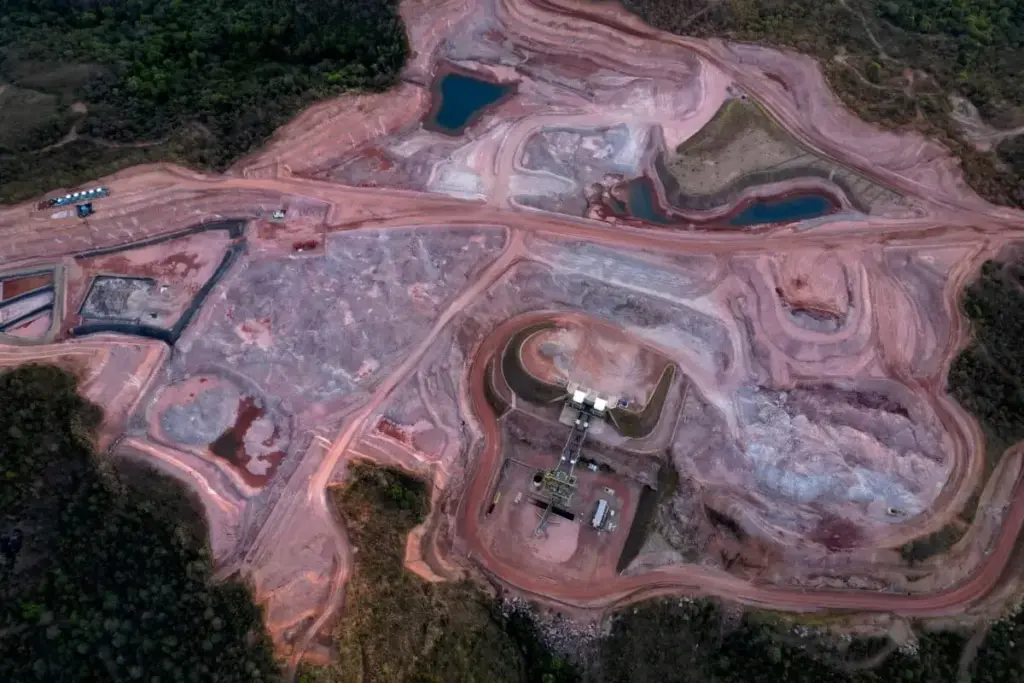
RIO DE JANEIRO — In a decisive legislative move that could reshape global supply chains for green technology and advanced electronics, Brazil’s Senate has overwhelmingly approved a sweeping bill designed to regulate and accelerate the exploration of critical minerals, most notably rare earth elements.
The legislation, passed late Thursday, establishes the nation’s first comprehensive legal framework for the extraction, processing, and commercialization of these high-value resources. With Brazil sitting atop the world’s second-largest reserves of rare earths—crucial components for everything from commercial smartphones to permanent magnets in electric vehicle (EV) motors—the bill now heads to the desk of President Luiz Inácio Lula da Silva for a widely anticipated signature.
By combining regulatory clarity with targeted tax incentives for domestic processing, Brasilia is openly signaling its ambition to challenge China’s near-monopoly on the critical minerals market and position South America’s largest economy as a secure, reliable alternative supplier to Western democracies.
Executive Overview: A Geopolitical Gambit in the Heart of South America
For decades, the global transition toward renewable energy and digital infrastructure has faced a glaring vulnerability: supply chain concentration. China has long dominated not only the extraction of rare earth elements (REEs) but, more importantly, the complex, environmentally sensitive refining and processing stages required to make them usable. As geopolitical tensions rise and Western nations frantically seek to diversify their sourcing of critical raw materials, Brazil has emerged as a sleeping giant.
The newly approved Senate bill is designed to wake that giant. It introduces structural certainty into a sector that has historically suffered from bureaucratic hurdles, informal mining, and a lack of institutional backing. Beyond simply clearing the way for extraction, the legislation aggressively incentivizes domestic value addition. Rather than allowing raw ores to be shipped abroad unprocessed—a historical economic pitfall for resource-rich developing nations—the new framework mandates and rewards local beneficiation, ensuring that more of the economic upside remains within Brazilian borders.
Furthermore, the creation of a specialized national mining fund aims to de-risk capital-intensive projects, attracting both domestic and foreign direct investment (FDI). As the global demand for neodymium, praseodymium, terbium, and dysprosium skyrockets, Brazil’s legislative milestone transforms its vast geological endowment into a formidable geopolitical and economic instrument.
Detailed Chronology: The Path to the Senate Floor
The road to Thursday’s Senate vote was paved by years of mounting geopolitical urgency, shifting industrial demands, and quiet diplomatic overtures from trade partners in North America, Europe, and Asia.
Phase 1: Recognizing the Blind Spot
Long viewed primarily as an agricultural superpower and an exporter of iron ore, soy, and oil, Brazil’s federal policymakers began paying closer attention to critical minerals in the wake of pandemic-era supply chain disruptions. Geologists and trade attachés alike warned that as the global automotive sector transitioned away from internal combustion engines, Brazil’s rich deposits of lithium, nickel, graphite, and rare earths would become prime strategic assets. However, the absence of a modern, specialized regulatory framework kept major international mining conglomerates hesitant to commit the billions of dollars required to bring these deposits online.
Phase 2: Drafting the Framework
Throughout late 2023 and 2024, congressional committees, in consultation with the Ministry of Mines and Energy, labored to draft a bill that could balance environmental protections with aggressive economic incentives. The core challenge was twofold: preventing the environmental degradation often associated with unregulated mining while simultaneously slashing the red tape that choked legitimate industrial development. Lawmakers looked closely at successful domestic pioneers—such as Serra Verde Mining in Minacu, Goiás state, which began producing critical rare earth concentrates—to understand the real-world operational hurdles facing the industry.
Phase 3: The Legislative Breakthrough
By early 2025, momentum had reached a fever pitch. International delegations visiting Brasilia repeatedly raised the issue of critical mineral security, tying trade agreements and green technology partnerships to reliable access to raw materials. Recognizing a historic window of opportunity, Senate leadership pushed the critical minerals bill to the forefront of the legislative agenda. Following rigorous debate and minor amendments aimed at environmental safeguards and regional development funds, the chamber voted to approve the measure, marking a definitive victory for President Lula’s administration’s industrial policy.
Supporting Context & Metrics: The Anatomy of Brazil’s Mineral Wealth
To understand the magnitude of Brazil’s new legislation, one must examine the hard numbers and industrial realities driving the global critical minerals race.
The Geological Landscape
According to data from the U.S. Geological Survey (USGS), Brazil holds the second-largest reserves of rare earth elements globally, estimated at approximately 21 million metric tons. These 17 chemically similar metallic elements are indispensable to modern technology. Neodymium and dysprosium, for instance, are vital for creating the ultra-strong permanent magnets used in wind turbine generators and electric vehicle traction motors. Without them, the global decarbonization timeline becomes functionally impossible.
| Metric / Indicator | Data Point | Global Context |
|---|---|---|
| Brazilian REE Reserves | ~21 Million Metric Tons | 2nd largest globally (behind China) |
| Key Elements Mined | Neodymium, Praseodymium, Terbium, Dysprosium | Essential for high-performance permanent magnets |
| Primary Production Hub | Minacu, Goiás (Serra Verde Mining) | Active commercial extraction and processing site |
| Market Dominance Target | Western Supply Chain Diversification | Aiming to reduce reliance on Chinese processing |
The Bottleneck: From Ore to Oxide
Extracting rare earth ore from the earth is only half the battle; the true industrial hurdle lies in separation and refining. Rare earths are notoriously difficult to isolate from one another due to their chemical similarities, and the extraction process often involves acidic reagents and low-level radioactive byproducts (such as thorium).
Historically, China capitalized on Western environmental hesitancy to corner over 80% of global REE mining and nearly 90% of refining capacity. By offering tax incentives specifically structured around domestic processing, Brazil’s new law directly targets this bottleneck. The legislation encourages companies to build separation and refining facilities on Brazilian soil, ensuring that the country exports high-value separated rare earth oxides rather than raw, low-value dirt.

Official Statements and Stakeholder Reactions
The passage of the bill has triggered a wave of commentary from government officials, industry leaders, and international observers, highlighting the multifaceted implications of the new law.
Government Perspectives
Proponents of the legislation within the Lula administration have framed the bill not merely as an economic boon, but as a pillar of national sovereignty and sustainable industrialization.
"We are no longer content to simply be the world’s farm or a quarry that ships raw earth away for others to profit from," noted a senior advisor to the Ministry of Mines and Energy, speaking on background. "This legal framework ensures that the wealth generated by our soil remains in Brazil, creates high-tech jobs for our people, and positions us as a trusted, sovereign partner in the global green transition."
Lawmakers who sponsored the bill emphasized that the tax incentives are specifically calibrated to attract environmentally responsible enterprises. The legislation mandates strict compliance with environmental monitoring, attempting to preempt the social and ecological backlash that has plagued traditional mining sectors in South America.
Industry and Market Reactions
Mining executives operating within Brazil have greeted the legislation with cautious optimism, praising the long-overdue regulatory certainty while noting that execution will be everything.
"For years, investors looked at Brazil’s geological potential and loved what they saw, but walked away due to legal ambiguity," said an executive at a prominent Brazilian critical minerals exploration firm. "This bill gives us the baseline we need to secure long-term financing. If implemented correctly, with fast-tracked environmental licensing that maintains high standards, Brazil can become a primary pillar of Western supply chain security within the decade."
International market analysts have similarly pointed out that while the law is a massive step forward, the capital expenditure required to build advanced separation plants will test the effectiveness of the newly established mining support funds.
Future Outlook: Challenges and Opportunities on the Horizon
As President Lula prepares to sign the bill into law, attention is rapidly shifting from the legislative chambers to the ground-level realities of implementation.
Environmental and Social Safeguards
The greatest challenge facing Brazil’s critical minerals boom will be balancing rapid industrialization with environmental preservation. Mining for rare earths, if poorly managed, can lead to soil contamination, water scarcity, and hazardous waste management issues. To maintain its credibility as an ethical alternative to Chinese suppliers, Brazil must ensure that regulatory agencies—such as IBAMA (the Brazilian Institute of Environment and Renewable Natural Resources)—are adequately funded and staffed to oversee compliance without falling into bureaucratic gridlock.
Geopolitical Balancing Act
Brazil’s emergence as a rare earths powerhouse also places the country at the center of escalating great-power competition. Both the United States and the European Union have enacted legislation (such as the U.S. Inflation Reduction Act and the EU Critical Raw Materials Act) aimed at securing non-Chinese mineral supplies through billions in subsidies and diplomatic partnerships. At the same time, Brazil maintains robust trade ties with China through BRICS and bilateral agreements.
Navigating this complex geopolitical landscape will require deft diplomacy. Brasilia will likely seek to attract Western capital and technology for refining facilities while maintaining commercial autonomy, ensuring that its mineral wealth serves national development goals rather than becoming a proxy battleground for foreign superpowers.
The Road Ahead: 2026 and Beyond
Over the next several years, the success of Brazil’s critical minerals strategy will be measured in tangible milestones: the breaking ground of new separation facilities, the inflow of foreign direct investment, and the successful export of value-added rare earth products to international markets.
By taking this bold legislative step, Brazil has signaled that it is ready to move beyond its traditional economic boundaries. If executed with foresight, transparency, and rigorous environmental stewardship, the new rare earths framework could fundamentally alter the global technological landscape—proving that the path to a green, digital future runs straight through the heart of South America.



