Executive Overview
For centuries, the world’s most iconic hiking trails existed as an open-access frontier—rough tracks through cloud forests, ancient stone pathways carved into mountain cliffs, and long-distance ridgelines open to any traveler with a sturdy pair of boots and a sense of adventure. But the golden age of unmanaged wilderness access has reached a definitive turning point.
Driven by a post-pandemic surge in outdoor recreation, the global hiking industry crossed an unprecedented threshold, valued at more than $11 billion in 2024. While this economic boom provides a vital lifeline to rural mountain communities, the sheer volume of foot traffic has introduced an existential threat: trails are quite literally being loved to death.
Without regulatory intervention, rising tourist numbers accelerate soil erosion, devastate fragile alpine and cloud forest ecosystems, overwhelm local waste management infrastructure, and degrade archaeological heritage sites that were never engineered to withstand modern mass tourism. In response, governments, park authorities, and indigenous communities across South America, Asia, North America, and Europe are fundamentally rewriting the rules of the trail.
Mandatory hiking permits, daily visitor caps, advance booking quotas, and mandatory guide policies are rapidly transitioning from the exception to the global norm. Far from being arbitrary bureaucratic roadblocks designed to restrict adventure, these systems are sophisticated conservation, safety, and long-term management frameworks. This investigative report examines why hiking permits have become mandatory, how these regulatory structures operate in practice, the undeniable metrics driving their expansion, and what the future holds for global trekking culture.
Detailed Chronology: The Evolution of Trail Regulation
The transition from open-access wilderness to tightly regulated trekking corridors did not happen overnight. It is the result of decades of escalating environmental degradation and institutional reaction to the pressures of global overtourism.
- Pre-2000s: The Era of Open Access. For decades, legendary routes like Peru’s Inca Trail and North America’s Pacific Crest Trail operated with minimal oversight. Hikers could arrive, register casually at trailheads, and pitch tents wherever space allowed.
- 2002: The Turning Point on the Inca Trail. Facing an estimated influx of up to 1,500 daily trekkers—plus an army of support porters—trampling ancient stone steps and destabilizing delicate cloud forest soils, the Peruvian government took unprecedented action. Authorities capped access at 500 total permits per day for the classic 4-day trek, fundamentally altering how global authorities viewed heritage route management.
- 2021: The Regulatory Shift in Remote Asia. Recognizing the compounding risks of high-altitude rescues and environmental degradation in sensitive borderlands, Nepal introduced restricted-area permits alongside mandatory licensed guide requirements for regions like Manaslu, effectively ending the era of unregulated solo trekking in designated zones.
- 2023: The Watershed Year for Global Overtourism. Major media outlets declared overtourism a defining global crisis. Mountain destinations felt the shockwaves immediately. Japan implemented a historic safety-and-crowd control package on Mount Fuji’s Yoshida Route, introducing an entry fee and strict climber caps. Concurrently, the Pacific Crest Trail implemented long-distance permit quotas, restricting northbound long-distance hikers to 50 per day during peak season.
- 2024–Present: Normalization and Expansion. The global hiking industry surpassed $11 billion, solidifying permits not as emergency stopgaps, but as permanent infrastructure. Digital booking portals, time-slot checkpoints, and localized entry fees have now become standard across top-tier international trekking destinations.
Supporting Context & Metrics: Why Permits Are Required
The implementation of permit systems is underpinned by hard data and observable ecological decline. Park authorities rely on four primary pillars when establishing strict access controls:
1. Preventing Environmental and Ecological Degradation
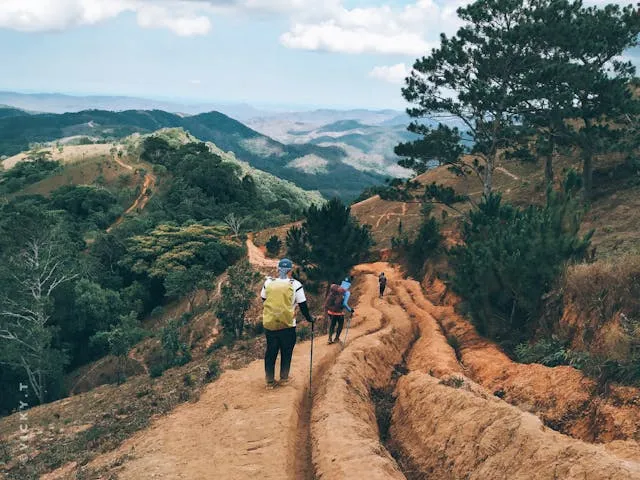
Natural surfaces possess finite carrying capacities. Constant foot traffic compacts topsoil, eradicates native vegetation, disrupts wildlife migration patterns, and destroys natural drainage systems, transforming historic pathways into deeply eroded gullies.
The classic Inca Trail provides a stark historical lesson. Before the 2002 cap of 500 daily permits (roughly 200 for trekkers and 300 for guides, porters, and cooks), the sheer volume of boots caused severe structural erosion on pre-Columbian stone staircases and placed unsustainable pressure on the fragile Peruvian cloud forest. Capping daily numbers dramatically reduced soil compaction and allowed native flora to regenerate while preserving local tourism jobs.
2. Safeguarding Cultural and Historic Heritage
Many of the world’s most sought-after trails are not merely scenic walks; they are living archaeological museums.
At the ancient citadel of Machu Picchu, the cumulative weight and friction of millions of visitors pose a direct threat to delicate, mortarless Incan stonework. To mitigate this, authorities enforce rigid visitor caps—5,600 daily visitors during peak season and 4,500 during the low season—alongside mandatory one-way circuits. Without these channeled pathways and hard caps, irreplaceable cultural monuments would face irreversible structural deterioration.
3. Combating the Scourge of Overtourism
Overtourism is no longer restricted to European city centers and coastal beaches; it has climbed to the highest peaks on Earth.
The efficacy of simple numeric restrictions is best illustrated by Japan’s Mount Fuji. Following the implementation of the Yoshida Route climber cap and entry fee in 2023, official figures revealed a remarkable 14% drop in climber numbers during the very first season. This targeted reduction eliminated dangerous summit bottlenecks, significantly cut down on trailside litter and discarded gear, and alleviated the logistical strain on mountain huts.
4. Mitigating Risk and Enhancing Search-and-Rescue Efficiency
Beyond conservation, permit and regulatory systems serve a critical life-safety function. High-altitude environments are inherently volatile, with weather patterns capable of shifting in minutes.
In 2023, Nepal mandated that foreign trekkers hire licensed guides through registered agencies for designated routes, effectively banning solo trekking in those regions. By tying permits to registered operators and official trailheads, local authorities maintain an accurate manifest of who is on the mountain, drastically cutting down search-and-rescue response times when hikers go missing or suffer altitude-related medical emergencies.
Official Statements and Global Perspectives
The global shift toward regulated access has sparked intense debate among conservationists, tourism boards, and the adventure travel community.
Dr. Elena Vasquez, a leading conservation ecologist specializing in high-altitude Andean environments, emphasizes that permits are a matter of ecological survival:
"We must move past the romanticized notion of the infinite wilderness. Mountains are fragile, finite ecosystems. When daily visitor numbers exceed ecological thresholds, recovery is measured in decades, not seasons. Permits are the baseline defense mechanism preventing our most cherished landscapes from collapsing under their own popularity."
Conversely, long-distance backpacking advocates have historically voiced concerns regarding equity and spontaneity. Trail organizations note that while advance booking systems protect nature, they can create hurdles for spontaneous travelers and favor those with flexible planning schedules and disposable income.
However, forward-thinking park managers argue that compromise is essential. Kenji Sato, a regional park official involved in the Mount Fuji management initiative, notes:
"Our goal was never to lock people out of nature. Our goal was to ensure that nature remains there to be experienced tomorrow. The 14% reduction in climbers on the Yoshida Route did not diminish the spiritual or physical value of the climb—it restored safety, dignity, and quiet respect to the mountain."
Real-World Case Studies: How Permit Systems Operate Globally
Across continents, diverse regulatory models demonstrate how modern land management adapts to protect local environments:
- The Inca Trail & Machu Picchu (Peru): Regulated via strict daily caps, mandatory licensed guide requirements, and pre-booked ticketing tied to specific calendar dates. This dual system protects both the mountain track and the stone citadel.
- Mount Fuji (Japan): Utilizes a hybrid model of minor entry fees, pre-registration systems, and gate-enforced climber caps specifically on the heavily trafficked Yoshida Route to curb overcrowding and waste.
- Manaslu Region (Nepal): Employs restricted-area permits and mandatory guide hire laws to monitor human traffic in sensitive Himalayan border zones, improving trekker safety and local economic distribution.
- Torres del Paine (Chile): The world-famous W Trek enforces strict advance campsite reservations. Hikers cannot step onto the trail without proving they have pre-booked every night of their itinerary, effectively eliminating unmanaged backcountry camping and sanitation issues.
- Pacific Crest Trail (United States): Manages long-distance through-hikers via a structured permit quota system (limiting northbound starters to 50 per day during peak windows) to prevent severe trail erosion and campsite degradation in the delicate Sierra Nevada range.
Future Outlook: The Next Decade of Trail Management
As global demographics shift and the appetite for outdoor adventure continues its upward trajectory, the landscape of hiking permits will inevitably expand. Industry experts project several key trends for the coming decade:
- Dynamic Pricing and Smart Allocation: Similar to airline ticketing, future permit systems may utilize dynamic pricing or lottery mechanisms to balance environmental protection with equitable access across socioeconomic groups.
- Digital-First Enforcement: Trailheads worldwide are transitioning toward digital check-ins, GPS-enabled permit tracking, and automated turnstiles to monitor visitor flows in real time without heavy infrastructure footprints.
- Expansion to Secondary and Tertiary Trails: As iconic routes like the Inca Trail and Mount Fuji reach maximum saturation, travelers will increasingly spill over into secondary wilderness routes. In response, regional governments are already drafting preemptive permit frameworks for lesser-known tracks before overtourism takes root.
- The Rise of Regenerative Tourism: Permits will increasingly be tied to conservation contributions, where a portion of every permit fee directly funds reforestation, trail maintenance crews, and waste-removal initiatives managed by local indigenous populations.
Conclusion
Hiking permits are no longer an anomaly in the world of adventure travel; they are the fundamental price of admission for a sustainable future.
Iconic trails are finite ecological and cultural resources. Once a fragile alpine meadow is eroded to bedrock, or an ancient stone pathway is ground down by millions of unfiltered footsteps, it cannot simply be rebuilt. Requiring hiking permits is not an assault on the exploratory spirit, nor is it an attempt to lock people out of the great outdoors. Rather, it is a necessary, science-backed commitment to ensuring that the wild, awe-inspiring beauty of our planet remains intact, pristine, and accessible for the generations of adventurers yet to come.
For modern travelers, responsible planning—researching early, respecting quotas, and securing permits months in advance—has officially become the highest form of outdoor ethics.