The frontline of the global climate and ecological crisis is rarely confined to a single geography or a singular issue; rather, it is an interconnected web of fossil fuel dependency, industrial agricultural pollution, and the rapidly accelerating impacts of extreme weather. Over the past week, Greenpeace activists, researchers, and photojournalists have been deployed across Europe to document, protest, and bear witness to these compounding crises. From the geopolitical flashpoint of the Black Sea to the severely depleted waterways of western Germany, the sun-scorched rail terminals of the Netherlands, the threatened pine monocultures of Brandenburg, and the suffocating, nutrient-laden fjords of Denmark, this week’s actions underscore an undeniable reality: environmental degradation is actively destabilizing ecosystems, communities, and economies.
For more than half a century, Greenpeace has leveraged visual storytelling as a primary tool for environmental justice, recognizing that bearing witness is the first and most critical step toward systemic accountability. The images and campaigns captured over the past seven days are not merely snapshots of isolated incidents; they are symptomatic evidence of institutional failure and delayed political action. As temperatures breach historical records, rivers recede to dangerous lows, and marine life suffocates beneath artificial nutrient loads, this week’s dispatches serve as an urgent call to action. This comprehensive report details the scope of Greenpeace’s recent interventions, examines the underlying drivers of these environmental catastrophes, explores the socio-political implications, and outlines the road ahead as activists prepare for major mobilizations this autumn.
Detailed Chronology of Events
1. The Black Sea, Bulgaria: Targeting the Russian Shadow Fleet
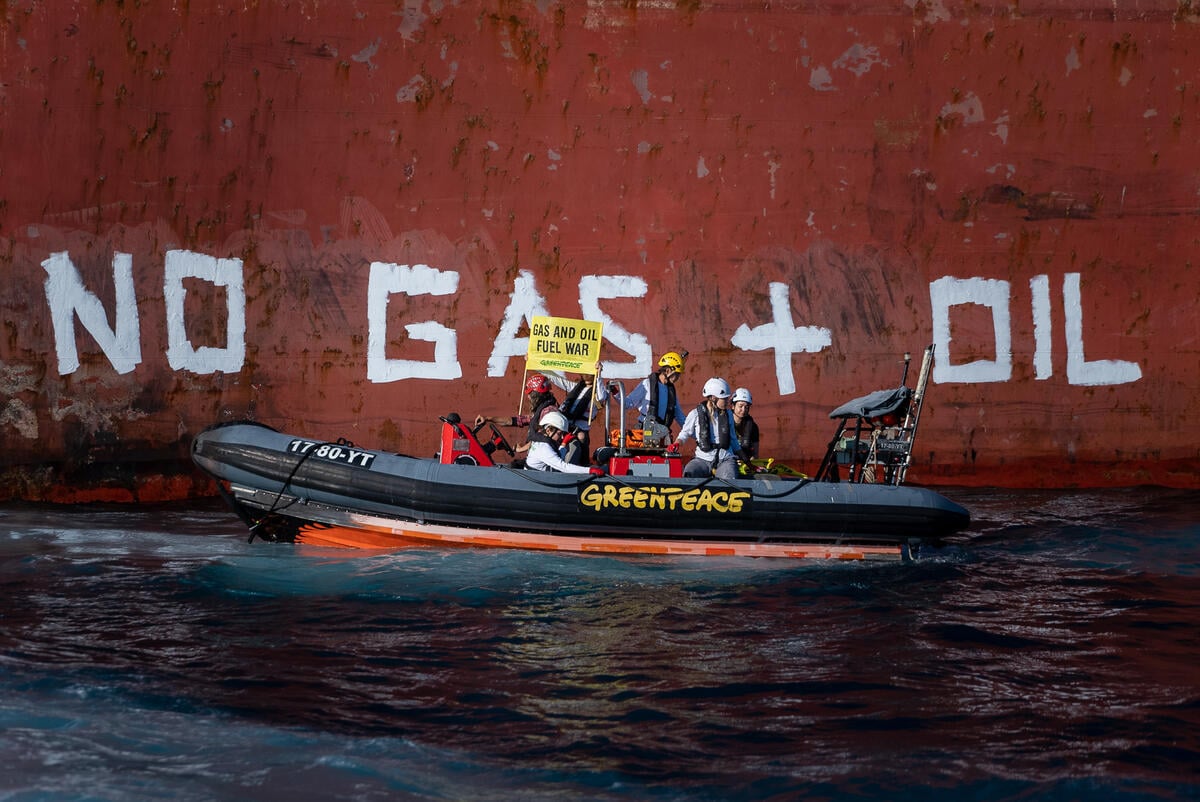
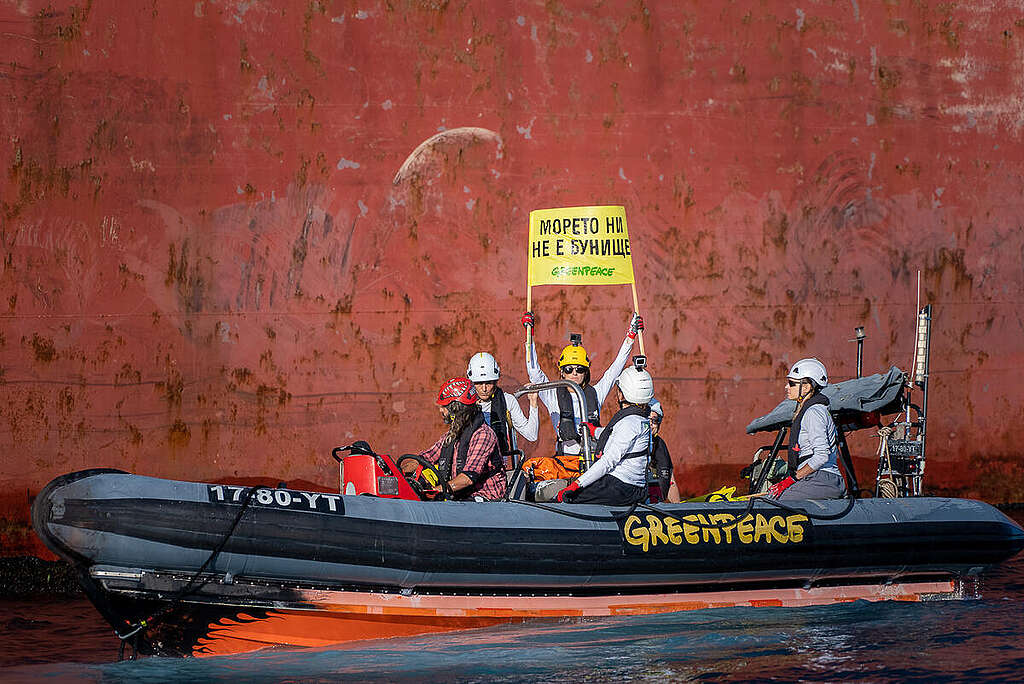
The Action: Greenpeace activists hailing from five distinct nations united to make a striking statement against maritime fossil fuel operations. Scaling the side of the abandoned tanker Kairos—a vessel identified as part of Russia’s clandestine "shadow fleet"—anchored off the coast of Burgas, Bulgaria, the activists painted a bold, unmissable message: “NO GAS + OIL.”
The Context: The action targeted more than just carbon emissions. The "shadow fleet" represents a dual threat: an environmental ticking time bomb navigating European waters with substandard safety and insurance protocols, and a financial lifeline funding ongoing geopolitical conflicts. Furthermore, the reliance on these volatile energy channels perpetuates systemic corruption and places marine ecosystems and coastal communities at immediate risk of catastrophic spills.
[Black Sea: Tanker "Kairos"] ---> Action: Painted "NO GAS + OIL" ---> Objective: Expose Shadow Fleet & Fossil Dependency
2. Brandenburg, Germany: Rewriting the Future of Forests
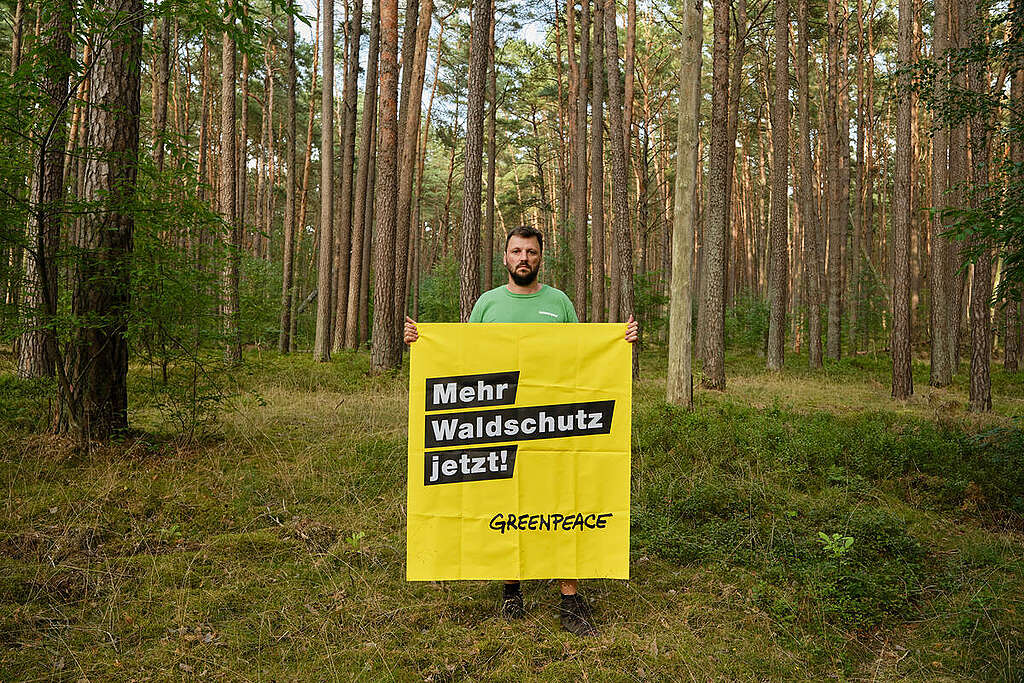
The Action: Deep within the woodlands of Reiersdorf, Brandenburg, Greenpeace hosted an intensive forest site visit to confront a deeply entrenched forestry practice: the widespread cultivation of pine monocultures.
The Context: As summer heatwaves intensify, these uniform pine stands have proven catastrophically susceptible to extreme wildfire risks. Greenpeace forest experts utilized the tour to demonstrate a viable, nature-based alternative: structurally diverse mixed-format forests rich in deadwood. Unlike dense, single-species pine blocks, resilient mixed forests retain vital ground moisture, create natural microclimates that cool the earth, and drastically mitigate the frequency and severity of forest fires.
3. The Netherlands: Rebranding the Climate Reality at Railway Stations
The Action: In a clever, highly visible satirical intervention, Greenpeace Netherlands hijacked the linguistic landscape of the country’s transit system. Following yet another suffocating "tropical day" characterized by temperatures soaring well past 30°C, activists modified the formal signage of several major railway hubs.
The Station Renames:
Rotterdam Centraal became ‘Hotterdam Centraal’
Amsterdam Centraal became ‘Amsterwarm Centraal’
Hilversum Media Park became ‘Grillversum Media Park’
‘s-Hertogenbosch became ‘Smelthogenbosch’
The Context: This guerrilla campaign shattered the illusion that extreme summer temperatures are fleeting anomalies. By anchoring the climate crisis directly into the daily commutes of thousands of citizens, Greenpeace emphasized that escalating heatwaves are the direct result of fossil fuel dependency. The action served as a direct mobilization tool, funneling public frustration toward the upcoming Climate March scheduled in Amsterdam on September 12, where organizers are demanding immediate, decisive political timelines for a fossil-free transition.
4. Vejle Fjord, Denmark: Raising the Red Flag on Oxygen Depletion
The Action: A Greenpeace Nordic scientific expedition dropped anchor in Vejle Fjord, deploying specialized testing equipment to bring an invisible crisis to the surface. Activists raised a literal red flag for marine life to highlight widespread oxygen depletion (hypoxia) plaguing Danish fjords, lakes, and coastal waters.
The Context: The root cause of this ecological collapse traces back to decades of intensive, industrial pig farming. Massive quantities of nitrogen-rich animal manure, spread across agricultural fields as fertilizer, inevitably run off into local waterways. This nutrient overload triggers massive algal blooms that consume dissolved oxygen as they decompose, creating suffocating "dead zones" where fish and benthic organisms cannot survive.
5. Cologne, Germany: The Shrinking Arteries of the Rhine
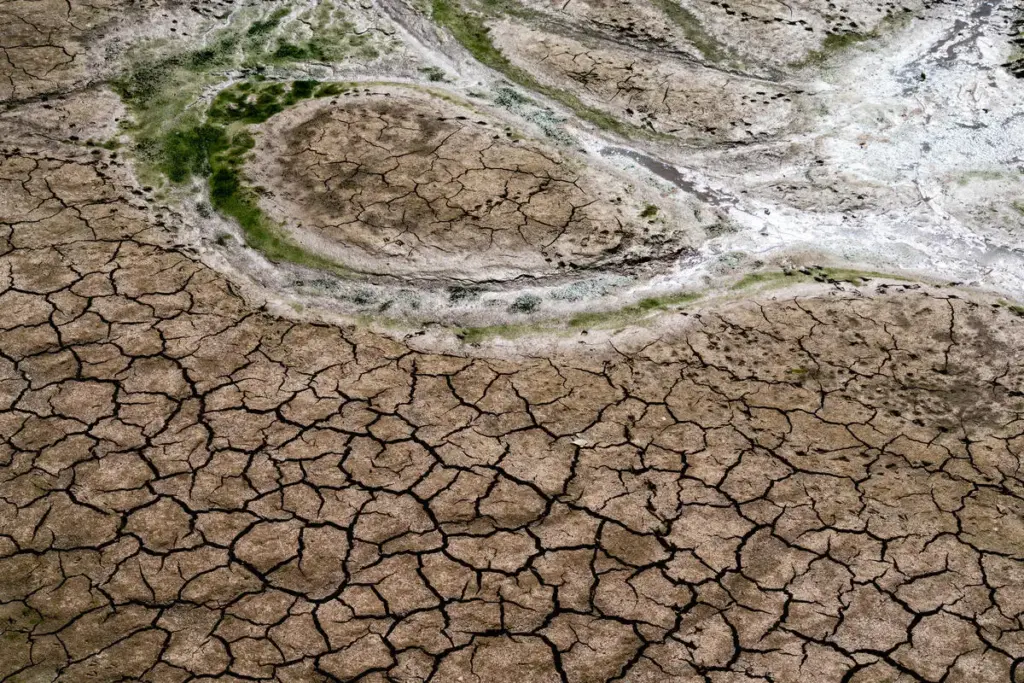
The Action: Along the banks of the Rhine River in Cologne, Greenpeace photojournalists documented a stark and sobering reality: historically low water levels driven by severe, persistent drought conditions.
The Context: The Rhine is one of Europe’s most vital economic and ecological arteries, serving as a critical corridor for freight transport, industrial cooling, and regional hydrology. The plunging water levels—exacerbated by compounding climate anomalies and low precipitation—threaten supply chains, disrupt power generation, and place severe stress on freshwater aquatic life.
Supporting Context & Metrics
To fully understand the weight of these actions, one must examine the systemic data driving the current environmental crisis across Europe. The events in Germany, the Netherlands, Denmark, and Bulgaria are not anomalies; they are synchronized symptoms of an overheating planet and mismanaged natural resources.
The Fossil Fuel and Shadow Fleet Nexus
The deployment of the "shadow fleet" in the Black Sea highlights a dangerous loophole in global sanctions and environmental regulations. According to maritime shipping analysts, hundreds of aging tankers have been purchased by opaque shell companies to transport Russian crude oil, evading international price caps. These vessels often operate without standard Western maritime insurance, meaning that if a spill occurs—such as off the coast of Bulgaria—regional governments are left with billions of dollars in cleanup liabilities while marine ecosystems face irreversible ruin.
Agricultural Runoff and Aquatic Dead Zones
In Denmark, the crisis in Vejle Fjord is emblematic of a broader European agricultural challenge. Industrial animal agriculture accounts for a massive percentage of the European Union’s greenhouse gas emissions and is the primary driver of freshwater nitrogen pollution.
The Nitrogen Cycle: Over-fertilization with synthetic inputs and animal slurry has pushed approximately 60% of EU surface waters out of "good ecological status."
Hypoxic Thresholds: When dissolved oxygen levels drop below 2 milligrams per liter, most marine species must flee or perish. The Greenpeace Nordic expedition utilized direct water sampling to prove that industrial farming practices are directly destabilizing coastal marine food webs.
Extreme Weather and the European Heat Pump Effect
The Netherlands’ record-breaking summer temperatures align with alarming climatological trends documented across Western Europe. The continent is warming at roughly twice the global average rate.
Urban Heat Islands: Cities like Amsterdam and Rotterdam are experiencing unprecedented heat stress due to asphalt and concrete retention, making "tropical days" (temperatures exceeding 30°C) a lethal health hazard for urban populations, particularly the elderly and vulnerable communities.
Forest Vulnerability: In Germany, decades of planting fast-growing pine monocultures for commercial timber have left millions of hectares of forest dangerously brittle. These uniform stands lack the genetic and structural diversity required to withstand prolonged droughts, making them prime fuel sources for catastrophic wildfires, as demonstrated during the Brandenburg forest assessments.
Official Statements and Perspectives
The scale of this week’s mobilization has drawn sharp commentary from Greenpeace organizers, scientists, and environmental policy experts across the continent:
"We are no longer warning about a distant future; we are documenting the collapse of our ecological buffers in real time. Whether it is a dying fjord in Denmark, a burning pine plantation in Germany, or a rogue tanker polluting the Black Sea, the common denominator is an economic and political system addicted to fossil fuels and industrial exploitation."
— Greenpeace International Coordination Desk
Reflecting on the psychological impact of the summer heatwaves in the Netherlands, a regional campaign spokesperson noted:
"By renaming our train stations to names like ‘Hotterdam’ and ‘Amsterwarm,’ we wanted to strip away the passive acceptance of extreme weather. Politicians can no longer treat these summers as pleasant anomalies. They are a crisis requiring emergency wartime mobilization away from coal, oil, and gas."
On the agricultural front, marine biologists aboard the Greenpeace Nordic vessel stressed the urgency of systemic food system reform:
"The red flags we raised in Vejle Fjord are for the fish, but they are also a warning for us. When you turn our coastal waters into hypoxic dead zones through decades of unchecked industrial pig farming, you are dismantling the very life-support systems of our planet. Voluntary measures have failed; we need binding caps on fertilizer use and livestock density."
Future Outlook: The Road Ahead
As the summer of 2026 draws to a close, Greenpeace and its allied environmental movements are pivoting from documentation and localized resistance to large-scale, coordinated public mobilization. The actions executed this week in Bulgaria, Germany, the Netherlands, and Denmark serve as foundational pillars for an aggressive autumn campaign strategy.
Key Milestones on the Horizon:
The National Climate March in Amsterdam (September 12): Following the "Hotterdam" railway station interventions, civil society groups, climate scientists, and thousands of citizens are expected to flood the streets of Amsterdam. The central demand will be a legally binding, accelerated phase-out of all remaining fossil fuel subsidies and a comprehensive national climate action plan.
Expansion of Shadow Fleet Monitoring: Greenpeace marine units have committed to increasing surveillance and documentation of high-risk tankers operating in European enclosed seas, pressuring maritime authorities to enforce stricter environmental and liability standards.
Forest Resilience Policy Push in Germany: Armed with data from the Brandenburg field tours, environmental lawyers and forestry experts are lobbying state and federal governments to halt the replanting of vulnerable pine monocultures, pushing instead for expansive subsidies dedicated to mixed-forest conversion.
Legal and Political Pressure on Agricultural Runoff: Greenpeace Nordic will use the empirical data gathered during its fjord expeditions to challenge national governments at the EU level, demanding strict enforcement of the EU Water Framework Directive and accountability for industrial agricultural lobbies.
For more than half a century, Greenpeace has stood as a relentless sentinel against environmental destruction. The images captured this week—from the rusted hull of an abandoned shadow tanker in the Black Sea to the parched banks of the Rhine—are a testament to the power of visual activism. They demand that the global community stop looking away, confront uncomfortable truths, and act with the urgency that the planetary crisis demands.
To explore the complete visual archive, high-resolution imagery, and video logs from these international actions, visit the official Greenpeace Media Library.