

Executive Overview
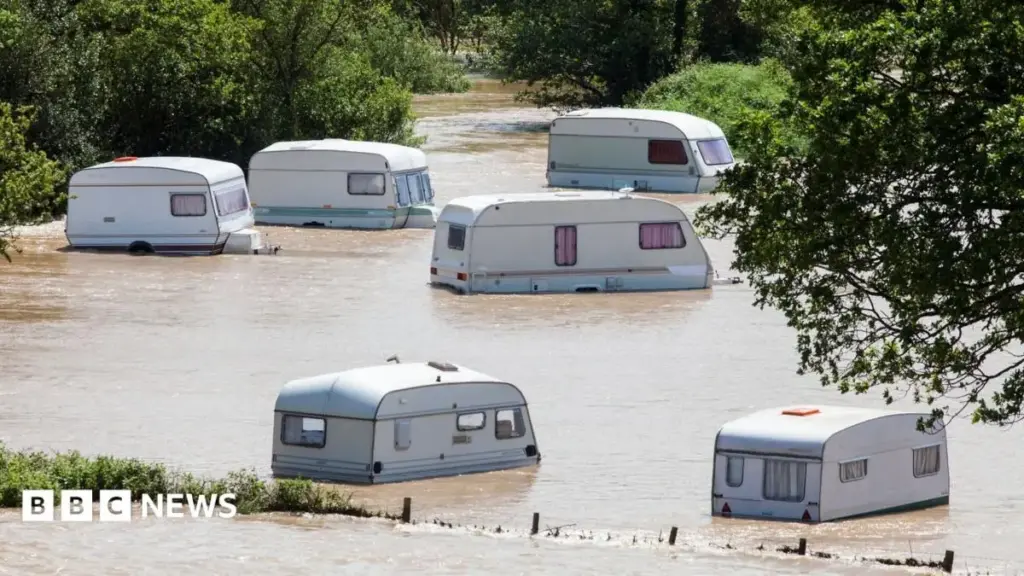
In the historic Welsh border town of Monmouth, the high street once echoed with the steady, reassuring rhythms of commerce and community. Today, however, those same pavements carry the heavy, lingering ghosts of a disaster that residents say has fundamentally rewritten what they thought possible. In November 2025, a catastrophic flood tore through the town in the dead of night, transforming quiet residential streets into raging torrents and leaving behind a trail of devastation that locals describe as "harrowing" and "dreadful."
For lifelong residents—many of them octogenarians who have weathered decades of seasonal shifts—the sheer velocity and scale of the water were unprecedented. Yet, as the shock of that fateful night gives way to the arduous, months-long process of rebuilding, a much larger, more uncomfortable truth is beginning to crystallize. This was not merely an isolated act of meteorological bad luck. Rather, it serves as a stark preview of an increasingly volatile future, one forged at the intersection of accelerating climate change and shifting global weather patterns.
Across Wales and the wider United Kingdom, scientists, environmental regulators, and local communities are confronting a sobering reality. As winters grow progressively wetter and wilder, and as global climate phenomena push meteorological systems to historic extremes, the traditional margins of safety are evaporating. In Monmouth, where three rivers converge, the geography that once fostered civilization now acts as a natural funnel for disaster.
This in-depth report examines the harrowing events of November 2025 through the eyes of those who survived them, analyzes the broader environmental pressures mounting across the globe, and scrutinizes the urgent warnings issued by Natural Resources Wales (NRW). It highlights a critical disconnect between the escalating risks of extreme weather and the current state of public preparedness, raising vital questions about how communities, policymakers, and infrastructure must adapt before the next deluge arrives.
Detailed Chronology: The Night the River Raged
To understand the true terror of the November 2025 flooding in Monmouth, one must look back to the early hours of the morning when the disaster struck. While the town slumbered, unaware of the meteorological pressure cooker building around them, the landscape was quietly transforming into a hazard zone.
According to local resident Malcolm Butcher, 82, who has lived in Monmouth his entire life, the first signs of the crisis manifested with terrifying suddenness. "At 2:30 in the morning when it hit, it was unbelievable… absolutely raging," Butcher recalled, standing on the high street weeks after the event. Along with his lifelong friends—Jim Tyler, 81, Brian Churches, 82, and Dave Blake, 82—Butcher belongs to a generation that thought it had seen every mood the Welsh weather could muster. Yet, the consensus among them was unequivocal: they had lived in the town all their lives "and never seen anything like it."
The timing of the flood was perhaps the most critical factor in preventing a mass casualty event. Had the torrent breached its banks during the busy daytime hours, when shoppers crowded the high street and vehicles jammed the residential lanes, the human cost could have been catastrophic. "If it had happened in the daytime, people would have died," Butcher stated bluntly.
As the icy waters surged through the dark, they swallowed everything in their path. On Butcher’s road alone, eighteen vehicles were completely submerged and written off—including his own personal car. In the street directly behind his, the onslaught was even more severe; every single home was inundated, with water pouring through doors and windows, destroying family heirlooms, electrical systems, and structural foundations.
The economic and psychological toll was immediately visible in commercial areas as well. Imogen Elliot, another 82-year-old resident helping the town navigate its recovery, noted the sheer depth of the inundation. "Waitrose was four feet in water, and it went right up the street," she said, reflecting on the community’s resilience. "We’ve had flooding before, but not like that."
While emergency services and municipal cleanup crews mobilized swiftly in the aftermath, the psychological scars remained raw. For the elderly residents who watched their neighborhood turn into a lake in a matter of minutes, the disaster has shattered their sense of security. The water may have receded, but the vulnerability it exposed lingers heavily in the air.
Supporting Context & Metrics: The Climate Pressures Behind the Deluge
What drove the catastrophic flooding in Monmouth? To answer this, meteorologists and climate scientists point to a complex convergence of regional vulnerabilities and global atmospheric anomalies. Monmouth’s geography has always made it susceptible to high water. The town sits at the confluence of three major rivers—the Wye, the Monnow, and the Trothy. When heavy, persistent rainfall blankets the upland catchments, these watercourses swell rapidly, channeling immense volumes of water directly toward the urban center.
However, the events of late 2025 cannot be viewed through a purely local lens. Scientists emphasize that human-induced climate change is fundamentally altering the baseline of British weather. Wales, with its western Atlantic facing coastline and hilly terrain, is increasingly bearing the brunt of wetter, wilder winters. Warmer air holds more moisture, meaning that when storm systems stall over the British Isles, they unleash unprecedented volumes of rain in compressed timeframes.
Compounding this regional trend during the winter of 2025/2026 has been a powerful global climate driver: the El Niño event over the Pacific Ocean. Meteorological agencies identified this particular El Niño cycle as one of the "strongest in living memory." This massive natural climate phenomenon disrupts atmospheric circulation patterns on a planetary scale, driving up global surface temperatures and supercharging the hydrological cycle.
While climatologists are careful to note that a Pacific El Niño does not automatically translate into a specific extreme weather event in the UK, they emphasize that it acts as a critical force multiplier. It loads the atmospheric dice, increasing the statistical probability and intensity of extreme weather anomalies worldwide. Jeremy Parr, a senior official at Natural Resources Wales (NRW), described the phenomenon as a vital piece of a much larger, deeply concerning puzzle.
"We do invest in flood defences… but you can’t stop all of the flooding all of the time," Parr explained, underscoring the physical and financial limitations of hard engineering solutions. The sheer volume of water generated by these intensified storm systems simply outpaces the capacity of traditional barriers, walls, and drainage networks. Consequently, the strategy must evolve from merely trying to hold back the water to fundamentally rethinking how communities coexist with the threat of inundation.
Official Statements: Confronting the "Unthinkable"
As communities like Monmouth grapple with the aftermath, agencies tasked with managing environmental risks are issuing stark, uncompromising warnings to the public. The consensus among disaster management experts is that complacency remains one of the greatest hazards facing property owners in flood-prone regions across Wales.
Jeremy Parr of Natural Resources Wales argues that residents must undergo a psychological shift when assessing their vulnerability. "That means that people need to think the unthinkable really—or the unpleasant—and [consider] if it were to flood around where I live, what would I do?" he said.
According to Parr, NRW hears the same refrain "time and time again" from individuals who have just lost their homes and possessions to rising waters. The standard refrain from victims is almost always the same: "They’d never flooded before, and didn’t think it would happen to them." This pervasive sense of historical immunity—the belief that because a property has remained dry for thirty, forty, or fifty years, it is permanently safe—is a dangerous fallacy in an era of rapid climate disruption.
To combat this, NRW has ramped up its public outreach campaigns, directing citizens to digital tools designed to demystify risk. The organization strongly advises all property owners to utilize online resources to check their specific flood risk by postcode, sign up for real-time flood warnings, and access comprehensive guidance on emergency preparation.
Yet, the statistical reality of public engagement reveals a troubling gap in preparedness. Recent figures released by NRW show that while their advanced flood warning service has the technical capacity to cover 181,158 properties across Wales, only a fraction of those eligible have actually taken action. At the time of the November deluges, just 48,844 properties were signed up to receive automated voice calls, texts, or emails alerting them to rising waters.
"It is low—27%," Parr admitted candidly, addressing the dismal uptake rate. When asked why so many at-risk residents fail to register for a free, potentially life-saving service, Parr pointed to entrenched misconceptions. Chief among these is the persistent myth that registering for official flood warnings or experiencing a flood event will automatically drive up household insurance premiums or make properties uninsurable. While insurance availability remains a complex issue in high-risk zones, failing to receive early warnings only increases the likelihood of catastrophic property loss.
Local voices like Malcolm Butcher are also stepping up to offer practical advice forged in the fires of experience. Beyond relying on official channels, Butcher suggests that residents in vulnerable areas take proactive, grassroots measures ahead of forecasted bad weather. This includes moving valuable possessions upstairs and ensuring a ready supply of sandbags. "It’s a worry, we have three rivers running into Monmouth… and the winters are changing," Butcher noted, emphasizing that adaptation must become a seasonal routine rather than an emergency reaction.
Future Outlook: Adapting Wales for a High-Risk Era
Looking ahead, the road to long-term resilience for Monmouth and similar river-valley towns across Wales is fraught with difficult choices, substantial financial investments, and systemic policy shifts. The events of November 2025 have laid bare the inadequacies of treating climate adaptation as a reactive measure. Instead, experts argue that policymakers, urban planners, and local populations must adopt a proactive, multi-layered approach to hazard management.
First, hard infrastructure must be re-evaluated. While sea walls, river dredging, and earthen embankments remain essential components of flood defense, they are no longer sufficient on their own. Environmental engineers are increasingly advocating for nature-based solutions—often referred to as natural flood management (NFM). By restoring upstream peatlands, planting strategic woodlands, and reconnecting rivers with their natural floodplains, authorities can slow the flow of water before it reaches densely populated urban centers like Monmouth. These catchment-wide initiatives not only help absorb peak rainfall but also provide biodiversity and carbon-sequestration co-benefits.
Second, building codes and spatial planning policies must reflect the new climatic reality. For decades, residential and commercial developments have been approved in historical floodplains, driven by housing demand and economic expansion. Moving forward, local planning authorities face mounting pressure to restrict new construction in high-risk zones and enforce stringent climate-resilient building standards for existing structures—such as elevating electrical wiring, installing water-resistant flooring, and utilizing non-return valves in plumbing systems.
Third, bridging the gap in public preparedness remains an urgent priority for agencies like Natural Resources Wales. Raising the current 27% subscription rate for flood warning alerts will require targeted educational campaigns that dismantle insurance myths and foster a culture of community readiness. Initiatives similar to community flood wardens—where trained local volunteers help coordinate evacuation plans, check on vulnerable neighbors, and distribute emergency supplies—are proving invaluable in bridging the gap between centralized emergency services and grassroots action.
Ultimately, the story of Monmouth in November 2025 is both a tragedy and a warning. It demonstrates the ferocious power of nature when unleashed by global climatic shifts, but it also highlights the profound resilience of local communities. As winters grow wetter and the shadow of extreme weather lengthens across the British Isles, the survival of towns like Monmouth will depend not on whether they can stop the rivers from rising, but on how well they prepare for the day the water knocks on their doors. The time for denial has washed away; the era of adaptation has arrived.



