By Global Energy & Climate Correspondent
Published: Investigative Energy Desk
Executive Overview
The European summer of extreme weather will be remembered not merely as a meteorological anomaly, but as a watershed moment for the continent’s critical infrastructure. Repeated, record-shattering heat domes cooked the continent, driving June temperatures to unprecedented highs and triggering a simultaneous, devastating drought that shriveled vital waterways to historic lows.
This dual crisis collided violently with Europe’s energy systems. Stagnant atmospheric conditions stifled wind generation, while soaring water temperatures and evaporating rivers starved thermal power plants—nuclear, natural gas, and coal alike—of the essential cooling water they require to operate safely. As electricity demand surged to feed millions of newly installed air conditioning units, the continent’s power grid faced an existential stress test.
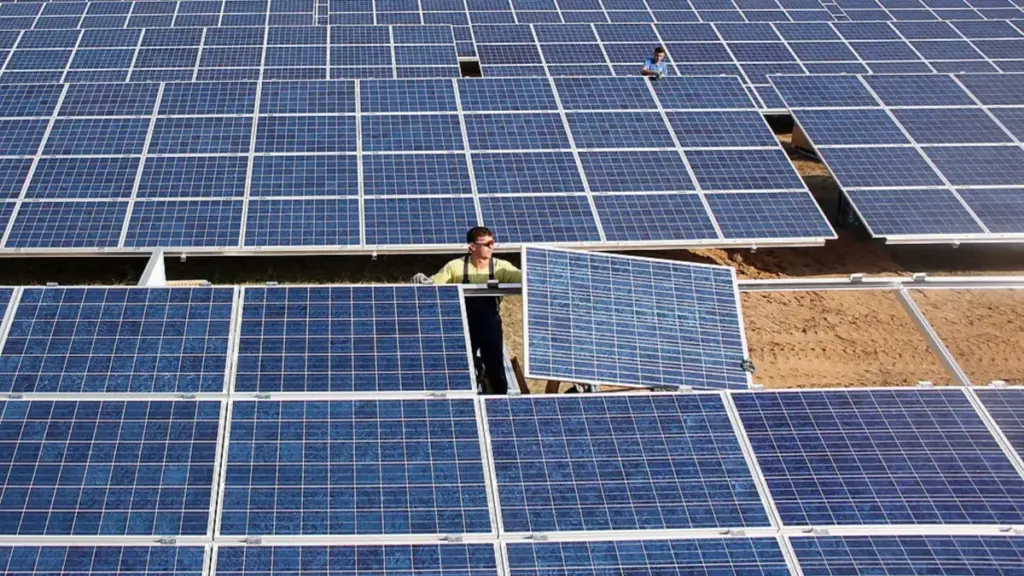
Amid this systemic vulnerability, one technology emerged as an indispensable savior: solar power, bolstered by rapid advancements in battery storage. While traditional baseload and renewable generation sources faltered under the weight of the heat, photovoltaic arrays delivered peak performance precisely when the grid needed them most.
Yet, as climate scientists confirm that fossil-fueled global warming has made such extreme heat events up to 200 times more likely than they were two decades ago, Europe stands at a perilous crossroads. With air conditioning adoption rates poised to explode from a modest 23% baseline across households toward American levels, energy planners, utility executives, and policymakers are forced to confront an urgent reality: the old paradigms of European energy security are broken, and the transition to a weather-resilient grid cannot happen fast enough.
Detailed Chronology: A Season of Unprecedented Strains
To understand the magnitude of the summer energy crisis, one must trace its chronological fallout across the continent—a cascading series of events that exposed the fragility of modern electrical grids.
Late June: The Heat Dome Arrives and Demand Spikes
The crisis began in earnest during the final weeks of June, when an atmospheric heat dome settled over Western Europe, breaking long-standing temperature records. As asphalt melted and urban heat islands trapped oppressive air masses, citizens turned defensively to cooling systems.
According to data compiled by the energy think tank Ember, the sudden surge in demand was immediate and dramatic. In Italy, power demand spiked by an astonishing 28% compared to the preceding week. In France, domestic demand jumped by 14%. Because solar generation peaks during daylight hours, the most dangerous pressure points emerged during the evening. As the sun set, temperatures stubbornly remained high, air conditioners continued to crank at maximum capacity, and electricity and natural gas prices experienced violent evening spikes, hitting levels not seen since the height of the 2022–2023 winter energy crisis triggered by Russia’s invasion of Ukraine.
Mid-July: The Great Dry-Down and Thermal Plant Curtailments
While demand climbed to dizzying heights, the generation capacity of the continent began to wither. Historic dryness gripped the region; England and Wales recorded their driest July on record, while the Danube River plummeted to historic lows in Central and Eastern Europe. These dropping water levels exposed grim relics of the past—including World War II shipwrecks and prehistoric fossils—while simultaneously choking the present.
Hydropower production slumped to its lowest July level in a decade. Simultaneously, thermal and nuclear power plants across the continent were forced to scale back operations. In the United Kingdom, five gas-fired power plants were forced to slash output by a combined 2.5 gigawatts because the elevated ambient and water temperatures severely degraded the efficiency of their cooling systems. Concurrently, wind power collapsed; heat-induced low wind speeds halved the UK’s typical wind farm generation throughout June.
In France, the situation was particularly acute. By mid-July, the country lost roughly 18% of its nuclear capacity due to "environmental factors." French nuclear reactors rely heavily on river water for cooling, pulling it in at ambient temperatures and discharging it slightly warmed. Because French environmental law strictly caps the temperature of discharged water to prevent thermal shock and protect aquatic ecosystems, operators are legally mandated to curtail generation when incoming river waters are already pre-warmed by heat waves and drought. This event extended an increasingly familiar and worrisome trend of summertime nuclear outages across the French fleet.
Supporting Context & Metrics: The Anatomy of a Grid Under Pressure
The juxtaposition of failing thermal and wind assets against soaring cooling demand created a precarious macroeconomic and technical puzzle for grid operators.
The Nuclear-River Vulnerability Matrix
Nuclear energy has long provided the reliable baseload backbone of France’s electricity grid, accounting for roughly 70% of the nation’s power. However, this model assumes a climate baseline that no longer exists. The physics of nuclear generation require massive, continuous heat rejection. When rivers run low and warm, the operational margin evaporates.
[River Water Intake] ---> [Nuclear Plant Cooling Loop] ---> [Discharge (Strict Temp Caps)]
        ^                                                               |
    (Warmed by Drought)                                        (Threat to Aquatic Life)
        |                                                               |
        +------------------- [Mandatory Power Curtailment] <------------+
As climate change accelerates, French state-owned utilities are discovering that the traditional design specifications of their atomic infrastructure are incompatible with multi-week summer heat domes.
The Wind Drought Paradox
Public perception often links sunny weather with high wind conditions, but meteorological science dictates otherwise. Summer high-pressure heat domes are characterized by stable, stagnant atmospheric conditions and light pressure gradients. Consequently, just as solar assets found optimal performance parameters under cloudless skies, wind turbines across the North Sea and onshore European fields stalled, delivering a fraction of their nameplate capacity.
The Solar and Storage Savior
While wind and thermal assets stumbled, solar photovoltaics (PV) proved to be the undisputed hero of the summer. European heat waves consistently deliver clear, unblemished skies—the optimal operational environment for solar panels. Ember’s analytics reveal that Europe’s solar fleet produced 17% more power during the summer’s heat waves than under normal climatological conditions.
Crucially, this generation profile dovetailed with daytime cooling loads. When the sun began to dip, advanced battery storage systems—which have undergone a massive industrial scale-up—discharged the surplus energy harvested during peak daylight hours. This bridge of stored energy sustained the grid into the evening, powering millions of residential and commercial AC units through sweltering nights.
The market has responded aggressively to this structural shift. In 2025 alone, Europe installed 36 gigawatt-hours of new battery storage capacity, representing a staggering 48% year-over-year increase. This milestone marked the 12th consecutive year of uninterrupted growth for the European battery sector, signaling that capital markets and grid operators recognize storage as the ultimate hedge against extreme weather volatility.
The Air Conditioning Gap
Despite the strain experienced this summer, Europe’s vulnerability to heat is bound to escalate. Unlike the United States—where roughly 90% of households are equipped with air conditioning—only 23% of European households currently have access to or use air conditioning.
Geographic disparities are notable:
- Italy and Spain: ~50% household adoption.
- France: ~25% household adoption.
- Northern and Western Europe: Significantly lower percentages.
As recurring heat waves normalize lethal temperatures across the continent, this infrastructure deficit will close rapidly. Millions of citizens who previously relied on shutters and cross-ventilation are now purchasing cooling units, permanently shifting the baseline of Europe’s summer electricity demand curves.
Official Statements and Political Shifts
The existential shock of the summer has triggered profound rhetorical and strategic shifts among political leaders and energy executives, breaking long-standing ideological taboos.
The Cooling Taboo Shattered
For decades, European environmental parties and urban planners strongly discouraged the widespread adoption of air conditioning, pointing to its high energy consumption, reliance on fossil-fueled grids, and the urban heat island effect caused by the exhaust heat of exterior compressor units.
However, the human toll of repeated heat waves has forced a pragmatic reckoning. Marine Tondelier, national secretary of France’s Ecologist Party, captured this evolving consensus during a candid statement in June:
"There are places where we just can’t do without it now."
This sentiment underscores a grim reality: air conditioning has transitioned from a luxury carbon-intensive convenience to an essential public health necessity.
Industry Leaders Call for Regulatory Reform
Energy industry executives are unified in their assessment that current regulatory frameworks are ill-equipped for a volatile climate future.
Walburga Hemetsberger, CEO of the industry group SolarPower Europe, emphasized the shifting tactical frontier of grid management:
"The next challenge is the evening period. Temperatures often remain high after sunset and AC demand can stay elevated, even as solar production declines. This is why battery storage is becoming such an important part of the energy transition."
Echoing these concerns, Beatrice Petrovich, a senior energy analyst covering Europe at Ember, highlighted the economic signals broadcasted by the summer’s disruptions:
"Extreme price spikes during heatwaves are a blaring signal for regulatory changes that increase power system flexibility. Treating this summer as a turning point for energy storage would be an opportunity to remove existing barriers."
Future Outlook: Engineering Resilience for a Warmer World
The lessons of this extraordinary summer are already reshaping multi-billion-euro capital expenditure plans across the European continent. Policymakers and utilities are no longer planning for a stable, historical climate baseline; they are engineering systems for a world of extremes.
Industrial Adaptation and Capital Outlays
France’s state-owned utility has announced an ambitious, multi-decade capital expenditure program, committing over $10 billion over the next 15 years to climate-proof its nuclear and hydroelectric infrastructure. This funding will directly target:
- Advanced Cooling Technologies: Installing auxiliary mechanical cooling systems and closed-loop heat exchangers at nuclear facilities to chill discharge water before it enters local river systems, ensuring strict compliance with environmental protection standards during droughts.
- Hydrological Diversification: Upgrading intake structures to handle lower minimum water levels without tripping safety mechanisms.
- Grid Hardening: Reinforcing transmission lines and substation transformers against ambient thermal stress.
The Dual Challenge: Decarbonization Meets Data Centers
As utilities scramble to upgrade their generation and cooling fleets, they face a simultaneous demand shock from the digital economy. Grids are not only absorbing the surging residential load of air conditioning units, but they are also grappling with a massive expansion of power-hungry artificial intelligence data centers springing up across Western and Northern Europe.
Meeting this compounding demand requires an unprecedented acceleration of renewable buildouts. The rapid deployment of solar and battery storage in 2025 demonstrates that the private sector is capable of scaling at breakneck speeds, provided regulators clear the bureaucratic roadblocks that currently stall transmission interconnects and permitting processes.
Conclusion: A Turning Point for European Energy Policy
The summer of extreme heat and drought has acted as an unsparing diagnostic tool for Europe’s energy architecture. It revealed that traditional baseload assets are fundamentally vulnerable to the very environmental conditions created by climate change. At the same time, it validated the modular resilience, speed, and reliability of decentralized solar and battery storage systems.
If Europe treats this season as a momentary aberration, it courts systemic collapse. But if policymakers heed the warnings of analysts, heed the shifting priorities of environmental leaders, and aggressively dismantle regulatory bottlenecks holding back energy storage and grid flexibility, this summer could be remembered as the crucible that forged a truly climate-resilient European power grid.