

Executive Overview
The waste management landscape across the United States continues to undergo significant structural shifts, marked by competing demands for disposal capacity, stringent environmental regulations, and vocal community opposition. In recent developments, municipal solid waste (MSW) operators have ramped up efforts to secure long-term capacity through high-stakes landfill expansions. Most notably, the Louisiana Department of Environmental Quality has greenlit a massive expansion of the River Birch Landfill, cementing its status as the largest disposal facility in the state. Meanwhile, in Michigan, waste giant GFL Environmental has initiated a critical procedural push to incorporate a substantial expansion of the controversial Arbor Hills Landfill into Washtenaw County’s pending materials management plan.
These regulatory milestones occur against a backdrop of increasing scrutiny regarding environmental impacts, historical legal disputes, odor mitigation, and wetland preservation. While operators emphasize the economic efficiencies of expanding existing infrastructure—particularly concerning renewable natural gas (RNG) production and integrated leachate management systems—local residents and environmental advocates remain deeply skeptical. As state and local agencies weigh the long-term viability of these projects, the intersection of solid waste disposal, renewable energy generation, and community health has emerged as a central flashpoint in modern environmental governance.
Detailed Chronology of Recent Regulatory Actions
The past month has brought a flurry of procedural steps, approvals, and legal milestones that underscore the high-stakes nature of landfill development and closure across the nation.
Early September 2024: Louisiana Approves River Birch Expansion
On September 3, the Louisiana Department of Environmental Quality (LDEQ) officially approved a sweeping expansion request submitted by the operators of the River Birch Landfill. The decision permits the facility to absorb the adjacent, closed Greater New Orleans Landfill site, dramatically expanding its operational footprint and service area. This regulatory milestone sets the stage for decades of continued waste intake, even as local stakeholders voice persistent concerns over historic and ongoing operational nuisances.
September 9, 2024: Washtenaw County Committee Convenes on Arbor Hills
In Michigan, the regulatory battle over the Arbor Hills Landfill entered a new phase on September 9, when a Washtenaw County planning and materials management committee convened to discuss regional waste infrastructure. During this session, representatives from GFL Environmental actively lobbied local officials to integrate a massive, multi-acre expansion of the Arbor Hills facility into the county’s upcoming materials management plan. This procedural hurdle is mandatory before GFL can formally pursue state-level permitting through the Michigan Department of Environment, Great Lakes, and Energy (EGLE).
Supporting Context & Metrics: Inside the Major Projects
To fully understand the gravity of these expansions, one must examine the specific capacity metrics, environmental engineering designs, and geographic footprints associated with both the River Birch and Arbor Hills facilities.
River Birch Landfill: Louisiana’s New Heavyweight
According to LDEQ’s biennial landfill capacity report for fiscal year 2023, the River Birch Landfill held a permitted capacity of 58.8 million wet tons, with approximately 28.2 million wet tons of capacity remaining. Prior to the recent merger and expansion, these figures afforded the facility an estimated remaining operational lifespan of more than 21 years.
With the LDEQ’s new permit in effect, the facility’s operational parameters have scaled significantly:
- Weekly Intake Limit: Approved to accept up to 50,000 wet tons per week.
- Annual Volume: Totaling more than 2.6 million wet tons annually.
- Engineering Design: The expansion plan requires the operator to construct a modern geosynthetic liner system directly on top of existing waste within the closed Greater New Orleans Landfill site. A dedicated leachate collection system will be installed over this liner, and operators intend to leverage existing on-site groundwater monitoring wells.
- Energy Integration: River Birch is not merely a disposal site; it is an active energy hub. Operating a landfill gas upgrading system originally constructed in 2009 and subsequently expanded, the facility produces renewable natural gas (RNG) at rates reaching up to 16,000 standard cubic feet per minute.
Arbor Hills Landfill: GFL’s Michigan Expansion Bid
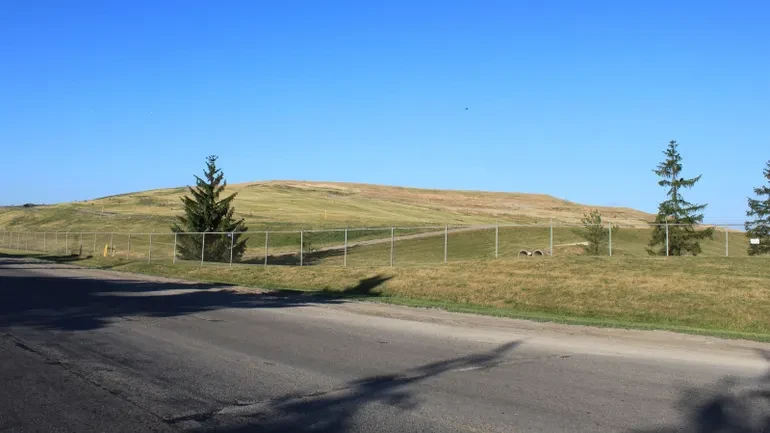
In Salem Township, Michigan, GFL Environmental is pursuing an equally ambitious project at the Arbor Hills Landfill. Facing a dwindling lifespan—with only an estimated three years of permitted airspace remaining, as noted in wetland permit applications submitted to EGLE in August—GFL is pushing to add profound new capacity.
Key details of the proposed Arbor Hills expansion include:
- Footprint and Scale: The proposed expansion covers a 91-acre parcel directly north of the existing facility. At full buildout, the new waste cells could reach up to 200 feet in height.
- Annual Volume: The facility currently handles approximately 2 million cubic yards of waste annually.
- Geographic Reach: According to regional solid waste management data, Arbor Hills historically receives waste from a wide swath of Southeast Michigan, including Wayne, Oakland, and Washtenaw counties. While Washtenaw County generates a substantial portion of its own waste, only about 10% of the total volume received at Arbor Hills originates locally, with the vast majority imported from neighboring jurisdictions.
- Wetland Mitigation: GFL’s application indicates that the project will directly impact roughly 33 acres of regulated wetlands. To mitigate this environmental loss, the company has proposed constructing a sprawling 200-acre wetland preserve on adjacent farmland.
- Operational Synergies: By building directly adjacent to the existing footprint, GFL argues it can tie the new cells into pre-existing leachate collection and landfill gas extraction networks, substantially lowering capital expenditures. Since 2023, the site has featured an advanced facility—developed in partnership with Opal Fuels—capable of converting raw landfill gas into pipeline-quality natural gas.
Official Statements and Stakeholder Perspectives
The expansion proposals have elicited sharp divisions between corporate operators, state regulators, local advisory committees, and surrounding communities.
Corporate Arguments: Efficiency and Renewable Energy
For private operators like GFL Environmental and the leadership behind River Birch, expansions are framed as operational necessities that guarantee regional waste security while advancing green energy initiatives. Industry representatives routinely emphasize that consolidating waste into larger, state-of-the-art regional facilities minimizes environmental risks compared to managing numerous smaller, outdated dumps.
Furthermore, the integration of high-capacity landfill gas-to-energy (LFGTE) systems transforms liability into an asset. By capturing methane—a potent greenhouse gas—and converting it into pipeline-quality RNG, operators position these massive facilities as vital contributors to regional decarbonization and energy independence goals.
Community Pushback and Historical Scrutiny
Conversely, local residents and citizen groups view these multi-decade extensions with deep apprehension, citing historical grievances and environmental justice concerns.
- Odor and Traffic Complaints: Both facilities have long histories of local friction. Arbor Hills has faced intense regulatory and public scrutiny over chronic odor issues and heavy truck traffic, culminating in a landmark $2.3 million settlement between the state of Michigan and the facility’s operators in 2022. Similarly, residents living near River Birch have repeatedly protested against foul odors emanating from the site.
- Litigation and Corporate Conduct: River Birch’s operators have previously weathered high-profile legal battles. Most notably, the company was embroiled in a decade-long civil racketeering and bribery lawsuit brought by rival Waste Management regarding New Orleans municipal disposal contracts. Although the case reached the U.S. Supreme Court, the parties ultimately reached a private settlement in 2021, though the legacy of the dispute lingers in local memory.
- Local Planning Constraints: In Washtenaw County, local committee members like David Drinan, vice president of The Conservancy Initiative, have highlighted the sheer scale of the Arbor Hills proposal. Drinan noted during committee hearings that the expansion could extend the facility’s operational life by as much as 50 years—a prospect that alarms residents who anticipated the landfill’s eventual closure within the decade.
Future Outlook: The Evolving Regulatory Horizon
As the waste management sector navigates the remainder of the decade, several overarching trends will dictate the success or failure of major landfill projects:
- Stricter Materials Management Planning: States like Michigan are modernizing their regulatory frameworks through comprehensive materials management planning laws. These statutes shift the focus from traditional "solid waste disposal" toward circular economy principles, recycling, and waste reduction. However, counties find themselves caught between state-mandated planning duties and the hard economic reality that regional disposal capacity remains essential.
- The LFGTE Renaissance: The economic incentives tied to renewable natural gas production will continue to drive operators to seek expansions. As federal and state clean fuel standards reward RNG production, landfills are increasingly viewed by corporations as gas-mining operations as much as final resting places for refuse.
- Heightened Environmental Justice Oversight: State agencies such as LDEQ and EGLE face mounting pressure from environmental justice advocates to hold expanding facilities to higher standards. Future permit approvals will likely require more robust mitigation measures, tighter emission controls, and binding community benefit agreements to appease local opposition.
Ultimately, while the approval of River Birch’s massive footprint and GFL’s lobbying efforts at Arbor Hills demonstrate that landfills remain foundational to America’s infrastructure, they also highlight a permanent truth: expanding our capacity to discard waste will forever demand vigilant oversight, technological innovation, and transparent civic dialogue.



