

Executive Overview
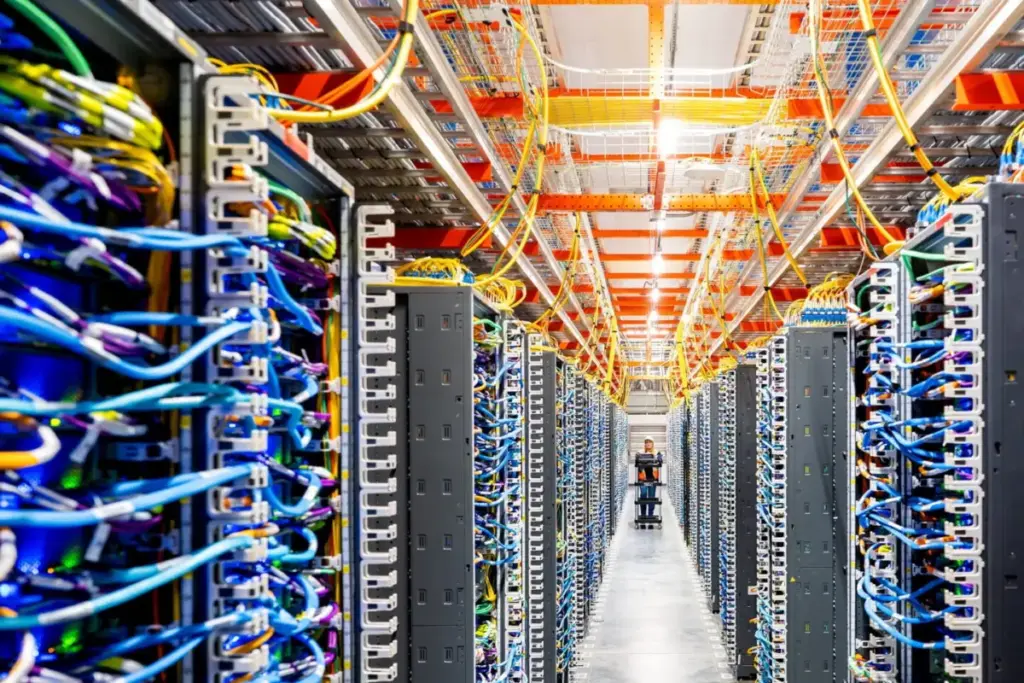
The global race to construct artificial intelligence infrastructure has triggered unprecedented demand for energy, placing electric grids under severe strain and refocusing climate debates on hyperscale data centers. Current projections suggest that by 2030, the electricity consumed by global data centers will be nearly three times the combined annual energy consumption of Pakistan, Bangladesh, and Nigeria. In response to this staggering load growth, utility providers—particularly in the United States—are delaying coal plant retirements and investing heavily in new fossil fuel power generation, threatening to derail long-term decarbonization goals.
However, an exclusive focus on the power consumption of data centers obscures a far more systemic climate risk: the direct deployment of artificial intelligence by the fossil fuel industry itself. While tech conglomerates and international bodies like the International Energy Agency (IEA) highlight AI’s potential to optimize renewable energy grids and enhance resource efficiency, major energy corporations are quietly deploying these same advanced models deep within the upstream oil and gas sector.
By leveraging machine learning for seismic processing, subsurface reservoir modeling, and automated drilling, oil and gas companies are extracting planet-heating hydrocarbons faster, cheaper, and with higher success rates than ever before. Consequently, the narrative that artificial intelligence will deliver a net-positive environmental outcome ignores a fundamental paradox: the technology designed to optimize our clean energy transition is simultaneously expanding the frontier of fossil fuel extraction.
Detailed Chronology: From Cloud Contracts to Generative Extraction
+-----------------------------------------------------------------------------------+
| CHRONOLOGY OF THE TECH-FOSSIL FUEL CONVERGENCE                                    |
+-----------------------------------------------------------------------------------+
| 2015–2018: The Enterprise Cloud Alliance                                         |
|   • Tech giants launch specialized enterprise AI platforms for oil and gas.       |
|   • Upstream exploration relies heavily on cloud-based sub-surface processing.    |
+-----------------------------------------------------------------------------------+
| 2019–2021: Backlash and Net-Zero Commitments                                      |
|   • Civil society and tech employees protest AI-driven fossil fuel contracts.      |
|   • Big Tech issues 2030 climate goals; public rhetoric shifts to "green AI."    |
+-----------------------------------------------------------------------------------+
| 2022–2023: The Generative AI Boom and Energy Strain                               |
|   • Generative AI & large language models drive an exponential spike in compute.   |
|   • Utility providers re-commission fossil fuel assets to power data centers.      |
+-----------------------------------------------------------------------------------+
| Present–2030 (Projected): The Double-Edged Acceleration                             |
|   • Data center power demand approaches 3x the output of major developing nations.  |
|   • Deep learning algorithms dramatically reduce hydrocarbon extraction costs.    |
+-----------------------------------------------------------------------------------+
Phase 1: The Enterprise Cloud Alliance (2015–2018)
The structural convergence of big tech and fossil fuels began in earnest during the mid-2010s. As cloud computing hyperscalers competed for market share, legacy oil and gas companies presented an immensely lucrative target. Upstream exploration generates terabytes of complex geological data—primarily 3D and 4D seismic surveys—that traditional on-premise supercomputers struggled to process efficiently.
Major technology firms created dedicated energy divisions, designing specialized machine learning pipelines for supermajors like ExxonMobil, Shell, BP, and Chevron. These tools were explicitly engineered to shorten the field development lifecycle, maximize flow rates from existing wells, and improve success rates in deepwater and unconventional shale plays.
Phase 2: Backlash, Net-Zero Rhetoric, and Corporate Realignment (2019–2021)
By late 2019, growing public scrutiny and internal employee activism placed tech leaders on the defensive. Non-governmental organizations published detailed reports documenting how cloud algorithms were directly increasing crude oil production volumes.
In response, several technology corporations announced sweeping corporate sustainability goals, targeting net-zero operations or carbon negativity by 2030. Public messaging shifted dramatically: public relations campaigns emphasized the role of AI in carbon capture, methane tracking, and renewable grid management. Behind the scenes, however, core cloud infrastructure and consulting contracts with the oil sector largely persisted, rebranded under the banner of "operational efficiency" and "emissions reduction within extraction."
Phase 3: The Generative AI Explosion and the Grid Energy Reckoning (2022–Present)
The commercialization of generative AI and large language models (LLMs) fundamentally altered the energy landscape. Unlike standard cloud workloads, training and running inference on multi-billion-parameter AI models requires dense computing hardware running at ultra-high power densities.
As data center operators scrambled to secure gigawatt-scale grid connections, local utilities faced an immediate capacity deficit. To meet this surge without risking grid instability, utility companies across North America and parts of Europe began scaling back plans to decommission natural gas and coal plants. Simultaneously, fossil fuel producers accelerated their adoption of advanced neural networks, using custom foundation models trained on subsurface geophysics to discover previously inaccessible hydrocarbon pockets.
Supporting Context & Metrics: The Dual Front of AI’s Carbon Footprint
To fully grasp how artificial intelligence intersects with global carbon dynamics, one must evaluate both its direct grid consumption and its indirect extraction enablement.
AI's Environmental Impact: A Dual Front
├── 1. Direct Grid Consumption (Data Centers)
│   ├── Power demand projected to triple by 2030.
│   ├── Exceeds combined usage of Pakistan, Bangladesh, and Nigeria.
│   └── Triggers new investments in gas-fired and coal power generation.
└── 2. Upstream Extraction Acceleration (Oil & Gas Fields)
    ├── Advanced seismic imaging accelerates site discovery.
    ├── Predictive physics-informed models increase recovery rates by 5%–15%.
    └── Automated drilling workflows lower production cost per barrel.
The Grid Crisis: Data Center Power Trajectories
While data centers currently account for less than 1% of total global greenhouse gas emissions, their power demand curve is following a near-exponential trajectory.
- Comparative Scale: By 2030, the annual electricity consumption of AI data centers worldwide is projected to exceed the combined annual power usage of Pakistan, Bangladesh, and Nigeria—nations with a collective population exceeding 430 million people.
- Fossil Fuel Rebound: In the United States, regional transmission organizations (RTOs) have revised their 10-year load growth forecasts sharply upward. In several regions, planned investments in natural gas power generation now outpace new clean energy builds, explicitly driven by the continuous baseload demands of hyperscale computing facilities.
The Subsurface Threat: AI as an Extraction Force Multiplier
The environmental damage caused by data center electricity usage is compounded by the application of AI algorithms to geological exploration. Upstream oil and gas companies deploy deep learning across several key operational areas:
| Operational Focus | Legacy Method | AI-Enabled Method | Carbon & Economic Impact |
|---|---|---|---|
| Seismic Data Processing | Months of manual geomechanical modeling and supercomputing batch processing. | Neural network-driven processing delivering high-resolution 3D subsurface images in hours. | Drastically lowers exploration risk; enables drilling in challenging deepwater formations. |
| Reservoir Simulation | Simplified numerical approximations limited by compute power. | Physics-informed neural networks simulating fluid dynamics in real time. | Increases well recovery factors by 5% to 15%, expanding total extractable reserves. |
| Automated Drilling & Completion | Human-directed directional drilling based on periodic telemetry. | Autonomous closed-loop control systems making real-time bit adjustments. | Speeds up well completion times, lowers capital expenditure per barrel, and extends project viability. |
By lowering the break-even cost per barrel, these technological advances allow marginal oil and gas projects—which would otherwise be economically unfeasible—to secure capital funding and proceed into commercial production.
The Rebound Paradox: Why Green Efficiency Claims Fall Short
Proponents of AI often point to the technology’s ability to reduce emissions by optimizing logistics, improving battery management, and modeling climate systems. However, this argument ignores Jevons’ Paradox: historically, increases in the efficiency with which a resource is used tend to increase—rather than decrease—the overall rate of consumption of that resource.
When AI lowers the energy required to process complex datasets, the structural response is not a reduction in overall computing power, but a massive expansion of computing infrastructure. Similarly, when AI reduces the operational cost of hydrocarbon extraction, the market incentive is not to leave oil in the ground, but to extract more oil faster to maximize yield before global demand peaks.
Official Statements: Industry Defense vs. Climate Watchdogs
The debate over artificial intelligence’s net impact on the climate has exposed a sharp divide between corporate messaging and climate analysis.
The Hyperscale & Energy Sector Position
Tech executives and industry analyst groups maintain that AI remains a net positive for global sustainability goals.
"Artificial intelligence is the critical tool required to manage the complexity of a modern, multi-directional clean energy grid. From forecasting variable wind and solar output to managing real-time demand response, the energy transition cannot occur at the necessary speed without high-performance computing."
— International Energy Agency (IEA) Special Report Analysis
Similarly, major technology companies routinely defend their commercial partnerships with energy providers by framing them as efficiency projects:
"Our cloud architecture and machine learning tools help energy providers streamline legacy operations, lower direct methane leakages, and transition their internal workflows toward cleaner energy systems."
— Joint Hyperscaler Enterprise Statement
The Environmental Counter-Perspective
Climate policy experts, energy analysts, and environmental advocacy groups argue that tech companies are actively engaging in structural greenwashing by hiding their upstream extraction support behind downstream efficiency claims.
"The public discourse is almost entirely fixated on the electricity meters of data centers, but the real structural hazard is what those computers are working on. When you use advanced AI models to reduce the exploration risk of a multi-billion-barrel offshore field, you are actively extending the fossil fuel age. The minor efficiency gains on the surface are dwarfed by the massive volume of carbon unlocked beneath it."
— Senior Climate Risk Analyst, Global Environmental Policy Institute
Furthermore, climate researchers challenge the notion that emissions can be "offset" by optimization algorithms:
"An algorithm that makes a natural gas plant 2% more efficient does not neutralize the fact that the plant continues to emit carbon for decades. When that same technology is applied to double the extraction efficiency of a shale basin, AI becomes a direct catalyst for global climate instability."
— Energy Transition Research Network
Future Outlook: Grid Bottlenecks, Policy Scrutiny, and Systemic Risk
As the timeline to meet global climate targets shrinks, the intersection of artificial intelligence, grid infrastructure, and fossil fuel extraction will face unprecedented regulatory and operational challenges.
+-----------------------------------------------------------------------------------+
| EMERGING DYNAMICS: AI & THE ENERGY TRANSITION                                     |
+-----------------------------------------------------------------------------------+
| 1. Grid Capacity Bottlenecks                                                      |
|    • Hyperscalers face multi-year delays for grid connections.                     |
|    • Increasing reliance on off-grid, direct-site natural gas power sources.     |
+-----------------------------------------------------------------------------------+
| 2. Regulatory Disclosures & Policy Mandates                                        |
|    • European Union & US state regulations mandating scope 3 emissions reporting. |
|    • Potential bans on specialized cloud software sold for fossil fuel development.|
+-----------------------------------------------------------------------------------+
| 3. Advanced Energy Sourcing (Nuclear & Geothermal)                                |
|    • Multi-gigawatt deals signed for Small Modular Reactors (SMRs) and deep hot dry |
|      rock geothermal.                                                             |
|    • Interim reliance on fossil fuels remains high through the 2030 threshold.     |
+-----------------------------------------------------------------------------------+
Grid Capacity Bottlenecks and On-Site Fossil Generation
Over the next decade, data center operators will encounter severe grid interconnect delays. In response, several technology hyperscalers are exploring "behind-the-meter" power generation arrangements. Instead of waiting years for public utility grid upgrades, data centers are increasingly being co-located next to natural gas power plants—and in some cases, directly at wellheads using stranded field gas. This trend threatens to lock in fossil fuel infrastructure purely to serve computing loads, bypassing municipal clean-energy mandates.
Regulatory Disclosures and Scope 3 Accountability
Regulatory bodies in the European Union and select U.S. jurisdictions are expanding reporting mandates for technology companies. Future policy frameworks are expected to move beyond measuring direct energy use (Scope 1 and Scope 2) to evaluate indirect emissions (Scope 3), which include the downstream emissions generated by clients using tailored enterprise AI tools.
If legislation forces technology firms to account for the additional oil and gas extracted as a result of their proprietary software, hyperscalers may be forced to re-evaluate their enterprise partnerships with the energy sector.
The Clean Compute Race: Nuclear, SMRs, and Next-Gen Energy
Recognizing the reputational and physical risks of relying on fossil-fueled power grids, tech giants are committing billions of dollars toward long-term advanced energy contracts. Pacts involving Small Modular Reactors (SMRs), advanced nuclear restarts, and next-generation deep-rock geothermal systems are multiplying.
However, because these advanced clean technologies will not reach commercial maturity at scale until the 2030s, the intermediate gap will largely be met by fossil fuels. During this critical decade, artificial intelligence will continue to exert a powerful dual pressure on the Earth’s climate: consuming fossil energy to build out its digital capacity, while simultaneously providing the tools to extract fossil energy from the ground at unprecedented speed.



