

Executive Overview
Last year, when state government officials descended upon the isolated south Indian hamlet of Tarluvada, they came bearing grand visions of an unprecedented economic renaissance. They announced that Google—one of the wealthiest and most influential technology conglomerates on the planet—had selected this impoverished rural community in Andhra Pradesh as the site for a monumental $15 billion artificial intelligence data center. Billed as Google’s largest "hyperscale" AI facility outside of the United States, the project promised to thrust Tarluvada into the global technological spotlight, ushering in an era of abundant employment opportunities, skyrocketing real estate valuations, and generous financial compensation for affected landowners.
Yet, nearly a year later, the initial euphoria that rippled through the dusty streets and surrounding farmlands has curdled into profound suspicion, distress, and active resistance. Across the globe—from the suburbs of California and Texas to the wind-swept landscapes of Scotland and regional Australia—communities are increasingly pushing back against the staggering environmental and infrastructural burdens imposed by the artificial intelligence boom. Now, this global backlash has firmly taken root in rural India.
Local villagers, farmers, and environmental advocates fear that Tarluvada and the surrounding region will bear a crippling ecological and socio-economic toll for infrastructure designed to power algorithmic models utilized half a world away. As bulldozers tear through local hillsides and clear more than a hundred acres of forest, residents are asking a bitter, central question: If Western nations are increasingly reluctant to absorb the environmental fallout of hyper-scale digital infrastructure, why is Silicon Valley shifting these heavy burdens onto the Global South?
Detailed Chronology: From Secretive Approvals to Ground-Level Discontent
The unfolding controversy in Andhra Pradesh is characterized by a rapid, opaque bureaucratic approval process that left local residents entirely in the dark until construction equipment was already on site.

- The Initial Incursion (Late Last Year): State government officials and representatives acting on behalf of project partners arrived in Tarluvada to survey land allocations. Villagers report that they were given vague justifications regarding public utility works, with zero mention of artificial intelligence, high-voltage electrical demands, or large-scale ecological disruption.
- The Blueprint Emerges: Public announcements framed the initiative as a standard 1GW data center project intended to anchor the state’s digital economy. However, subsequent state environmental clearance documents revealed that the project had secretly been authorized for a staggering 2.51GW capacity—more than double its publicly stated energy footprint.
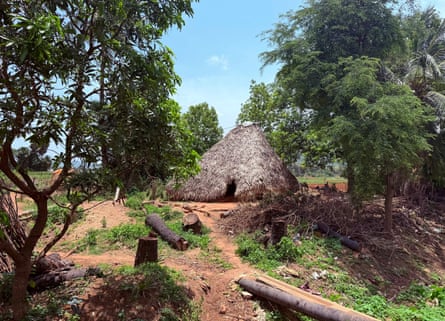
- Fencing Off Livelihoods (April): Tensions reached a boiling point when private security personnel, reportedly deployed by Indian conglomerate and project partner the Adani Group, erected perimeter fences around ancestral communal and agricultural plots. Approximately 520 local families in Tarluvada found themselves abruptly locked out of lands they had farmed or grazed livestock on for decades.
- Legal Challenges Mount: Frustrated by administrative stonewalling and police intimidation, local civil rights groups and regional environmental advocates filed multiple petitions with India’s National Green Tribunal (NGT), the nation’s highest environmental court. Additional public interest litigation was simultaneously lodged in the Andhra Pradesh High Court, targeting the severe lack of public consultation and deeply flawed environmental impact assessments.
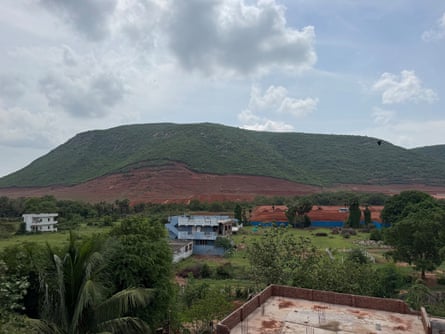
- Present Day: Construction on the mega-campus proceeds at a relentless pace along the hillsides near Visakhapatnam, even as legal battles crawl through the judicial system and grassroots demonstrations face systematic suppression from local authorities.
Supporting Context & Metrics: The Scale of the AI Energy and Water Crisis
To comprehend the scale of the Tarluvada project, one must examine the staggering macroeconomic and infrastructural metrics governing the initiative. The Andhra Pradesh data center initiative is not an isolated facility; it comprises three distinct high-capacity data hubs strategically positioned around the state capital of Visakhapatnam, anchored by partnerships between global tech giants and powerful domestic industrial conglomerates like the Adani Group and Reliance Industries.
Energy Consumption vs. State Capacity
Publicly, the facility was marketed as a 1-gigawatt (1GW) installation. However, regulatory filings confirm authorized power parameters reaching 2.51 gigawatts. To put this immense figure into perspective:
- 2.51GW is the rough power equivalent of two large nuclear reactors operating at maximum output.
- Over the course of a single year, this single complex will consume upwards of 30% of the total electricity currently utilized by the entire state of Andhra Pradesh, a region supporting a population exceeding 55 million people.
- While Google has publicly committed to sourcing "new, clean energy" to offset its operational footprint, the reality of India’s national power grid remains heavily carbon-dependent, with approximately 75% of the country’s electricity generated by coal.
Environmental and Climatic Vulnerabilities
The geographic placement of the hubs compounds the ecological risk. Tarluvada regularly experiences punishing summer temperatures soaring to 45°C (113°F). Data centers are globally recognized intensive thermal emitters. Coupled with the intentional clearing of over 100 acres of local woodland and brush—vital carbon sinks and natural climate regulators—activists warn that the massive thermal output of the servers could exacerbate local microclimates, pushing already intolerable summer temperatures even higher.
Furthermore, water stress remains a critical flashpoint. While Google has assured stakeholders that the facility will rely on air-cooling technologies rather than intensive water-extraction systems to protect local drinking water reservoirs, skepticism remains high. Situated only meters away from reserve forests, vital agricultural watersheds, and a protected wildlife sanctuary harboring endangered species such as leopards, the ecosystem leaves vanishingly little margin for industrial error.
Official Statements and Corporate Stances
The stark divergence in perspective between the architects of the deal and the residents living in its shadow highlights systemic governance challenges in India’s rapid technological expansion.
The State Government and Corporate Defense
The administration of Andhra Pradesh views the multi-billion-dollar initiative as an unmitigated triumph, aligning directly with Prime Minister Narendra Modi’s national digital infrastructure mandates. According to the government’s economic surveys, India generates nearly 20% of the world’s data yet hosts a paltry 3% of global data center infrastructure. State leaders argue that closing this gap is non-negotiable for long-term economic survival.
"Artificial intelligence is becoming foundational infrastructure for the global economy," said Sribharat Mathukumilli, a local member of parliament representing the ruling state government. "Our objective is not simply to host a datacentre, but to create an AI and digital ecosystem."
To secure this vision, the state government rolled out an unprecedented suite of subsidies, tax holidays, discounted land leases, and subsidized power and water access—incentives estimated by financial analysts to total 220 billion rupees ($2.2 billion) over a 20-year span.
In formal communications with investigative journalists, Google maintained that the engineering and design choices for the AI hub have been rigorously tailored to local environmental realities. The tech giant asserted that it has "engaged deeply" with regional communities and that the facility will have "no expected impact" on local daily life while creating thousands of specialized engineering and support jobs around Visakhapatnam. The Adani Group similarly defended the project, stating that all statutory approvals and land acquisitions were executed in strict compliance with Indian law.
The Grassroots Counter-Narrative
Civil society organizations and human rights advocates tell a profoundly different story—one defined by coercion, corporate opacity, and the systematic suppression of dissent.
"This datacentre will be unprecedented in scale, but there was no public hearing and no substantial evaluation of the ecological damage or the economic cost for local communities," noted VS Krishna, an activist with the Human Rights Forum, the organization spearheading the legal challenges before the National Green Tribunal.
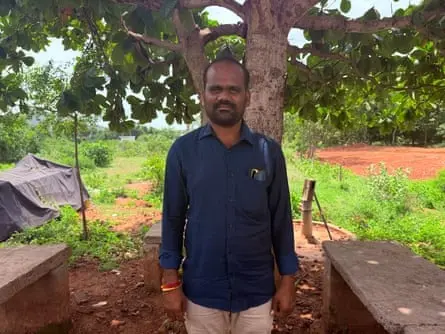
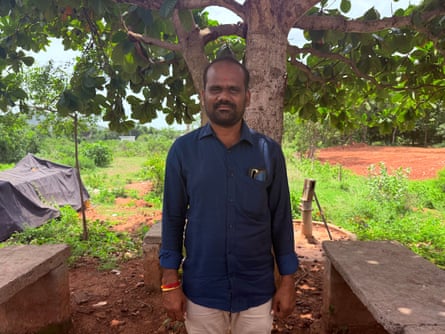
Krishna and other community leaders have accused local administrations of digital censorship, noting that protest videos, critical commentary, and social media pages addressing the data center controversy have been systematically scrubbed or blocked online. Farmers like T Applaraju—who watched as security guards fenced off ancestral lands allocated to his family two decades ago—express profound bewilderment at the government’s priorities.
"They took land that we thought belonged to us; it’s a big shock," Applaraju said, standing near his village. "Why are Google building this here and not in America?"
Future Outlook: A Critical Test for India’s Tech-Led Growth
The confrontation playing out in Tarluvada serves as a microcosm of a much larger, global dilemma: How can developing nations balance the insatiable global demand for artificial intelligence infrastructure against the immediate, localized rights of rural populations, fragile ecosystems, and strained municipal grids?
With multiple legal challenges pending before India’s National Green Tribunal and the Andhra Pradesh High Court, the Tarluvada project has transformed into a high-stakes legal and political referendum. If the petitions succeed, they could establish a monumental precedent demanding stringent environmental oversight, mandatory public consultations, and transparent energy-load disclosures for all future digital infrastructure projects across the subcontinent.
Conversely, if the project proceeds unchecked, it risks setting a dangerous blueprint for how multinational technology giants can fast-track high-emission, resource-intensive digital projects in the Global South by leveraging state-level political backing at the expense of local communities. For the people of Tarluvada—whose lands have been cleared, whose livelihoods have been disrupted, and whose appeals for transparency have been met with police intervention—the stakes could not be higher. As the bulldozers continue their daily work along the denuded hillsides, the ultimate question remains whether this digital golden opportunity will illuminate India’s technological future or cast a permanent shadow over its most vulnerable rural communities.



