

Executive Overview
In the heart of Cumbria’s striking upland landscapes, a quiet ecological transformation is underway. Driven by the urgent need to reverse decades of environmental degradation, the environmental charity Friends of the Lake District (Fold) has launched a targeted conservation initiative to restore the fragile biodiversity of a traditional upland hay meadow at Mazonwath, located in Little Asby.
At the center of this initiative is a large-scale planting campaign: 1,500 native wildflower plants are set to be introduced to the soil, breathing new life into a landscape that has suffered from the pressures of intensive historical farming practices. This intervention is not merely cosmetic; it is a calculated, science-backed endeavor designed to restore lost native flora, fortify soil health, improve natural water retention, and rebuild the fractured food webs that sustain local insect, bird, and mammal populations.
Operating in strategic partnership with the Cumbria Wildlife Trust as a core component of the wider Cumbria Seed Bank Project, Fold’s work at Mazonwath represents a microcosm of a broader national struggle. Across the United Kingdom, centuries-old grassland habitats have vanished at an alarming rate, taking with them the complex ecological networks upon which rural biodiversity depends. By reintroducing keystone plant species—including great burnet, bird’s-foot trefoil, black knapweed, cranesbills, oxeye daisy, and various vetches—the project seeks to heal the landscape from the roots up.
This comprehensive report examines the multi-faceted dimensions of the Mazonwath restoration. We will explore the historical context of Britain’s disappearing hay meadows, detail the specific ecological mechanisms by which these wildflowers engineer environmental resilience, analyze the operational timeline of the October planting drive, and weigh the long-term outlook for Cumbria’s upland ecosystems against the backdrop of modern climate and agricultural challenges.
Detailed Chronology: From Decline to Restoration
To understand the significance of the upcoming planting at Mazonwath, one must trace the timeline of change that has swept through Britain’s rural landscapes over the past century.
The Post-War Agricultural Shift
For generations, upland hay meadows like those in Little Asby were managed through low-intensity, traditional agricultural methods. Farmers harvested a rich mosaic of grasses and wildflowers in late summer, a practice that accidentally maintained high botanical diversity by allowing plants to set seed before the hay was cut. Livestock grazing was seasonal and light, preventing the dominance of aggressive, nutrient-loving grasses.
However, the post-World War II push for national food security fundamentally altered this balance. Driven by government subsidies and the advent of synthetic fertilizers and intensive reseeding techniques, many traditional meadows were plowed up and re-seeded with fast-growing, high-yield agricultural monocultures—predominantly perennial ryegrass and white clover.
While these modern sews maximized short-term livestock productivity, they proved ecologically catastrophic. The diverse tapestry of native wildflowers—which relied on nutrient-poor, undisturbed soils—was systematically choked out. According to conservation estimates, the UK has lost approximately 97% of its traditional wildflower meadows since the 1930s. Mazonwath, like countless other upland sites, bore the scars of this silent ecological attrition, seeing populations of pollinators and farmland birds plummet as their native habitats disappeared.
The Genesis of the Mazonwath Project
Recognizing the tipping point facing Cumbria’s rural heritage, Friends of the Lake District identified the land at Mazonwath as a prime candidate for restorative intervention. Unlike deeply degraded commercial arable land, upland hay meadows retain structural potential. The underlying soil architecture, while depleted of its botanical richness, still holds the memory of its past ecology.
Planning for the Mazonwath initiative began months in advance, involving rigorous site assessments, soil composition analyses, and ecological surveys conducted in tandem with conservation partners. The goal was clear: rather than letting nature struggle through decades of slow, natural succession—which is often hindered by the absence of nearby seed sources—human intervention could act as a catalyst. By introducing robust, nursery-grown native plug plants and locally harvested green hay, the charity could fast-track the establishment of a self-sustaining, biodiverse plant community.
The Road Ahead: October 13 and Beyond
The operational phase of this ambitious project is rapidly approaching. On October 13, Fold will transition from planning to execution, hosting a dedicated volunteer planting day at Mazonwath.
Ahead of this date, logistics coordinators have been preparing the site, organizing tools, and coordinating with regional ecological experts to ensure the plants are introduced under optimal autumn conditions. Autumn planting is a vital agricultural and horticultural strategy; the cooling air temperatures combined with still-warm soil and the onset of dependable autumn rains provide the ideal environment for perennial root systems to establish without the stress of summer heat.
Following the October planting event, the chronology shifts from active installation to long-term stewardship and monitoring. Conservationists will track germination rates, monitor the return of pollinating insects in the spring, and evaluate how the newly introduced root networks interact with the local hydrology over successive seasons.
Supporting Context & Metrics: The Science of Meadow Restoration
The restoration of Mazonwath is grounded in rigorous ecological science. The project is not merely an aesthetic endeavor; it addresses three critical environmental crises simultaneously: biodiversity collapse, soil degradation, and climate-induced water management challenges.
Botanical Diversity and the Food Web
The selection of the 1,500 plants scheduled for Mazonwath is far from random. Fold has curated a specific mix of flora designed to maximize ecological impact:
- Great Burnet (Sanguisorba officinalis): A striking maroon-flowered perennial that provides essential late-season nectar for specialized hoverflies and butterflies.
- Bird’s-foot Trefoil (Lotus corniculatus): Often called "eggs and bacon" due to its red and yellow flowers, this legume fixes nitrogen in the soil while serving as the primary larval foodplant for several declining butterfly species, including the common blue and the wood white.
- Black Knapweed (Centaurea nigra): Widely regarded as one of the single most important nectar sources for British pollinators, its thistle-like blooms are heavily visited by bumblebees, honeybees, and long-tongued insects well into the autumn.
- Cranesbills (Geranium species): Hardy native geraniums that provide early-season forage and structural complexity to the meadow floor.
- Oxeye Daisy (Leucanthemum vulgare): A resilient perennial whose large white flower heads act as landing pads for a vast array of beetles, flies, and beneficial predatory insects.
- Vetches (Vicia species): Climbing, nitrogen-fixing legumes that weave through the meadow canopy, providing structural support and critical food resources for bees and moths.
When these species are absent, the ecological pyramid collapses. Herbivorous insects lose their host plants; insectivorous birds—such as swallows, martins, and various declining farmland songbirds—lose their food source; and apex predators of the micro-world (like bats, small mammals, and predatory beetles) find themselves facing starvation. By restoring the botanical foundation, the Mazonwath project aims to reconstruct this intricate web of life.
[Botanical Foundation: Native Wildflowers]
       │
       ├─► Soil Health & Nitrogen Fixation (Legumes like Bird's-foot Trefoil & Vetches)
       │
       ├─► Pollinator Support (High-nectar sources like Knapweed & Oxeye Daisy)
       │
       └─► Hydrological Resilience (Deep root architecture for water retention)
Soil Health and Hydrological Engineering
Beyond biodiversity, the physical properties of a restored hay meadow play a vital role in landscape-scale environmental management. A spokesperson for Friends of the Lake District highlighted the crucial mechanical functions that plant roots perform beneath the surface:
"Plant roots are good for moisture retention and soil health, with their texture playing a part in slowing the flow of overland water."
In an era defined by extreme weather events linked to climate change, upland water management is of paramount national concern. Traditional, heavily grazed or degraded soils often develop a compacted surface layer. When heavy rainfall hits these compacted uplands, water cannot infiltrate the soil; instead, it rushes across the surface, turning into destructive overland runoff that swells local watercourses, strips topsoil, and increases downstream flood risks in vulnerable communities.
In contrast, a species-rich hay meadow functions like a living sponge. Plants such as great burnet and black knapweed possess deep, fibrous, and taproot systems that penetrate several feet into the soil profile. These roots create complex channels that aerate the earth, dramatically increasing its hydraulic conductivity.
Furthermore, the dense carpet of above-ground vegetation breaks the kinetic energy of falling raindrops, preventing soil compaction and surface sealing. By slowing the flow of overland water at the source in the Cumbrian uplands, projects like the one at Mazonwath contribute directly to natural flood management (NFM) strategies, helping to mitigate downstream flooding while recharging underground aquifers.
Official Statements and Collaborative Frameworks
The Mazonwath restoration does not occur in a vacuum; it is part of a coordinated, county-wide strategy championed by environmental charities, local stakeholders, and conservation scientists working in tandem.
The Vision of Friends of the Lake District
As the primary driving force behind the project, Friends of the Lake District has emphasized the long-term, intergenerational responsibility of conservation work. In an official statement released by the charity, a spokesperson articulated the core philosophy guiding the initiative:
"Conservation work like this is really important to help our insects and birds have a home into the future."
This forward-looking perspective underscores the reality that environmental restoration is an investment in ecological legacy. Fold recognizes that halting the decline of native species requires proactive, hands-on intervention rather than passive observation. By engaging the local community and providing tangible avenues for public participation, the charity is building a localized culture of environmental stewardship that extends far beyond the boundaries of the Mazonwath meadow.
The Cumbria Seed Bank Project Partnership
The work at Little Asby is deeply integrated into a broader collaborative initiative: the Cumbria Seed Bank Project, spearheaded by the Cumbria Wildlife Trust.
The Seed Bank Project was established to address the fragmentation and genetic isolation of remaining wildflower populations across the county. As meadows become isolated islands in a sea of intensive agriculture or commercial forestry, plant populations suffer from inbreeding depression and loss of genetic diversity, making them increasingly vulnerable to disease and environmental stressors like drought.
Through the Seed Bank Project, conservationists harvest seeds from ancient, highly resilient local donor meadows—sites that have never been improved or plowed. These seeds are then propagated or used to supply restoration sites like Mazonwath, ensuring that the flora reintroduced to the uplands is genetically adapted to the specific climatic, edaphic (soil-related), and biological conditions of Cumbria. This regional provenance approach ensures high survival rates and preserves the unique genetic heritage of Cumbrian flora.
Community Engagement: The Volunteer Imperative
A defining characteristic of modern conservation in the UK is the democratization of environmental action. Large-scale ecological restoration cannot be successfully accomplished by conservation professionals working behind closed doors; it requires the active hands, hearts, and minds of the local community.
Mobilizing the Public for October 13
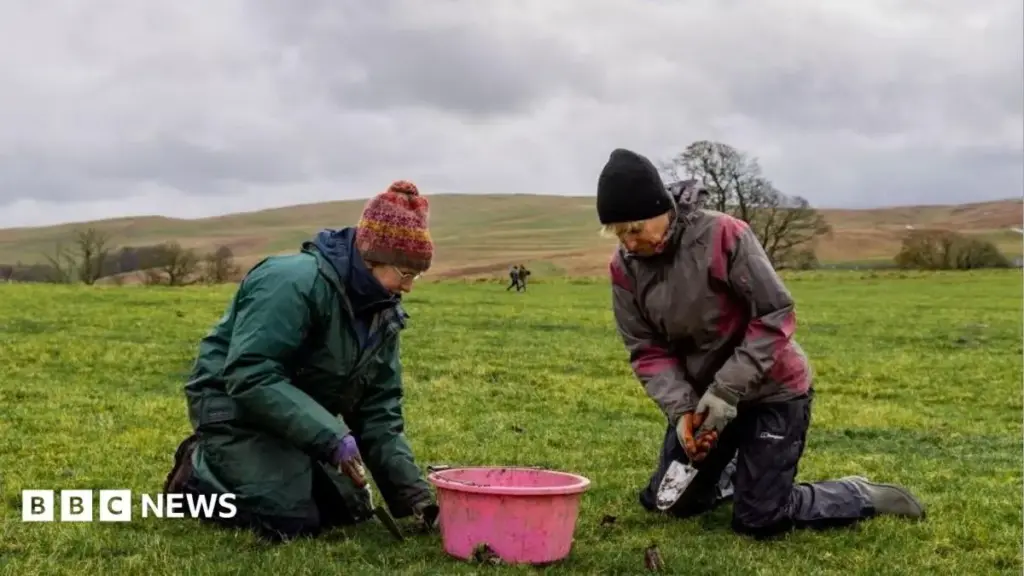
Friends of the Lake District is issuing an open call to conservationists, outdoor enthusiasts, local residents, and citizen scientists to roll up their sleeves and take part in the physical planting effort on October 13.
Participating in a meadow restoration project offers volunteers a unique connection to the land. The process of planting 1,500 individual plug plants requires care, precision, and physical labor—qualities that foster a deep sense of ownership and personal investment in the site’s future success. Volunteers will work alongside experienced conservation ecologists, learning firsthand about plant identification, soil ecology, and sustainable land management techniques.
How to Get Involved
For individuals interested in participating in the Mazonwath planting day, comprehensive logistical details, safety guidelines, tool requirements, and registration procedures are readily accessible via the official Friends of the Lake District website. Organizers advise prospective volunteers to dress appropriately for Cumbrian upland weather, wear sturdy footwear, and bring practical outdoor gear.
By mobilizing this volunteer army, Fold is not only accelerating the physical planting process but also cultivating an informed, passionate constituency of environmental advocates who will champion the protection of Cumbria’s landscapes for decades to come.
Future Outlook: Challenges, Scalability, and Ecological Vision
As the 1,500 wildflower plants take root at Mazonwath this October, attention will inevitably turn to the horizon. What does the future hold for this restored hay meadow, and what lessons can the project offer to the wider conservation movement?
Navigating Climate and Environmental Pressures
The path of ecological restoration is rarely straightforward. Upland ecosystems in the UK face mounting pressures from a changing climate, including increasingly erratic weather patterns, prolonged summer drought periods, and unseasonal warmth that can disrupt the delicate synchronization between emerging plants and emerging pollinators.
To ensure the long-term resilience of the Mazonwath meadow, ongoing adaptive management will be essential. Conservationists must monitor how the newly introduced species respond to shifting climatic baselines. Management strategies such as adjusted grazing regimes (reintroducing traditional livestock at carefully timed intervals to mimic natural herbivory) and targeted control of invasive weed species will be necessary to maintain the delicate botanical balance of the sward.
Scalability and the Blueprint for Cumbrian Uplands
The true value of the Mazonwath project extends far beyond its immediate geographic footprint. As a pilot and partnering initiative within the Cumbria Seed Bank Project, its success will serve as a replicable blueprint for landowners, farmers, and conservation charities across the North of England.
If 1,500 plants can transform a degraded patch of Little Asby into a vibrant, resilient ecosystem, the potential for scaling similar interventions across the county’s vast upland acreage is immense. As government agricultural subsidies increasingly transition toward a "public money for public goods" model—rewarding farmers for environmental stewardship, carbon sequestration, and biodiversity recovery rather than sheer production volume—projects like Mazonwath point the way toward a sustainable future where agriculture and nature exist in harmony.
Conclusion
The restoration of the upland hay meadow at Mazonwath is more than a local planting event; it is an act of ecological healing and a testament to the power of collaborative conservation. By reintroducing foundational native species, Friends of the Lake District and the Cumbria Wildlife Trust are repairing the broken threads of a fragile ecosystem, securing a future for local insects and birds, and fortifying the Cumbrian landscape against the mounting pressures of climate change and habitat loss.
As volunteers gather on October 13 to press those 1,500 wildflower plants into the Cumbrian soil, they will not just be planting flowers—they will be planting hope for the generations of wildlife and humanity that share this remarkable landscape.



