

Executive Overview
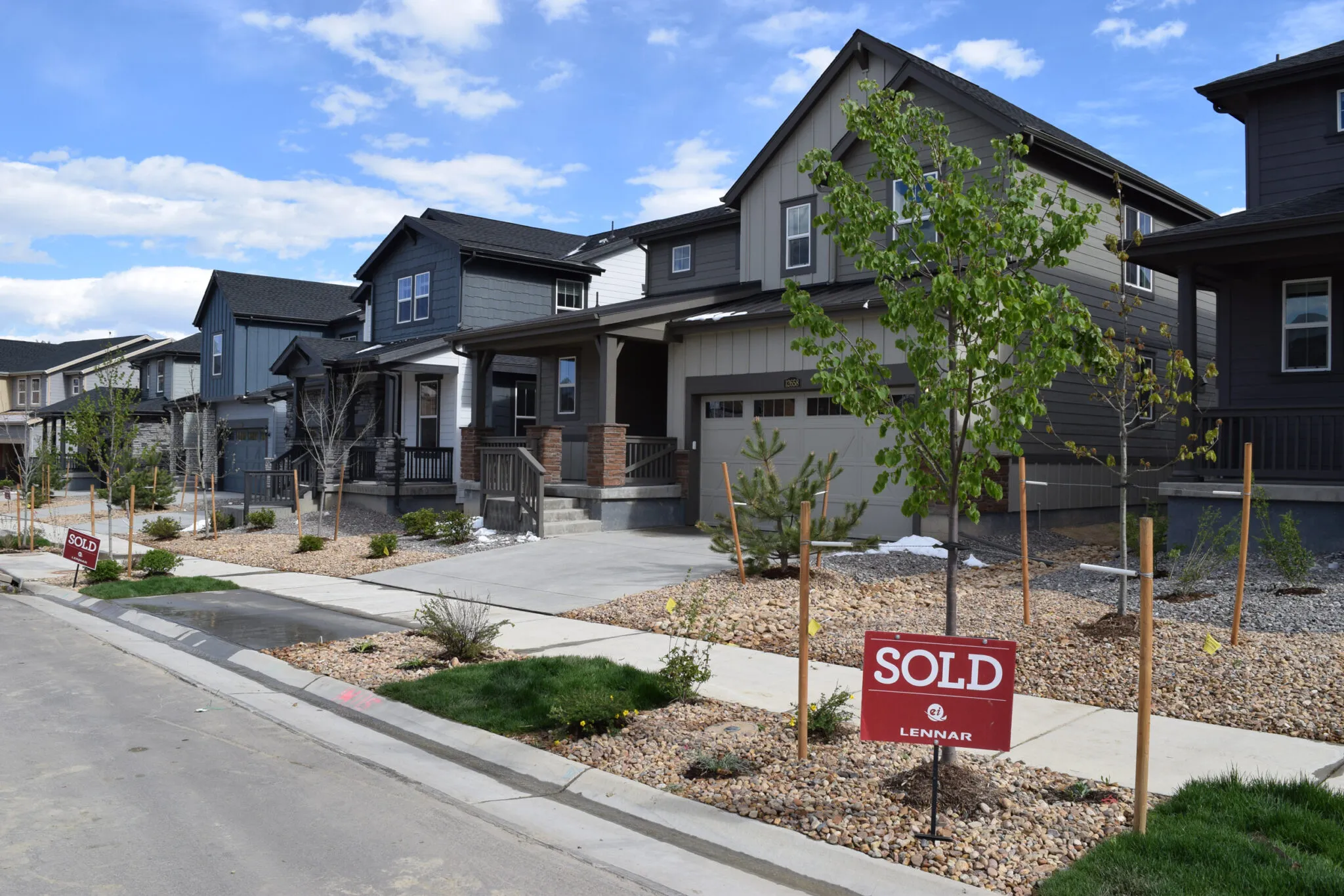
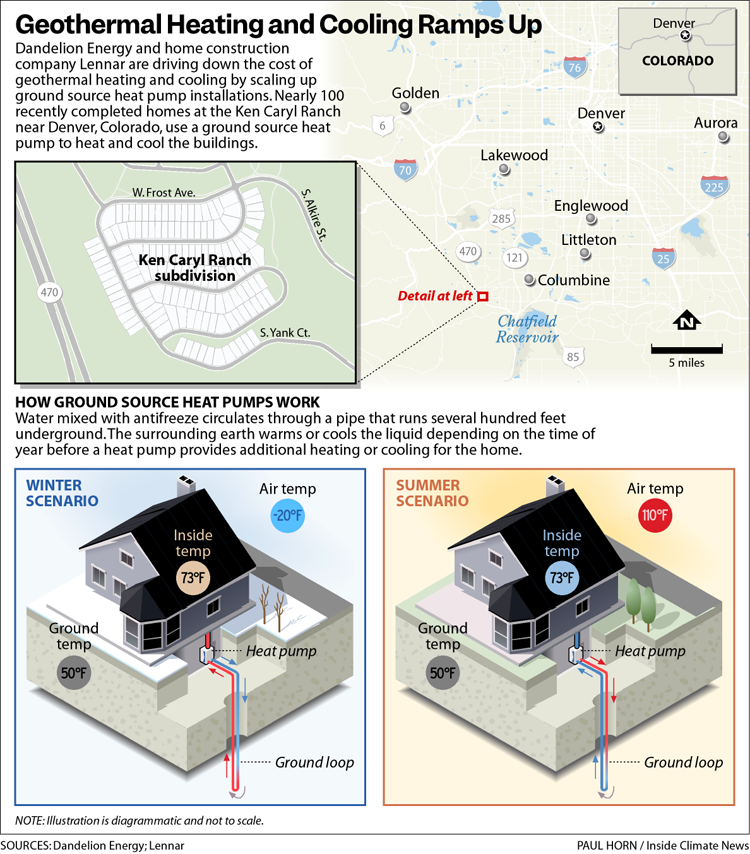
In the rolling foothills of Colorado’s Front Range, a quiet technological and infrastructural shift is taking root. Just south of Denver at the Ken Caryl Ranch development in Littleton, geothermal startup Dandelion Energy and national homebuilder Lennar have successfully wrapped up construction on nearly 100 new single-family homes outfitted with advanced ground-source heat pump systems.
This milestone represents far more than a standard suburban housing build; it serves as a high-stakes proving ground for a collaborative model that could fundamentally alter how American homes are heated and cooled. By tackling the historic cost, customization, and logistical barriers that have long relegated geothermal energy to a luxury niche, the Dandelion-Lennar partnership is attempting to drag subsurface heating and cooling into the mass market.
The implications extend well beyond Colorado’s borders. As municipal, state, and federal policies converge to penalize fossil-fuel expansion and incentivize clean-energy building electrification, ground-source heat pumps are emerging as the holy grail of grid-friendly climate solutions. Unlike conventional air-source heat pumps, which struggle and consume vast amounts of electricity during extreme winter cold snaps, ground-source systems tap into the earth’s stable subterranean temperatures. In doing so, they slash peak energy demand, eliminate the need for costly new natural gas pipeline infrastructure, and provide an all-electric pathway to significant building decarbonization.
Detailed Chronology: From Google "Moonshot" to Front Range Realities
The path to the Ken Caryl Ranch deployment stretches back to Silicon Valley’s experimental laboratories, tracing a trajectory from corporate research and development to the gritty, heavy-machinery realities of a residential construction site.
The Genesis at Alphabet’s X
Dandelion Energy was born out of X (formerly Google X), Alphabet’s famed "moonshot" factory tasked with incubating high-risk, high-reward technological solutions to global problems. Recognizing that residential heating and cooling accounted for a staggering portion of global carbon emissions—yet had seen virtually no innovation in decades—the team spun Dandelion out as an independent startup in 2017. Their explicit mission was to make geothermal heating and cooling accessible, affordable, and scalable.
Laying the Groundwork: The Lennar Partnership
For years, geothermal energy remained a bespoke, artisanal product. Installing a ground-source system typically required contracting specialized drilling rigs on a per-home basis, driving upfront capital costs past $25,000 and leaving builders hesitant to disrupt fast-paced construction schedules.
That paradigm began to shift in 2025, when Dandelion and Lennar—one of the largest homebuilding corporations in the United States—announced a sweeping, multi-year initiative. The goal: integrate geothermal heating and cooling into more than 1,500 new homes across Colorado. The Ken Caryl Ranch development represents the first major crystallization of this partnership, moving from blue-sky planning to completed, operational neighborhoods.
The Construction Symphony
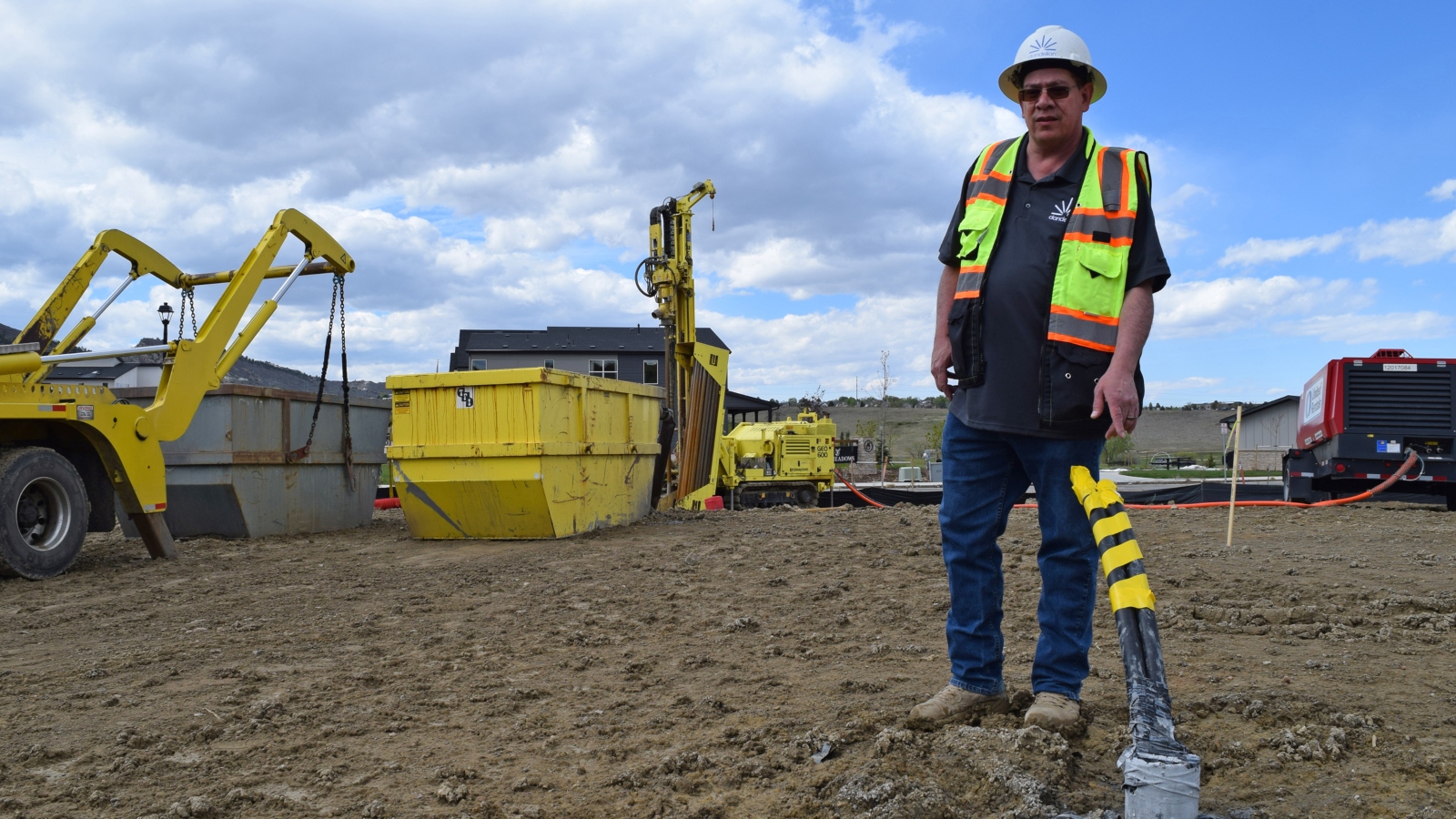
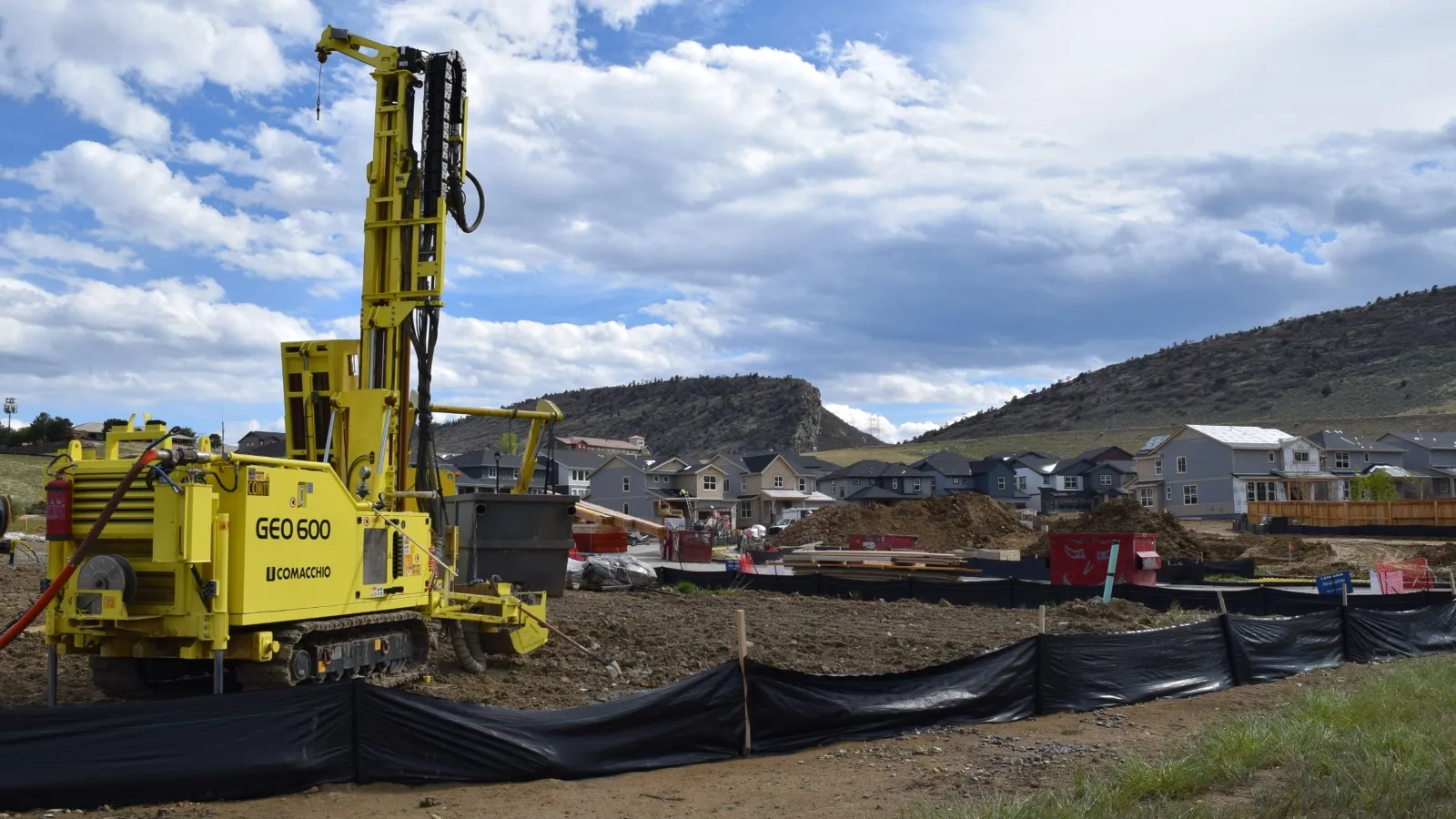
Earlier this year at Ken Caryl Ranch, Dandelion’s specialized drilling teams demonstrated an innovative, high-efficiency approach to mass-market geothermal installation. Rather than hauling heavy, cumbersome equipment onto a finished lot for a single custom job, Dandelion deployed lightweight, agile drilling rigs designed to leapfrog seamlessly from lot to lot.
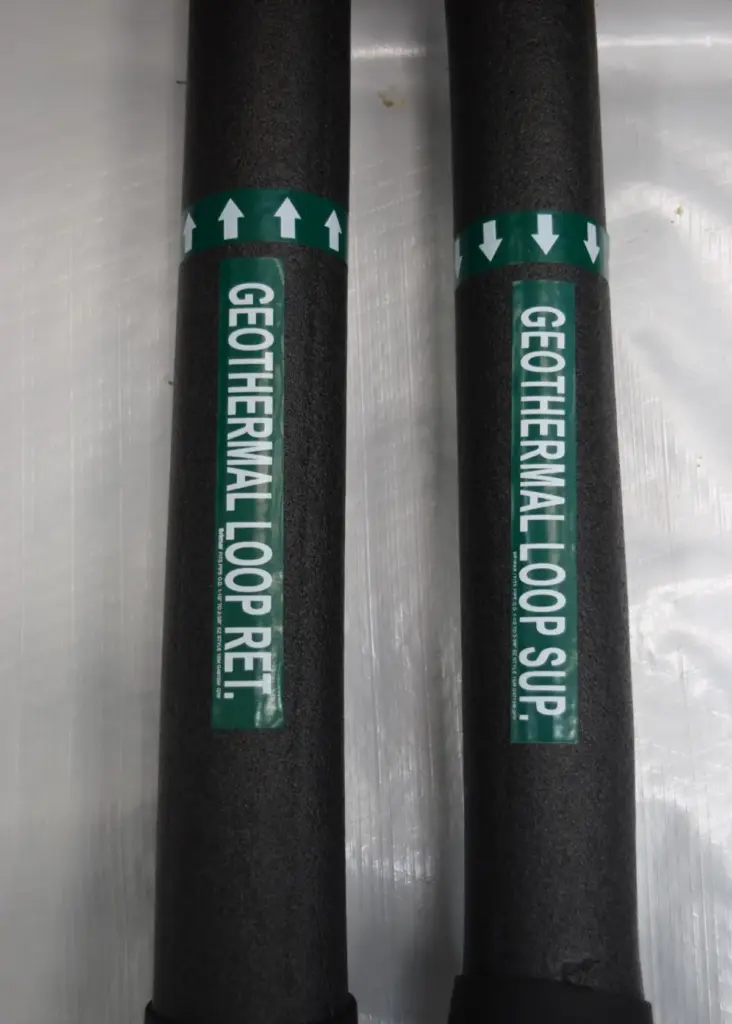
Working in precise coordination with Lennar’s framing and foundation schedules, the drilling crews bored single vertical shafts—ranging between 200 and 500 feet deep—into each housing plot before the structural foundations were poured. Inside these narrow boreholes, workers inserted continuous loops of high-density polyethylene pipe.
By executing these operations across dozens of adjacent lots simultaneously, Dandelion bypassed the logistical dead time that normally plagues the industry. Instead of losing an entire operational day simply transporting and setting up a rig for a single home, crews could complete boreholes for one or more homes every single day. Once the homes were framed, a compact geothermal heat pump unit was dropped into each basement, tying directly into the pre-installed loop of pipe where water circulates to absorb or reject heat into the earth.
Supporting Context & Metrics: The Science and Economics of Subsurface Energy
To understand why this deployment is drawing intense scrutiny from energy analysts and utility executives, one must examine the fundamental mechanics and macro-economics of ground-source heat pumps.
The Mechanics of the Earth
The physics underlying ground-source systems are deceptively simple. While ambient air temperatures above ground fluctuate wildly from blistering summer heatwaves to sub-zero winter polar vortices, the earth just a few hundred feet below the surface maintains a remarkably stable, constant temperature—typically hovering around 50 degrees Fahrenheit year-round in regions like the Front Range.
When a home requires heating, fluid circulating through the underground polyethylene pipe absorbs the earth’s ambient warmth. This fluid is routed to the basement heat pump, which concentrates the thermal energy and distributes it through standard ductwork. In the summer, the process reverses: unwanted heat from the home is captured, driven downward, and safely dissipated into the cooler earth.
Overcoming the Efficiency Trap
The energy efficiency gains of this process are profound. According to Dandelion CEO and chairman Dan Yates, ground-source heat pumps use a fraction of the electricity required by even the most advanced air-source heat pumps. This efficiency differential becomes most pronounced during severe cold snaps—precisely the moments when electrical grids experience dangerous demand spikes.
During these peak winter events, ground-source heat pumps consume roughly one-quarter of the electricity used by air-source models.
"It’s the only system that actually reduces peak demand and electrifies homes at the same time," Yates noted.
Broad Economic and Geographic Viability
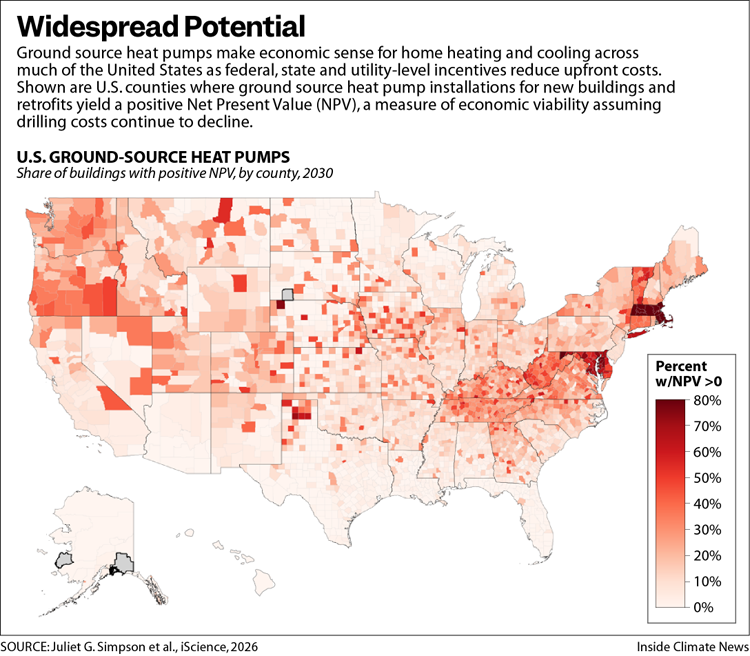
For years, a pervasive myth persisted that geothermal energy was geographically restricted to regions with active volcanic geology, such as Iceland or parts of the American West. However, a landmark study published in the journal iScience dispelled this notion, confirming that ground-source heat pumps are economically and technically viable across the entire continental United States.
"It is technically possible everywhere, and there is economic potential across all states," said Juliet Simpson, a former research engineer at the National Laboratory of the Rockies and lead author of the study.
Despite this broad potential, market penetration has historically lagged. According to a 2025 U.S. Department of Energy (DOE) report, just over one million U.S. homes currently feature ground-source heat pumps, with roughly 100,000 new installations added annually. By contrast, the market for air-source heat pumps has exploded, with 3.6 million units sold nationwide last year alone—outpacing conventional gas furnace sales for four consecutive years, according to Yara van Ingen, an associate with BloombergNEF’s building decarbonization team.
The primary friction points for geothermal adoption have always been twofold:
- Upfront Capital Costs: Averaging around $25,000 per home, the initial installation price tag deters budget-conscious buyers and risk-averse developers.
- Logistical and Regulatory Hurdles: Space constraints in dense urban environments and a patchwork of complex municipal permitting requirements have complicated borehole drilling.
Initiatives like the Dandelion-Lennar partnership aim to systematically dismantle these barriers through scale, standardized engineering, and aggressive deployment strategies.
Official Statements & Policy Alignment
The success of the Ken Caryl Ranch project is not occurring in a vacuum; it is heavily accelerated by a sophisticated matrix of state policies, utility incentives, and regulatory mandates designed to phase out fossil-fuel reliance in the residential sector.
The Utility Footprint: X Energy’s Rebate Strategy
In Colorado, the push toward building electrification is actively backed by the state’s largest electric and gas utility, X Energy. Through targeted energy-efficiency programs, X Energy provides approximately $25,000 per home for new residential construction projects that incorporate high-efficiency ground-source heat pump systems.
"For large neighborhoods with hundreds of homes, builders may receive seven-figure rebate amounts," an X Energy spokesperson confirmed in a written statement.
These financial incentives are not merely philanthropic; they are strategic compliance tools. X Energy utilizes these programs to advance its own corporate sustainability targets while actively helping Colorado comply with the state’s Clean Heat Standard, a legislative mandate requiring gas utilities to cut greenhouse gas emissions by 22 percent below 2015 levels by 2030.
State-Level Policy Pressure
The regulatory environment in Colorado actively discourages the expansion of fossil-fuel infrastructure. The state currently offers a direct $2,000 tax credit for ground-source heat pump installations. More critically, state regulators have updated rules regarding utility hookups: homebuilders are now required to pay outright for new gas service expansion pipes—a burdensome capital expense that is entirely avoided if developers pivot to all-electric, geothermal-equipped communities.
"Policies that incentivize high-efficiency electric heating and cooling while discouraging fossil fuel use in homes are intended to fundamentally reduce greenhouse gas emissions from buildings," explained Will Toor, executive director at the Colorado Energy Office.
A National Wave of Incentives
The momentum in Colorado is mirroring broader national trends. In Maryland, Dandelion recently announced plans to bring geothermal technology to 129 new residential units, propelled by the state’s Ground Source Heat Pump Advantage Pilot Program. Furthermore, under federal provisions such as expanded commercial and multi-family clean energy tax credits, qualifying geothermal installations can recoup 30 percent or more of their total capital costs.
"The economics just look better and better," said Jessica Silber-Byrne, senior manager of thermal energy networks for the Building Decarbonization Coalition. "There is a combination of both incentives and market signals that suggest this is about to really take off."
Future Outlook: Mainstreaming the Subsurface
The implications of what Dandelion and Lennar have achieved on the Front Range point toward a transformative decade for American infrastructure.
The U.S. Department of Energy’s 2025 report projects that if geothermal heating and cooling can scale to reach 7 million American homes by 2035, the resulting benefits to the national energy grid will be staggering. Such an adoption curve would slash winter peak energy demand by more than 40 gigawatts nationwide—alleviating immense strain on aging electrical grids and yielding approximately $4 billion in annual savings for ratepayers and utilities alike.
Buoyed by these projections, Dandelion Energy is not resting on the success of its Littleton deployment. The company is actively scaling its operations, with a stated corporate goal of ramping up production capacity to install geothermal systems in 10,000 homes per year nationwide in the near future.
"Our mission at Dandelion is to mainstream geothermal, and we think that the time has finally arrived for that to happen," Dan Yates emphasized.
If the neighborhood south of Denver proves anything, it is that the marriage of industrial-scale homebuilding and innovative subsurface engineering can turn geothermal energy from a boutique luxury into a foundational pillar of the clean energy transition. As builders, utilities, and policymakers across the country search for reliable ways to electrify housing stock without collapsing the electrical grid, the quiet network of pipes buried beneath Ken Caryl Ranch may well serve as the blueprint for the American neighborhood of tomorrow.



