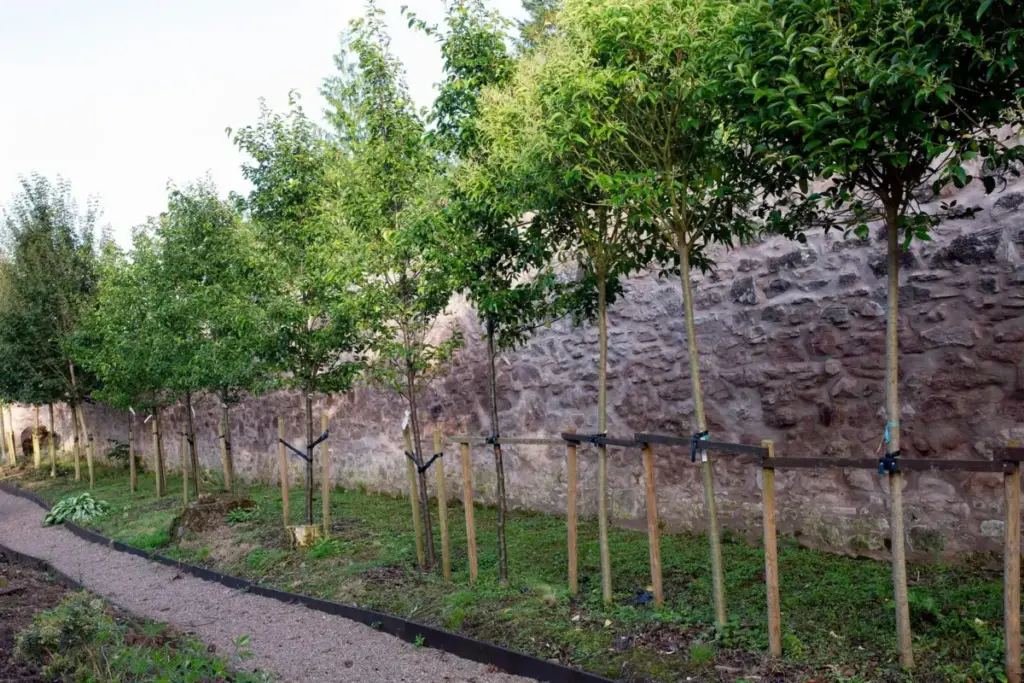
In an era of increasingly compact housing developments, overlooked urban plots, and shared boundary lines, reclaiming personal sanctuary within our own outdoor spaces has transformed from a casual landscaping preference into a primary architectural necessity. Whether the challenge is blocking the gaze of inquisitive neighbours, obscuring an unsightly view of a utility structure, or muting the relentless din of modern traffic, living green infrastructure offers a sophisticated, sustainable solution.
Unlike stark wooden fences or rigid masonry walls that degrade over time, botanical screens grow more valuable, resilient, and visually engaging with each passing season. From narrow vertical accents that slide effortlessly into urban courtyards to dense, impenetrable evergreen hedges and sprawling, flower-laden climbers, the right selection of trees, shrubs, and vines can turn any exposed plot into a secluded Eden. This comprehensive review examines thirty-seven of the world’s most effective garden screening specimens, categorizing their privacy yields, aesthetic values, structural footprints, and environmental tolerances to help property owners curate the ultimate living boundary.
Detailed Chronology: Establishing Your Living Screen
Transitioning a barren, exposed perimeter into a private sanctuary requires a strategic, chronological approach to planting and establishment. Understanding how these botanical systems mature over short- and long-term milestones ensures success:
Phase 1: Soil Preparation and Structural Installation (Months 0–6)
Before introducing any privacy plant, the foundational earth must be evaluated and enriched with organic matter. For climbers, install trellis systems, high-tensile wire networks, or sturdy pergolas prior to planting. For structural trees and hedging whips, clear a one-meter-wide strip of turf to eliminate root competition, ensuring maximum water and nutrient absorption during the critical establishment phase.
Phase 2: Initial Establishment and Rapid Srowth (Years 1–3)
During the first three years, root architecture expands outward. Fast-growing species such as cherry laurel (Prunus laurocerasus), Leyland-style alternatives, and star jasmine (Trachelospermum jasminoides) demand regular irrigation during dry spells. Pruning during this window should focus on encouraging lateral branching rather than vertical height, forcing the plants to thicken from the base upward to guarantee ground-level privacy.
Phase 3: Canopy Interlocking and Boundary Sealing (Years 3–7)
As individual specimens cross the three-to-seven-year threshold, their canopies begin to touch. Hedges knit together into a solid green wall, while columnar trees reach their operational screening heights. Regular maintenance schedules—such as annual hedge trimming in late summer or structural pruning of deciduous canopies—are initiated to maintain the desired width-to-height ratio.
*Phase 4: Maturity, Peak Privacy, and Ecosystem Integration (Years 7–20+)
In maturity, species like yew (Taxus baccata), holm oak (Quercus ilex), and Italian cypress (Cupressus sempervirens*) reach their structural stride. At this stage, the garden boundary transitions from a young screen into a mature micro-ecosystem, providing vital nesting habitats for local bird populations, winter wind protection, and absolute, year-round seclusion.
Supporting Context & Metrics: The 37 Best Plants for Privacy
Here is the definitive index of trees, shrubs, and climbers engineered to solve boundary issues while enhancing landscape aesthetics.
1. Italian cypress (Cupressus sempervirens)
Type: Tree | Privacy Rating: 4/5 | Beauty Rating: 4/5 | Dimensions: 15m x 2.5m (at 20 years)
Profile: A definitive choice for Mediterranean-inspired vertical drama. Its exceptionally narrow, columnar profile fits tight spatial footprints while stretching upward to screen multi-story properties.
Profile: A classic British evergreen providing dense, prickly foliage that creates an impenetrable security barrier. Glossy dark green leaves and winter red berries offer exceptional wildlife value.
Profile: Celebrated for its explosive, brilliant red young foliage and dense branching habit, providing urban screening that handles pollution and hard pruning with ease.
4. Holm oak (Quercus ilex)
Type: Tree | Privacy Rating: 5/5 | Beauty Rating: 3/5 | Dimensions: 8m x 6m (at 20 years)
Profile: A remarkably tough evergreen equipped with leathery, dark green leaves. It withstands salt-laden coastal gales and urban grime, functioning as an elite windbreak and privacy screen. (Note: Toxic to pets; invasive in wild semi-natural woodlands).
Profile: The fast-growing stalwart for instant privacy. Large, glossy leaves form a thick visual barrier. Requires careful management to prevent bird-dispersed seed spread. (Toxic if ingested; wear protective gear).
Profile: Upright and narrow with rich green, pointed leaves. Produces white autumn panicles and operates wonderfully in small-scale courtyard boundaries. (Toxic if ingested).
Profile: Features rugged reddish bark, dark evergreen leaves, and simultaneous autumn displays of white bell-shaped flowers and strawberry-like crimson fruits.
8. Tree fern (Dicksonia antarctica)
Type: Tree fern | Privacy Rating: 3/5 | Beauty Rating: 5/5 | Dimensions: 4m x 4m
Profile: A prehistoric structural marvel with arching fronds that generate lush, tropical seclusion in damp, shaded corners or intimate seating zones.
9. Cotoneaster frigidus ‘Cornubia’
Type: Shrub/Small Tree | Privacy Rating: 3/5 | Beauty Rating: 4/5 | Dimensions: 6m x 4m (at 20 years)
Profile: Semi-evergreen with arching branches, early summer pollinator flowers, and a heavy autumn load of red berries that draw winter thrushes.
10. Hornbeam (Carpinus betulus)
Type: Tree | Privacy Rating: 4/5 | Beauty Rating: 4/5 | Dimensions: 10m x 6m (at 20 years)
Profile: A native powerhouse frequently pleached or clipped into formal hedges. Retains golden-brown winter foliage in sheltered spots to ensure continuous seasonal screening.
Type: Tree | Privacy Rating: 3/5 | Beauty Rating: 4/5 | Dimensions: 5m x 3m (at 20 years)
Profile: Pyramidal, clean, and narrow. Leaves emerge exceptionally early in spring and hold onto autumn purple-red hues well into the cold season.
12. Silver birch (Betula pendula)
Type: Tree | Privacy Rating: 3/5 | Beauty Rating: 4/5 | Dimensions: 25m x 10m
Profile: Delivers light, airy, dappled shade without making a garden feel hemmed in. Striking white winter bark creates a tranquil grove effect.
13. Rowan (Sorbus aucuparia)
Type: Tree | Privacy Rating: 2/5 | Beauty Rating: 3/5 | Dimensions: 15m x 7m
Profile: Also known as mountain ash, its feathery pinnate leaves soften harsh boundaries while providing spring blossoms and vibrant autumn bird-attracting berries.
14. Field maple (Acer campestre)
Type: Tree | Privacy Rating: 3/5 | Beauty Rating: 4/5 | Dimensions: 15m x 8m
Profile: A native British tree with rounded crowns, lobed leaves that glow golden-yellow in autumn, and high tolerance for urban pollution.
15. Snowy mespilus (Amelanchier lamarckii)
Type: Tree | Privacy Rating: 3/5 | Beauty Rating: 4/5 | Dimensions: 12m x 4m
Profile: Flaunts a frothy spring display of star-shaped white blossoms set against coppery-pink young leaves, transitioning to blazing autumn reds.
Profile: Thorny stems deter intruders while supporting local moth caterpillars and nesting birds with spring blossom and autumn haws.
17. Crab apple (Malus spp.)
Type: Tree | Privacy Rating: 4/5 | Beauty Rating: 3/5 | Dimensions: 10m x 5m
Profile: Smothered in spring blossom and laden with decorative autumn fruits, offering manageable proportions and flexible multi-stem or standard training.
18. Golden rain tree (Koelreuteria paniculata)
Type: Tree | Privacy Rating: 3/5 | Beauty Rating: 4/5 | Dimensions: 10m x 10m
Profile: Displays bright summer yellow flower panicles followed by lantern-like seed pods, offering high ornamental utility alongside canopy screening.
19. Yew (Taxus baccata)
Type: Tree | Privacy Rating: 5/5 | Beauty Rating: 3/5 | Dimensions: 20m x 10m
Profile: The gold standard of formal hedging. Slow-growing, exceptionally long-lived, and capable of regenerating entirely from old wood. (Toxic to humans and pets).
Type: Tree | Privacy Rating: 4/5 | Beauty Rating: 3/5 | Dimensions: 25m x 15m
Profile: Deep purple, glossy foliage delivers dramatic architectural presence and dense sound-dampening boundary cover for expansive properties. (Toxic to dogs).
Profile: Semi-evergreen, fast-growing, and exceptionally tolerant of coastal winds and urban soils, clipping into a crisp, traditional green wall. (Toxic if ingested).
22. Berberis
Type: Shrub | Privacy Rating: 4/5 | Beauty Rating: 3/5 | Dimensions: Variable by species
Profile: Combines vibrant foliage, spring flowers, and defensive thorny stems that create an impenetrable barrier against unwanted access.
Profile: An evergreen security champion easily trained flat against walls or grown as a free-standing hedge loaded with winter-fruiting red and orange berries.
Profile: Ranging from deciduous mopheads to the evergreen climbing species Hydrangea seemannii, providing lush, voluminous seasonal or permanent enclosure. (Skin allergen; toxic to pets).
Profile: Compact, shade-loving evergreen with fragrant spring panicles and winter red berries, perfect for low front-garden screening or patio containers.
Profile: Incomparable growth speed and deep-shade adaptability. Creates instant, maintenance-free green walls that support specialized wildlife habitats. (Skin allergen; toxic if ingested).
Profile: Vibrant deciduous climbers offering explosive summer color across pergolas and trellises. Can be woven through evergreens for extended seasonal cover. (Skin irritant).
Profile: Breathtaking spring floral cascades suspended from heavy woody frameworks. Requires robust support structures and strict bi-annual pruning regimes. (Toxic if ingested).
36. Chinese Virginia creeper (Parthenocissus henryana)
Profile: Self-clinging vine featuring velvety dark green leaves with striking silvery veins, transforming into brilliant crimson displays in autumn. (Skin allergen).
Profile: Romantic, thorny, and floriferous. Perfect for training over rustic oak pergolas to blend high-security boundaries with classic cottage-garden charm.
Official Statements and Arboricultural Insights
Horticultural authorities and landscape designers emphasize that selecting privacy flora requires balancing biological realities with urban constraints. According to leading urban forestry consultants:
"Property owners frequently make the mistake of planting aggressive, fast-growing monocultures without evaluating long-term root dynamics or light displacement. A successful green screen is rarely achieved by a single species planted in isolation; rather, it relies on multi-layered planting—combining evergreen shrubs, structural trees, and seasonal climbers—to achieve robust privacy without suffocating the garden’s microclimate."
Furthermore, environmental councils remind gardeners to verify local zoning codes regarding maximum hedge heights and to exercise caution when planting species capable of naturalizing beyond domestic boundaries, such as cherry laurel or wild ivy strains.
Future Outlook: The Evolution of Living Boundaries
As urban densities intensify and property footprints shrink, the role of living architecture in residential design will expand exponentially. Innovations in vertical gardening technology, modular green-wall panels, and the cultivation of sterile, non-invasive cultivar variants are shifting how landscape architects approach boundary management.
Looking forward, plant breeders are increasingly focused on breeding climate-resilient cultivars capable of enduring prolonged summer droughts, urban heat-island effects, and shifting pest pressures without relying on heavy chemical interventions. By investing in diverse, multi-species botanical screens today, homeowners are not merely blocking out the outside world—they are constructing self-healing, biodiverse ecosystems that will appreciate in aesthetic and ecological value for generations to come.