Executive Overview
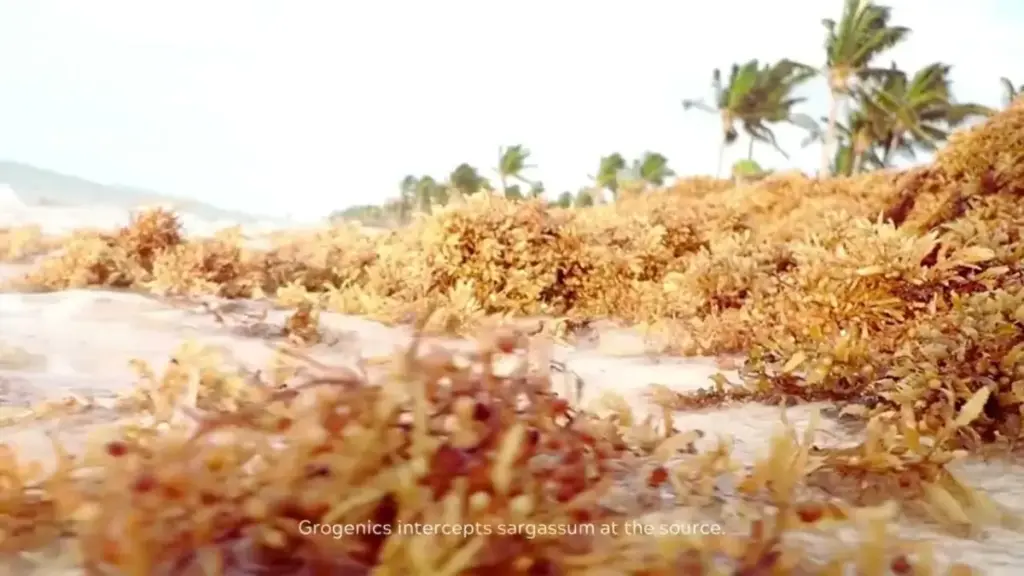
Along the sun-drenched white-sand coastlines of the Riviera Maya and the wider Caribbean basin, a golden-brown tide is rewriting the narrative of tropical paradise. Vast, unprecedented waves of pelagic sargassum—a sprawling brown macroalgae—now routinely deluge Mexican beaches. Once famous for crystal-clear turquoise waters and pristine shores, coastal hotspots are increasingly battling towering, decaying dunes of seaweed that emit a pungent sulfurous odor, suffocate nearshore marine ecosystems, and devastate local tourism economies.
For years, the arrival of sargassum has been framed purely as an ecological disaster and an intractable economic burden. Governments, resort owners, and local municipalities have spent millions of dollars on frantic, manual beach cleanups, often resorting to dumping rotting seaweed in makeshift inland landfills where it compounds environmental degradation. However, a paradigm shift is underway.
At the vanguard of this movement is the Sargassum Recovery for Clean Coasts project, a pioneering initiative integrated into the Sustainable Travel International Climate Impact Portfolio and powered by innovative techniques from organizations like Grogenics. Rather than fighting a losing battle at the water’s edge, this initiative intercepts sargassum before it hits the shore and begins to decay. By capturing the seaweed fresh, the project prevents the massive atmospheric release of methane—a greenhouse gas significantly more potent than carbon dioxide in the short term.
Through an advanced process of local collection and rigorous detoxification via bioremediation, this once-noxious waste is transformed into a high-value agricultural asset: biochar-enriched compost. This closing of the loop not only revives depleted local soils and supports regional farmers by boosting crop yields, but it also permanently sequesters carbon, locking it safely into the ground.
By championing a circular blue economy, the Sargassum Recovery for Clean Coasts project demonstrates that coastal ecosystems, thriving tourism sectors, and vulnerable agrarian communities do not have to exist in conflict. Instead, they can mutually reinforce one another, turning an overwhelming oceanic crisis into a cornerstone of regional climate resilience and sustainable development.
Detailed Chronology: The Evolution of the Sargassum Crisis and the Rise of Recovery
To understand the profound significance of the Sargassum Recovery for Clean Coasts project, it is essential to trace the trajectory of the phenomenon that necessitated it. The crisis is not merely a localized anomaly; it is a symptom of systemic, global environmental shifts.
The Shift in the Atlantic: 2011–2015
Prior to the turn of the decade, pelagic sargassum (Sargassum natans and Sargassum fluitans) played a vital, benign ecological role in the open ocean. Floating in massive, drifting mats primarily within the Sargasso Sea of the North Atlantic, these golden macroalgae served as essential nurseries, feeding grounds, and habitats for a diverse array of marine life, including sea turtles, fish, crabs, and birds.
However, around 2011, oceanographers and marine biologists began noticing a radical departure from historical patterns. A new, massive sargassum belt—dubbed the "Great Atlantic Sargassum Belt"—began to materialize, stretching thousands of miles from the coast of West Africa across the tropical Atlantic and into the Caribbean Sea and the Gulf of Mexico. Triggered by a complex cocktail of rising ocean temperatures, changing oceanic currents, and massive influxes of nutrient-rich agricultural runoff (particularly nitrogen and phosphorus) from the Amazon and Congo river basins, this new belt began generating colossal blooms year after year.
The Breaking Point: 2018–2022
By the late 2010s, the phenomenon transitioned from an irregular nuisance to an annual catastrophic event. Coastal communities in Quintana Roo, Mexico—including Tulum, Playa del Carmen, and Cancun—were hit with exponential increases in seaweed volume.
During peak seasons, beaches that were once world-renowned tourist destinations were buried under meters of dense, rotting biomass. Local hotels and municipalities struggled to keep up. Heavy machinery used on beaches compacted nesting grounds for endangered sea turtles, while the leachate from decaying sargassum piles seeped into coastal aquifers, threatening freshwater supplies and coral reefs alike as hypoxic (low-oxygen) black water washed back out to sea.
The Birth of Intervention and Circular Innovation: 2023–Present
Recognizing that reactive measures—such as hauling truckloads of rotting seaweed to inland pits—were environmentally disastrous and financially unsustainable, forward-thinking environmentalists, scientists, and sustainable tourism advocates began designing proactive mitigation models.
This era marked the conceptualization and deployment of intercept-and-transform frameworks. Organizations realized that sargassum, rich in trace minerals, potassium, and nitrogen, possessed immense biological potential if properly managed. This realization paved the way for the establishment of the Sargassum Recovery for Clean Coasts initiative. By deploying nearshore barriers and collection craft, projects began intercepting the algae at sea or immediately upon landfall.
Simultaneously, protocols for bioremediation were refined. Raw sargassum naturally absorbs heavy metals (such as arsenic, cadmium, and lead) from polluted ocean waters, making untreated seaweed dangerous for agricultural use. Through controlled bioremediation—utilizing specialized microbial agents and composting techniques—these toxins are neutralized, rendering the biomass safe, nutrient-dense, and ready for transformation into biochar-enriched soil amendments.
Supporting Context & Metrics: The Science of the Blue Economy
The success of the Sargassum Recovery for Clean Coasts project relies on a deep understanding of biogeochemical cycles, carbon accounting, and agricultural science. Evaluating the initiative requires examining the specific metrics that validate its environmental and economic claims.
Methane Mitigation and Carbon Sequestration
When sargassum washes ashore and is left unmanaged, it rapidly decomposes under anaerobic conditions. This rotting process generates vast quantities of methane ($CH_4$) and carbon dioxide ($CO_2$). Methane is a potent greenhouse gas with a global warming potential approximately 28 to 36 times greater than carbon dioxide over a 100-year timescale, and significantly higher over a 20-year horizon.
By intercepting the sargassum before decay sets in, the project halts this fugitive methane emission at the source. Furthermore, through the process of pyrolysis—heating the processed biomass in the absence of oxygen to create biochar—the carbon absorbed by the algae during its growth cycle is locked into a stable, solid form. When this biochar-enriched compost is applied to agricultural soils, the carbon is sequestered in the earth for centuries, transforming a short-term carbon cycle liability into a long-term carbon sink.
Soil Restoration and Agricultural Resilience
The agricultural heartland of the Yucatan Peninsula and surrounding regions often struggles with thin, nutrient-poor tropical soils that are vulnerable to erosion and depletion from intensive farming. Traditional synthetic fertilizers provide a temporary boost but degrade soil microbiomes over time.
The biochar-enriched compost produced by the sargassum recovery initiative offers a revolutionary alternative:
- Enhanced Nutrient Retention: Biochar acts like a microscopic sponge, holding vital nutrients and water within the root zone, preventing them from leaching away during heavy tropical downpours.
- Microbial Activation: The bioremediated compost introduces and supports beneficial soil microbes that break down organic matter and make minerals more bioavailable to crops.
- pH Buffering: The processed compost helps stabilize soil acidity, creating optimal growing conditions for local farmers cultivating maize, citrus, and other staple crops.
The Circular Blue Economy Framework
The initiative operationalizes the principles of the "circular blue economy"—an economic model that values ocean health while extracting sustainable value from marine resources without depleting them.
| Linear Model (Old Approach) | Circular Blue Economy Model (Project Approach) |
|---|---|
| Ocean Blooms: Sargassum grows unchecked due to excess nutrient pollution. | Proactive Interception: Seaweed is harvested nearshore before ecological damage occurs. |
| Beach Accumulation: Massive rotting piles ruin tourism and emit methane. | Detoxification: Bioremediation neutralizes heavy metals and path-gens. |
| Landfill Dumping: Toxic leachate pollutes groundwater and soils. | Upcycling: Biomass is transformed into biochar-enriched agricultural compost. |
| Economic Loss: Millions spent on inefficient cleanup with no return. | Economic Gain: Restored soils improve crop yields; carbon credits fund the cycle. |
Official Statements and Stakeholder Perspectives
The multi-dimensional nature of the Sargassum Recovery for Clean Coasts project has garnered praise from environmental scientists, tourism leaders, and community organizers alike. The collaborative framework underpinning the initiative reflects a unified front against a shared ecological challenge.
Reflecting on the mission of the initiative, representatives from Sustainable Travel International emphasize the broader vision behind their Climate Impact Portfolio:
"The sargassum crisis is a stark reminder of how deeply interconnected our planetary systems are. What happens in the open ocean directly impacts our shorelines, our local economies, and our global climate. Through the Sargassum Recovery for Clean Coasts project, we are proving that climate action does not have to be an abstract concept. By intercepting this seaweed, we are stopping harmful methane emissions at the source, revitalizing local agriculture through safe bioremediation, and locking carbon permanently into the ground. This is the definition of a circular blue economy—where protecting our environment directly supports the livelihoods of the communities that call it home."
Agricultural partners and local stakeholders on the ground in Mexico have equally voiced optimism regarding the practical benefits of the biochar-enriched compost:
"For years, farmers in our region have watched our soils degrade under the pressure of changing weather patterns and expensive synthetic inputs. Receiving access to high-quality, locally sourced biochar compost derived from sargassum has been a game-changer. Not only has it eliminated the fear of heavy metal contamination through rigorous detoxification processes, but we are seeing healthier crops, better water retention during dry spells, and a tangible way to participate in regional climate solutions."
Furthermore, organizations specializing in technological execution, such as Grogenics—which provides critical video documentation and operational insights for the project—highlight the scalability of the model. By utilizing modular collection techniques and standardized bioremediation protocols, the framework implemented in Mexico serves as a scalable blueprint that can be adapted by other Caribbean nations currently grappling with their own sargassum inundations.
Future Outlook: Scaling Up and Sustaining Impact
As global temperatures continue to rise and oceanic nutrient loading remains a persistent challenge, scientific models indicate that massive sargassum blooms are not a temporary inconvenience, but the new normal for the tropical Atlantic and Caribbean. Consequently, the long-term viability of coastal tourism, marine biodiversity, and regional agriculture depends entirely on institutionalizing proactive, scalable management strategies.
Expanding Intercept Infrastructure
The immediate future of the Sargassum Recovery for Clean Coasts project involves scaling up interception capabilities. Moving beyond manual beach collection and reactive coastal cleanups, the project aims to deploy more sophisticated nearshore barrier systems and specialized collection vessels. By catching the sargassum further out at sea, municipalities can prevent the massive accumulation of biomass that causes immediate ecological suffocation in shallow reef systems.
Technological Refinement and Carbon Markets
As methodologies for pyrolysis and bioremediation become more efficient, the cost per ton of sequestered carbon drops, making the initiative increasingly attractive to corporate partners seeking high-integrity carbon offsets. Because the Sargassum Recovery project is integrated into structured Climate Impact Portfolios, it benefits from transparent monitoring, reporting, and verification (MRV) protocols. This ensures that every ton of carbon locked into biochar-enriched soil is rigorously accounted for, providing a reliable, market-driven revenue stream that can fund ongoing community operations.
Policy Integration and Regional Replication
Ultimately, solving the sargassum crisis requires policy harmonization across national borders. As the success of the Mexican pilot projects becomes undeniable, regional bodies such as the Caribbean Tourism Organization (CTO) and the Association of Caribbean States (ACS) are looking closely at these circular economy models.
By sharing best practices in bioremediation and agricultural distribution, neighboring countries—from Belize and Honduras to the Lesser Antilles—can adapt these frameworks to their own coastlines. In doing so, the Caribbean region can transform an environmental menace into a powerful engine for climate mitigation, rural empowerment, and sustainable tourism.
Conclusion
The Sargassum Recovery for Clean Coasts project stands as a shining beacon of innovation in an era marked by daunting environmental challenges. By looking past the immediate sensory assault of rotting seaweed and recognizing its underlying biochemical potential, project leaders have forged a path forward that honors both people and the planet. Through meticulous bioremediation, methane mitigation, soil restoration, and carbon sequestration, this initiative does not merely clean up a mess—it builds a resilient, thriving foundation for the future of the blue economy.