

Executive Overview
As the global race to electrify transportation, expand renewable energy infrastructure, and rapidly deploy artificial intelligence hardware accelerates, a silent bottleneck threatens to throttle the green transition: rare earth elements. Permanent magnets—crucial components in electric vehicle (EV) traction motors, wind turbine generators, defense systems, and advanced robotics—rely heavily on critical minerals like neodymium, praseodymium, dysprosium, and terbium. For decades, the global supply chain for these indispensable materials has been overwhelmingly concentrated in a single nation, leaving Western manufacturing acutely vulnerable to geopolitical trade friction, embargoes, and artificial supply shortages.
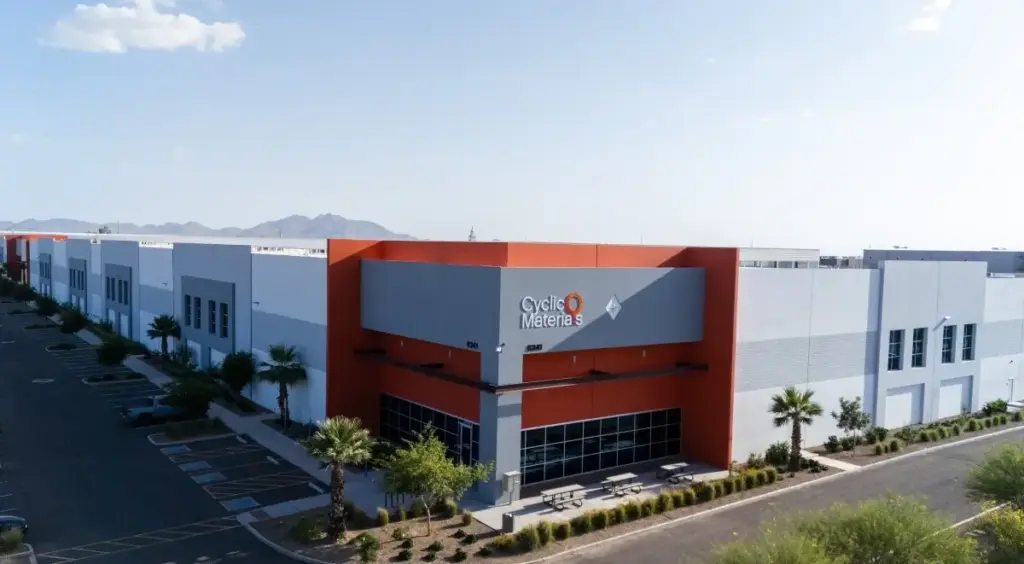
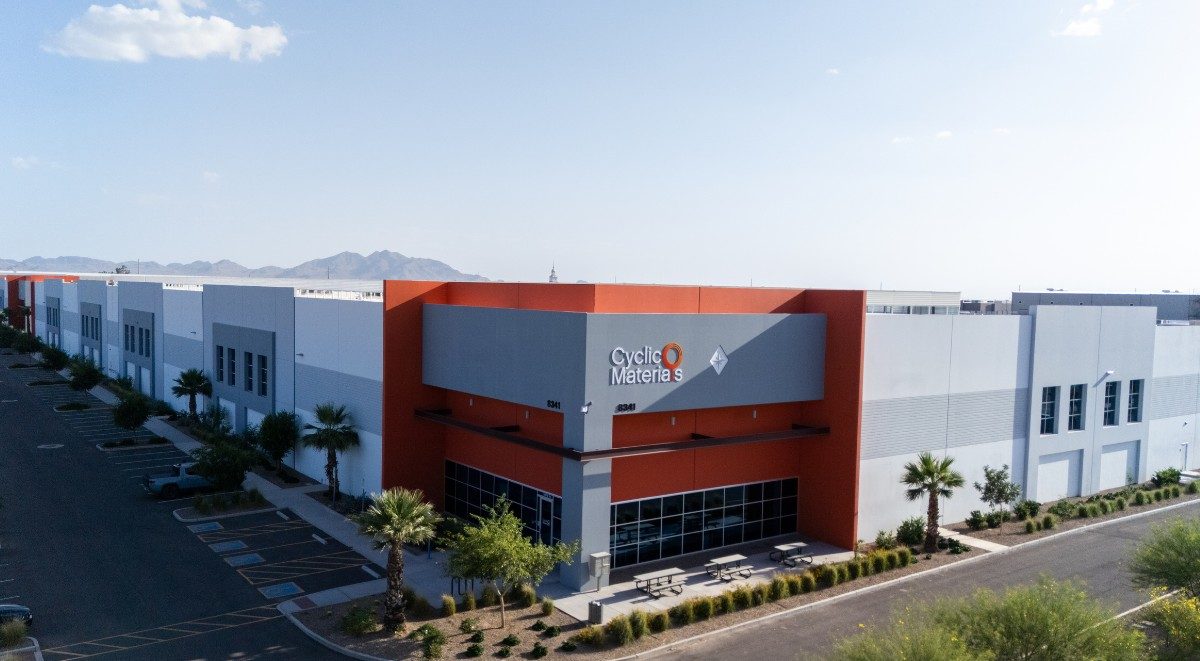
In a landmark development for domestic supply chain resilience, clean-tech innovator Cyclic Materials has officially opened its first commercial-scale rare earth magnet recycling facility in Mesa, Arizona. Representing a critical milestone achieved just 17 months after its initial announcement, the Mesa plant is designed to process an astonishing 25,000 metric tons of magnet-bearing, end-of-life products annually. By deploying its proprietary MagCycle technology, the facility mechanically extracts and recovers valuable permanent magnets from discarded electronics and industrial hardware, transforming them into a high-grade rare earth concentrate known as Mag-Xtract. Alongside rare earths, the facility systematically recovers industrial-grade copper, aluminum, and steel, creating a circular economy loop that promises to feed vital materials directly back into United States manufacturing pipelines.
With global demand for rare earth elements projected to triple by 2035, the opening of the Mesa facility arrives at a precarious yet opportune moment. Over 7,000 metric tons of magnet-bearing feed material have already arrived at the Arizona site, with initial processing actively underway and the first commercial shipments to domestic customers slated for later this month. This investigative report explores the operational mechanics of the Mesa plant, the broader geopolitical context of rare earth supply chains, the strategic partnerships fueling this infrastructure push, and what the future holds as the United States strives to secure its critical mineral sovereignty.
Detailed Chronology: From Concept to Commercialization in Mesa
The realization of Cyclic Materials’ Mesa facility is a testament to the fast-tracked infrastructure development required to meet the demands of modern technology and the energy transition. The timeline of this milestone project underscores how rapidly private enterprise and regulatory frameworks are mobilizing to close critical gaps in the domestic supply chain.
The Genesis and the Blueprint
The journey toward commercial-scale rare earth recycling in Arizona began taking formal shape as Cyclic Materials refined its closed-loop recycling processes. The company recognized that traditional mining operations—characterized by massive capital expenditures, lengthy environmental permitting processes, and ecologically destructive extraction methods—could not scale quickly enough to keep pace with the exponential rise of EVs, wind farms, and AI data centers.
Instead, Cyclic Materials turned its focus to urban mining: extracting critical minerals from the mountains of electronic waste (e-waste), obsolete industrial machinery, and decommissioned consumer goods already circulating within domestic borders. The decision to select Mesa, Arizona, as the home for its flagship commercial facility was strategic. Arizona has rapidly emerged as a burgeoning hub for advanced manufacturing, semiconductor production, and clean-tech supply chains, offering a business-friendly environment paired with a skilled technical workforce.
The 17-Month Buildout
Following the official announcement of the Mesa facility project, Cyclic Materials executed a rapid development and construction phase. Over a span of just 17 months, the company transformed industrial real estate into a high-tech processing facility equipped with advanced mechanical sorting, magnetic separation, and hydrometallurgical preprocessing units.
The buildout was heavily supported by strategic supply agreements. Most notably, in July, Cyclic Materials announced a monumental partnership with ERI, one of the nation’s largest cybersecurity-focused hardware destruction and e-waste recycling companies. This partnership secured a steady, high-volume pipeline of post-consumer and enterprise electronic waste, ensuring that the Mesa facility would have immediate access to feedstock upon opening.
Delivery of Feedstock and Launch of Operations
As construction wrapped up, logistics networks swung into gear. Cyclic Materials reported that more than 7,000 metric tons of magnet-bearing material had already been delivered to the Mesa campus by the time operations officially commenced.
Processing lines are now fully active, utilizing the company’s proprietary MagCycle technology to dismantle complex electronic assemblies, shred components, and isolate high-strength permanent magnets from non-magnetic structural metals. With processing underway, Cyclic Materials is on track to execute its inaugural commercial shipments of Mag-Xtract concentrate to domestic customers before the end of the month, officially marking the transition from a development-stage enterprise to an operational commercial producer.
Supporting Context & Metrics: The Mechanics and Economics of Rare Earths
To fully comprehend the significance of Cyclic Materials’ Mesa plant, one must examine the metallurgical challenges of rare earth elements, the limitations of traditional supply chains, and the quantitative metrics defining the current market landscape.
The Anatomy of Permanent Magnets and the MagCycle Advantage
Rare earth permanent magnets—predominantly Neodymium-Iron-Boron (NdFeB) magnets—are the unsung workhorses of the modern technological revolution. Possessing unmatched magnetic strength relative to their size and weight, NdFeB magnets allow electric vehicle motors to achieve high torque and efficiency, enable wind turbine generators to capture maximum kinetic energy from variable wind speeds, and allow miniature actuators in robotics and AI hardware to operate with pinpoint precision.

However, extracting these elements from raw ore is notoriously difficult and environmentally taxing. Rare earths do not naturally occur in pure deposits; they are heavily bound up with radioactive thorium and uranium, requiring intensive chemical acid baths to separate them.
Cyclic Materials circumvents these environmental hurdles through its proprietary MagCycle and Mag-Xtract technologies. Instead of handling raw rock, the process takes end-of-life products, safely shreds them, and utilizes physical and chemical forces to liberate the intact magnets. The output is Mag-Xtract, a concentrated rare earth feedstock that can be fed directly into refining facilities to produce high-purity oxides and metals. Furthermore, the mechanical sorting process meticulously recovers secondary structural commodities—including copper, aluminum, and steel—ensuring that virtually zero waste leaves the facility.
The Looming Supply Demand Imbalance
The market dynamics governing critical minerals are characterized by an alarming supply-demand deficit. According to industry projections cited by Cyclic Materials, global demand for rare earth elements is projected to triple by 2035. This unprecedented surge is being propelled simultaneously by six major sectors:
- Automotive: The mass adoption of battery-electric vehicles (BEVs) and hybrid electric vehicles (HEVs).
- Energy: The buildout of onshore and offshore wind farms utilizing direct-drive permanent magnet generators.
- Artificial Intelligence: The explosive growth of power-hungry AI data centers requiring advanced cooling, switching, and server hardware.
- Robotics: The proliferation of industrial automation, warehouse logistics bots, and humanoid robotics.
- Consumer Electronics: Laptops, smartphones, audio gear, and domestic appliances.
- Defense: Guidance systems, radar installations, secure communications hardware, and propulsion motors for naval and aerospace applications.
Concurrently, the geographical concentration of the current rare earth supply chain presents a systemic risk. China currently controls the vast majority of global rare earth mining, and an even greater share of the midstream refining and magnet-manufacturing capacity. This near-monopoly leaves Western manufacturers perpetually vulnerable to export quotas, political trade restrictions, and sudden price volatility. Domestic recycling operations like the Mesa plant represent a vital shock absorber against these geopolitical vulnerabilities.
Official Statements and Industry Perspectives
The opening of the Mesa facility has drawn praise from industry leaders, environmental advocates, and economic strategists alike, all of whom view the plant as a critical building block for national industrial policy.
Ahmad Ghahreman, CEO and founder of Cyclic Materials, emphasized the broader national security and economic implications of the facility during the launch announcement:

"This facility delivers new capacity for the US to keep resource-rich products here and build a domestic rare earth supply. Cyclic is quickly closing gaps in the domestic supply chain as we expedite our rare earth and critical mineral infrastructure development in the US."
Industry analysts have similarly lauded the speed of execution. Achieving commercial scale in just 17 months from project conception demonstrates a level of operational agility that is rarely seen in heavy industrial and metallurgical sectors. By proving that advanced recycling infrastructure can be deployed rapidly on U.S. soil, Cyclic Materials has established a blueprint that other critical mineral startups are likely to emulate.
Environmental economists note that urban mining carries a dramatically lower carbon footprint and water usage profile compared to virgin mining. By intercepting valuable metals before they reach landfills or are shipped overseas for low-yield processing, facilities like the Mesa plant ensure that the circular economy delivers both ecological and economic dividends.
Future Outlook: Scaling the Circular Economy and Next-Phase Expansion
While the opening of the Mesa, Arizona facility is a monumental triumph, it represents merely the opening salvo in Cyclic Materials’ long-term strategic roadmap. The company is already looking toward the horizon to scale its operational capacity and deepen its integration within the North American manufacturing ecosystem.
The South Carolina Campus: Closing the Loop
Even as the Mesa plant ramps up production of Mag-Xtract concentrate, Cyclic Materials is laying the groundwork for its next major infrastructure project: a comprehensive recycling campus in South Carolina, scheduled to open in 2028.
While the Mesa facility specializes in the initial collection, mechanical separation, and concentration phases, the upcoming South Carolina campus is designed to take integration a step further. It will combine magnet recovery and advanced rare earth refining at a single, co-located site. By bridging the gap between concentrate production and final rare earth oxide refining, the South Carolina campus will eliminate intermediate shipping steps, reduce operating costs, and deliver battery- and motor-ready rare earth metals directly to manufacturers on the East Coast and throughout the Midwest.

Scaling Up to Meet 2035 Realities
As global demand for critical minerals prepares to triple over the next decade, the 25,000-metric-ton annual capacity of the Mesa plant will need to be replicated many times over. Cyclic Materials’ dual-pronged approach—establishing regional preprocessing hubs like Mesa near major e-waste aggregation centers, paired with massive, fully integrated refining campuses like the upcoming South Carolina site—provides a scalable template for the future.
Furthermore, regulatory tailwinds in the United States, including provisions within the Inflation Reduction Act (IRA) and federal directives supporting domestic critical mineral sourcing, provide a robust financial tailwind for companies operating in this space. Automakers and renewable energy developers are increasingly mandated to source a percentage of their critical minerals from domestic or free-trade-agreement partner nations, making Cyclic Materials’ output an indispensable commodity.
Conclusion
The ribbon-cutting at Cyclic Materials’ Mesa, Arizona facility is more than just the opening of a factory; it is a foundational pillar in the construction of an independent, resilient American critical mineral supply chain. By turning discarded electronics, obsolete machinery, and end-of-life industrial products into a domestic stream of rare earth magnets, copper, aluminum, and steel, Cyclic Materials is proving that the future of green technology does not need to rely on foreign extraction.
As the Mesa plant fires up its processing lines and prepares its first commercial shipments this month, the United States takes a definitive step toward technological self-reliance—ensuring that the green transition is built upon a secure, circular, and sustainable foundation.



