

Executive Overview
For two decades, the Biodiversity Heritage Library (BHL) has served as the global digital backbone for ecological and natural history research. In celebration of its 20th anniversary, institutions worldwide are highlighting crown jewels from their collections. Among these contributions, a profound narrative has emerged from the Library and Archives of the Academy of Natural Sciences of Drexel University in Philadelphia. Through meticulous archival work, digital cataloging, and student-led initiatives, librarians have resurrected the story of Carrie Baily Aaron—a 19th-century entomologist whose brilliant contributions were nearly lost to the historical margins simply due to how her records were indexed.
This article explores the journey of Aaron’s digitized 1889–1901 entomological notebook, examining her scientific rigor, her complex relationship with the male-dominated scientific institutions of her era, and the modern technological frameworks—such as Wikidata and digital repositories—that are righting historical oversights. By bridging 19th-century handwritten manuscripts with 21st-century linked data, this project underscores a transformative truth: historical visibility is rarely a matter of a lost past, but rather of unoptimized access. As archives race to digitize fragile paper trails, they are not only preserving biodiversity data but also restoring the human stories of the women who helped shape the natural sciences.
Detailed Chronology: The Life, Work, and Rediscovery of Carrie Baily Aaron
To understand the magnitude of Carrie Aaron’s archival footprint, one must trace a timeline that spans over a century of scientific inquiry, institutional exclusion, and modern digital rescue.
1889–1901: The Notebook and the Mosquito Eradication Essay
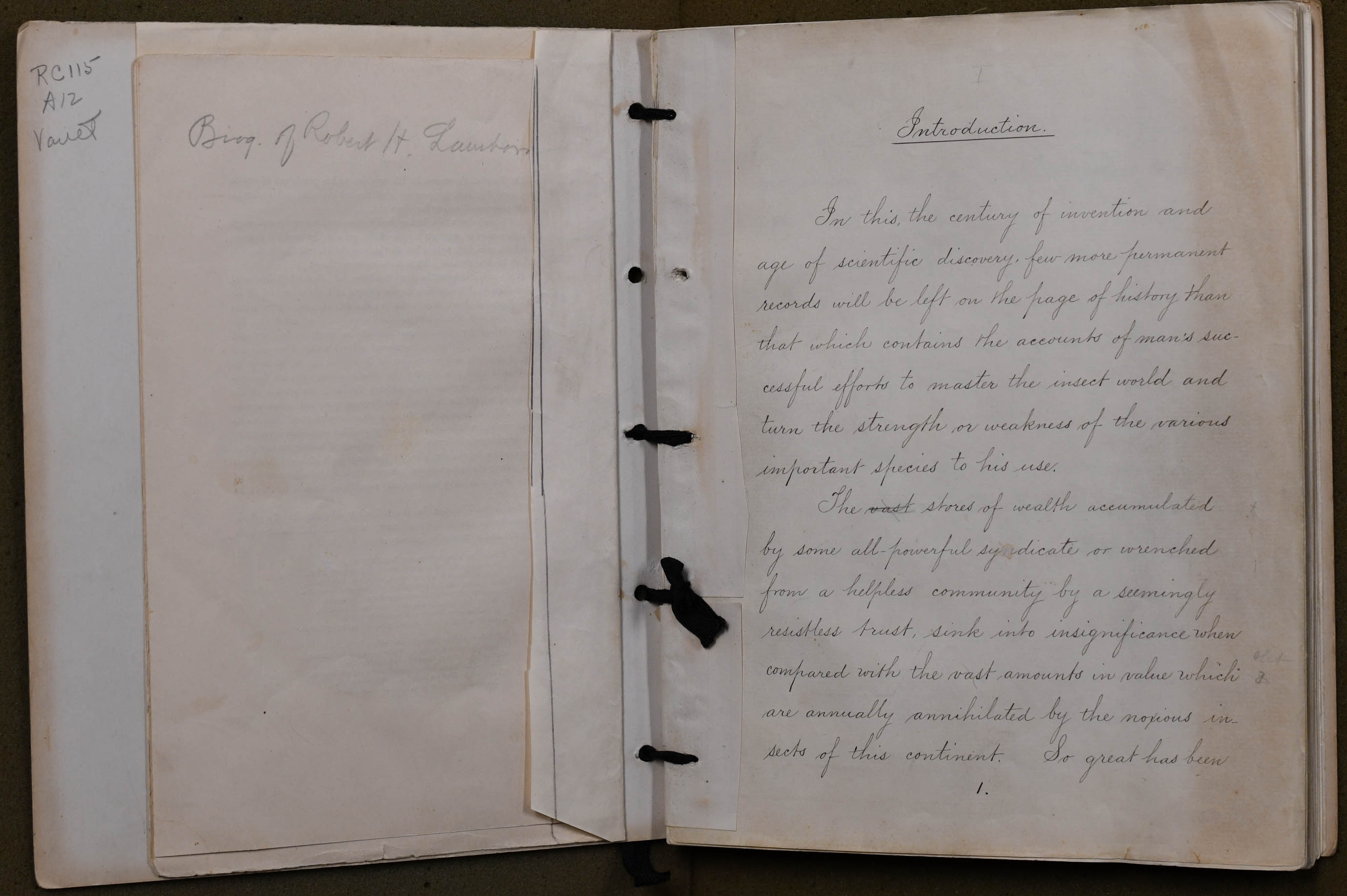
The core of the recent discovery centers on a meticulously handwritten manuscript titled A notebook containing an entomological essay by Carrie Aaron. Spanning dates between 1889 and 1901, the notebook documents Aaron’s deep-dive investigations into dipterology, specifically focusing on mosquitoes and potential biological controls.
The impetus for her research tied into a broader public health and scientific movement of the late 19th century. As Aaron noted in her biographical writings within the collection, Dr. Robert Henry Lamborn—a financier heavily involved in building the Lake Superior Railroad—had suffered immensely from relentless mosquito swarms during his construction projects. Seeking a solution, Lamborn established a prestigious essay contest offering substantial prizes for the three best papers on how to eradicate or mitigate the mosquito pest.
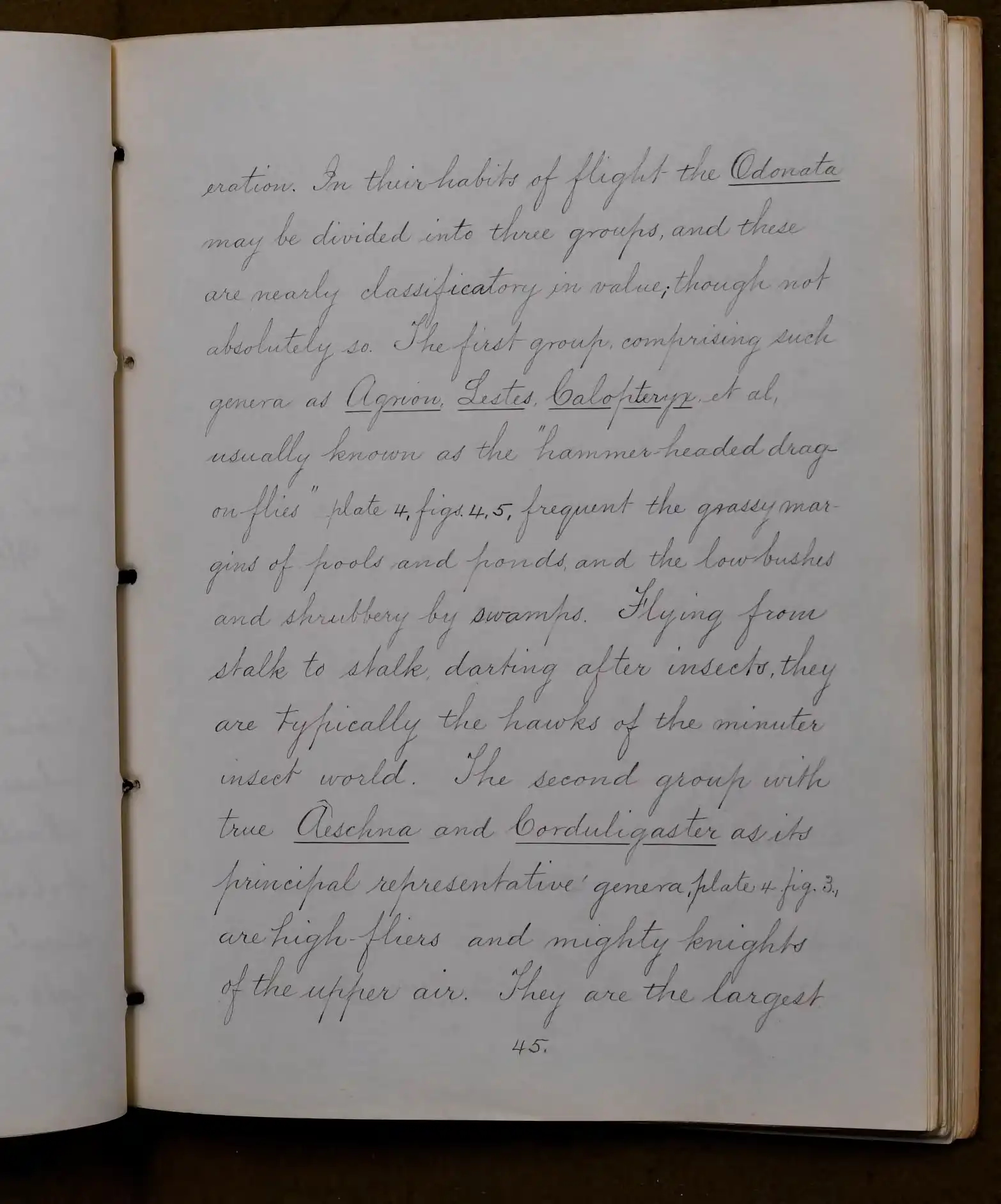
Aaron rose to the challenge. Her essay, later published alongside other submissions in the landmark volume Dragon Flies vs. Mosquitoes: Can the Mosquito Pest be Mitigated? under the title "The Dipterous Enemies of Man," demonstrated acute ecological observation. Long before modern vector control strategies, Aaron analyzed natural predators, famously describing hammer-headed dragonflies as "the hawks of the minuter insect world."
Her research methods were remarkably hands-on. Archival pages reveal that Aaron and her contemporaries even attempted to self-inoculate with fluids from mosquitoes to study their physiological impact. While these experiments failed—a shortcoming Aaron wryly attributed to the "inferiority of the needle as an injector, compared with the delicate hypopharynx"—they showcase an intrepid experimental spirit.
January 11, 1900: Resignation from the American Entomological Society
Following her essay’s success, Henry Skinner, a prominent entomologist and archivist, congratulated Aaron, assuring her that her scientific reputation was secure. Yet, despite her early acclaim, Aaron felt increasingly alienated by the structural barriers facing women in professional societies.
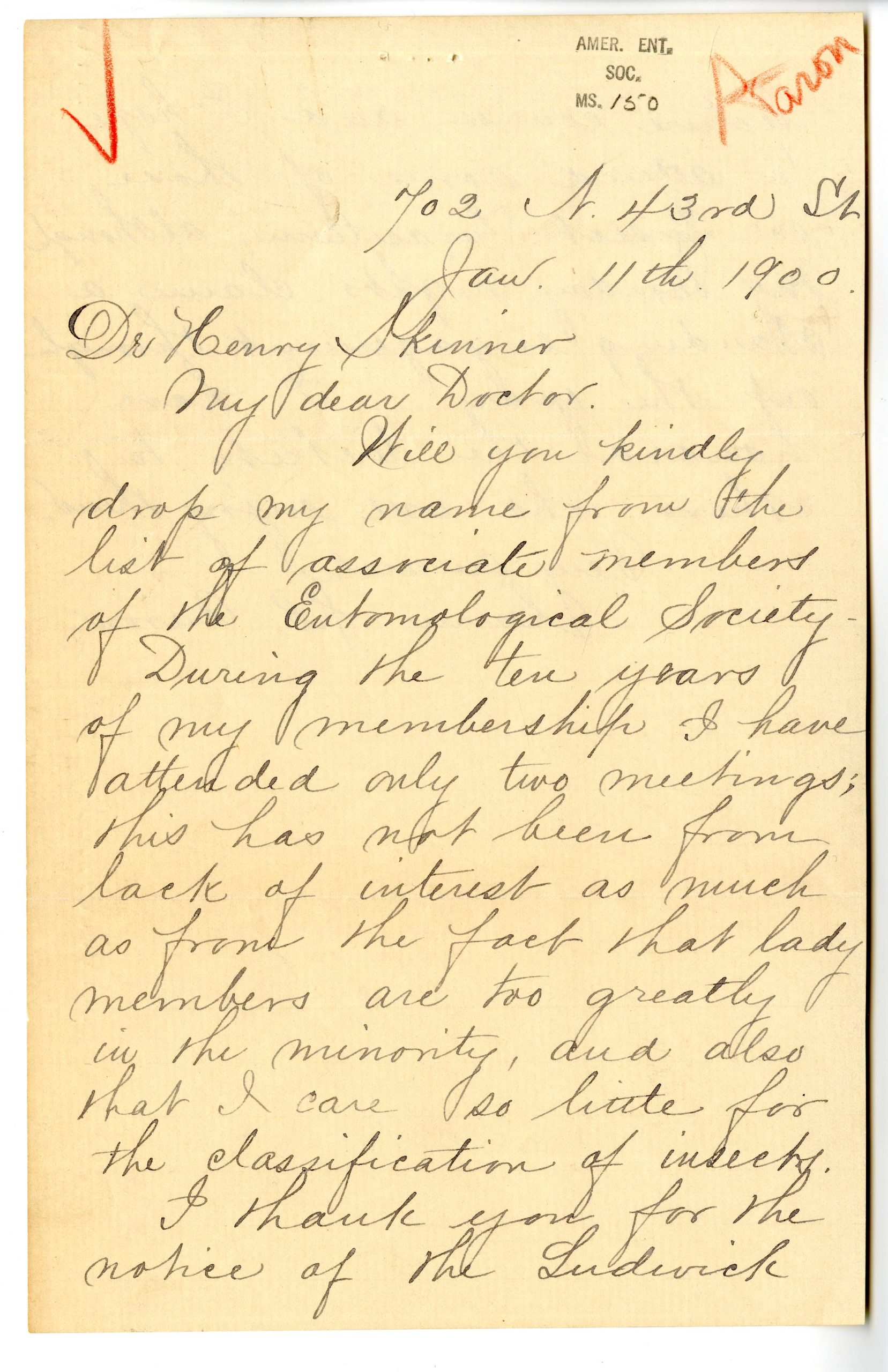
On January 11, 1900, Aaron penned a candid, poignant letter to Henry Skinner requesting the removal of her name from the active roster of associate members of the American Entomological Society (AES). She explained:
"During the ten years of my membership I have attended only two meetings; this has not been from lack of interest as much as from the fact that lady members are too greatly in the minority, and also that I care so little for the classification of insects."
This resignation highlights a critical historical paradox: while women were deeply capable of rigorous ecological observation and field research, the formal professional apparatus—defined by clubby meeting spaces, rigid taxonomic debates, and social exclusivity—actively pushed them to the periphery.
March 8, 1926: Travels, Museums, and Encounters with Female Curators
Decades after stepping back from formal society memberships, Aaron maintained a rich intellectual correspondence with Skinner, spanning over thirty years of sympathetic friendship. Letters written during her travels to California—such as a missive from Santa Monica in March 1926, which she described as "the land of perpetual bloom and uninterrupted sounds of birds and insects"—reveal a mind still voraciously curious about natural history.
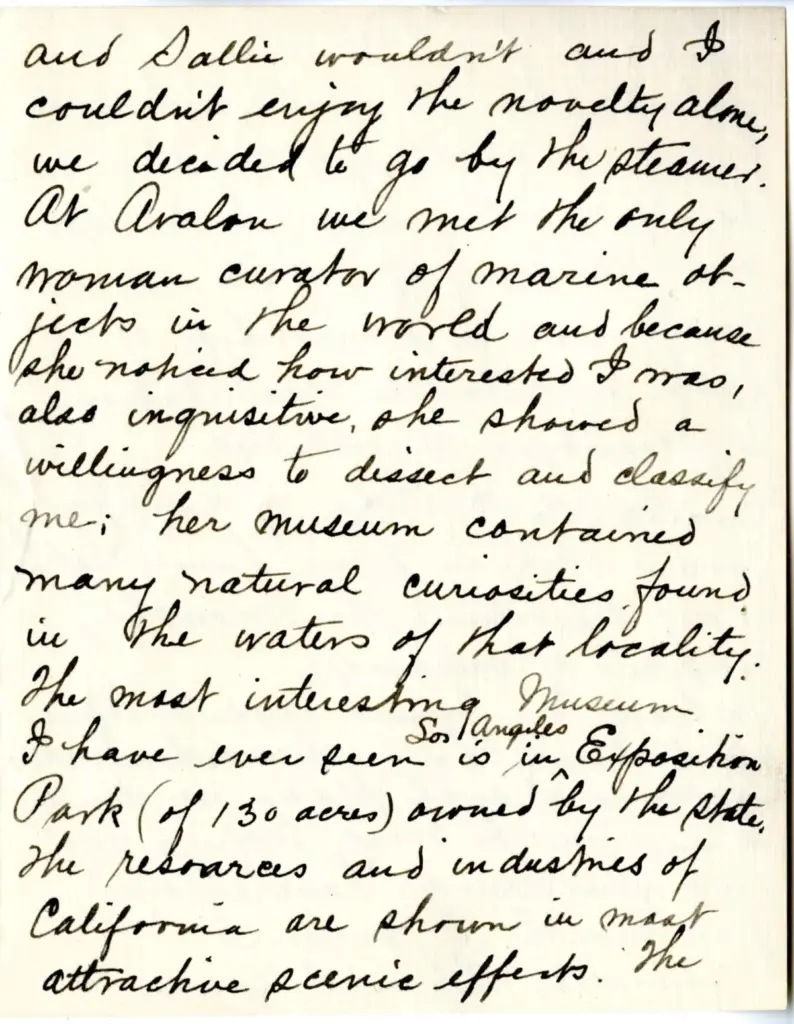
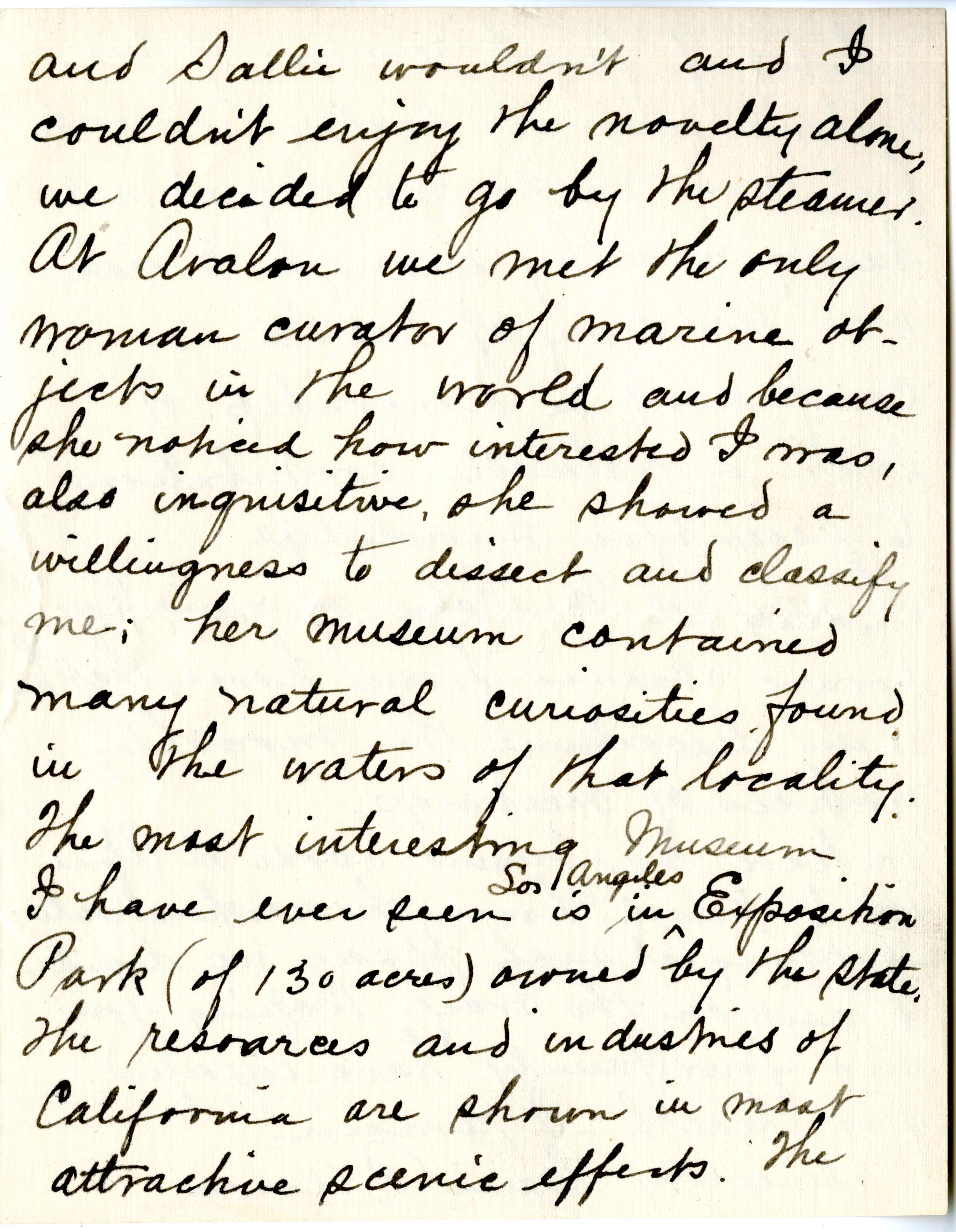
During a visit to Avalon, Aaron recorded a landmark encounter:
"At Avalon we met the only woman curator of marine objects in the world and because she noticed how interested I was, also inquisitive, she shared a willingness to dissect and classify me; her museum contained many natural curiosities found in the waters of that locality."
She also marveled at the fossil exhibits at Exposition Park in Los Angeles, expressing a bittersweet regret that her health prevented her from helping the Academy of Natural Sciences acquire similar paleontological treasures. These letters, preserved in the AES correspondence collection, offer a rare, lived perspective of female scientific tourism and mentorship in the early 20th century.
Modern Era: The Archival Rescue and BHL Integration
For decades, Aaron’s papers rested quietly within the Academy’s archives. However, legacy cataloging systems obscured her identity. When her notebook was first processed, finding aids cryptically listed the author merely as "Mrs. Aaron," stripping away her Christian name, her professional agency, and her historical context.
The turning point arrived during preparations for the Biodiversity Heritage Library’s 20th-century milestone initiatives. Academy Archivist Jessica Lydon identified the anonymization issue, prompting Cataloging and Digital Resources Librarian Briana Giasullo to spearhead a comprehensive metadata overhaul. Collaborating with Drexel University student assistants and digitization intern Will Le—whose work was funded by Dr. William Day and the American Entomological Society—the team digitized 83 field journals and notebooks for the BHL "Field Journal Fixup" project.
Crucially, Giasullo established a dedicated BHL Creator ID for Carrie Baily Aaron, directly linking her catalog profile to her Wikidata identifier (Q125503946). Simultaneously, Will Le digitized the entirety of the AES correspondence collection, publishing the letters on PA Photos and Documents. Today, a global audience can trace Aaron’s journey from an anonymous "Mrs. Aaron" to a recognized, interconnected historical figure.
Supporting Context & Metrics: The Scale of Modern Biodiversity Digitization
To appreciate the scope of this rediscovery, one must examine the operational framework that made it possible. The Academy of Natural Sciences of Drexel University holds vast repositories documenting centuries of ecological exploration. However, physical paper degrades, and handwritten cursive—often referred to by modern archivists as a barrier for younger generations—keeps vital historical data locked away.
- The Scope of Digitization: Under current initiatives, dozens of rare field books, administrative logs, and thousands of pages of historical correspondence are undergoing high-resolution imaging and crowdsourced or AI-assisted transcription.
- Linked Open Data (LOD) Impact: The creation of persistent digital identifiers (like BHL Creator IDs and Wikidata nodes) transforms static library records into dynamic web-scale entities. When a researcher searches for mosquito eradication history or 19th-century female entomologists, the algorithms can now successfully cluster Aaron’s works, letters, and biographical metadata.
- Interdisciplinary Collaboration: The project represents a synergy between archivists, metadata librarians, academic departments, funding bodies (such as the American Entomological Society and individual donors like Dr. William Day), and student interns who perform the painstaking labor of scanning fragile paper artifacts.
Official Statements and Perspectives
The rediscovery of Carrie Aaron has sparked reflections among the professionals steering the Academy’s library collections and the broader BHL community.
Briana Giasullo, Cataloging and Digital Resources Librarian at the Academy and a member of the BHL Cataloging and Metadata Committee, reflected on the emotional and professional impact of the project:
"After working with archival notebooks and reading Carrie Aaron’s letters, I’m thrilled to see how digitization and public access to collections spur research into lesser-known individuals and uncover more potential research subjects! I don’t consider myself a historian, but it’s difficult to resist historical research when presented with easily accessible primary sources and when given the tools to link subjects across different platforms."
Giasullo also emphasized the collaborative team dynamic that brought the project to fruition, praising Academy Archivist Jessica Lydon, entomology collection manager Greg Cowper, digitization intern Will Le, and the American Entomological Society for transforming scattered manuscripts into an accessible digital treasure trove.
From the institutional vantage point of the Biodiversity Heritage Library, Aaron’s story exemplifies the core mission of the 20-year-old initiative:

"For 20 years, BHL has helped uncover the people and stories hidden within biodiversity literature and archives, making them freely available for new generations to discover. Your support helps us continue digitizing, connecting, and sharing collections like Carrie Aaron’s notebook—and ensures that more overlooked voices and histories can be found."
Future Outlook: Unresolved Mysteries and the Road Ahead
While Carrie Aaron’s cataloging record has been successfully corrected, her archival footprint continues to generate new avenues of inquiry. Giasullo noted that Aaron’s 1926 letter describing her meeting with "the only woman curator of marine objects in the world" in Avalon, California, has opened an entirely new historical investigation: Who was this pioneering female marine curator?
Identifying this forgotten curator will require cross-referencing California coastal museum records from the 1920s, marine station logs, and regional historical societies—a task made feasible precisely because collections are increasingly migrating to digital search spaces.
As the Biodiversity Heritage Library enters its third decade, projects like the digitization of the Carrie Baily Aaron Papers and the American Entomological Society correspondence demonstrate that natural history archives are not merely dusty repositories of dead specimens and old taxonomic lists. They are living human tapestries. By correcting historical anonymization, leveraging linked open data, and investing in student-powered digitization pipelines, modern librarians are ensuring that the women who observed, questioned, and wrote about the natural world are finally given their rightful place in the scientific canon.



