

Executive Overview
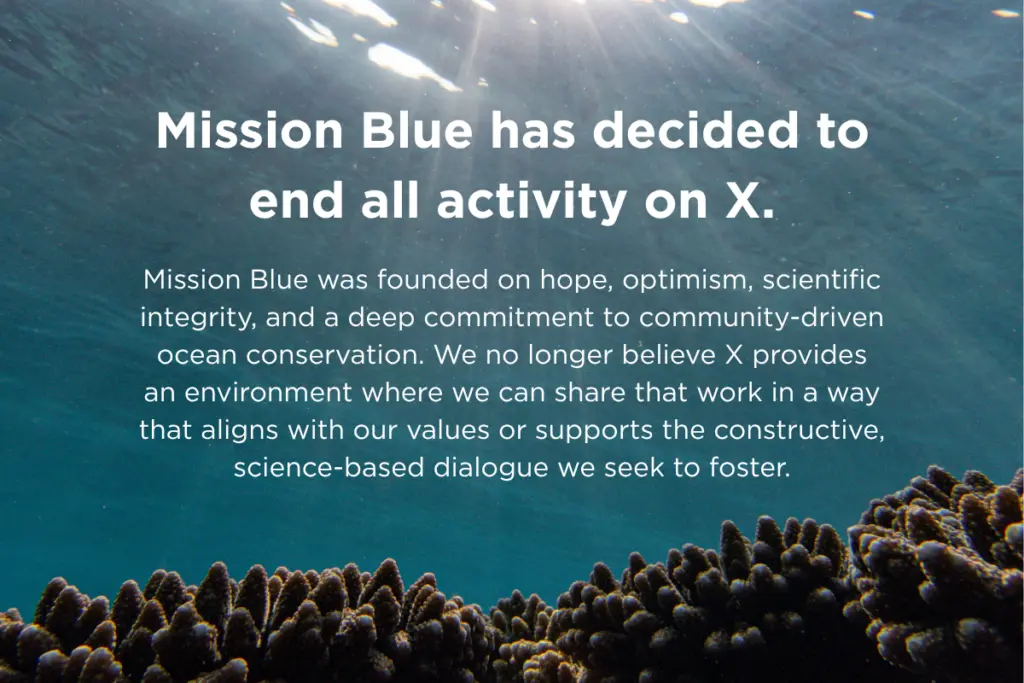
In a significant strategic pivot reflecting broader anxieties within the global scientific community, ocean conservation organization Mission Blue has officially announced the cessation of its active operations on X (formerly Twitter). Founded by legendary oceanographer and National Geographic Explorer-in-Residence Dr. Sylvia Earle, Mission Blue has long championed a message of optimism, hope, and community-driven action to protect our planet’s marine ecosystems. However, after years of utilizing the platform to broadcast vital research, mobilize ocean advocates, and highlight critical marine protected areas known as "Hope Spots," the organization has determined that the current digital ecosystem of X is fundamentally incompatible with its core values.
The decision, made public through an official organizational announcement, underscores a growing exodus of environmental non-governmental organizations (ENGOs), academic institutions, and science communicators from the platform. Citing a measurable deterioration in constructive dialogue, an alarming rise in unchecked misinformation, and an increasingly hostile digital climate that frequently undermines empirical science, Mission Blue has opted to reallocate its digital resources elsewhere.
Rather than engaging with a medium that has increasingly favored polarization over solutions-oriented discourse, Mission Blue is doubling down on platforms that it believes better serve its community-building mission. Moving forward, the organization will direct its social media efforts toward Instagram, Facebook, LinkedIn, and YouTube, while continuing to cultivate direct relationships through its specialized email newsletters and digital campaigns.
While the organization’s historical archive will remain visible on X as a static repository of past marine conservation milestones, no new content, updates, or advocacy campaigns will be published on the handle. This comprehensive report examines the motivations behind Mission Blue’s departure, analyzes the broader sociological and technological shifts occurring within modern social media ecosystems, contextualizes the growing friction between scientific bodies and algorithmically driven platforms, and outlines the organization’s forward-looking digital strategy.
Detailed Chronology: From Optimistic Outreach to Strategic Disengagement
To understand the weight of Mission Blue’s recent departure from X, it is necessary to examine the trajectory of the platform’s relationship with the environmental science community over the past decade and a half.
The Early Promise of Microblogging for Conservation
When Mission Blue first established its presence on the platform then known as Twitter, the digital landscape was characterized by a different set of norms and technical structures. In its early years, the platform functioned largely as a real-time information network, serving as a vital lifeline for field researchers, marine biologists, and conservationists working in remote corners of the globe.
For an organization dedicated to drawing a global map of Hope Spots—special places that are scientifically identified as critical to the health of the ocean—the platform offered unprecedented utility. Field researchers could dispatch rapid updates from research vessels, share geotagged discoveries of fragile coral reefs, and coordinate international advocacy campaigns with lightning speed. It bridged the gap between academic institutions, passionate grassroots activists, and the general public, fostering what many conservationists viewed as a democratized public square for environmental awareness.
The Inflection Point: Shifts in Platform Governance and Culture
Over successive years, however, structural and cultural transformations within the platform began to erode its utility as a trusted space for scientific dialogue. Following significant changes in corporate ownership, leadership, and content moderation policies—alongside the rebranding of the platform to X—users witnessed a profound shift in online dynamics.
Algorithms that once prioritized chronological updates and niche community networking were increasingly tuned to maximize user engagement through high-arousal emotional triggers. For scientific organizations, this shift created an unsustainable operating environment. Empirically rigorous, nuanced discussions regarding marine biodiversity, climate change metrics, and overfishing policies routinely struggled to compete with sensationalized narratives, targeted harassment campaigns, and coordinated disinformation efforts.
By late 2023 and into 2024, Mission Blue’s leadership team—in consultation with its communications strategists and scientific advisors—began conducting internal evaluations of their digital footprint. The core question facing the organization was straightforward yet profound: Did the returns of maintaining an active presence on X justify the reputational and operational costs of operating within an increasingly toxic digital public square?
The Final Decision
The tipping point arrived as the prevalence of content actively undermining established ecological science became too pronounced to ignore. Recognizing that its institutional mandate is rooted in constructive, respectful, and solutions-oriented dialogue, Mission Blue’s leadership concluded that remaining active on X compromised its core ethos.
Rather than participating in a digital environment increasingly defined by hostility and division, the organization chose a path of deliberate withdrawal. On the day of the announcement, Mission Blue formally locked in its transition plan, freezing its output on X while simultaneously launching a migration campaign to redirect its hundreds of thousands of followers toward more hospitable digital venues.
Supporting Context & Metrics: The Science Communication Exodus
Mission Blue’s departure from X is not an isolated incident; rather, it represents a bellwether moment in a broader, systemic migration away from the platform by academic bodies, climate scientists, medical researchers, and environmental NGOs.
The Rise of Scientific Disinformation Online
To contextualize Mission Blue’s concerns, one must examine the empirical data surrounding environmental discourse on social media. Academic studies conducted by digital sociology labs have consistently demonstrated that climate and environmental science topics are among the primary targets for organized disinformation campaigns.
- Amplification of Skepticism: Research indicates that polarizing content regarding ecological crises routinely achieves algorithmic velocity far exceeding that of peer-reviewed scientific summaries. On platforms where engagement metrics (likes, reposts, algorithmic reach) dictate visibility, sensationalized denialism often outperforms nuanced conservation science.
- The Degradation of Discourse: Independent audits of platform health following policy rollbacks on content moderation revealed a surge in abusive interactions directed at public-facing scientists. Environmental advocates reporting on ocean acidification, illegal fishing, and habitat loss frequently encounter coordinated harassment, drowning out constructive public engagement.
The Exodus of Academic and Non-Profit Entities
Mission Blue joins a growing roster of prestigious institutions that have reassessed their digital strategies in light of these platform shifts:
- Academic Institutions: Numerous universities and research centers in North America and Europe have either suspended or entirely shuttered their institutional feeds, redirecting faculty and public relations departments toward decentralized networks or traditional channels.
- Environmental Coalitions: Major global NGOs focused on biodiversity, wildlife protection, and climate action have similarly curtailed their activities on X, noting that the return on investment—measured in meaningful community engagement and policy advocacy impact—has plummeted while brand risk has risen.
The Cost of Remaining: Brand Safety and Institutional Integrity
For Mission Blue, the calculus ultimately boiled down to institutional integrity. As an organization that relies heavily on philanthropic donations, corporate partnerships, and public trust, maintaining a presence in a digital space rife with scientific hostility posed a tangible risk. When corporate sponsors and high-net-worth donors evaluate a non-profit’s brand safety, the association of an authoritative scientific voice with an unmoderated, volatile platform becomes a liability. By stepping away, Mission Blue has signaled that the integrity of its message far outweighs the numerical vanity metrics of maintaining an active profile on a degraded network.
Official Statements and Institutional Philosophy
At the heart of Mission Blue’s announcement is a steadfast commitment to its foundational philosophy: hope. Established by Dr. Sylvia Earle with the explicit aim of shifting the environmental narrative away from paralyzing doom-mongering and toward actionable inspiration, the organization views its communication style as a vital tool for planetary survival.
The Philosophy of Hope-Driven Conservation
In the official transition statement released by the organization, leadership emphasized the spiritual and operational necessity of maintaining a welcoming digital environment:
"Mission Blue was founded with a spirit of hope, optimism, and dedication to community-driven ocean conservation… We are all connected to the same ocean. Through our digital strategy, we seek to build a curious, welcoming online community. We cannot, in good faith, continue to use the X platform."
This sentiment directly reflects Dr. Earle’s lifelong ethos. Often referred to simply as "Her Deepness," Dr. Earle has frequently articulated that while the threats facing the global ocean—ranging from plastic pollution and industrial overfishing to deep-sea mining and coral bleaching—are catastrophic in scale, despair is not a viable strategy. Communication must empower, educate, and mobilize rather than alienate or exhaust.
Prioritizing Constructive Dialogue Over Algorithmic Reach
By pivoting away from X, Mission Blue is explicitly rejecting the premise that an organization must subject itself to toxic algorithmic environments simply to maintain scale. The official statement highlights a refusal to compromise on the quality of engagement:
"Over time, however, the environment on X has changed significantly. We have become increasingly concerned about the prevalence of misinformation, hostility, and divisive content on the platform, including content that undermines science and constructive dialogue around environmental issues. We do not believe this environment is aligned with the kind of informed, respectful, and solutions-oriented community Mission Blue seeks to foster."
This declaration serves as a challenge to other scientific and environmental entities still grappling with their own social media strategies. It frames platform selection not merely as a technical marketing decision, but as a deeply ethical one tied directly to an organization’s mission statement.
Future Outlook: Rebuilding and Expanding the Community of Hope
With its departure from X finalized, Mission Blue is actively investing in a diversified, resilient digital strategy designed to deepen engagement across alternative channels where community safety, content control, and meaningful dialogue can be preserved.
Diversifying the Digital Ecosystem
Mission Blue’s communications team has laid out a clear roadmap for its ongoing digital outreach, inviting supporters to migrate alongside the organization to platforms that better align with its institutional values:
- Instagram: Serving as the visual anchor of Mission Blue’s digital presence, Instagram remains a premier platform for showcasing the breathtaking beauty of Hope Spots. Through high-resolution photography, short-form video reels documenting marine expeditions, and direct storytelling from field scientists, Instagram allows the organization to maintain an emotionally resonant connection with ocean lovers worldwide.
- Facebook: Acting as a robust hub for community organizing, Facebook continues to serve as an effective space for fostering discussion groups, sharing long-form educational articles, and mobilizing grassroots support for marine protected area designations across different global jurisdictions.
- LinkedIn: Recognizing the critical intersection between ocean conservation, corporate governance, sustainable finance, and international policy, Mission Blue utilizes LinkedIn to engage with industry leaders, policymakers, academic researchers, and institutional partners who hold the levers of systemic environmental change.
- YouTube: As long-form video content becomes increasingly essential for deep-dive documentary storytelling, expedition logs, and educational webinars, Mission Blue’s YouTube channel will serve as the definitive multimedia archive for Hope Spot documentaries and expert interviews led by Dr. Sylvia Earle and her global network of Champions.
- Direct-to-Consumer Newsletters: Perhaps most importantly in an era of unpredictable social media algorithms, Mission Blue is heavily prioritizing its proprietary email newsletter. By building a direct line of communication that cannot be disrupted by corporate policy changes or algorithmic filtering, the organization ensures that its community receives reliable, unmediated updates on Hope Spots, ocean stories, and urgent calls to action.
The Road Ahead for Ocean Advocacy
As Mission Blue turns this new digital page, the broader implications for the environmental movement are clear. The era of blindly accepting every emerging social media platform as a mandatory public utility is coming to an end. Organizations are increasingly recognizing that the quality of engagement matters infinitely more than sheer quantitative reach—especially when fighting battles as critical as the preservation of our blue planet.
For the global community of ocean advocates, scientists, and supporters, Mission Blue’s message remains unchanged: the ocean connects us all, and hope is the most powerful catalyst for change. By stepping away from the noise of X and leaning into spaces designed for genuine connection, education, and action, Mission Blue is positioning itself to champion the health of the seas with greater clarity, purpose, and integrity than ever before.
How to Stay Connected with Mission Blue
To continue following Mission Blue’s journey, support marine conservation initiatives, and receive regular updates on global Hope Spots, supporters are encouraged to:
- Follow and engage on Instagram, Facebook, LinkedIn, and YouTube.
- Subscribe directly to the official Mission Blue newsletter via their website to ensure uninterrupted access to ocean stories, scientific updates, and meaningful ways to take action for our blue planet.



