

By Dr. Sally Bryant AM
Special to the Biodiversity Heritage Library
Executive Overview
For nearly two centuries, the written record of scientific and cultural discovery in Australia’s most southern island has been carefully preserved, bound, and studied. Established in 1843 by British colonists, the Royal Society of Van Diemen’s Land—later renamed the Royal Society of Tasmania following the island’s colonial moniker shift—stands proudly as Australia’s oldest Royal Society. Six years after its inception, in 1849, the institution inaugurated its flagship publication: the Papers and Proceedings of the Royal Society of Van Diemen’s Land (now known as the Papers and Proceedings of the Royal Society of Tasmania).
As part of the milestone celebration of BHL at 20: Treasures from the Biodiversity Heritage Library, this foundational volume is receiving renewed global attention. Spanning more than 180 years of continuous publication, the journal has served as a dynamic mirror to Tasmania’s changing landscapes, shifting ecologies, and social structures. Today, thanks to the open-access digitization efforts of the Biodiversity Heritage Library (BHL), this monumental archive of science, exploration, and institutional history is entirely accessible to researchers, historians, and the public worldwide.
Yet, this extensive historical record is not merely a dusty compendium of 19th-century curiosities. It is a complex narrative. While the pages celebrate groundbreaking discoveries in natural history, paleontology, and anthropology, they also reflect the deep-seated biases of colonial administration. Modern evaluations of these texts require balancing historical fascination with a critical lens regarding omitted Indigenous perspectives and ecological transformations. This article explores the rich contents of the journal’s debut volume, the profound socio-ecological shifts it documents, and its evolution into a modern tool for historical accountability, truth-telling, and conservation science.
Detailed Chronology: A Window into Colonial Van Diemen’s Land (1849–1851)
When Volume One of the Papers and Proceedings was published in three distinct parts between 1849 and 1851, the colony of Van Diemen’s Land was rapidly transforming from a remote British penal outpost into a bustling, enterprising frontier. Weighing heavily in terms of both scientific content and cultural weight, these early volumes offered an unprecedented glimpse into the settlers’ desire to map, categorize, and monetize their new environment.

The Scientific Vanguard and the Mapping of a New Frontier
The inaugural volume opens with an exhaustive, nearly fifty-page analysis of the colony’s diverse human demographics and volatile weather systems, presented through intricate charts, meteorological tables, and demographic data. Alongside these administrative records, readers found practical articles detailing early industrial endeavors: new building techniques, coal exploration initiatives, agricultural breakthroughs, and manufacturing developments. These entries paint a vivid picture of colonial enterprise attempting to harness the raw potential of an unfamiliar terrain.
In the realm of natural sciences, the journal quickly attracted international acclaim by drawing contributions from a veritable scientific "Who’s Who" of the era. Luminaries such as:
- John Edward Gray: The renowned English zoologist who cataloged numerous species.
- John Gould: The celebrated ornithologist whose intricate illustrations and descriptions brought Australian fauna to the global stage.
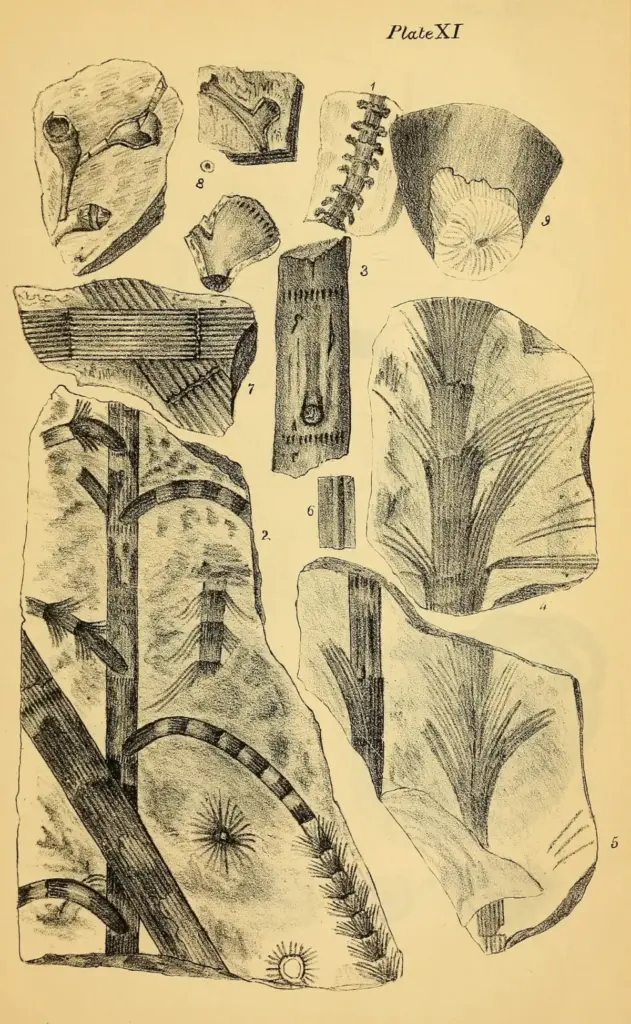
- Frederick McCoy: The prominent paleontologist and geologist whose work on fossil zoology and botany unraveled the deep prehistoric mysteries of the Southern Hemisphere.
Together, these scientists utilized the journal to investigate everything from ancient fossils to living oddities like the duck-billed platypus, cementing the colony’s status as a global hotspot for biological inquiry.
Incidental Reports and Extraordinary Encounters
Beyond formal scientific papers, the journal’s pages captured seemingly incidental observations shared during Society meetings. These casual meeting reports often provide the most striking and telling insights into the rapidly changing environment.
- The Colossal Blue Gum (1849): A member named Mr. Hull detailed a gargantuan blue gum tree discovered roughly six miles from Hobart Town. Standing an estimated 330 feet (100.5 meters) high, with a circumference measuring 28 yards (25.6 meters), the tree highlighted the immense, ancient scale of Tasmania’s original forests before industrial logging took hold.
- The Four-Legged Fish: Mr. Champ donated a small spotted fish preserved in spirits. Bizarrely, the specimen appeared to possess four legs complete with finger-like appendages, sparking intense morphological debates among visiting naturalists.
- The Thylacine’s Journey: Mr. Milligan reported on the safe arrival in London of two live thylacines (Tasmanian tigers) shipped the previous year—a haunting reminder of an apex predator that would later be driven to extinction by human persecution.
- Native Bread and Oyster Bay Pine: Members examined specimens of the subterranean fungus known as "native bread" (Mylitta sp.), traditionally consumed by Tasmanian Aboriginal people. Notes from the meeting remarked that when grated and prepared into a pudding with milk, the fungus was "very palatable." Additionally, a sample of white resin from the Oyster Bay pine was described. Sourced from a tree with an extremely restricted distribution, the pine was praised for its resilience in local building and carpentry. Today, the South Esk Pine Nature Reserve protects one of the last remaining stands of this critically endangered species.
Unforeseen Ecological Consequences
Some of the most historically compelling—and cautionary—papers in the early volumes address the introduction of exotic species. Renowned naturalist Ronald Campbell Gunn penned an insightful paper detailing how the "flying squirrel" (the sugar glider) became naturalized in Tasmania. Originally imported as a pocket-sized pet during the 1830s, the animals quickly escaped captivity and established a thriving wild population. At the time, few could have foreseen that this introduced pet would evolve into a serious ecological threat, preying upon the nesting females, eggs, and chicks of Tasmania’s critically endangered swift parrot.

Equally consequential was a paper authored by Captain Charles Stanley, which explored the practicalities of introducing brown and rainbow trout into Tasmania’s native river systems. When live fish ova were eventually transported to the Salmon Ponds at New Norfolk and released, the island’s freshwater ecosystems were permanently altered by the introduction of an aggressive, non-native apex predator.
Supporting Context & Metrics: Institutional Growth and Cultural Legacy
The Papers and Proceedings recorded far more than mere ecological discoveries; they meticulously tracked the institutional evolution of the Royal Society itself.
Administrative Transparency and Civic Ambition
While modern readers often skip administrative accounts, the early journals recorded office-bearer lists, membership rosters, financial ledgers, and donation catalogs. These logistical details reveal the powerful network of individuals who shaped 19th-century Tasmania. The Society’s leadership consisted of the colony’s most influential political, judicial, and mercantile figures. Regular meetings routinely attracted generous public donations of rare books, fine artworks, geological samples, natural history specimens, and anthropological artifacts.
These donated items laid the foundational building blocks for world-class cultural institutions that thrive today, including:
- The Royal Tasmanian Botanical Gardens
- The Tasmanian Museum and Art Gallery (TMAG)
- The Royal Society of Tasmania’s Art and Library Collections
Within four decades of British colonization, Van Diemen’s Land had evolved from an isolated penal colony into an interconnected, intellectually vibrant community pursuing scientific mastery, economic prosperity, and civic enrichment. The journal stands as the primary written chronicle of this rapid societal transformation.

The Colonial Lens and Omitted Voices
Historical integrity requires confronting the shortcomings of these archives. Journals produced by 19th-century colonial administrators and naturalists inherently reflect European privilege, Eurocentric worldviews, and systematic blind spots.
The early volumes frequently gloss over or completely ignore Indigenous voices, traditional land management systems, and the profound human injustices associated with British expansion. Consequently, modern researchers reading these texts must navigate a complex landscape: while the scientific observations are invaluable, the absences within the text—and the perspectives that challenge contemporary ethical values—reveal much about the power dynamics of the colonial era.
Official Statements and Editorial Perspectives
Reflecting on the enduring legacy of the journal, Dr. Sally Bryant AM, Honorary Editor of the Papers and Proceedings and a leading Tasmanian wildlife conservationist, notes the profound journey of the publication:
"For nearly two centuries, these pages have captured the heartbeat of Tasmania’s natural and cultural evolution. From the early, ambitious inventories of colonial settlers to our modern commitment to historical truth-telling, the journal remains an irreplaceable archive. It challenges us, teaches us, and above all, connects us to the extraordinary landscape we are privileged to inhabit."
The transition of the journal from a tool of colonial classification into an instrument of modern ecological and cultural reconciliation highlights its dynamic nature. Modern governance of the Royal Society of Tasmania actively seeks to address historical imbalances, ensuring that contemporary volumes serve as platforms for restorative justice and inclusive dialogue.

Future Outlook: Modern Relevance in the Age of AI and Open Access
Today, the mission of the Papers and Proceedings of the Royal Society of Tasmania has expanded beyond traditional natural sciences to embrace broader social, historical, and cultural themes. In recent years, the journal has played a pivotal role in institutional truth-telling and accountability. Notably, these efforts include the publication of the Royal Society of Tasmania’s formal Apology to Tasmanian Aboriginal People in 2021 and peer-reviewed papers stemming from the Society’s annual Tasmanian Aboriginal Lecture series.
Digital Preservation via the Biodiversity Heritage Library (BHL)
Thanks to the Biodiversity Heritage Library, the entirety of the Papers and Proceedings—spanning over 175 years of continuous publication—is available as a freely accessible, open-access digital resource.
In an era dominated by artificial intelligence, machine learning, and rapid digital communication, this archive remains intensely relevant. Researchers across the globe can now apply advanced computational tools, natural language processing, and big-data analytics to historical volumes. These technologies unlock hidden ecological baselines, historical climate data, and taxonomic distribution records that manual reading alone might miss.
Preserving Our Shared Natural Heritage
As the Biodiversity Heritage Library celebrates its 20th anniversary through the BHL at 20 campaign, projects like the digitization of the Royal Society of Tasmania’s archives underscore the vital importance of open-access digital repositories. These platforms ensure that irreplaceable historical records are protected against physical degradation, fire, and institutional loss, securing them for generations of future scholars, conservationists, and curious minds.
More than just ink on aged paper or pixels on a high-resolution screen, the Papers and Proceedings of the Royal Society of Tasmania represents a living window into the environments, controversies, and cultures that continue to shape the unique island of Tasmania.

To explore the complete digitized collection of the Papers and Proceedings of the Royal Society of Tasmania, visit the Biodiversity Heritage Library. To support the ongoing preservation efforts of BHL during its 20th-anniversary celebration, consider contributing to the BHL Donation Fund.



