Across the rolling hills, sweeping moorlands, and historic parishes of Devon, a quiet revolution is taking root. From the therapeutic green spaces of Bow to the rugged expanse of Dartmoor, communities are mobilizing to confront the twin challenges of environmental degradation and declining public well-being. This grassroots wave of ecological stewardship has been thrust into the spotlight following the announcement of the finalists for the prestigious BBC Radio Devon Make a Difference Awards.
Four standout projects—The Growing Well Garden, the Sampford Peverell Tree Wardens, Shallowford Farm, and Sustainable Hatherleigh—have been officially nominated in the environmental category. These diverse initiatives are championing a holistic approach to sustainability, weaving together biodiversity enhancement, climate resilience, educational outreach, and nature-based healthcare.
Rather than viewing conservation as separate from human society, these projects demonstrate that healing the planet and healing people are deeply interdependent. Whether it is an NHS general practitioner prescribing soil and sunshine instead of pharmaceuticals, volunteers planting hundreds of trees to establish vital wildlife corridors, or urban youth discovering the origins of their food on a historic farm, these changemakers are proving that local action can generate profound, systemic impact. The winners of this year’s awards will be officially announced at a celebratory ceremony held at the historic Buckfast Abbey on September 24.
Detailed Chronology: From Seeds of Thought to Regional Recognition
The journey of these four environmental champions reflects years of dedicated, unglamorous groundwork, community organizing, and unwavering commitment. While their methods vary wildly—spanning medical practices, rural education, municipal tree planting, and urban rewilding—their timelines reflect a synchronized awakening across the county of Devon.
The Genesis of Green Social Prescribing
The roots of the Growing Well Garden were planted when Dr. Susan Taheri, an NHS General Practitioner at Bow Medical Practice, recognized a critical gap in traditional healthcare. Confronted by patients suffering from chronic lifestyle illnesses, isolation, and mental health strain, Dr. Taheri envisioned a therapeutic outlet that bypassed the sterile walls of the standard consulting room. By integrating horticultural therapy into primary care, the Growing Well Garden transformed empty land into an active green social prescribing hub. Over the past several years, the initiative has systematically bridged the gap between clinical medicine and environmental immersion, offering patients a living laboratory for recovery.
Cultivating the Next Generation on Dartmoor
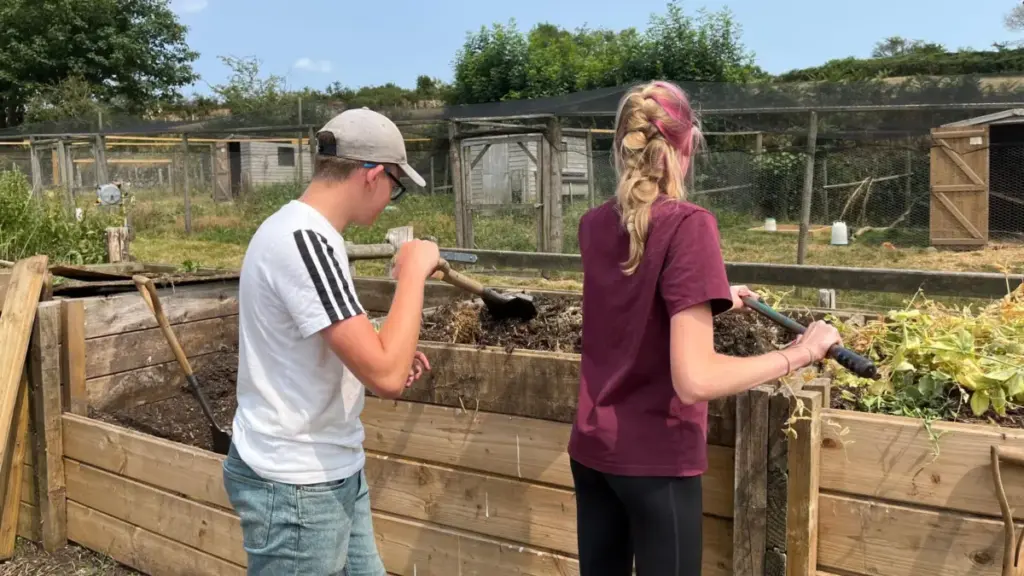
For Shallowford Farm, located in the dramatic heart of Dartmoor, the timeline is defined by a generational passing of the torch. While the historic farm has long operated as an educational touchstone, its modern incarnation focuses intensely on bridging the urban-rural divide. Joined by seasoned volunteers like retired horticulturalist Charles Staniland—whose passion for the outdoors traces back to early childhood—the farm has spent years welcoming children and young adults out of concrete environments and onto the land. Through hands-on farming, livestock care, and crop cultivation, the farm has systematically dismantled the disconnect between modern consumers and primary food production.
Roots and Shoots in Mid-Devon
In mid-Devon, the Sampford Peverell Tree Wardens have spent years quietly transforming the parish’s public spaces. Operating as an independent, volunteer-led collective, the wardens formalised their mission to protect, plant, and maintain local greenery in close coordination with local authorities and private landowners. Their timeline is marked by steady, methodical labour: community-driven planting days fuelled by home-baked goods, strategic mapping of hedgerows, and the monumental milestone of planting approximately 750 native trees to construct a sprawling wildlife corridor across the parish.
Hatherleigh’s Wild Renaissance
Sustainable Hatherleigh rounds out the quartet, representing a masterclass in comprehensive, urban-fringe ecological management. Over the years, the group has evolved from a small collective of concerned citizens into a multi-faceted engine of sustainability. Their chronological milestones include the establishment of community composting schemes, the launch of popular repair cafes, targeted bug hunts for local families, and the conversion of a municipal graveyard into a thriving haven for wildflowers and native pollinators. Their crowning achievement arrived when their central town site was officially designated as a county wildlife site, cementing years of meticulous habitat restoration.
Supporting Context & Metrics: The Science and Scale of Local Action
To truly appreciate the significance of these four nominations, one must examine the broader socio-ecological framework in which they operate. The UK countryside faces mounting pressures from agricultural intensification, habitat fragmentation, and climate volatility. Concurrently, public health systems are grappling with unprecedented rates of burnout, anxiety, and nature-deficit disorder. The nominated projects in Devon provide quantifiable, practical solutions to these macro-level crises.
The Mechanics of Green Social Prescribing
The Growing Well Garden operates at the intersection of environmental psychology and preventative medicine. Clinical research consistently demonstrates that exposure to biodiverse natural environments reduces cortisol levels, lowers blood pressure, and mitigates symptoms of depression. By shifting consultations outdoors, Dr. Taheri and her team harness these physiological benefits. Patients engage in physical labour—turning compost, sowing seeds, and weeding beds—which simultaneously builds cardiovascular fitness and restores psychological equilibrium. The metric of success here is not merely crop yield, but restored human agency and reduced reliance on pharmacological interventions.
Ecological Connectivity: The 750-Tree Corridor
The efforts of the Sampford Peverell Tree Wardens address a critical ecological imperative: habitat fragmentation. In modern landscapes, patches of woodland and hedgerows are frequently isolated by intensive agriculture and infrastructure, trapping wildlife populations and accelerating biodiversity loss. By planting approximately 750 trees and strengthening parish hedgerows, the Sampford Peverell group engineered a functional wildlife corridor. This linear habitat allows species such as birds, small mammals, and vital insect pollinators to move safely across the landscape, enhancing genetic diversity and ecosystem resilience against a shifting climate.
Education and the Food System
Shallowford Farm’s educational framework tackles a psychological phenomenon known as "plant blindness" and the pervasive disconnect modern youth experience regarding food systems. In an era where food is predominantly experienced as pre-packaged goods on supermarket shelves, bringing young people to Dartmoor re-establishes a fundamental ecological literacy. By physically interacting with livestock, soil, and seasonal crop cycles, participants gain a visceral understanding of ecological footprints, sustainable agriculture, and the energy required to feed communities.
Urban Biodiversity and Circular Economies
Sustainable Hatherleigh exemplifies the power of micro-scale conservation within populated areas. Graveyards and municipal green spaces, traditionally managed for manicured neatness rather than ecological value, are re-imagined as sanctuaries for biodiversity. By introducing no-mow zones, encouraging wildflowers, and hosting bug hunts, Hatherleigh has measurably increased local insect populations, which in turn support native bird and bat species. Furthermore, their circular economy initiatives—such as community composting and repair cafes—directly reduce local municipal waste streams and curb carbon footprints.
Official Statements & Voices from the Ground
The human element remains at the absolute core of all four initiatives. The leaders and volunteers behind these projects articulate a shared philosophy: environmental stewardship is fundamentally about community cohesion and emotional connection.
Dr. Susan Taheri, reflecting on her dual role as an NHS GP and the founder of the Growing Well Garden, emphasizes the profound healing power of nature over sterile clinical environments:
"The most important thing we grow in our garden is people and connections. Meeting patients in a garden offers entirely different therapeutic benefits compared to seeing them in a consulting room. It’s my ‘happy place’—there’s a lot more getting your hands dirty and not worrying too much about germs."
For Charles Staniland, the retired horticulturalist volunteering at Shallowford Farm, the mission is about imparting a profound respect for the natural world to the upcoming generation:
"I wanted to show a more physical approach to food—that it doesn’t just show up on a plate, and that it’s something young people can actively contribute to. It takes people out of a concrete environment and serves as a very good first step into a greener world. We hope to encourage a new generation to understand and value the world around them."
Pete Drew of the Sampford Peverell Tree Wardens highlights the social catalysts that make environmental work sustainable and joyful:
"Looking after the environment is very much a community effort, often powered by cake! For us, it’s about taking pride in where you live and making local spaces better for everyone. Planting and protecting these trees on public land ensures that future generations inherit a greener, healthier parish."
Jo Pullin of Sustainable Hatherleigh echoes these sentiments, stressing the importance of grassroots resilience in an uncertain global climate:
"Our goal has always been to build a resilient future for our area. From our work transforming the local graveyard into a wildflower haven to running our community compost schemes and repair cafes, every project is designed to bring people together while actively regenerating our local environment."
Future Outlook: A Blueprint for Community-Led Conservation
As Devon awaits the momentous announcement on September 24 at Buckfast Abbey, the broader implications of these four nominations extend far beyond the awarding of a trophy. They serve as a scalable blueprint for rural and semi-urban communities across the United Kingdom and beyond.
The model demonstrated by Dr. Taheri’s Growing Well Garden signals a potential paradigm shift in national healthcare policy. As the NHS increasingly explores green social prescribing to alleviate burdened primary care services, community gardens attached to medical practices could become standard infrastructure. By embedding wellness into ecological restoration, society can simultaneously address the chronic illness epidemic and the biodiversity crisis.
Similarly, the successes of the Sampford Peverell Tree Wardens and Sustainable Hatherleigh illustrate the untapped potential of citizen science and municipal volunteerism. Local authorities, constrained by tight budgetary limits, are finding willing, highly effective partners in grassroots environmental groups. These volunteers are not merely executing labour; they are acting as localized custodians, monitoring ecosystem health, educating the public, and spearheading adaptation strategies against climate change at the micro-level.
Ultimately, whether located on the rugged windswept slopes of Dartmoor at Shallowford Farm, within the therapeutic soils of Bow, the hedgerows of Sampford Peverell, or the urban wildlife sites of Hatherleigh, these finalists remind us of a fundamental truth: environmental sustainability is not an abstract global policy objective. It is forged locally, cultivated collectively, and rooted permanently in the hands, hearts, and communities of everyday people.