

Executive Overview
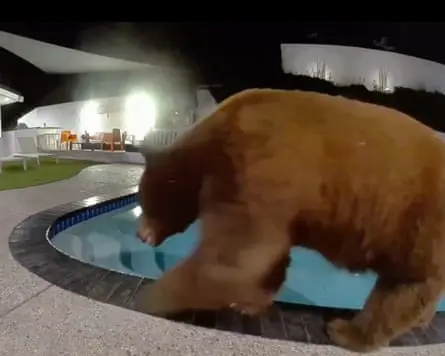
As the scorching California summer transitions into the crisp air of autumn, an annual ritual unfolds in the suburban foothills framing the greater Los Angeles metropolitan area. Black bears—historically creatures of dense timber, remote ravines, and high-altitude wilderness—are increasingly making themselves at home in residential backyards. Drawn down from the rugged Angeles National Forest, these adaptable omnivores are trading the laborious foraging of acorns, ants, and pine nuts for the high-calorie bounty of human civilization: overflowing trash cans, fallen backyard fruit, pristine swimming pools, and the occasional open garage containing a case of beer.
This intersection of wilderness and urban sprawl has turned Southern California into a front line for human-wildlife interaction. With an estimated state black bear population fluctuating between 50,000 and 70,000, and several hundred residing in the Angeles National Forest alone, encounters are no longer statistical anomalies. They are a daily reality for neighborhoods like Monrovia, often dubbed California’s "bear capital."
While viral videos of bear cubs splashing in residential swimming pools and tumbling clumsily from trees have fostered a wave of digital endearment and local tourism, this growing proximity carries profound risks. The complex dynamics of climate change, historic wildfires, urban expansion, and hyperphagia—the pre-hibernation eating frenzy—have pushed these animals deeper into suburban neighborhoods. The stakes are high: while many residents have adapted to treating bears as neighbors rather than intruders, tragic friction points, such as the controversial euthanization of a local mother bear named "Blondie," highlight the devastating cost of a shared habitat.
Detailed Chronology: The Evolution of Urban Foraging
The modern era of Los Angeles bear encounters did not happen overnight; it is the culmination of decades of suburban encroachment, shifting ecological pressures, and a steadily expanding wildlife population.
1. The 1990s: The Inflection Point
According to wildlife researchers at the University of California, Los Angeles (UCLA), the frequency of human-bear interactions began a steady upward climb in the 1990s. As housing developments aggressively pushed further into the foothills of the San Gabriel Mountains, human populations began to directly overlap with historic bear migration and foraging corridors. What was once seasonal wilderness became perimeter fencing, manicured lawns, and paved cul-de-sacs.
2. The Modern Era of Digital Documentation
Over the past decade, the proliferation of Ring doorbells, security cameras, and smartphones has fundamentally transformed how human-bear encounters are recorded and shared. Platforms like Instagram and TikTok are flooded with footage from accounts like PoolBearLife, showcasing the lighter side of suburban bear life. However, researchers note that this constant stream of media creates a double-edged sword: while it builds critical public empathy for wildlife conservation, it also risks "Disney-fying" wild animals, leading some residents to lower their guard around powerful and unpredictable predators.
3. The 2025 Wildfire Season and Its Aftermath
The ecological strain on Southern California’s wildlife reached a tipping point with the devastating 2025 Eaton and Palisades fires. These massive blazes ravaged vast swaths of natural habitat, severely depleting native food sources such as berries, roots, and mast crops. Displaced and starved, local bear populations had little choice but to expand their foraging ranges downward, pressing deep into suburban neighborhoods in search of sustenance. This crisis set the stage for record-setting encounter rates projected throughout 2026.

4. Spring 2026: The "Blondie" Tragedy
The fragile truce between humans and bears was violently tested in early 2026. State wildlife officials made the controversial decision to euthanize a local Monrovia mother bear, affectionately known as "Blondie," after she allegedly swiped at residents twice, resulting in minor injuries. The decision sparked immediate outrage across the city. Residents argued for non-lethal management alternatives, and local leaders expressed shock, as Blondie had two dependent cubs at the time. Though the orphaned cubs were placed into captive rearing facilities with hopes of eventual release, the community’s grief manifested in a poignant memorial walk through Monrovia, underscoring the deep emotional bonds many Angelenos share with their wild neighbors.
Supporting Context & Metrics: The Science of Hyperphagia and Habitat
To understand why a 300-pound black bear would bypass a forest to raid a suburban patio, one must examine the biology of the species and the realities of modern ecological pressures.
The Physics of Hyperphagia
As September draws to a close, black bears enter a physiological state known as hyperphagia. Driven by biological cues signaling the approach of winter, bears must consume massive quantities of calories to pack on crucial fat reserves for hibernation.
According to Wilson Sherman, a PhD student studying human-wildlife interaction at UCLA, human-derived foods represent an irresistible evolutionary shortcut.
"Black bears are incredibly adaptable, versatile omnivores," Sherman notes. "They can eat everything we can eat. It takes a lot of work to get the calories from, say, a half-eaten pizza in the trash in equivalent calories from acorns and ants. It makes sense to get calories from human food."
This caloric abundance alters more than just foraging habits; it directly impacts demographics. Studies indicate that bears living near urban interfaces often reproduce more frequently and at higher rates due to the reliable, high-density calorie sources provided by human refuse, fruit trees, and pet food.
The Urban Buffet: What Attracts Bears?
Neighborhoods on the edge of the wilderness unintentionally function as all-you-can-eat buffets. Alex Heeran, a research scientist at the California Department of Fish and Wildlife who studies human dimensions in wildlife encounters, highlights the primary attractants:
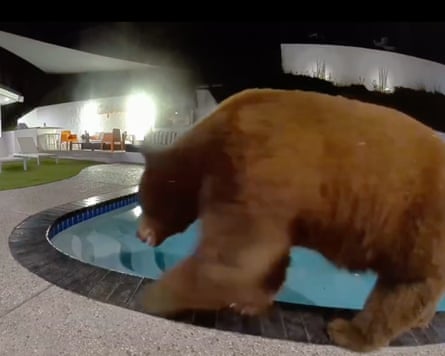
- Swimming Pools: Used by bears to cool off during scorching late-summer heatwaves and for playful recreation.
- Fruit Trees: Backyard citrus, apple, and avocado trees laden with ripening fruit.
- Trash Cans: Unsecured refuse containers containing leftover human meals, which emit potent aromatic lures.
- Pets and Koi Ponds: Outdoor pet food bowls and backyard fish ponds that offer easy protein.
Seasonal Metrics and Peaks
Wildlife data consistently shows that human-bear conflicts peak annually in late summer and early September. This spike coincides with two major forces: bears frantically foraging to complete their pre-hibernation weight gain, and humans utilizing local foothills, parks, and campsites for final summer outings and Labor Day excursions. Consequently, state wildlife agencies register high volumes of nuisance calls regarding property damage, broken fences, and raided sheds.
Official Statements and Perspectives
Managing wildlife in the nation’s second-largest urban center requires a delicate balance between public safety, animal welfare, and conservation science.
State Wildlife Authorities
The California Department of Fish and Wildlife (CDFW) emphasizes that while bears are acting on purely instinctual behaviors, human actions largely dictate the frequency of dangerous conflicts.
Alex Heeran stresses the importance of proactive prevention:
"The bear’s just looking for food, doing natural behavior, but it’s creating a situation that’s not ideal. A lot of the conflict can be prevented."
When conflicts escalate—such as a bear displaying habituation, loss of fear toward humans, or defensive aggression—state officials are occasionally forced to make the grim choice to euthanize or relocate the animal. However, biologists reiterate that lethal removal is always a last resort, deployed only after non-lethal hazing and deterrence efforts fail.
Municipal Leadership
Local city officials find themselves navigating a passionate electorate deeply protective of local fauna. Following the "Blondie" incident in Monrovia, Mayor Becky Shevlin voiced the community’s profound disconnect with state-level wildlife management decisions.
In an interview with the Los Angeles Times, Mayor Shevlin stated:
"The city was not a part of that conversation or decision. We were absolutely devastated, especially when you think about her having the two little cubs."
Monrovia, peppered with public monuments honoring black bears, prides itself on being a sanctuary of coexistence, making state-ordered euthanizations exceptionally painful for the local civic identity.
Residents on the Front Line
For homeowners like Brian Gordon, who moved to Monrovia four years ago to a home bordering the Angeles National Forest, adaptation has replaced fear. Initially facing what he describes as an "unnatural fear" fueled by sensationalized media, Gordon quickly realized that the bears passing through his property were simply looking for a quiet route through their expanded territory.
While Gordon and his partner document family bear dynamics on their PoolBearLife Instagram account—capturing everything from bubble-blowing cubs to climbing mishaps—they are equally vocal advocates for responsible coexistence. They secure their trash, remove food attractants, and respect the animals’ space.
"People will say ‘you guys are the bear experts,’" Gordon remarks. "No, we’re city boys. We bought a house that happened to have bears… Bears are super likable, and this population of bears wouldn’t be there if people didn’t like bears so much."
Future Outlook: Living Along the Wildland-Urban Interface
As September gives way to October, interactions between Angelenos and black bears will experience a seasonal lull as the animals begin retreating into dens for winter torpor. Yet, wildlife experts caution that this peace is temporary.

When spring arrives, the bears will emerge hungry once more, rejoining the mountain lions, deer, and coyotes that permanently inhabit Los Angeles’s rugged outskirts. Urban sprawl shows no signs of reversing, meaning the wildland-urban interface will remain a permanent friction point.
The long-term success of this uneasy neighborhood depends entirely on cultural shifts within suburban communities. Experts agree that minimizing negative encounters requires a paradigm shift among residents:
- Securing Waste: Utilizing certified bear-resistant trash cans and keeping garage doors securely closed.
- Eliminating Attractants: Harvesting fruit trees promptly, bringing pet food indoors, and avoiding the feeding of local wildlife.
- Cultivating Respect: Moving past the urge to treat wild animals like domestic pets or tourist attractions, thereby preserving the natural wariness bears need to survive safely near human populations.
Wilson Sherman summarizes the core challenge facing new arrivals to the LA foothills:
"When people move to these foothill neighborhoods, a lot of people are moving in because they think it’s a suburb of LA. But they’re not necessarily thinking they’re going to have bears in their back yard. At first it can be really scary, but the people I’ve spoken to generally become accustomed to them."
Ultimately, Los Angeles’s black bears are a testament to the resilience of nature adapting to the relentless march of human civilization. Whether Southern California can sustain this harmonious, high-stakes voisinage will depend on the willingness of millions of urban residents to share their space with the true monarchs of the San Gabriel foothills.



