

By Investigative Desk | A Collaborative Report by Grist and Chicago Public Media
Executive Overview
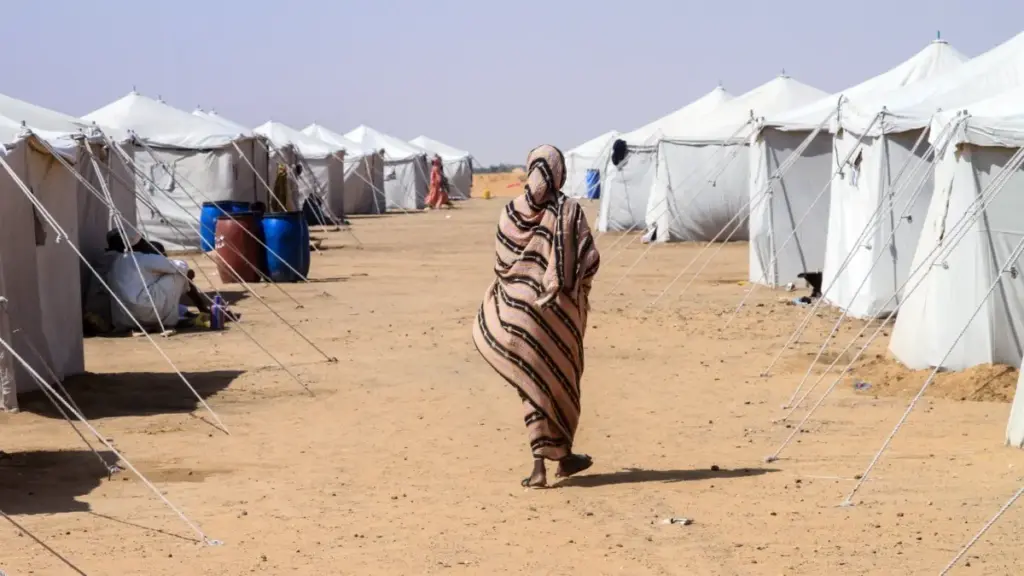
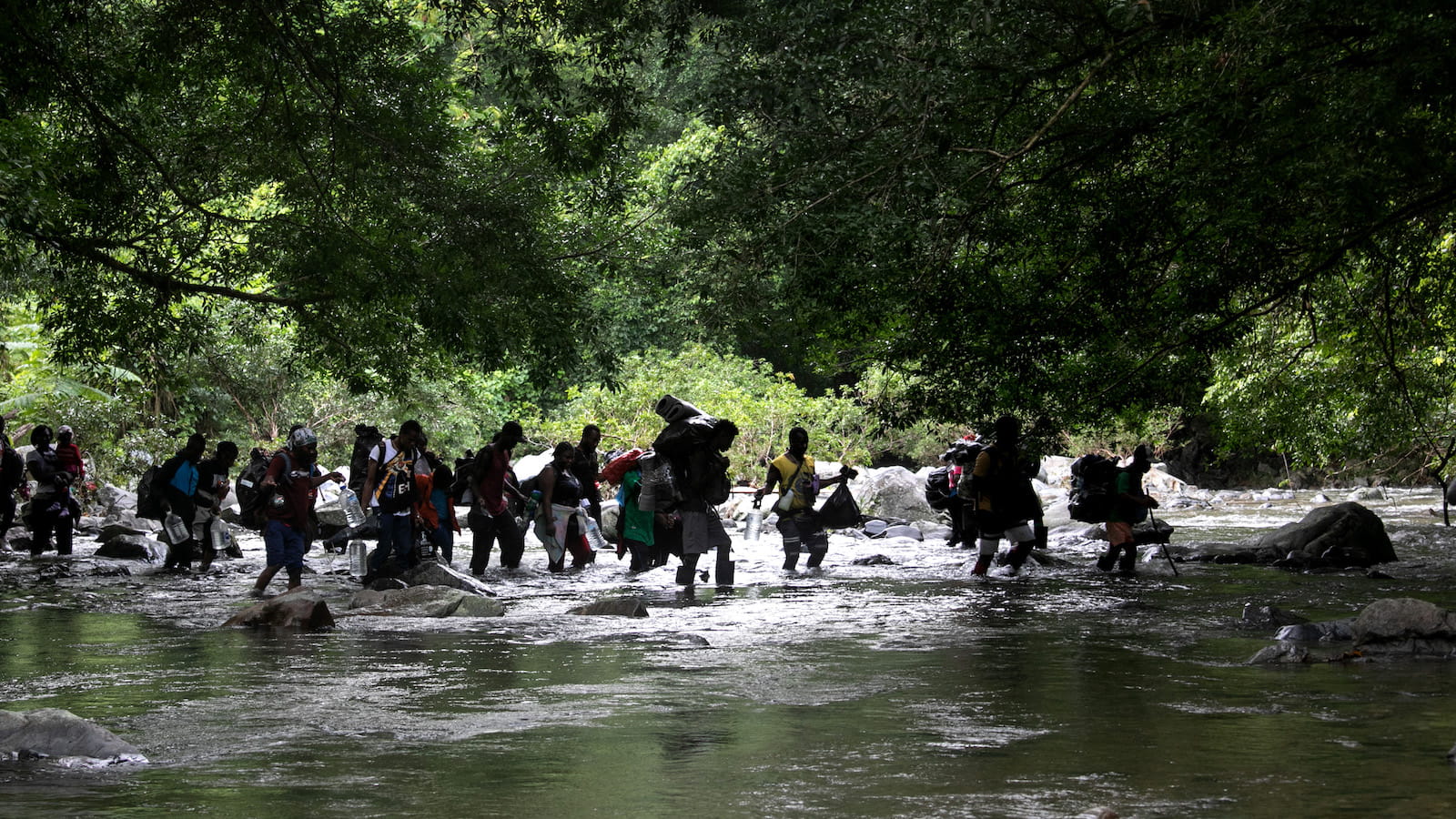
Across the globe, the escalating climate crisis is rewriting the human geography of the planet. Every year, sudden-onset and creeping climate disasters—ranging from catastrophic floods and devastating wildfires to prolonged, agricultural-destroying droughts—force millions of people from their homes. These displaced individuals find themselves trapped in a legal vacuum, lacking formal international protections or domestic frameworks. Commonly referred to as "climate migrants," this growing demographic mostly relocates within their own borders, though an increasing number seek refuge across international lines.
As global temperatures continue to shatter historical records, the scale of this displacement is projected to reach unprecedented heights. Conservative estimates from the World Bank indicate that at least 44 million people will be internally displaced across the globe by 2050 due to environmental pressures. Some models project this figure to climb as high as 216 million. This planetary churn is the demographic equivalent of completely rehoming the entire population of Argentina. Yet, despite the sheer gravity of these projections, very few regional or national governments are actively planning for this reality.
Last fall, Illinois attempted to change the narrative. When Governor JB Pritzker signed the landmark Climate Displacement Act, Illinois became the only state in the United States attempting to systematically anticipate how climate-driven migration would transform life for both its existing residents and future arrivals. The law established a dedicated task force charged with investigating how domestic and international climate migration patterns would test the state’s infrastructure, economic resources, and communities.
The first-of-its-kind legislation required this newly formed team to publish two comprehensive reports outlining the state’s capacity to address climate migration through at least 2050. If successful, Illinois was poised to serve as a vital blueprint for how state governments could absorb vulnerable populations.
However, just one year after introducing this visionary effort, state officials have largely abandoned it. Lawmakers have quietly pushed back reporting deadlines, and the state has failed to convene the task force, casting a long shadow over the future of the nation’s most ambitious climate adaptation law.
Detailed Chronology: From Visionary Legislation to Bureaucratic Stall
The origins of the Climate Displacement Act trace back to a period of mounting climate anxiety and immediate regional emergencies. In February 2025, just a month after 14 destructive wildfires tore through Southern California—scorching tens of thousands of homes and buildings in the state’s second- and third-most destructive fires in history—Illinois state Senator Graciela Guzman introduced the landmark bill.

As the daughter of Salvadoran refugees raised in Los Angeles, Guzman understood the visceral nature of climate displacement. "My family, like many families there, were having some really real conversations: If these wildfires were to encroach upon the valley where they lived, where would they go?" Guzman recalled.
The answer, increasingly, pointed toward the American Midwest.
Under the original timeline of the legislation, Governor Pritzker, key state lawmakers, and the heads of several Illinois state agencies were legally mandated to appoint members to a 17-seat oversight board no later than 90 days after the law took effect. Yet, for over a year, only a single appointment was made to the board.
Journalists from WBEZ and Grist reached out to the primary state officials responsible for making these appointments, including Governor Pritzker, four members of the Illinois General Assembly, and the directors of seven distinct state agencies. Aside from the governor’s office, only Illinois Senate President Don Harmon responded, ultimately appointing Senator Guzman to the task force after being contacted for comment.
The law established strict benchmarks, requiring an initial report by December of its first year to synthesize the latest data and scientific findings regarding the scale of anticipated climate migration. A second report, due at the end of 2027, was designed to assess how state agencies and existing social programs would need to evolve to support disaster-induced displacement.
Despite these clear statutory guidelines, the state missed its initial implementation windows. Lawmakers began quietly pushing back reporting deadlines, and the task force has yet to hold a single official meeting.
When questioned about the delays, Guzman expressed frustration with the bureaucratic inertia plaguing the law she championed. "We haven’t received a clear answer," Guzman said regarding the stalled rollout. "This has been two years in the making… I’m honored to serve on the Climate Displacement Task Force and ready to get to work."
Supporting Context & Metrics: The "Climate Haven" Myth and Midwestern Realities
To understand why Illinois targeted itself as a destination for climate migration, one must examine the unique geographic and ecological advantages of the American Midwest.
Illinois is an agricultural powerhouse situated adjacent to 20 percent of the world’s unfrozen surface freshwater. It remains relatively safe from coastal hurricanes and expansive wildfires, and its inland positioning protects it from the immediate threat of sea-level rise. A recent climate-risk modeling analysis by AlphaGeo even ranked Chicago as the most climate-resilient major city on the planet, citing these natural buffers alongside its robust urban infrastructure.
Because of these attributes, Chicago, Illinois, and the broader Great Lakes region have frequently been marketed as "climate havens"—destinations insulated from the worst extremes of global heating. However, climate scientists and urban policy experts have aggressively pushed back against this terminology, arguing that no true haven exists in an interconnected global ecosystem.
The reality of climate change caught up to the Midwest with alarming speed over the past year. Chicago residents experienced severe, widespread flooding that pushed the region’s massive deep-tunnel and reservoir system dangerously close to maximum capacity. At the same time, the region grappled with a record-breaking tornado season, punishing extreme heatwaves, and thick wildfire smoke drifting down from Canada that degraded local air quality indices for nearly a full week.
"It’s all that anybody I’m around is talking about—just the incredible weather events that we have had in our state," Guzman noted. "It’s really laying bare why this kind of planning is important."
Experts emphasize that even if the Midwest is not entirely immune to climate disruptions, the region will inevitably see an influx of domestic climate migrants fleeing uninhabitable coastal zones, wildfire corridors, and drought-stricken agricultural regions in the American West and South. Without a proactive roadmap, this influx risks overwhelming local housing markets, job programs, and public infrastructure.
Official Statements and Institutional Responses
As scrutiny mounts over the delayed implementation of the Climate Displacement Act, state leadership has maintained that its underlying commitment to climate resilience remains intact, even as tangible progress stalls.
Andres Correa, a spokesperson for Governor Pritzker, defended the administration’s position in a written statement to reporters:
"Governor Pritzker remains committed to fighting climate change and preparing Illinois for its impacts, including climate-related migration. This work is important, and the administration will continue working with lawmakers, state agencies, and stakeholders to establish a timeline and move the task force forward."
Despite this assurance, the governor’s office declined to provide a concrete estimate or deadline for when the task force appointments would be finalized and a working timeline established.
Critics note that the legislation suffers from a critical enforcement flaw: while the law clearly outlines what the mandated reports must address, it includes no legal penalties or punitive consequences for state officials who fail to meet their statutory deadlines. Without accountability mechanisms, administrative priorities have predictably sidelined the long-term planning initiative in favor of immediate, short-term governance crises.
Future Outlook: A Nationwide Imperative Facing Regional Hesitation
Illinois may be the only U.S. state to date that has passed an explicit, standalone legislative mandate to prepare for population shifts driven by climate change, but it is not alone in confronting the reality of climate-induced relocation.
Across the country, other states are beginning to piece together fragmented adaptation strategies:
- Maine has formally integrated climate migration considerations into its broader statewide resilience planning frameworks.
- California, Hawaii, and New Jersey have introduced progressive legislative bills aimed at protecting coastal communities vulnerable to sea-level rise and funding voluntary buyouts for homeowners in high-risk zones.
- Alaska lawmakers recently passed emergency legislation to fund the relocation of vulnerable coastal Native communities, such as Kipnuk and Kwigillingok, in the devastating aftermath of Typhoon Halong.
- Cincinnati, Ohio published a comprehensive Climate Migration Readiness Plan designed to strategically accommodate up to 500,000 new residents by 2050 by heavily investing in affordable housing and robust public transit.
Byran Jones, a geographer and professor at Baruch College in New York City who has contributed to landmark climate displacement studies, emphasizes that the road ahead for Illinois—and the nation at large—is extraordinarily complex.

"It’s a daunting task, and the state of Illinois needs to recognize that," Jones said.
A primary systemic hurdle is the lack of legal and linguistic consensus. The term "climate migrant" lacks a universally agreed-upon definition in public policy, and "climate refugees" enjoy zero formal legal recognition under international law. Modern refugee protections remain anchored to the 1951 Refugee Convention, which strictly limits refugee status to individuals fleeing persecution based on race, religion, nationality, membership in a particular social group, or political opinion. Furthermore, modeling human migration is notoriously difficult under normal economic and social conditions; layering compounding climate variables onto these projections creates an econometric puzzle of immense proportions.
Despite these barriers, experts maintain that inaction carries a far heavier price tag than flawed initial planning. By identifying its structural strengths—such as fertile agricultural sectors, abundant freshwater access, and established metropolitan infrastructure—Illinois possesses the raw materials to model future population shifts successfully.
As climate change accelerates, migration patterns will inevitably shift with or without governmental preparation. For Illinois, the window to transition from stalled bureaucratic promises to actionable, forward-looking infrastructure planning is rapidly closing.
"It would be of tremendous service and certainly help to get the conversation started where there’s been limited conversation in this country, to this point," Jones concluded. Until state leadership breathes life back into the Climate Displacement Act, however, that vital conversation remains frozen in political limbo.



