

Published: September 3, 2026
Author: Megan Quinn
Source/Attribution: WasteDive / Agency of Natural Resources (ANR)
Executive Overview
Vermont is officially charting a bold and unprecedented path in environmental policy. As of late 2026, the state’s Agency of Natural Resources (ANR) is directly managing the implementation of the nation’s first Extended Producer Responsibility (EPR) law dedicated explicitly to household hazardous waste (HHW).
Passed originally in 2023, the groundbreaking legislation places the financial and operational burden of managing tricky residential wastes back onto the manufacturers. However, due to a unique confluence of regulatory challenges—including a broad spectrum of covered goods and a glaring absence of consolidated trade organizations representing those specific sectors—ANR was forced to step into the driver’s seat. Instead of relying on a traditional Producer Responsibility Organization (PRO) to oversee the entirety of the framework from day one, the state is self-administering the program.
To ensure stability, compliance, and technological seamlessness, ANR has partnered with the Reverse Logistics Group (RLG), an international regulatory compliance firm. RLG will furnish vital operational support, including backend billing, data collection, and producer engagement.
While state-run administration is currently the necessary reality, policymakers and industry stakeholders view this phase as transitional. Thanks to a newly minted piece of legislation signed into law by Governor Phil Scott in June 2026, the state has built a flexible runway that could eventually invite specialized PROs into the ecosystem. As Vermont establishes its draft program plan—currently undergoing public comment cycles and stakeholder workshops—environmental attorneys, municipal leaders, and waste management professionals across the United States are watching closely to see if this hybrid model can serve as a blueprint for other states tackling complex product stewardship.
Detailed Chronology: From Legislative Genesis to Direct State Administration
The journey toward Vermont’s pioneering HHW EPR framework has been methodical, iterative, and marked by structural hurdles that required innovative governance adaptations.
2023: Setting the Precedent
Vermont lawmakers successfully passed the nation’s first-ever HHW EPR statute. The visionary bill aimed to capture and responsibly process a diverse array of residential items that historically bypassed regular municipal waste streams or posed severe environmental and safety hazards when improperly discarded. The broad array of covered materials includes:
- Adhesives and glues
- Automotive fluids and specialized cleaners
- Industrial and household lubricants
- Degreasers of various chemical makeups
- Aerosol spray products
- Non-refillable propane cylinders commonly used for camping or grilling
- Specialized household cleaning solutions
The core philosophy of the law mandated that the costs associated with collecting, transporting, and safely disposing of these items should be absorbed by the producers who introduce them into the consumer market, rather than resting squarely on local property taxpayers and municipal budgets.
2025–2026: The Administrative Reality Check
As implementation deadlines loomed, ANR regulators encountered an unexpected roadblock. Unlike mature EPR sectors such as electronics, paint, or mattresses—which often feature established, centralized trade associations ready to shoulder operational responsibilities as PROs—the vast, fragmented nature of HHW product categories presented a structural vacuum. The sheer breadth of the items covered under the 2023 law meant there were no pre-existing, consolidated trade groups capable of instantly mobilizing to form a unified PRO.
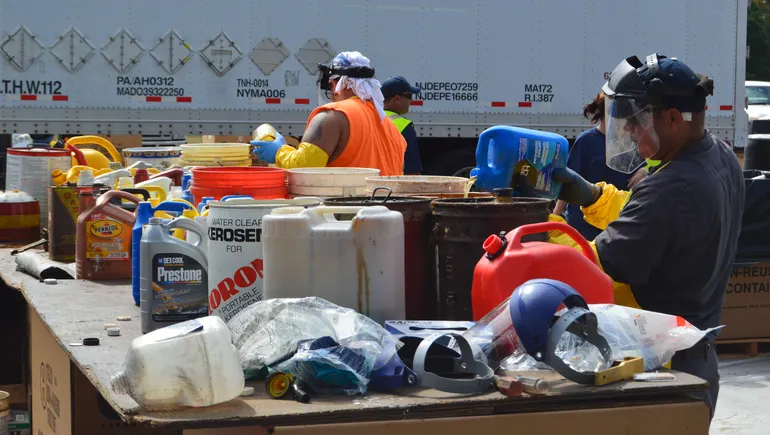
Faced with this institutional gap, ANR made the decisive determination in 2025 that the agency itself would run the program directly, ensuring that environmental protections and statutory timelines would not be stalled by a lack of private-sector organization.
June 2026: Legislative Course Correction
Recognizing the burden placed upon state regulators, Governor Phil Scott signed a consequential new state law in June 2026 (Act 158). This legislative update acts as an institutional bridge, intentionally designed to encourage new PROs to step forward incrementally.
Under the provisions of the new law, a group of manufacturers will eventually be granted the option to form a dedicated PRO for a specific sub-section of products covered under the expansive HHW umbrella, provided that those specific products are collected and managed together.
Late Summer 2026: Public Engagement and RLG Integration
By September 2026, the operational framework entered its public-facing phase. ANR released its comprehensive draft EPR program plan, inviting intense public commentary through mid-September alongside a series of scheduled stakeholder meetings.
Concurrently, RLG stepped into its operational support role. Working side-by-side with state officials, RLG has begun deploying its proprietary compliance infrastructure to handle the massive data loads, financial billing streams, and producer auditing procedures essential to keeping a statewide hazardous waste initiative afloat.
Supporting Context & Metrics: The Mechanics of Managing Household Toxins
Household hazardous waste represents one of the most volatile streams in the American waste management matrix. Left out of standard curbside recycling bins, these items frequently end up in municipal solid waste landfills or, worse, poured down household drains and storm sewers, threatening local watersheds and endangering sanitation workers via chemical reactions, toxic fumes, or localized fires (particularly from pressurized propane cylinders and aerosol cans).
Why the HHW Landscape is Uniquely Complex
Managing HHW via EPR is fundamentally different from managing paper, glass, or rigid plastics. The materials are chemically reactive, highly varied in packaging formats, and distributed across thousands of distinct manufacturers—many of whom have little to no experience with state-level environmental compliance reporting.
Furthermore, the product categories span multiple industries:
- Automotive: Lubricants and degreasers sold primarily through auto-parts supply chains.
- Home Improvement: Adhesives and aerosols distributed through hardware and home-improvement big-box retailers.
- Recreation: Non-refillable propane cylinders sold at outdoor outfitters, grocery stores, and gas stations.
This market fragmentation explains why a single, unified PRO was impossible to spin up organically without state intervention.

The Strategic Value of Specialized Support
Enter the Reverse Logistics Group (RLG). With a global footprint spanning dozens of regulatory regions—and active municipal and state-level EPR operations in U.S. jurisdictions such as California, Connecticut, Massachusetts, Minnesota, and the province of Ontario—RLG brings battle-tested logistics expertise to Vermont’s nascent initiative.
The firm’s responsibilities in Vermont focus on the unglamorous yet mission-critical backbone of compliance:
- Producer Engagement: Identifying, contacting, and onboarding the myriad brand owners and manufacturers obligated under the Vermont statute.
- Billing Systems: Establishing transparent cost-allocation mechanisms to ensure producers pay their fair share based on market volume.
- Data Collection & Management: Building secure repositories to track hazardous waste collection volumes, transportation paths, and final processing destinations.
- Program Administration: Offering the administrative scaffolding necessary to keep state regulators from being overwhelmed by day-to-day operational friction.
Official Statements and Industry Perspectives
The pioneering nature of Vermont’s program has drawn commentary from key compliance executives and state regulators alike, illuminating the broader structural shifts occurring across North American product stewardship.
Andriana Kontovrakis, Director of EPR Solutions at RLG, emphasized the escalating complexity of modern environmental mandates during the September rollout:
"States and organizations are being required to take on more complex producer responsibility requirements, and so having reliable billing, data management, producer engagement, and program administration are essential to building effective systems."
Kontovrakis’s perspective highlights a growing trend: as state legislatures grow increasingly ambitious—moving past traditional recycling domains into hazardous waste, textiles, and packaging—state agencies frequently lack the internal data infrastructure to track thousands of distinct product lines without private-sector technological backing.
Echoing this sentiment, Brad Wright, Executive Vice President for RLG’s Americas region, pointed to the global context of modern environmental compliance:
"EPR laws often have incredibly complex regulations and requirements, and RLG has been working globally within these frameworks in dozens of regions to facilitate EPR programs."
For Vermont regulators, partnering with an experienced global vendor serves as a risk-mitigation strategy. It allows the state to maintain sovereign oversight and direct operational control of the HHW initiative while leveraging enterprise-grade software and logistics networks that would take years and millions of dollars for a state agency to build independently.

Future Outlook: A Phased Transition Toward Private-Sector Stewardship
While ANR is currently holding the reins, the regulatory roadmap established by the June 2026 legislative amendments outlines a clear, multi-year evolution for the program.
The 2027–2030 Horizon
The statutory changes signed by Governor Phil Scott introduce a strategic pivot point that will unfold over the next few years:
- July 2027: The specific legislative provision allowing sub-sector PRO formations officially takes effect. This will enable industry coalitions representing distinct product families—such as propane cylinder manufacturers or specialized aerosol producers—to begin organizing internal compliance frameworks.
- July 1, 2030: The hard deadline by which any newly minted sub-sector PRO plans can officially take effect and assume operational control over their respective product classes.
Under this forward-looking architecture, only one PRO will be permitted for each distinct class of products, preventing turf wars or overlapping jurisdictions. However, multiple PROs could eventually operate in parallel under the overarching umbrella of the Vermont HHW framework, effectively dividing and conquering the diverse waste streams currently managed solely by ANR.
Implications for the National Waste Landscape
Vermont’s experiment is being monitored by environmental agencies across the United States. Many states are eager to tackle household hazardous waste through product stewardship but have historically hesitated due to the administrative nightmare of organizing fragmented manufacturer bases.
By demonstrating that a state agency can successfully bootstrap a complex EPR program with private operational backing—while simultaneously engineering a legislative pathway to transition those duties back to specialized industry groups over time—Vermont is effectively writing the playbook for the next generation of American environmental policy.
As the public comment period closes and stakeholder workshops proceed through September 2026, all eyes remain on the Green Mountain State to see how effectively theory translates into practice on the hazardous waste sorting floor.



