Executive Overview
In the rugged landscapes of Jersey, a quiet technological revolution is fundamentally transforming agricultural conservation and land management. Traditional farming methods—often defined by grueling physical labor, the hauling of heavy electric fencing equipment across precipitous terrain, and the constant threat of livestock escapes—are rapidly being replaced by advanced GPS-enabled livestock collars. Spearheaded by the local conservation initiative The Grazing Project, this innovative approach allows shepherds to manage expansive flocks using nothing more than a smartphone application and virtual boundaries.
The initiative, which has spent the last three years refining and scaling the technology, currently oversees approximately 600 sheep equipped with these smart collars. Originally developed in Norway and heavily tested across the United Kingdom—even gaining mainstream public exposure in 2025 via Jeremy Clarkson’s hit television documentary Clarkson’s Farm—the system relies on audio warnings and mild deterrents to keep animals safely within invisible, app-drawn perimeters.
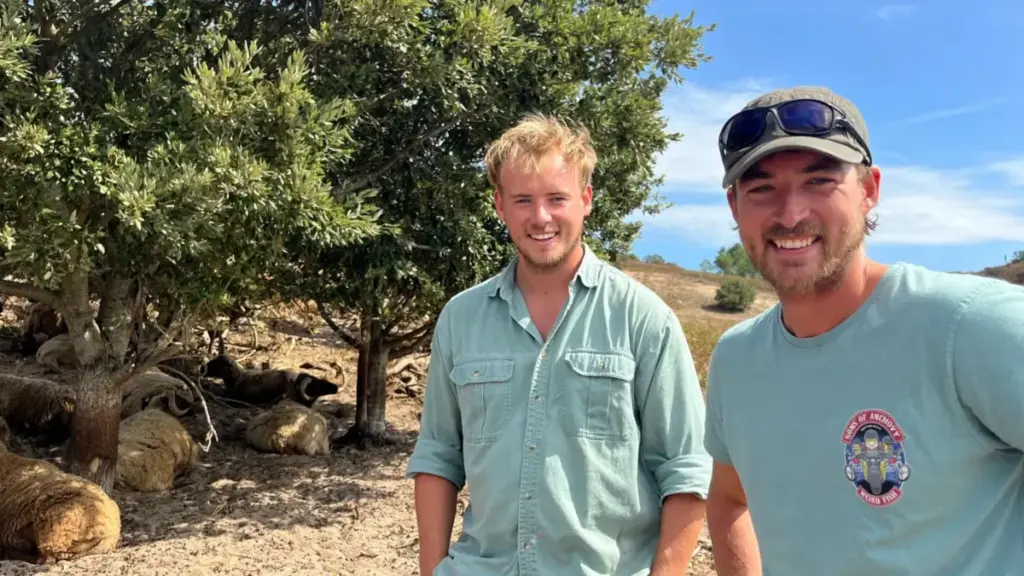
For local brothers and shepherds Josh and Ben Voak, who manage the day-to-day operations of the flocks, the technology has done more than just save hours of manual labor; it has unlocked previously inaccessible, ecologically vital landscapes. Steep cliffs choked with thick bracken and gorse can now be grazed effectively, aiding in conservation efforts. Buoyed by this success, the project is now expanding its horizons, entering a trial phase to train cattle on the system and exploring collaborative multi-species grazing to rewild new regions of Jersey.
Detailed Chronology: From Heavy Wire to Virtual Boundaries
For generations, managing livestock on Jersey’s dramatic coastal cliffs was an arduous, high-risk undertaking. Shepherds faced the daunting task of maintaining physical barriers in environments where the terrain is inherently hostile to traditional farming infrastructure.
The Era of Manual Labor
Before the introduction of GPS tracking and virtual perimeters, the management of cliffside grazing was defined by brute physical exertion. Shepherds like Josh and Ben Voak had to manually transport heavy wooden or plastic fence poles, spools of wire, and heavy-duty batteries up and down steep inclines and unstable cliff paths.
"We used to lay electric fencing before the GPS collars came in," recalls Josh Voak. "That means lugging fence poles, wire, and batteries up and down the cliff. It could take hours, and every time the weather turned or an animal tested the line, you were back out there doing heavy maintenance."
This grueling process severely limited where livestock could be deployed. Areas choked with dense, invasive gorse or high bracken on perilous slopes were often left ungrazed because the logistical hurdles of securing physical fences made the effort economically and physically unviable. Furthermore, tracking missing or wandering sheep required extensive on-foot searches across vast expanses of rural terrain, consuming valuable hours that could have been dedicated to herd health and environmental stewardship.

The Adoption of Smart Technology
The turning point for The Grazing Project arrived roughly three years ago when the initiative acquired its initial batch of 70 GPS-enabled collars. Recognizing the profound operational shifts the technology could facilitate, the team systematically scaled up its usage. Today, approximately 600 sheep across Jersey wear the devices.
The integration of the system drastically streamlined daily routines. Instead of spending hours stringing wire, the shepherds simply map out a virtual boundary on a specialized smartphone application. The physical labor is reduced to a digital keystroke, allowing the flock to be introduced to a site almost instantly.
"Now with the GPS collars, all we have to do is upload the site on to the app, put the sheep in, and then we’re done," Josh explains. Beyond containment, the constant real-time tracking feature has revolutionized animal husbandry. Daily headcounts, once a labor-intensive search-and-rescue mission across complex topography, are now conducted instantly via the app’s live GPS feed, enabling shepherds to pinpoint the exact location of every animal within seconds.
Supporting Context & Metrics: How Virtual Fencing Works
To understand the profound impact of this technology on modern conservation grazing, it is essential to examine the mechanics of the system and its broader adoption footprint across British and European agriculture.
The Mechanics of the Collar
The technology, designed by Norwegian ag-tech innovators Nofence, operates through a sophisticated interplay of satellite positioning, onboard hardware, and behavioral conditioning.
- Virtual Mapping: Land managers use a smartphone application to draw a digital polygon over an aerial map of the grazing area. This data is transmitted directly to the collars worn by the livestock.
- The Warning Phase: As an animal approaches the designated virtual boundary, the collar detects its proximity via GPS coordinates. It emits an escalating audible warning sound designed to alert the animal that it is nearing the limit of its allowed pasture.
- The Deterrent Phase: If the animal ignores the audio cue and continues past the virtual boundary, the collar delivers a mild electric shock. Through natural behavioral conditioning, livestock quickly learn to associate the audio signal with the boundary, turning back before the deterrent phase is ever triggered.
- Real-Time Telemetry: Beyond containment, the collars act as constant trackers, recording movement patterns, resting habits, and distress signals, feeding valuable data back to the farmer’s mobile device.
Broader Industry Adoption
While Jersey’s conservation efforts represent a pioneering leap in scale, the technology has steadily gained traction across the broader UK agricultural sector. The system received a significant cultural and public awareness boost in 2025 when it was featured prominently on Clarkson’s Farm, Jeremy Clarkson’s popular documentary series chronicling life at Diddly Squat Farm in the Cotswolds. The show highlighted the practical utility of the collars for containing alternative livestock, specifically demonstrating their effectiveness in managing herds of goats in areas lacking traditional fencing.
For The Grazing Project, however, the primary focus remains ecological restoration. By utilizing roughly 600 sheep equipped with these devices, the project has managed to achieve targeted grazing densities in fragile habitats that would otherwise require intensive manual intervention to prevent overgrowth.

Official Statements and Industry Collaboration
The success of The Grazing Project has not gone unnoticed within the international agricultural community. As one of the largest and most intensive deployments of GPS grazing technology in the British Isles, the Jersey initiative has positioned itself as a thought leader in the space, maintaining a close, collaborative relationship with the hardware manufacturers.
Pioneering Scale and Feedback Loops
Ben Voak emphasizes that the sheer volume of collars deployed by the project places them at the cutting edge of modern farming practices.
"We certainly speak to a lot of people about it and they’re very interested," Ben notes, highlighting the frequent inquiries they receive from traditional farmers struggling with livestock containment. "For a lot of farmers who do struggle with sheep who love to escape, it can be a really useful tool."
Rather than acting as passive consumers, the Voak brothers and their colleagues play an active role in the evolution of the technology. Through an ongoing feedback loop with Nofence, the team provides critical operational data from the harsh, salt-laden, and rugged cliff environments of Jersey.
"We speak to Nofence a lot about the design of the collar itself and how to improve that," Ben explains. "Because if we ever come across an issue, they’re really good at taking in that feedback, learning it, and sending us maybe a new type of chain or a new type of strap that can increase how usable it is." This symbiotic relationship ensures that the hardware continually evolves to withstand the rigors of extreme topography and varied climate conditions.
Future Outlook: Multi-Species Rewilding and Beyond
With the sheep management system thoroughly optimized and functioning smoothly, The Grazing Project is no longer resting on its laurels. The proven success of virtual fencing has opened the door to ambitious new horizons in conservation, most notably the expansion into multi-species grazing trials.
Training Cattle for the Virtual Era
The next major frontier for the Jersey initiative involves expanding the technology beyond sheep. Ben Voak confirmed that the project is currently in the midst of a trial phase to train four grazing cows to wear the GPS collars.

"They’re currently being trained at the farm as we speak," Ben stated, outlining the meticulous process required to help larger livestock adapt to the audio-deterrent system. Unlike sheep, cattle present distinct behavioral dynamics and physical weight distributions, making this trial a crucial milestone for the project’s long-term environmental strategy.
Multi-Species Rewilding Initiatives
The integration of cattle into the GPS collar program is designed to unlock complex ecological restoration strategies that single-species grazing cannot achieve. Different animals graze in distinct ways: sheep tend to crop vegetation closely and selectively, whereas cattle are adept at managing coarser grasses, trampling bracken, and opening up structural diversity within pastures.
The immediate vision for the newly trained cattle involves deploying them alongside sheep into targeted environments. "The plan is to put them on certain wetland sites or up on the north coast, not letting them on the cliffs," Ben elaborated. "We’re in a trial period seeing how the cows and the sheep work together, if we can put the collars with cows and sheep on the same site, so it’s quite an exciting time for us because we’re just testing those possibilities."
By harmonizing the grazing habits of both sheep and cattle through precise digital boundaries, The Grazing Project aims to accelerate the ecological restoration and rewilding of undeveloped lands across Jersey. As technology and traditional stewardship merge, initiatives like this offer a compelling blueprint for modern conservation worldwide—proving that innovation can lighten the load for farmers while simultaneously healing the natural landscape.