
Executive Overview
The explosive expansion of artificial intelligence and the massive data centers required to fuel it has precipitated a paradigm shift across the American energy landscape. For years, the U.S. electric utility sector was steadily transitioning away from fossil-fueled generation, driven by the rapidly declining costs of renewable energy sources like wind and solar. However, the advent of generative AI and hyperscale cloud computing has abruptly halted this trajectory, introducing unprecedented projected load growth unseen in decades.
To cope with this surging demand—and to bypass the fierce public pushback against rising residential utility bills—policymakers, consumer advocates, and tech giants have increasingly championed a seemingly pragmatic solution: forcing data centers to generate their own electricity. State leaders like Pennsylvania Governor Josh Shapiro and Texas Governor Greg Abbott have enacted sweeping measures to block new data centers from tapping into public power grids, insisting that facility developers build, manage, and finance dedicated local power sources.
Yet, this "make your own power" strategy has exposed a critical regulatory blind spot. Recent guidance and proposed rule changes from the Environmental Protection Agency (EPA) regarding "islanded" power plants—generation facilities built entirely to serve a single industrial client rather than the public grid—reveal a troubling lack of federal oversight. By clarifying that these isolated facilities fall outside the purview of the Clean Air Act’s Acid Rain Program, federal regulators have stripped away vital continuous emissions monitoring mandates.
As tech giants and energy developers race to build massive natural gas-fired power plants—some rivaling the largest utilities in the nation—environmental law experts warn that a piecemeal deregulation wave is taking shape. With federal safeguards receding, the burden of monitoring local pollution, holding corporations accountable, and safeguarding public health has been thrust almost entirely onto under-resourced state and local communities.
Detailed Chronology of the AI Energy Crisis and Regulatory Shifts
The collision between the tech sector’s insatiable appetite for computational power and the physical limitations of the American electrical grid did not happen overnight. Understanding the current regulatory crisis requires tracing a specific sequence of events, policy responses, and administrative decisions.
Phase 1: The AI Surge and the Grid Capacity Crunch
- The Inflection Point: Following years of relatively flat electricity demand, the commercial explosion of generative AI models in the early 2020s created an immediate, massive demand for continuous, 24/7 power. Hyperscale data centers began consuming electricity on a scale equivalent to small cities.
- The Public Backlash: Across the United States, communities near proposed data center sites pushed back vigorously. Residential and small business utility customers raised alarms that they would be forced to subsidize expensive grid upgrades through higher monthly bills. Furthermore, public concern mounted over the climate and health impacts of relying on fossil fuels to power these facilities.
- State-Level Interventions: In response to grassroots pressure, state executives began taking unilateral defensive actions. Texas Governor Greg Abbott blocked new data centers from connecting to the state’s beleaguered power grid to protect grid stability. Concurrently, Pennsylvania Governor Josh Shapiro signed an executive order establishing a moratorium on any AI data center that fails to bring, develop, and pay for its own independent power source.
Phase 2: The EPA’s "Islanded" Power Plant Guidance
- The Loophole Clarification: While state governors sought to shield public ratepayers by pushing data centers off the main grid, federal regulators quietly altered the regulatory playing field. Last month, the EPA published new guidance regarding "islanded" power plants—facilities constructed exclusively to serve isolated industrial loads.
- Acid Rain Program Exemption: The EPA clarified that the Clean Air Act’s Acid Rain Program does not apply to power generation facilities that lack any physical connection to the broader public electricity grid. While legal experts note that such plants were arguably never covered by the 1990 statute, this official guidance explicitly removes a layer of federal permitting and continuous monitoring obligations.
- Streamlining Proposals: Following this guidance, the EPA advanced a broader formal rule change designed to accelerate permitting for data centers and their dedicated power sources. Under this proposal, new pollution sources classified as "minor" would no longer require public notice and comment periods prior to permit issuance.
Phase 3: Bypassing Local Permits and Construction Violations
- Jumping the Gun: As federal policy trends toward expedited approvals, developers have increasingly tested the limits of local compliance. In Georgia, the state Environmental Protection Division issued official violation notices to microgrid developer VoltaGrid and data center operator Serverfarm after discovering they began constructing a proposed power plant and backup generators before securing the necessary state permits.
- The Mississippi Legal Battle: In an even more contentious case, a civil rights lawsuit filed by the NAACP alleges that xAI bypassed the permitting process entirely, constructing a massive 495-megawatt power plant in Mississippi to supply electricity to a data center across state lines in Memphis, Tennessee, without prior regulatory review.
Supporting Context, Scale, and Metrics
The sheer magnitude of the power generation facilities now being proposed to support AI infrastructure dwarfs traditional industrial energy projects. Industry experts emphasize that without federal monitoring standards, the environmental footprint of these mega-projects could go unchecked.
The Return of Fossil Fuels
For over a decade, economic realities favored renewable energy integration. Wind and solar installations consistently underpriced fossil-fuel alternatives, leading to the retirement of aging coal and gas infrastructure. However, data centers demand firm, unyielding power—electricity that must flow uninterrupted 24 hours a day, 365 days a year.
Because current battery storage and long-duration renewable technologies cannot yet reliably meet this continuous baseload requirement at scale, tech conglomerates have turned en masse to natural gas.
Scale of Proposed Data Center Power Plants
The energy footprints of planned artificial intelligence facilities are historic in proportion:
- The Ohio Project: OpenAI has announced plans for a staggering 9.2-gigawatt natural gas plant, to be constructed by the U.S. Department of Energy at a dedicated data center site in Ohio.
- Texas Mega-Projects: In Texas, Amazon has advanced proposals for a 7.65-gigawatt natural gas plant, while energy firm Nexus has submitted plans for a separate 6-gigawatt facility. These installations rank among the largest power production facilities of any kind in the United States.
- Mid-Sized and Microgrid Developments: The trend is not restricted to multi-gigawatt goliaths. Smaller projects are proliferating nationwide. The EPA’s recent guidance dossier highlights a 500-megawatt natural gas plant proposed for an unpublicized data center location. Additionally, VoltaGrid applied for permits to build a 90-megawatt facility in Georgia specifically to power a Serverfarm data center.
The Loss of Continuous Emissions Monitoring
The Acid Rain Program, added as Title IV of the Clean Air Act amendments in 1990, was designed primarily to curb sulfur dioxide ($SO_2$) and nitrogen oxide ($NO_x$) emissions from large utility combustion sources. While its primary target historically was aging coal plants, compliance with the program mandates continuous emissions monitoring systems (CEMS).
According to environmental law experts, individual states generally lack the regulatory authority or technical infrastructure to mandate continuous emissions reporting outside of federal frameworks like the Acid Rain Program. Consequently, exempting islanded power plants from these provisions deprives environmental agencies of their most reliable diagnostic tool for tracking localized air pollution.
Official Statements and Industry Perspectives
The policy pivot toward deregulating islanded power generation has elicited sharp divisions between federal regulators, legal scholars, and environmental advocates.
The Federal Position
Defending its administrative adjustments, the Environmental Protection Agency issued a formal statement asserting that the Acid Rain Program guidance actively serves the public interest:
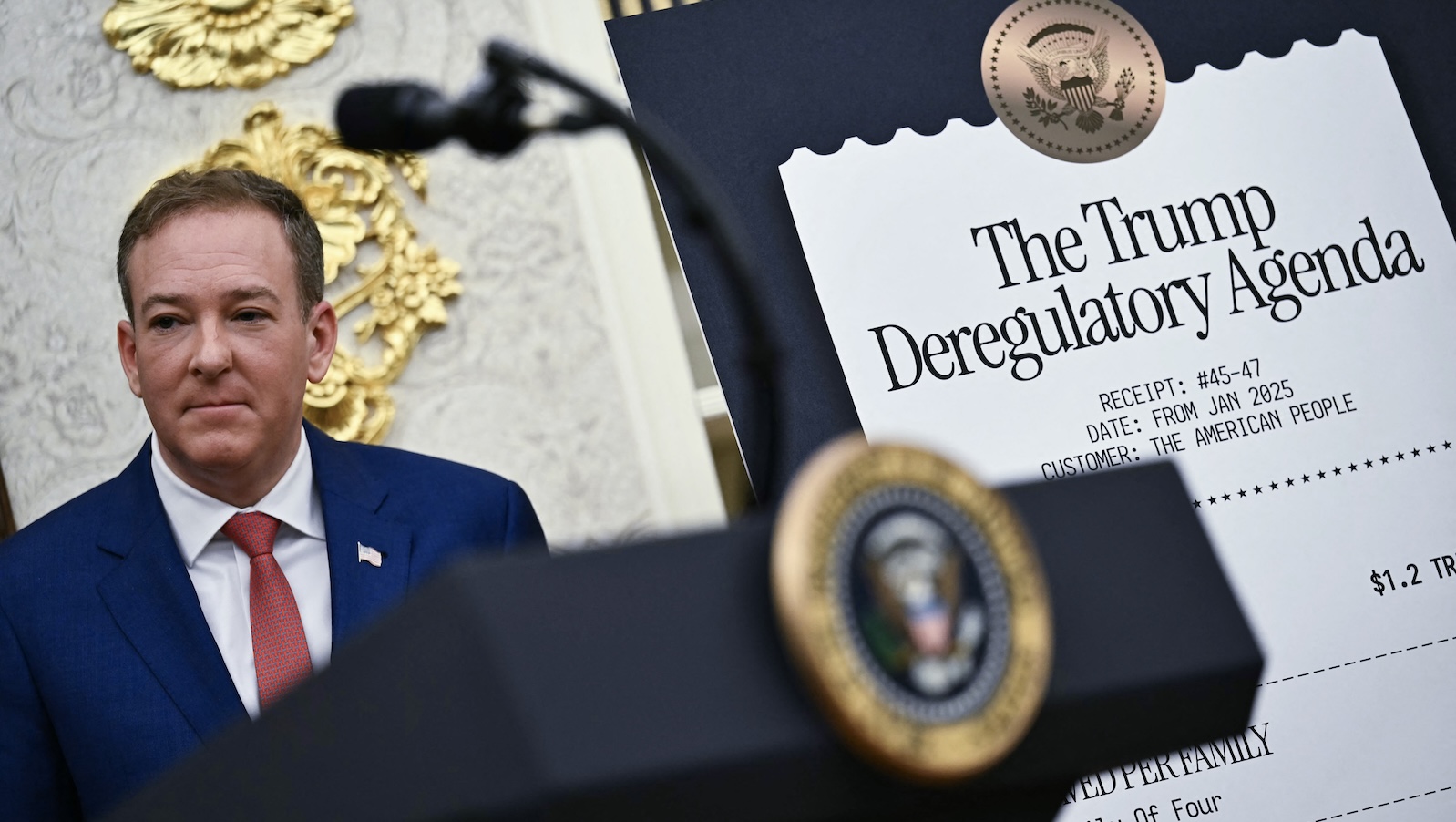
"The guidance expands opportunities for companies to develop and operate islanded power generation facilities for data centers. This will give developers greater flexibility in where and how quickly they can build new facilities while helping to protect the environment and reducing burdens on communities’ electric grid."
Addressing its broader proposal to streamline "minor" pollution source permitting—which would eliminate mandatory public notice and comment periods—the EPA maintained that environmental safeguards remain intact:
"The proposal also does not demand that states make particular revisions to their programs and does not alter emission standards or weaken environmental protections. This approach is intended to reduce administrative burden and responsibly speed up permitting, supporting American economic development and energy dominance."
Critical Legal and Environmental Analysis
Legal scholars and former regulators view these federal maneuvers with deep skepticism, characterizing them as a coordinated effort to clear regulatory hurdles for the technology sector at the expense of local communities.
-
Mindy Goldstein, Director of Emory Law School’s Environmental Law Program: Goldstein argues that the federal strategy represents a dangerous erosion of oversight.
"This is a piecemeal approach to trying to clear the way for data center siting and for the siting of corresponding electric generating units. It seems like a continuous knockdown of dominoes to clear the way for these data centers, and they’re leaving states and communities to hold it back."
-
Joe Goffman, Former EPA Official and Environmental Protection Network Member: Goffman emphasizes that the retreat of federal oversight shifts an impossible monitoring burden onto local governments.
"The anchor of the Clean Air Act is a set of programs that are, in the end, the responsibility of states and counties to implement targeting that local pollution. Local regulators will have to decide, and communities will have to ultimately demand some kind of system that reveals what the emissions profile of these things are."
-
David Spence, Professor of Energy Law and Politics, University of Texas: Spence points out that the political paralysis in Washington makes comprehensive federal oversight of the AI boom virtually impossible under current conditions.
"For a long time, we just didn’t have anybody building gas plants at all because wind and solar are cheaper. Then along came data centers with their incredibly large demands for power that has to be 24-7 and a lot of money to spend on these things. If AI had been invented in 1975, all of this growth would have been regulated because the politics of regulation was starkly different then than it is now. The partisan environment in Congress is not conducive to regulating this explosive growth."
Future Outlook: Navigating the Unregulated Energy Frontier
As the United States barrels further into the artificial intelligence era, the intersection of digital technology and energy infrastructure stands at a dangerous crossroads. State-level policies designed to protect utility ratepayers from surging electricity costs have inadvertently catalyzed a rush toward private, off-grid fossil fuel generation.
By removing federal guardrails—such as Acid Rain Program compliance and mandatory public comment periods for minor pollution sources—the federal government has effectively greenlit a wild-west era of industrial energy development.
Moving forward, the containment of local air pollution and the enforcement of environmental standards will depend entirely on the fortitude of state environmental protection agencies and the activism of local communities. Without federal mandates requiring continuous emissions monitoring for islanded power plants, residents living in the shadow of multi-gigawatt data center campuses may find themselves fighting blind against a rising tide of unchecked industrial emissions.